Results by title
6 books match the query 'Vatican City'
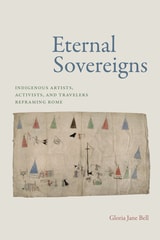
Eternal Sovereigns
Indigenous Artists, Activists, and Travelers Reframing RomeGloria Jane Bell
Duke University Press, 2024
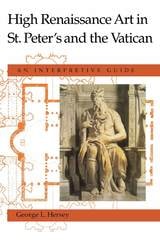
High Renaissance Art in St. Peter's and the Vatican
An Interpretive GuideGeorge L. Hersey
University of Chicago Press, 1993
Before starting the tour of individual works, Hersey describes how the treacherously shifting political and religious alliances of sixteenth-century Italy, France, and Spain played themselves out in the Eternal City. He offers vivid accounts of the lives and personalities of four popes, each a great patron of art and architecture: Julius II, Leo X, Clement VII, and Paul III. He also tells of the complicated rebuilding and expanding of St. Peter's, a project in which Bramante, Raphael, and Michelangelo all took part.
Having set the historical scene, Hersey then explores the Vatican's magnificent Renaissance art and architecture. In separate chapters, organized spatially, he leads the reader through the Cortile del Belvedere and Vatican Museums, with their impressive holdings of statuary and paintings; the richly decorated Stanze and Logge of Raphael; and Michelangelo's Last Judgment and newly cleaned Sistine Chapel ceiling. A fascinating final chapter entitled "The Tragedy of the Tomb" recounts the vicissitudes of Michelangelo's projected funeral monument to Julius II.
Hersey is never content to simply identify the subject of a painting or sculpture. He gives us the story behind the works, telling us what their particular themes signified at the time for the artist, the papacy, and the Church. He also indicates how the art was received by contemporaries and viewed by later generations.
Generously illustrated and complete with a useful chronology, High Renaissance Art in St. Peter's and the Vatican is a valuable reference for any traveler to Rome or lover of Italian art who has yearned for a single-volume work more informative and stimulating than ordinary guidebooks. At the same time, Hersey's many anecdotes and intriguing comparisons with works outside the Vatican will provide new insights even for specialists.
Masses for the Sistine Chapel
Vatican City, Biblioteca Aposotlica Vaticana, Cappella Sistina, MS 14Edited and with an Introduction by Richard Sherr
University of Chicago Press, 2010
Donated in the late fifteenth century to the papal choir, the musical manuscript Cappella Sistina14 reflects a new style of mass composition used by some of the era’s most noted composers. Masses for the Sistine Chapel makes the complete contents of the Cappella Sistina14—held in the Vatican Library—available for the first time.
Featuring fifteen masses and four mass fragments, this volume includes works by such composers as Guillaume Du Fay, Johannes Ockeghem, and Antoine Busnoys. In a comprehensive introduction and critical commentary on each work, Richard Sherr places the choirbook in its historical context, describing its physical makeup as well as the repertory. Sherr’s critical edition of this celebrated manuscript finally provides the insight necessary to inform future performances and recordings of its influential contents.
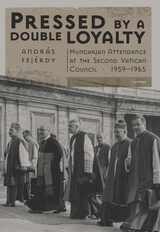
Pressed by a Double Loyalty
Hungarian Attendance at the Second Vatican Council, 1959-1965András Fejérdy
Central European University Press, 2017

The Chigi Codex
Sacred Music from Burgundy and France; Vatican City, Biblioteca Apostolica Vaticana, MS Chigi C VIII 234Edited by Edward F. Houghton
University of Chicago Press, 2027
Compiled between 1500 and 1504, The Chigi Codex contains the complete contents of an extraordinary illuminated manuscript, an anthology of forty polyphonic masses and motets associated with the royal courts of France and Burgundy. This edition includes nearly the complete oeuvre of Johannes Ockeghem, five motets by Johannes Regis, and compositions by Josquin des Prez, Henricus Isaac, Antoine Busnoys, Pierre de la Rue, Jean Mouton, Alexander Agricola, and others. Twelve works are unique to The Chigi Codex; seven motets were added by a Spanish scribe after 1515. The complete contents are presented here with transcriptions of the music accessible to musicians today, with a critical commentary on the music and concordant sources. The Codex transmits works that were copied in manuscripts and prints throughout Europe later in the sixteenth century.
In addition to its monumental repertory, The Chigi Codex includes notable works of visual art in the double-folio openings of thirty-six works with miniature paintings, coats of arms, inhabited capitals, family mottos, bizarre creatures, and colorful borders, all in the famed Ghent-Bruges style. Herbert Kellman discusses these as well as the history of the Codex and its long journey from its original patron, the Burgundian seigneur Philippe Bouton, to the Spanish families Folch de Cardona and Fernández de Córdoba, and finally to Rome and to the library of Fabio Chigi, Pope Alexander VII. The Chigi library is now an important part of the Vatican Library.
Making the manuscript accessible to the public and musicians, this edition of The Chigi Codex supports the study, performance, and understanding of its music and art in the musical, cultural, and historical contexts of its creation.
The KGB and the Vatican
Secrets of the Mitrokhin FilesSean Brennan
Catholic University of America Press, 2022