Results by title
7 books match the query 'Victory'

A Fan's Life
The Agony of Victory and the Thrill of DefeatPaul Campos
University of Chicago Press, 2022
The Pass. The Curse. The Double Doink. A sports fan’s life is not just defined by intense moments on a field, it’s scarred by them. For a real fan, winning isn’t everything—losing is. The true fans, it’s said, are those who have suffered the most, enduring lives defined by irrational obsession, fervid hopes, and equally gut-wrenching misery. And as Paul Campos shows, those deep feelings are windows not just onto an individual fan’s psychology but onto some of our shared concepts of community, identity, and belonging—not all of which are admirable. In A Fan’s Life, he seeks not to exalt a particular team but to explore fandom’s thorniest depths, excavating the deeper meanings of the fan’s inherently unhappy life.
A Fan’s Life dives deep into the experience of being an ardent fan in a world defined more and more by the rhetoric of “winners” and “losers.” In a series of tightly argued chapters that suture together memoir and social critique, Campos chronicles his lifelong passion for University of Michigan football while meditating on fandom in the wake of the unprecedented year of 2020—when, for a time, a global pandemic took away professional and collegiate sports entirely. Fandom isn’t just leisure, he shows; it’s part of who we are, and part of even our politics, which in the age of Donald Trump have become increasingly tribal and bloody. Campos points toward where we might be heading, as our various partisan affiliations—fandoms with a grimly national significance—become all the more intense and bitterly self-defining. As he shows, we’re all fans of something, and making sense of fandom itself might offer a way to wrap our heads around our increasingly divided reality, on and off the field.
The Ethiopian Army
From Victory to Collapse, 1977-1991Fantahun Ayele
Northwestern University Press, 2014
The Ethiopian popular revolution of 1974 ended a monarchy that claimed descent from King Solomon and the Queen of Sheba, and brought to power a military government that created one of the largest and best-equipped armies in Africa. In his panoramic study of the Ethiopian army, Fantahun Ayele draws upon his unprecedented access to Ethiopian Ministry of Defense archives to study the institution that was able to repel the Somali invasion of 1977 and suppress internal uprisings, but collapsed in 1991 under the combined onslaught of armed insurgencies in Eritrea and Tigray. Besides military operations, The Ethiopian Army discusses tactical areas such as training, equipment, intelligence, and logistics, as well as grand strategic choices such as ending the 1953 Ethio-American Mutual Defense Agreement and signing a treaty of military assistance with the Soviet Union. The result sheds considerable light on the military developments that have shaped Ethiopia and the Horn in the twentieth century.
The First Infantry Division and the U.S. Army Transformed
Road to Victory in Desert Storm, 1970-1991Gregory Fontenot
University of Missouri Press, 2017
From the author's introduction:
“My purpose is a narrative history of the 1st Infantry Division from 1970 through the Operation Desert Storm celebration held 4th of July 1991. This story is an account of the revolutionary changes in the late Cold War. The Army that overran Saddam Hussein’s Legions in four days was the product of important changes stimulated both by social changes and institutional reform. The 1st Infantry Division reflected benefits of those changes, despite its low priority for troops and material. The Division was not an elite formation, but rather excelled in the context of the Army as an institution.”
This book begins with a preface by Gordon R. Sullivan, General, USA, Retired. In twelve chapters, author Gregory Fontenot explains the history of the 1st infantry Division from 1970 to 1991. In doing so, his fast-paced narrative includes elements to expand the knowledge of non-military readers. These elements include a glossary, a key to abbreviations, maps, nearly two dozen photographs, and thorough bibliography.
The First infantry Division and the U.S. Army Transformed: Road to Victory in Desert Storm is published with support from the First Division Museum at Cantigny.
The Impulse of Victory
Ulysses S. Grant at ChattanoogaDavid A. Powell
Southern Illinois University Press, 2020
Union soldiers in the Army of the Cumberland, who were trapped and facing starvation or surrender in the fall of 1863, saw the arrival of Major General Ulysses S. Grant in Tennessee as an impetus to reverse the tides of war. David A. Powell’s sophisticated strategic and operational analysis of Grant’s command decisions and actions shows how his determined leadership relieved the siege and shattered the enemy, resulting in the creation of a new strategic base of Union operations and Grant’s elevation to commander of all the Federal armies the following year.
Powell’s detailed exploration of the Union Army of the Cumberland’s six-week-long campaign for Chattanooga is complemented by his careful attention to the personal issues Grant faced at the time and his relationships with his superiors and subordinates. Though unfamiliar with the tactical situation, the army, and its officers, Grant delivered another resounding victory. His success, explains Powell, was due to his tactical flexibility, communication with his superiors, perseverance despite setbacks, and dogged determination to win the campaign. Through attention to postwar accounts, Powell reconciles the differences between what happened and the participants’ memories of the events. He focuses throughout on Grant’s controversial decisions, showing how they were made and their impact on the campaign. As Powell shows, Grant’s choices demonstrate how he managed to be a thoughtful, deliberate commander despite the fog of war.

The Jewish War and The Victory
Henryk Grynberg
Northwestern University Press, 2001
Victory on Two Fronts
The Cleveland Indians and Baseball through the World War II EraScott H. Longert
Ohio University Press, 2022
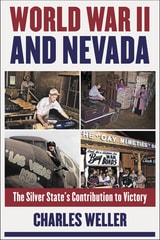
World War II and Nevada
The Silver State's Contribution to VictoryCharles Weller
University of Nevada Press, 2024
World War II and Nevada is an in-depth examination of the state’s role in the war. Nevada’s geographic location, land, sky, mineral resources, and the sacrifices of its people were crucial to victory—and transformed the state. The war brought the first significant development of the gaming industry; the introduction of a huge, permanent military presence; the diversification of its population; and a shift in political and economic power within the region.
Nevada’s previously unexamined role in the internment of Japanese Americans is explored, and so too is the role of women and minority groups in support of the war. The book concludes with a comprehensive list of those killed, wounded, or made prisoners of war during the conflict.
Weller provides the most thorough analysis of Nevada’s war effort to date and historians will find the book a valuable addition to their World War II history collections.