Results by title
33 books match the query 'Warfare'
Anguyiim Nalliini/Time of Warring
The History of Bow-and-Arrow Warfare in Southwest AlaskaAnn Fienup-Riordan and Alice Rearden
University of Alaska Press, 2016
The book is presented in bilingual format, with facing-page translations, and it will be hailed as a landmark work in the study of Alaska Native history and anthropology.
Archaeological Perspectives on Warfare on the Great Plains
Andrew Clark
University Press of Colorado, 2018
The Great Plains has been central to academic and popular visions of Native American warfare, largely because the region’s well-documented violence was so central to the expansion of Euroamerican settlement. However, social violence has deep roots on the Plains beyond this post-Contact perception, and these roots have not been systematically examined through archaeology before. War was part, and perhaps an important part, of the process of ethnogenesis that helped to define tribal societies in the region, and it affected many other aspects of human lives there. In Archaeological Perspectives on Warfare on the Great Plains, anthropologists who study sites across the Plains critically examine regional themes of warfare from pre-Contact and post-Contact periods and assess how war shaped human societies of the region.
Contributors to this volume offer a bird’s-eye view of warfare on the Great Plains, consider artistic evidence of the role of war in the lives of indigenous hunter-gatherers on the Plains prior to and during the period of Euroamerican expansion, provide archaeological discussions of fortification design and its implications, and offer archaeological and other information on the larger implications of war in human history. Bringing together research from across the region, this volume provides unprecedented evidence of the effects of war on tribal societies. Archaeological Perspectives on Warfare on the Great Plains is a valuable primer for regional warfare studies and the archaeology of the Great Plains as a whole.
Contributors: Peter Bleed, Richard R. Drass, David H. Dye, John Greer, Mavis Greer, Eric Hollinger, Ashley Kendell, James D. Keyser, Albert M. LeBeau III, Mark D. Mitchell, Stephen M. Perkins, Bryon Schroeder, Douglas Scott, Linea Sundstrom, Susan C. Vehik
As the Gods Kill
Morality and Social Violence among the Precolonial MayaAndrew K. Scherer
University of Texas Press, 2025
An exploration of war, violence, and sacrifice in precolonial Maya culture and its importance in religious practices.
As the Gods Kill delivers new insights into warfare, weaponry, violence, and human sacrifice among the ancient Maya. While attending to the particularity of a singular historical context, anthropologist and archaeologist Andrew Scherer also suggests that Maya practices have something to tell us about human propensities toward violence more broadly.
Focusing on moral frameworks surrounding deliberate injury and killing, Scherer examines Maya justifications of violence—in particular the obligations to one another, to ancestors, and to the gods that made violence not only permissible but necessary. The analysis isolates key themes underpinning the morality of violence—including justice, vengeance, payment, and costumbre (ritual)—and explores the ethics of violent agents, including warriors, ritual specialists, and the gods. Finally, Scherer addresses motivations for warfare, including the acquisition of spoils, tribute, captives, and slaves. An interdisciplinary case study of morality in an ancient society, As the Gods Kill synthesizes scholarship on an important dimension of precolonial American culture while taking stock of its implications for the social sciences at large.
Deadly Landscapes
Case Studies in Prehistoric Southwestern WarfareGlen E. Rice
University of Utah Press, 2012
Deadly Landscapes presents a series of cases that advance the rigorous examination of war in the archaeological record. The studies encompass examples from the Hohokam, Sinagua, Mogollon, and Anasazi regions, plus a pan-regional study of iconography covering the Colorado Plateau and the Rio Grande Valley. All of the cases focus on the narrow time frame from AD 1200 to the early-1400s, during which evidence for warfare is most pervasive.
Contributors to this volume present varying definitions of warfare and use differing types of data to test for the presence of warfare. These detailed case studies give clear demonstration of a pattern of significant warfare in the late prehistoric period that will alter our understanding of ancient Southwestern cultures.
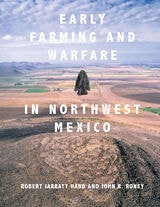
Early Farming and Warfare in Northwest Mexico
Robert J. Hard and John R. Roney
University of Utah Press, 2019
The authors place their work in a regional and theoretical context, providing detailed analyses of radiocarbon dates, structures, features, and artifacts. Authors Hard and Roney, and their contributors, present innovative analyses of plant and animal remains, ground stone, chipped stone, and landscape evolution. Through comparisons with a global cross-cultural probe of hilltop sites and a detailed examination of the features and artifacts of Cerro Juanaqueña, Hard and Roney argue that these cerros de trincheras sites are the earliest fortified defensive sites in the region. Readers with interests in ancient agriculture, warfare, village formation, and material culture will find this to be a foundational volume.
Fighting for the King and the Gods
A Survey of Warfare in the Ancient Near EastCharlie Trimm
SBL Press, 2017
The most up-to-date sourcebook on warfare in the ancient Near East
Fighting for the King and the Gods provides an introduction to the topic of war and the variety of texts concerning many aspects of warfare in the ancient Near East. These texts illustrate various viewpoints of war and show how warfare was an integral part of life. Trimm examines not only the victors and the famous battles, but also the hardship that war brought to many. While several of these texts treated here are well known (i.e., Ramses II's battle against the Hittites at Qadesh), others are known only to specialists. This work will allow a broader audience to access and appreciate these important texts as they relate to the history and ideology of warfare.
Features
- References to recent secondary literature for further study
- Early Greek and Chinese illustrative texts for comparisons with other cultures
- Indices to help guide the reader
Global Perspectives on Landscapes of Warfare
Hugo C. Ikehara-Tsukayama
University Press of Colorado, 2021
Global Perspectives on Landscapes of Warfare examines the effects of conflict on landscapes and the ways landscapes have shaped social and political boundaries over time. Contributors from different archaeological traditions introduce a variety of methodologies and theories to understand and explain how territories and geographies in antiquity were modified in response to threat.
Drawing from eleven case studies from periods ranging over eight thousand years in the Americas, Asia, and Europe, contributors consider how social groups moved and concentrated residences, built infrastructure, invested resources, created alliances and negotiated with human and nonhuman entities for aid, formed and reformed borders, and memorialized sites and territories. Because landscapes of warfare deal with built environments, chapters are presented with rich graphic documentation—detailed maps, site plans, and artifacts—to support the analysis and interpretations.
Territories that have been appropriated and transformed by communities at war illustrate how built landscapes not only reflect immediate events but also influence subsequent generations. With a diverse array of case studies and an explicit focus on landscapes, Global Perspectives on Landscapes of Warfare will be of great interest to students and scholars of conflict archaeology and the anthropology and history of violence across the globe.
Contributors: Elizabeth Arkush, Viktor A. Borzunov, Igor V. Chechushkov, Tiffany Earley-Spadoni, Nam C. Kim, Lauren Kohut, Takehiko Matsugi, Kerry Nichols, Russell S. Quick, Lizzie Scholtus, James T. Williams
History and Warfare in Renaissance Epic
Michael Murrin
University of Chicago Press, 1994
Analyzing English, Italian, and Iberian epics published between 1483 and 1610, Murrin focuses on particular aspects of warfare (cavalry clashes, old and new style sieges, the tactical use of the gun, naval warfare) and the responses to them by authors from Malory to Milton. Throughout, Murrin traces a parallel development in the art of war and in the epic as it emerged from the romance.
Murrin demonstrates that with new technology and increasing levels of carnage, the practice of war gradually drifted from traditional epic modes. But before changes in warfare completely doomed the tradition in which the epic was rooted, this crisis provoked an unprecedented range of experiment which marks heroic narrative in the late Renaissance and ultimately led to the epic without war.
A much-needed introduction to the neglected subject of warfare in epic literature, this work is an uncommonly wide-ranging exercise in comparative criticism that will appeal to historians and students of literature alike.
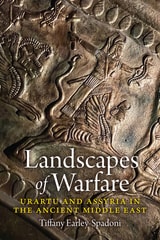
Landscapes of Warfare
Urartu and Assyria in the Ancient Middle EastTiffany Earley-Spadoni
University Press of Colorado, 2025
Tiffany Earley-Spadoni challenges traditional views by emphasizing warfare’s role in organizing ancient landscapes, suggesting that Urartu’s strength lay in its strategic optimization of terrain through fortified regional networks. Using an interdisciplinary approach that includes GIS-enabled studies and integrates archaeological, historical, and art-historical evidence, she illustrates how warfare was a generative force in structuring space and society in the ancient Middle East. Landscapes of Warfare situates Urartu’s developments within the broader context of regional empires, providing insights into the mechanisms of warfare, governance, and cultural identity formation.
Latin American Indigenous Warfare and Ritual Violence
Edited by Richard J. Chacon and Rubén G. Mendoza
University of Arizona Press, 2007
All of the chapters advance our knowledge of the causes, extent, and consequences of indigenous violence—including ritualized violence—in Latin America. Each major historical/cultural group in Latin America is addressed by at least one contributor. Incorporating the results of dozens of years of research, this volume documents evidence of warfare, violent conflict, and human sacrifice from the fifteenth century to the twentieth, including incidents that occurred before European contact. Together the chapters present a convincing argument that warfare and ritual violence have been woven into the fabric of life in Latin America since remote antiquity.
For the first time, expert subject-area work on indigenous violence—archaeological, osteological, ethnographic, historical, and forensic—has been assembled in one volume. Much of this work has heretofore been dispersed across various countries and languages. With its collection into one English-language volume, all future writers—regardless of their discipline or point of view—will have a source to consult for further research.
CONTENTS
Acknowledgments
Introduction
Richard J. Chacon and Rubén G. Mendoza
1. Status Rivalry and Warfare in the Development and Collapse of Classic Maya Civilization
Matt O’Mansky and Arthur A. Demarest
2. Aztec Militarism and Blood Sacrifice: The Archaeology and Ideology of Ritual Violence
Rubén G. Mendoza
3. Territorial Expansion and Primary State Formation in Oaxaca, Mexico
Charles S. Spencer
4. Images of Violence in Mesoamerican Mural Art
Donald McVicker
5. Circum-Caribbean Chiefly Warfare
Elsa M. Redmond
6. Conflict and Conquest in Pre-Hispanic Andean South America: Archaeological Evidence from Northern Coastal Peru
John W. Verano
7. The Inti Raymi Festival among the Cotacachi and Otavalo of Highland Ecuador: Blood for the Earth
Richard J. Chacon, Yamilette Chacon, and Angel Guandinango
8. Upper Amazonian Warfare
Stephen Beckerman and James Yost
9. Complexity and Causality in Tupinambá Warfare
William Balée
10. Hunter-Gatherers’ Aboriginal Warfare in Western Chaco
Marcela Mendoza
11. The Struggle for Social Life in Fuego-Patagonia
Alfredo Prieto and Rodrigo Cárdenas
12. Ethical Considerations and Conclusions Regarding Indigenous Warfare and Ritual Violence in Latin America
Richard J. Chacon and Rubén G. Mendoza
References
About the Contributors
Index
Life in a Mississippian Warscape
Common Field, Cahokia, and the Effects of WarfareMeghan E. Buchanan
University of Alabama Press, 2022
Analyzes Mississippian daily life at Cahokia’s environs during wartime
In Life in a Mississippian Warscape: Common Field, Cahokia, and the Effects of Warfare Meghan E. Buchanan posits that to understand the big histories of warfare, political fragmentation, and resilience in the past archaeologists must also analyze and interpret the microscale actions of the past. These are the daily activities of people before, during, and after historical events. Within warscapes, battles take place in peoples’ front yards, family members die, and the impacts of violence in near and distant places are experienced on a daily basis. This book explores the microscale of daily lives of people living at Common Field, a large, palisaded mound center, during the period of Cahokia’s abandonment and the spread of violence and warfare throughout the Southeast.
Linking together ethnographic, historic, and archaeological sources, Buchanan discusses the evidence that the people of Common Field engaged in novel and hybrid practices in these dangerous times. At the microscale, they adopted new ceramic tempering techniques, produced large numbers of serving vessels decorated with warfare-related imagery, adapted their food practices, and erected a substantial palisade with specially prepared deposits. The overall picture that emerges at Common Field is of a people who engaged in risk-averse practices that minimized their exposure to outside of the palisade and attempted to seek intercession from otherworldly realms through public ceremonies involving warfare-related iconography.
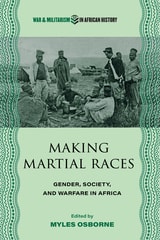
Making Martial Races
Gender, Society, and Warfare in AfricaMyles Osborne
Ohio University Press, 2024
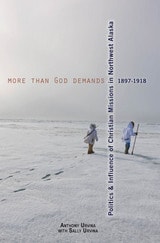
More Than God Demands
Politics and Influence of Christian Missions in Northwest Alaska, 1897-1918Anthony Urvina with Sally Urvina
University of Alaska Press, 2016
Anthony Urvina, whose mother was an orphan raised at one of the missions established as part of this program, draws on details from her life in order to present the first full history of this missionary effort. Smoothly combining personal and regional history, he tells the story of his mother’s experience amid a fascinating account of Alaska Native life and of the men and women who came to Alaska to spread the word of Christ, confident in their belief and unable to see the power of the ancient traditions they aimed to supplant.
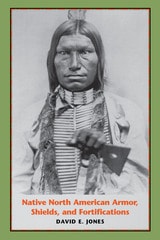
Native North American Armor, Shields, and Fortifications
By David E. Jones
University of Texas Press, 2004
From the Chickasaw fighting the Choctaw in the Southeast to the Sioux battling the Cheyenne on the Great Plains, warfare was endemic among the North American Indians when Europeans first arrived on this continent. An impressive array of offensive weaponry and battle tactics gave rise to an equally impressive range of defensive technology. Native Americans constructed very effective armor and shields using wood, bone, and leather. Their fortifications ranged from simple refuges to walled and moated stockades to multiple stockades linked in strategic defensive networks.
In this book, David E. Jones offers the first systematic comparative study of the defensive armor and fortifications of aboriginal Native Americans. Drawing data from ethnohistorical accounts and archaeological evidence, he surveys the use of armor, shields, and fortifications both before European contact and during the historic period by American Indians from the Southeast to the Northwest Coast, from the Northeast Woodlands to the desert Southwest, and from the Sub-Arctic to the Great Plains. Jones also demonstrates the sociocultural factors that affected warfare and shaped the development of different types of armor and fortifications. Extensive eyewitness descriptions of warfare, armor, and fortifications, as well as photos and sketches of Indian armor from museum collections, add a visual dimension to the text.
North American Indigenous Warfare and Ritual Violence
Edited by Richard J. Chacon and Rubén G. Mendoza
University of Arizona Press, 2007
The editors argue that a failure to acknowledge the roles of warfare and violence in the lives of indigenous North Americans is itself a vestige of colonial repression—depriving native warriors of their history of armed resistance. These essays document specific acts of Native American violence across the North American continent. Including contributions from anthropologists, archaeologists, historians, and ethnographers, they argue not only that violence existed but also that it was an important and frequently celebrated component of Amerindian life.
CONTENTS
Acknowledgments
Introduction
Richard J. Chacon and Rubén G. Mendoza
1. Traditional Native Warfare in Western Alaska
Ernest S. Burch Jr.
2. Barbarism and Ardour of War from the Tenderest Years”: Cree-Inuit Warfare in the Hudson Bay Region
Charles A. Bishop and Victor P. Lytwyn
3. Aboriginal Warfare on the Northwest Coast: Did the Potlatch Replace Warfare?
Joan A. Lovisek
4. Ethnohistoric Descriptions of Chumash Warfare
John R. Johnson
5. Documenting Conflict in the Prehistoric Pueblo Southwest
Polly Schaafsma
6. Cahokia and the Evidence for Late Pre-Columbian War in the North American Midcontinent
Thomas E. Emerson
7. Iroquois-Huron Warfare
Dean R. Snow
8. Desecrating the Sacred Ancestor Temples: Chiefly Conflict and Violence in the American Southeast
David H. Dye and Adam King
9. Warfare, Population, and Food Production in Prehistoric Eastern North America
George R. Milner
10. The Osteological Evidence for Indigenous Warfare in North America
Patricia M. Lambert
11. Ethical Considerations and Conclusions Regarding Indigenous Warfare and Violence in North America
Richard J. Chacon and Rubén G. Mendoza
References
About the Contributors
Index
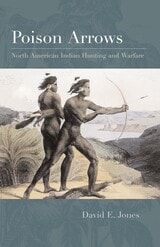
Poison Arrows
North American Indian Hunting and WarfareBy David E. Jones
University of Texas Press, 2007
Biological warfare is a menacing twenty-first-century issue, but its origins extend to antiquity. While the recorded use of toxins in warfare in some ancient populations is rarely disputed (the use of arsenical smoke in China, which dates to at least 1000 BC, for example) the use of "poison arrows" and other deadly substances by Native American groups has been fraught with contradiction. At last revealing clear documentation to support these theories, anthropologist David Jones transforms the realm of ethnobotany in Poison Arrows.
Examining evidence within the few extant descriptive accounts of Native American warfare, along with grooved arrowheads and clues from botanical knowledge, Jones builds a solid case to indicate widespread and very effective use of many types of toxins. He argues that various groups applied them to not only warfare but also to hunting, and even as an early form of insect extermination. Culling extensive ethnological, historical, and archaeological data, Jones provides a thoroughly comprehensive survey of the use of ethnobotanical and entomological compounds applied in wide-ranging ways, including homicide and suicide. Although many narratives from the contact period in North America deny such uses, Jones now offers conclusive documentation to prove otherwise.
A groundbreaking study of a subject that has been long overlooked, Poison Arrows imparts an extraordinary new perspective to the history of warfare, weaponry, and deadly human ingenuity.
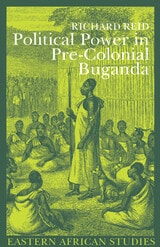
Political Power in Pre-Colonial Buganda
Economy, Society, and Warfare in the Nineteenth CenturyRichard Reid
Ohio University Press, 2002
Blessed with fertile and well-watered soil, East Africa’s kingdom of Buganda supported a relatively dense population and became a major regional power by the mid-nineteenth century. This complex and fascinating state has also long been in need of a thorough study that cuts through the image of autocracy and military might.
Political Power in Pre-Colonial Buganda explores the material basis of Ganda political power, gives us a new understanding of what Ganda power meant in real terms, and relates the story of how the kingdom used the resources at its disposal to meet the challenges that confronted it. Reid further explains how these same challenges ultimately limited Buganda’s dominance of the East African great lakes region.
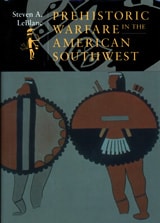
Prehistoric Warfare in the American Southwest
Steven A LeBlanc
University of Utah Press, 2007
Massacres, raiding parties, ambush, pillage, scalping, captive taking: the things we know and sometimes dread to admit occur during times of war all happened in the prehistoric Southwest—and there is ample archaeological evidence. Not only did it occur, but the history of the ancient Southwest cannot be understood without noting the intensity and impact of this warfare.
Most people today, including many archaeologists, view the Pueblo people of the Southwest as historically peaceful, sedentary corn farmers. Our image of the Hopis and Zunis, for example, contrasts sharply with the more nomadic Apaches whose warfare and raiding abilities are legendary. In Prehistoric Warfare in the American Southwest Steven LeBlanc demonstrates that this picture of the ancient Puebloans is highly romanticized. Taking a pan-Southwestern view of the entire prehistoric and early historic time range and considering archaeological and ethnohistorical evidence and oral traditions, he presents a different picture.
War, not peace, was commonplace and deadly throughout the prehistoric sequence. Many sites were built as fortresses, communities were destroyed, and populations massacred. The well-known abandonments of much of the Southwest were warfare related. During the late prehistoric period fighting was particularly intense, and the structure of the historic pueblo societies was heavily influenced by warfare.
Objectively sought, evidence for war and its consequences is abundant. The people of the region fought for their survival and evolved their societies to meet the demands of conflict. Ultimately, LeBlanc asserts that the warfare can be understood in terms of climate change, population growth, and their consequences.
Shooting a Revolution
Visual Media and Warfare in SyriaDonatella Della Ratta
Pluto Press, 2018
Drawing on a decade of ethnographic research conducted in Syria and neighboring countries, Donatella Della Ratta examines here how the networked age shapes contemporary warfare, from conflict on the ground to the performance of violence on the screen. Her findings present a stark parallel to the digital democracy offered by techno-utopians, delving into the dark side of web 2.0 practices, where visual regimes of representation and media production are put in service of modes of destruction.
A vivid account of the politics of Syria’s visual media, from commercial television to citizen journalism and Daesh propaganda, Shooting a Revolution offers fascinating insight into the media’s role in transforming conflict zones in the digital age.
The Archaeology of Regional Interaction
Religion, Warfare, and Exchange across the American Southwest and BeyondMichelle Hegmon
University Press of Colorado, 2000
The Archaeology of Regional Interaction surpasses most regional studies, which only focus on settlement patterns or exchange, and considers other forms of interaction, such as intermarriage and the spread of religious practices. Contributors focus especially on understanding the social processes that underlie archaeological evidence of interaction.
The essays in this volume examine what regional systems involve, in terms of political and economic relations, and how they can be identified. One essay by Steven LeBlanc provides a sweeping analysis of conflict, a form of regional interaction that has received relatively little attention in the Southwest until recently. A series of chapters devoted to expanding the coverage beyond the borders of the traditional Southwest examines the surrounding areas, including Nevada and Utah, northern Mexico, and the Plains.The volume also provides a unique treatment of religion - including manifestations such as Flower World Iconography, Medicine Societies, and ceremonial textiles - as a form of regional interrelation.
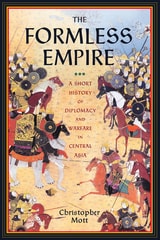
The Formless Empire
A Short History of Diplomacy and Warfare in Central AsiaChristopher Mott
Westholme Publishing, 2015
Central Asia, a vast region extending from eastern Russia and across Kazakhstan, Uzbekistan, Turkmenistan, Afghanistan, Tajikistan, Kyrgystan, Mongolia, and western China, has its own tradition of foreign policy rooted in the ancient nomadic culture of many of its peoples as well as the region’s distinctive geography. From the thundering hooves of Mongol or Cossack cavalry across the steppes to the clanking of tanks on parade in Moscow or Beijing, elements of this system still cast a shadow on the region at the heart of Earth’s largest continent. By tracing the evolution of Central Asian warfare and diplomacy through a series of historical examples, ranging from the ancient Xiongnu people and medieval Mongol Empire to the fall of the Soviet Union, historian Christopher Mott argues that the original system of informal relationships, indirect rule, and rapid military movement did not entirely fade from the region with the eclipse of the nomadic powers during the Middle Ages. In fact, many states like China, Iran, and Russia had already been influenced by nomadic people, and in so doing adapted their own diplomatic and military policies accordingly. The Formless Empire: A Short History of Diplomacy and Warfare in Central Asia is an engaging study of the nature of non-Western imperialism and great-power strategy. In addition, the book demonstrates that regional histories can show us the variety of political possibilities in the past and how they were adapted to changing circumstances—a point made even more important by the rapid changes facing global security and new forms of empire building.
“Christopher Mott’s extremely erudite and wide-ranging examination of the history of Central Asia shows us that we have been far too narrow-minded and Eurocentric in thinking about power and how the global system changes historically. Given the current interest in ‘caliphates’ we need to reflect on the history of the areas of the world that dance to a different historical drum than we do in the West.” —Andrew John Williams, author of France, Britain, and the United States in the Twentieth Century

The Intensification of Surveillance
Crime, Terrorism and Warfare in the Information AgeEdited by Kirstie Ball and Frank Webster
Pluto Press, 2003
Transformations of Warfare in the Contemporary World
John C. Torpey
Temple University Press, 2016
Today’s warfare has moved away from being an event between massed national populations and toward small numbers of combatants using high-tech weaponry. The editors of and contributors to the timely collection Transformations of Warfare in the Contemporary World show that this shift reflects changes in the technological, strategic, ideological, and ethical realms.
The essays in this volume discuss:
·the waning connection between citizenship and soldiering;
·the shift toward more reconstructive than destructive activities by militaries;
·the ethics of irregular or asymmetrical warfare;
·the role of novel techniques of identification in military settings;
·the stress on precision associated with targeted killings and kidnappings;
·the uses of the social sciences in contemporary warfare.
In his concluding remarks, David Jacobson explores the extent to which the contemporary transformation of warfare is a product of a shift in the character of the combatants themselves.
Contributors include: Ariel Colonomos, Roberto J. González, Travis R. Hall, Saskia Hooiveld, Rob Johnson, Colonel C. Anthony Pfaff, Ian Roxborough, and the editors
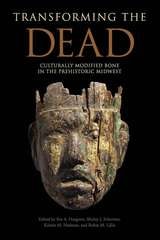
Transforming the Dead
Culturally Modified Bone in the Prehistoric MidwestEve A. Hargrave
University of Alabama Press, 2015
Revealing how the dead continued to shape the spiritual and social worlds of prehistoric North America.
Transforming the Dead is a collection of essays that examines culturally modified human bones and their roles as “cultural and ritual objects” among prehistoric Eastern Woodland cultures. Previous scholarship has explored the role of human body parts in Native American cultures as trophies of war and revered ancestors. This collection discusses new evidence that human elements were also important components of daily and ritual activities across the Eastern Woodlands. The contributors to this volume discuss each case study within the unique regional and temporal contexts of the material, rather than seeking universal answers to how these objects were used.
Most research addressing modified human bone has focused on cut marks and trauma associated with warfare, trophy taking, and burial practices. The editors and contributors of Transforming the Dead document the varied and often overlooked ways that human bone was intentionally modified through drilling, incising, cutting, and polishing for utilitarian, ornamental, spiritual, or ritual use. Examples include bracelets and gorgets to be worn, as well as musical rasps, pipe stems, masks, and protective talismans. The form and function of these objects are not unusual; their construction from the remains of “another” sets them apart.
Through a flexible but systematic analysis of the archaeological record, the contributors bring into focus how the careful selection, modification, and retention of particular bones or body parts of an individual after death offer insights into concepts of personhood, the body, life, and death among the prehistoric Native Americans in the Midwest.
Tribal and Chiefly Warfare in South America
Elsa M. Redmond
University of Michigan Press, 1994
This book presents new data on warfare from both ethnohistoric and ethnographic sources. The author documents principal differences between tribal and chiefly warfare; outlines the evidence archaeologists can expect to recover from warfare; and formulates testable hypotheses on the role of warfare in social and political evolution. This monograph is part of a series on Latin American Ethnohistory and Archaeology.
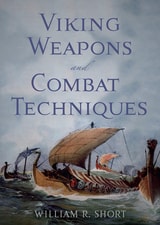
Viking Weapons and Combat Techniques
William R. Short
Westholme Publishing, 2009
A source of enduring fascination, the Vikings are the most famous raiders of medieval Europe. Despite the exciting and compelling descriptions in the Icelandic sagas and other contemporary accounts that have fueled this interest, we know comparatively little about Viking age arms and armor as compared to weapons from other historical periods. We know even less about how the weapons were used. While the sagas provide few specific combat details, the stories are invaluable. They were written by authors familiar with the use of weapons for an audience that, likewise, knew how to use them. Critically, the sagas describe how these weapons were wielded not by kings or gods, but by ordinary men, as part of their everyday lives. Viking Weapons and Combat Techniques provides an introduction to the arms and armor of the people who lived in Northern Europe during the Viking age, roughly the years 793–1066. Using a variety of available sources, including medieval martial arts treatises, and copiously illustrated with images of historical artifacts, battle sites, and demonstrations of modern replicas of Viking weapons, the author and his colleagues at Hurstwic (a Viking-age living history organization) and at the Higgins Armory Sword Guild have reconstructed the combat techniques of the Viking age and what is known about the defensive and offensive weapons of the time in general. Throughout, the author corrects some popular misconceptions about Viking warriors and warfare, such as the belief that their combat techniques were crude and blunt rather than sophisticated. In addition, the book provides an overview of Viking history and culture, focusing on the importance of weapons to the society as well as the Vikings’ lasting impact on Europe through their expeditions of trade and exploration.
Warfare and Diplomacy in Pre-Colonial West Africa
Robert S. Smith
University of Wisconsin Press, 1989
Warfare and the Dynamics of Political Control
Edited by Brian R. Billman
University of Arizona Press, 2025
Warfare and the Dynamics of Political Control draws on a wealth of interdisciplinary perspectives to explore how conflict shapes the establishment and maintenance of political institutions, from small-scale societies to expansive empires. The book examines the material and ideological factors that drive warfare, the organization of combatants, the ways leaders use violence to consolidate power, and how groups resist political domination in times of conflict. By posing critical questions about the efficacy of strategies and the varied outcomes of conflict-driven power struggles, this volume offers profound insights into the dynamics of political control throughout history.
Bringing together case studies from diverse regions and time periods, Warfare and the Dynamics of Political Controlilluminates the multifaceted nature of political violence. The volume includes discussions of human sacrifice, slave-taking, ideological signaling, and military strategy and tactics. The case studies reveal how different forms of political violence influence societal structures. From the fortifications of the Māori in New Zealand to the city walls of early historic India, each contribution provides a detailed analysis of how warfare has been used to both to challenge and to establish political hierarchies. Featuring examples from small foraging communities to large empires across various regions and time periods, the book offers a wide-ranging exploration of how different groups have used and resisted political violence.
This essential work contributes to our understanding of the intersections between conflict and political power, making it a vital resource for scholars of anthropology, archaeology, political science, and history.
Warfare and the Fall of a Fortified Center
Archaeological Investigations at AguatecaTakeshi Inomata
Vanderbilt University Press, 2006
VIMA Series #3
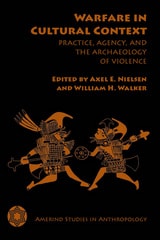
Warfare in Cultural Context
Practice, Agency, and the Archaeology of ViolenceEdited by Axel E. Nielsen and William H. Walker
University of Arizona Press, 2009
However, contributors argue, this model-and-evidence approach has given rise to multiple competing hypotheses and ambiguity rather than to full, coherent explanations of what turns out to be surprisingly complex acts of war. The chapters in Warfare in Cultural Context contend that agency and culture, inherited values and dispositions (such as religion and other cultural practices), beliefs, and institutions are always woven into the conduct of war.
This revealing book focuses on the ways that specific people construed their interests and life projects, and their problems and possibilities, and consequently chose among alternative courses of action. Using archaeological and ethnohistorical data from various parts of the world, the contributors explore the multiple avenues for the cultural study of warfare that these ideas make possible. Contributions focus on cultural aspects of warfare in Mesoamerica, South America, North America, and Southeast Asia. Case studies include warfare among the Maya, Inca, southwestern Pueblos, Mississippian cultures, and the Enga of Papua New Guinea.
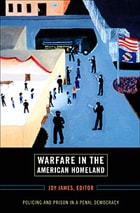
Warfare in the American Homeland
Policing and Prison in a Penal DemocracyJoy James, ed.
Duke University Press, 2007
Contributors consider the interning or policing of citizens of color, the activism of radicals, structural racism, destruction and death in New Orleans following Hurricane Katrina, and the FBI Counterintelligence Program designed to quash domestic dissent. Among the first-person accounts are an interview with Dhoruba Bin Wahad, a Black Panther and former political prisoner; a portrayal of life in prison by a Plowshares nun jailed for her antinuclear and antiwar activism; a discussion of the Puerto Rican Independence Movement by one of its members, now serving a seventy-year prison sentence for sedition; and an excerpt from a 1970 letter by the Black Panther George Jackson chronicling the abuses of inmates in California’s Soledad Prison. Warfare in the American Homeland also includes the first English translation of an excerpt from a pamphlet by Michel Foucault and others. They argue that the 1971 shooting of George Jackson by prison guards was a murder premeditated in response to human-rights and justice organizing by black and brown prisoners and their supporters.
Contributors. Hishaam Aidi, Dhoruba Bin Wahad (Richard Moore), Marilyn Buck, Marshall Eddie Conway, Susie Day, Daniel Defert, Madeleine Dwertman, Michel Foucault, Carol Gilbert, Sirène Harb, Rose Heyer, George Jackson, Joy James, Manning Marable, William F. Pinar, Oscar Lòpez Rivera, Dylan Rodríguez, Jared Sexton, Catherine vön Bulow, Laura Whitehorn, Frank B. Wilderson III
Warfare, Ritual, and Symbol in Biblical and Modern Contexts
Brad E. Kelle
SBL Press, 2014
New perspectives on Israelite warfare for biblical studies, military studies, and social theory
Contributors investigate what constituted a symbol in war, what rituals were performed and their purpose, how symbols and rituals functioned in and between wars and battles, what effects symbols and rituals had on insiders and outsiders, what ways symbols and rituals functioned as instruments of war, and what roles rituals and symbols played in the production and use of texts.
Features:
- Thirteen essays examine war in textual, historical, and social contexts
- Texts from the Hebrew Bible are read in light of ancient Near Eastern texts and archaeology
- Interdisciplinary studies make use of contemporary ritual and social theory
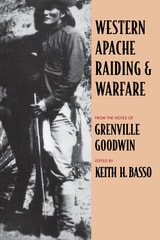
Western Apache Raiding and Warfare
From the Notes of Grenville Goodwin; Edited by Keith Basso
University of Arizona Press, 1971