Results by title
14 books match the query 'West North Central (IA, KS, MN, MO, ND, NE, SD)'
A Dictionary of Iowa Place-Names
Tom Savage
University of Iowa Press, 2007
Savage includes information on the place-names of all 1,188 incorporated and unincorporated communities in Iowa that meet at least two of the following qualifications: twenty-five or more residents; a retail business; an annual celebration or festival; a school; church, or cemetery; a building on the National Register of Historic Places; a zip-coded post office; or an association with a public recreation site. If a town’s name has changed over the years, he provides information about each name; if a name’s provenance is unclear, he provides possible explanations. He also includes information about the state’s name and about each of its ninety-nine counties as well as a list of ghost towns. The entries range from the counties of Adair to Wright and from the towns of Abingdon to Zwingle; from Iowa’s oldest town, Dubuque, starting as a mining camp in the 1780s and incorporated in 1841, to its newest, Maharishi Vedic City, incorporated in 2001.
The imaginations and experiences of its citizens played a role in the naming of Iowa’s communities, as did the hopes of the huge influx of immigrants who settled the state in the 1800s. Tom Savage’s dictionary of place-names provides an appealing genealogical and historical background to today’s map of Iowa.
“It is one of the beauties of Iowa that travel across the state brings a person into contact with so many wonderful names, some of which a traveler may understand immediately, but others may require a bit of investigation. Like the poet Stephen Vincent Benét, we have fallen in love with American names. They are part of our soul, be they family names, town names, or artifact names. We identify with them and are identified with them, and we cannot live without them. This book will help us learn more about them and integrate them into our beings.”—from the foreword by Loren N. Horton
“Primghar, O’Brien County. Primghar was established by W. C. Green and James Roberts on November 8, 1872. The name of the town comes from the initials of the eight men who were instrumental in developing it. A short poem memorializes the men and their names:
Pumphrey, the treasurer, drives the first nail;
Roberts, the donor, is quick on his trail;
Inman dips slyly his first letter in;
McCormack adds M, which makes the full Prim;
Green, thinking of groceries, gives them the G;
Hayes drops them an H, without asking a fee;
Albright, the joker, with his jokes all at par;
Rerick brings up the rear and crowns all ‘Primghar.’
Primghar was incorporated on February 15, 1888.”
Chicago
Metropolis of the Mid-Continent, 4th EditionIrving Cutler. Foreword by James F. Marran
Southern Illinois University Press, 2006
Chicago: Metropolis of the Mid-Continent provides a comprehensive portrayal of the growth and development of Chicago from the mudhole of the prairie to today’s world-class city. This completely revised fourth edition skillfully weaves together the geography, history, economy, and culture of the city and its suburbs with a special emphasis on the role of the many ethnic and racial groups that comprise the “real Chicago” of its neighborhoods. Cutler demonstrates how the geography of “Chicagoland” and the influx of a diverse population spurred transportation, industrial technology, the economy, and sporadic planning to foster rapid urban growth, which brought both great progress and severe problems.
Through insightful analysis, Cutler also traces the demographic and societal changes to Chicago, critically examining such problems as the environment, education, racial tension, crime, welfare, housing, employment, and transportation. Richly illustrated with nearly three hundred drawings, photos, maps, and tables, the volume includes six appendices with sections dedicated to Chicago facts, population growth and income data, weather and climate, significant dates, and historic sites.
Destination Heartland
A Guide to Discovering the Midwest's Remarkable PastCynthia Clampitt
University of Illinois Press, 2022
An informative handbook and introduction to the Midwest's colorful past, Destination Heartland provides travelers with a knowledgeable companion on the highways and backroads of history.
States covered in the book: Illinois, Indiana, Iowa, Kansas, Michigan, Minnesota, Missouri, Nebraska, North Dakota, Ohio, South Dakota, and Wisconsin.
Exploring the Boundary Waters
A Trip Planner and Guide to the BWCAWDaniel Pauly
University of Minnesota Press, 2005

Gateway Beer
St. Louis Craft Brewing in the Shadow of Anheuser-BuschJoel Bittle
University of Illinois Press, 2026
Interviews with the founders and brewers of the city’s craft beer businesses reveal how enthusiasm and expertise coalesced into a thriving community. Their stories of brewer creativity and underdog business acumen include looks at now-iconic brands like Schlafly and 2nd Shift. Bittle also describes how St. Louis entrepreneurs used the spirit of collaboration to not only change the city’s beer culture but build a scene that attracted a following eager to move beyond the hometown beer giant and other established brands.
An engaging insider account of a craft beer bastion, Gateway Beer takes readers inside a movement while telling a story of resilience and triumph.
Iowa State Parks
A Century of Stewardship, 1920-2020Rebecca Conard, Angela Corio, and Jim Scheffler
University of Iowa Press, 2020
The photo essays at the heart of this book feature the artistry of well-known nature photographers such as Carl Kurtz, Brian Gibbs, Don Poggensee, and Larry Stone. The images help tell the stories of Iowa’s state parks, recreation areas, preserves, and forests. A historical overview sets the stage, followed by essays on key aspects of our park system.
Local Vino
The Winery Boom in the HeartlandJames R. Pennell
University of Illinois Press, 2016
In Local Vino, James R. Pennell tracks among the hardy vines and heartland terroir of wineries across Illinois, Iowa, Indiana, and Ohio. Blending history and observation, Pennell gives us a top-down view of the business from cuttings and cultivation to sales and marketing. He also invites entrepreneurs to share stories of their ambitions, hard work, and strategies. Together, author and subjects trace the hows and whys of progress toward that noblest of goals: a great vintage that puts their winery on the map.
North Shore
A Four-Season Guide to Minnesota’s Favorite DestinationShawn Perich
University of Minnesota Press, 2003
The North Shore leads you along the wild and beautiful 150-mile inland coast that stretches from Duluth to the Canadian border. It guides you through historic sites, wilderness trails, and the seven state parks you’ll find along the way.
Read The North Shore as you plan your trip; then take it along and enjoy the milepost-by-milepost descriptions of Lake Superior’s scenic splendor. Fascinating details of the history, the people, and the events on the Shore offer you a multitude of options for making your trip more enjoyable.
The North Shore guides you to breathtaking vistas and exciting adventures. Explore river gorges and cascading waterfalls. Hike scenic wilderness trails. Experience four seasons of color and light. Ski miles of freshly groomed tracks. Fish Lake Superior and the tumbling streams that feed it. Explore pathways of early settlers.
The North Shore will help you plan adventures for all the seasons-from one-day excursions to two-week vacations. It’s a great gift for everyone who loves Minnesota’s favorite destination.
Shawn Perich is a free-lance writer who lives on the North Shore. His writing has been featured in numerous regional and national publications. He served as editor of the Cook County News-Herald in Grand Marais and as editor for Fins and Feathers magazine. Shawn and Vikki live in Hovland, Minnesota, on the edge of Lake Superior, with their yellow labrador, Casey.
Oneota Flow
The Upper Iowa River and Its PeopleDavid S. Faldet
University of Iowa Press, 2009
Whether profiling the chief of the last hunter-gatherers on the river, an early settler witnessing her first prairie fire and a modern wildlife biologist using fire to manage prairies, the manager of the Granger Farmer’s Co-op Creamery, or a landowner whose bottomlands are continually eaten away by floods, Faldet steadily develops the central idea that people are walking tributaries of the river basin in which they make their homes.
Faldet moves through the history of life along the now-polluted Upper Iowa, always focusing on the ways people depend on the river, the environment, and the resources of the region. He blends contemporary conversations, readings from the historical record, environmental research, and personal experience to show us that the health of the river is best guaranteed by maintaining the biological communities that nurture it. In return, taking care of the Upper Iowa is the best way to take care of our future.

RAGBRAI
Everyone Pronounces It WrongJohn Karras
University of Iowa Press, 2009
RAGBRAI: Everyone Pronounces It Wrong is a celebration, a memoir, an entertainment. The book deals with the first 25 years of the famous bike ride. It describes the genesis of an event that has drawn hundreds of thousands of people to Iowa from all over the world and attempts to explain the ride's continued charm and appeal.
RAGBRAI is different from all other bicycle tours. The others, and there are dozens of cross-state rides held in the United States, attract mostly serious, dedicated cyclists who clench their teeth and ride hard all day. RAGBRAI has its share of these cyclists, but it's more inclusive. It is a huge, week long celebration with dancing in the streets and evening entertainments. It is a love affair between bicycle riders and the people of Iowa. The book captures the essence of all that.

Runes Of The North
Sigurd F. Olson
University of Minnesota Press, 1997
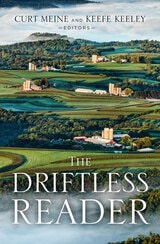
The Driftless Reader
Edited by Curt Meine and Keefe Keeley
University of Wisconsin Press, 2017
The Driftless Reader gathers writings that highlight the unique natural and cultural history, landscape, and literature of this region that encompasses southwestern Wisconsin and adjacent Minnesota, Iowa, and Illinois. The more than eighty selected texts include writings by Black Hawk, Mark Twain, Laura Ingalls Wilder, Frank Lloyd Wright, Aldo Leopold, David Rhodes, and many other Native people, explorers, scientists, historians, farmers, songwriters, journalists, and poets. Paintings, photographs, maps, and other images complement the texts, providing a deeper appreciation of this region's layered natural and human history.
Highlights include excerpts and art from:
Carol Ryrie Brink
William Cronon
John T. Curtis
August Derleth
Richard Eberhart
Fabu
Hamlin Garland
Pedro Guerrero
Hoowaneka (Little Elk)
Juliet Kinzie
Patty Loew
Ben Logan
Truman Lowe
Jacques Marquette
Ken McCullough
Edna Meudt
Mountain Wolf Woman
Zebulon Pike
Henry Schoolcraft
Clifford D. Simak
Wallace Stegner
Pearl Swiggum
Frank Utpatel
Mark Wunderlich
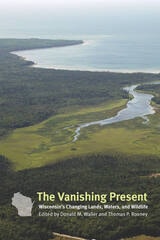
The Vanishing Present
Wisconsin's Changing Lands, Waters, and WildlifeEdited by Donald M. Waller and Thomas P. Rooney
University of Chicago Press, 2008
The Vanishing Present brings together a distinguished set of contributors—including scientists, naturalists, and policy experts—to examine how human pressures on Wisconsin’s changing lands, waters, and wildlife have redefined the state’s ecology. Though they focus on just one state, the authors draw conclusions about changes in temperate habitats that can be applied elsewhere, and offer useful insights into future of the ecology, conservation, and sustainability of Wisconsin and beyond.
A fitting tribute to the home state of Aldo Leopold and John Muir, The Vanishing Present is an accessible and timely case study of a significant ecosystem and its response to environmental change.
Wend Your Way
A Guide To Sites Along The Iowa Mormon TrailL. Matthew Chatterley
University of Iowa Press, 2007
Wend Your Way: A Guide to Sites Along the Mormon Trail tells the story of this great movement through Iowa. Tracing the trail from east to west through 12 counties the guide includes:
• Mormon Trail history for each county•Directs visitors to the 27 interpretive roadside panels that were constructed on the trail by U.S. National Park Service and Iowa Mormon Trails Association
•Reproduces the poignant illustrations that author L. Matthew Chatterley drew for these wayside exhibits
•Provides a map and directions by county to guide travelers to the route of the Mormon Trail, sites of Mormon camps and settlements and the interpretive roadside panels
•Lists other locations in southern Iowa that visitors will want to explore