Results by title
27 books match the query 'Wilderness areas'
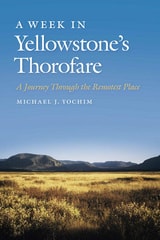
A Week in Yellowstone's Thorofare
A Journey Through the Remotest PlaceMichael J. Yochim
Oregon State University Press, 2016
Drawing upon the first-person accounts of rangers who have patrolled the area, archival documents, and Michael Yochim’s personal experiences over almost three decades, A Week in Yellowstone’s Thorofare distinguishes between the notions of wildness and wilderness. Through historic vignettes, descriptions of natural resources, and the author’s own experiences, it argues that wildness is the most precious, and easily lost, attribute of wilderness.
The Thorofare is remote not only from roads, but also largely unexplored in the vast body of wilderness literature. A Week in Yellowstone’s Thorofare aims to fill that void. Recognizing both the value and the fragility of wildness, the rangers who manage the area have struggled through many eras to preserve it. This book chronicles many of the struggles through which it has remained protected for visitors today.
Yochim offers poignant insight into the passions that motivate those who manage, defend, and journey through the Thorofare. His story demonstrates the importance of wild places for touching and understanding a fundamental part of the human experience. Part history, memoir, travelogue, natural history, and reflection, the book will appeal to readers interested in preservation, the wilderness movement, the history of National Parks, or the natural treasures of Yellowstone.
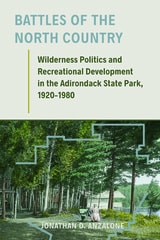
Battles of the North Country
Wilderness Politics and Recreational Development in the Adirondack State Park, 1920-1980Jonathan D. Anzalone
University of Massachusetts Press, 2018
Through a series of case studies, historian Jonathan D. Anzalone highlights the role of public and private interests in the region and shows how partnerships frayed and realigned in the course of several key developments: the rise of camping in the 1920s and 1930s; the 1932 Lake Placid Olympics; the construction of a highway to the top of Whiteface Mountain; the postwar rise of downhill skiing; the completion of I-87 and the resulting demand for second homes; and the 1980 Lake Placid Olympics. Battles of the North Country reveals how class, economic self-interest, state power, and a wide range of environmental concerns have shaped modern politics in the Adirondacks and beyond.
Boots, Bikes, and Bombers
Adventures of Alaska Conservationist Ginny Hill WoodEdited by Karen Brewster
University of Alaska Press, 2012

Corvallis Trails
Exploring the Heart of the ValleyMargie C. Powell
Oregon State University Press, 2006
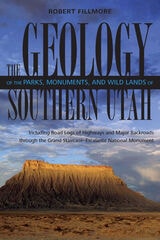
Geology Of Parks, Monuments, and Wildlands of Southern Utah
Robert Fillmore
University of Utah Press, 2000
This detailed interpretive guide explains the forces that created Utah's unforgettable scenery, while providing road logs of highways and major backroads through the Grand Staircase of the Colorado Plateau.
Where in Utah can you find a fossilized ant hill that is at least fifty million years old? Do you know the location of an ancient beach that disappeared along with the dinosaurs that strolled it? Find out in The Geology of the Parks, Monuments, and Wildlands of Southern Utah.
This fascinating and authoritative guide belongs on the dashboard or in the backpack of every visitor to southern Utah or student of its natural history. More than sixty illustrations and nearly three dozen photographs accompany clear explanations of the spectacular geologic features of this landscape, including Capitol Reef, Bryce Canyon, and Zion National Parks, as well as the Grand Staircase-Escalante Monument.
Section I of the volume surveys chronologically the origins of the formations and structural features and the geologic processes that have shaped the Colorado Plateau. Section II provides road logs with mile-by-mile geologic descriptions of key sections of highway traversing this area.
This detailed interpretive guide turns any windshield into a window of opportunity for understanding the forces that created Utah’s unforgettable scenery—whether it be a breathtaking panorama or a dazzling array of fins and fractures, pillars and pedestals, or cliffs and chasms.
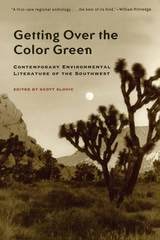
Getting Over the Color Green
Contemporary Environmental Literature of the SouthwestScott Slovic
University of Arizona Press, 2001
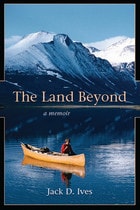
Land Beyond
A MemoirJack Ives
University of Alaska Press, 2010
Geographer Jack Ives moved to Canada in 1954, and soon after he played an instrumental role in the establishment of the McGill Sub-Arctic Research Laboratory in central Labrador-Ungava. This fascinating account of his fifty-plus years living and working in the arctic is simultaneously a light-hearted, winning memoir and a call to action on the issues of environmental awareness and conservation that are inextricably intertwined with life in the north. Mixing personal impressions of key figures of the postwar scientific boom with the intellectual drama of field research, The Land Beyond is a memorable depiction of a life in science.
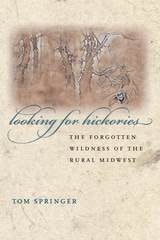
Looking for Hickories
The Forgotten Wildness of the Rural MidwestTom Springer
University of Michigan Press, 2008
A new voice reveals the unique character of the upper Midwest
In the spirit of other writers who share an affinity for the natural world---authors such as Robert Frost, Emerson, and Bill Bryson---Looking for Hickories is Tom Springer's ode to the people, natural beauty, and lore of the Midwest, a place where bustling communities neighbor a fragile mosaic of quiet woods, fertile meadows, and miles of farmland.
Touching and humorous by turns, Looking for Hickories captures the essence of the upper Midwest's character with subjects particular to the region yet often universal in theme, from barn building to land preservation to the neglected importance of various trees in the landscape.
Like Frost's best poems, Springer's essays often begin with delight and end in wisdom. They mingle a generosity of spirit and the childlike pleasure of discovery with a grown-up sense of a time and a place, if not lost, then in danger of disappearing altogether---things to treasure and preserve for today and tomorrow.
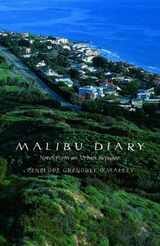
Malibu Diary
Notes From An Urban RefugeePenelope O'Malley
University of Nevada Press, 2004
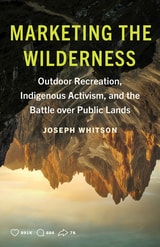
Marketing the Wilderness
Outdoor Recreation, Indigenous Activism, and the Battle over Public LandsJoseph Whitson
University of Minnesota Press, 2025
How outdoor industry marketing promotes an image of “the wilderness” as an unpeopled haven
Marketing the Wilderness analyzes the relationship between the outdoor recreation industry, public lands in the United States, and Indigenous sovereignty and representation in recreational spaces. Combining social media analysis, digital ethnography, and historical research, Joseph Whitson offers nuanced insights into more than a century of the outdoor recreation industry’s marketing strategies, unraveling its complicity in settler colonialism.
Complicating the narrative of outdoor recreation as a universal good, Whitson introduces the concept of “wildernessing” to describe the physical, legal, and rhetorical production of pristine, empty lands that undergirds the outdoor recreation industry, a process that further disenfranchises Indigenous people from whom these lands were stolen. He demonstrates how companies such as Patagonia and REI align with the mining and drilling industries in their need to remove Indigenous peoples and histories from valuable lands. And he describes the ways Indigenous and decolonial activists are subverting and resisting corporate marketing strategies to introduce new narratives of place.
Through the lens of environmental justice activism, Marketing the Wilderness reconsiders the ethics of recreational land use, advocating for engagement with issues of cultural representation and appropriation informed by Indigenous perspectives. As he discusses contemporary public land advocacy around places such as Bears Ears National Monument, Whitson focuses on the deeply fraught relationship between the outdoor recreation industry and Indigenous communities. Emphasizing the power of the corporate system and its treatment of land as a commodity under capitalism, he shows how these tensions shape the American idea of “wilderness” and what it means to fight for its preservation.
Retail e-book files for this title are screen-reader friendly with images accompanied by short alt text and/or extended descriptions.
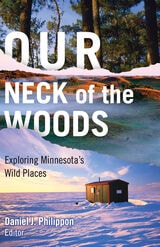
Our Neck of the Woods
Exploring Minnesota's Wild PlacesDaniel J. Philippon
University of Minnesota Press, 2009
What are the odds of finding Minnesota's tiniest orchid? Why take a Breathalyzer test to study frogs? How does ice fishing warm the heart? Who would live in such a cold, lean region? Our Neck of the Woods takes on these and other urgent (and sometimes quirky) questions, showcasing writers' own experiences in the best-loved places in Minnesota, including the North Shore, Lake Bemidji, the western prairies and grasslands, the Boundary Waters, and the Mesabi Iron Range.
The outdoor experiences described here range from sweeping natural history observations to adventurous tales of coming-of-age camping and hunting trips. We follow notable writers and conservationists Sigurd F. Olson, Paul Gruchow, Bill Holm, Jan Zita Grover, Greg Breining, Laurie Allmann, and many others as they descend a frozen river toward Lake Superior, explore a crystalline palace at minus 20 degrees, and trace a family's history along the Mississippi River. Writing on such themes as embracing winter, making camp, and finding wildness even amid development, these authors tell of hunting, fishing, birding, canoeing, and other great outdoor activities that help define what it means to be Minnesotan.
Drawn from the pages of Minnesota Conservation Volunteer magazine-published by the Department of Natural Resources since 1940-these writings evoke a strong sense of place and suggest that the outdoor experiences we share with others come to mean the most to us. With rich observations and spirited tales, Our Neck of the Woods beckons Minnesotans to work, play, and explore in the natural places close to their homes and hearts.
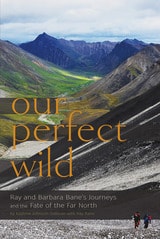
Our Perfect Wild
Ray & Barbara Bane's Journeys and the Fate of Far NorthKaylene Johnson-Sullivan with Ray Bane
University of Alaska Press, 2016
This book tells their story, a tale of dedication and tireless labor in the face of suspicion, resistance, and even violence. At a time when Alaska’s natural bounty remains under threat, Our Perfect Wild shows us an example of the commitment—and love—that will be required to preserve it.
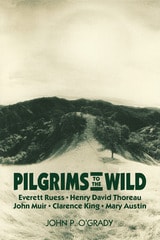
Pilgrims To The Wild
John P O'Grady
University of Utah Press, 1993
Pilgrims to the Wild is a survey of American writers who have responded to their encounters with the natural world. Ranging in its treatment from Thoreau’s important but neglected essay, 'Walking,' to the exuberant letters of the young artist Everett Ruess (who disappeared in the Escalante canyonlands), this is a broadly based exploration that brings to bear Eastern and Western classical philosophy, as well as contemporary critical theory, on a distinctive tradition of American Writing—those works concerned with the human relationship to the nonhuman world.
In addition to offering a fresh interpretation of classic authors such a Thoreau and Muir, this book introduces readers to the less widely known but equally fascinating writers Clarence King and Mary Austin.
Politics of Wilderness Preservation
Craig W. Allin
University of Alaska Press, 2008
Rediscovering the Maine Woods
Thoreau's Legacy in an Unsettled LandJohn J. Kucich
University of Massachusetts Press, 2019
Inspired partly by this expedition, the accessible and engaging essays here offer valuable new perspectives on conservation, the cultural ties that connect Native communities to the land, and the profound influence the geography of the Maine Woods had on Thoreau and writers and activists who followed in his wake. Together, these essays offer a rich and multifaceted look at this special place and the ways in which Thoreau's Maine experiences continue to shape understandings of the environment a century and a half later.
Contributors include the volume editor, Kathryn Dolan, James S. Finley, James Francis, Richard W. Judd, Dale Potts, Melissa Sexton, Chris Sockalexis, Stan Tag, Robert M. Thorson, and Laura Dassow Walls.
The Battle for Alabama's Wilderness
Saving the Great Gymnasiums of NatureJohn N. Randolph
University of Alabama Press, 2005
Traces the development of Alabama's environmental movement from its beginnings with the establishment of The Alabama Conservancy in the late 1960s and early '70s to the preservation efforts of present-day activist groups
The grassroots effort to preserve Alabama's Wilderness Areas spanned thirty years, from 1967 to 1997. The first battle, to establish the Sipsey Wilderness in the Bankhead National Forest, was the catalyst for reform of national policy regarding public land preserves in the eastern United States. It, and the later campaigns—to establish the Cheaha Wilderness, to enlarge the Sipsey, and to create the Dugger Mountain Wilderness—are classic tales of citizen activists overcoming the quagmire of federal bureaucracy and the intransigence of hostile politicians. Early political opposition to proposed designation or expansion of wilderness areas in Alabama was based on the belief that limiting development of these lands would negatively impact the state's powerful timber industry. In response to such opposition, serious environmental activism was born in Alabama.
Using newspaper reports, Congressional testimony, interviews, and his own recollections, John Randolph traces the development of Alabama's environmental movement from its beginnings with the establishment of The Alabama Conservancy in the late 1960s and early '70s to the preservation efforts of present-day activist groups, such as the Alabama Environmental Council, the Cahaba River Society, and the Alabama Wilderness Alliance.
The Battle for Alabama's Wilderness permits all of the players—pro and con—to speak for themselves, but the heroes—people like Mary Burks, Blanche Dean, Joab Thomas, and Pete Conroy—embody the vision, hope, and persistence required of those who succeed in their preservation efforts. Randolph's account is a testament to the power of grassroots citizen groups who are committed to a common cause and inspired by a shared ideal.
The Disappearances
A Story of Exploration, Murder, and Mystery in the American WestScott Thybony
University of Utah Press, 2016
Intrigued by this unusual string of coincidental disappearances, Scott Thybony set out to learn what happened. His investigations took him from Island in the Sky to Skeleton Mesa, from Texas to Tucson, and from the Green River to the Red. He traced the journey of Lucy Garrett from the murder of her father to her dramatic courtroom testimony. Using the pages of an old journal he followed the route of Dan Thrapp as he crossed an expanse of wildly rugged country with a pair of outlaws. Thrapp’s story of survival in an unforgiving land is a poignant counterpoint to the fate of the artist Everett Ruess, which the New York Times has called “one of the most enduring mysteries of the modern West.” Thybony draws on extensive research and a lifetime of exploration to create a riveting story of these three lives.

The Wildlife of New England
A Viewer's GuideJohn S. Burk
University of New Hampshire Press, 2011
With practical guidance, helpful tips, and informative overviews of each location, The Wildlife of New England invites you to discover more than 80 wildlife-viewing areas around New England.
• Where are you most likely to spot a moose, black bear, or otter in the wild?
• On what hilltop can you see thousands of migrating hawks in a single day?
• Where might you see a basking shark, seal, or sea star?
Experienced nature writer and photographer John S. Burk answers these questions and more in this unique guidebook. Organized by state, each viewing location is discussed in detail, including its natural habitats and their unique features, characteristic species to watch for and when to see them, and recommended trails, auto roads, and driving directions. The Wildlife of New England also offers informative introductions to 60 of the region's iconic animals organized by their natural habitats and shown in stunning photographs, many in color.
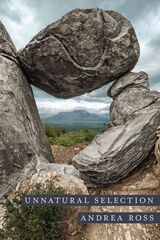
Unnatural Selection
A Memoir of Adoption and WildernessAndrea Ross
CavanKerry Press, 2021
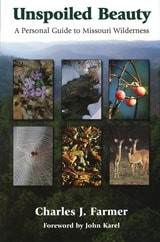
Unspoiled Beauty
A Personal Guide to Missouri WildernessCharles J. Farmer
University of Missouri Press, 1999
Tucked within Missouri's borders are eight Congressionally designated Wilderness areas. These magnificent forests, scattered across the southern portion of the state, combine a wide variety of unique ecosystems. In Unspoiled Beauty, Charles Farmer captures the essence of the Missouri Wilderness experience, allowing even those who have never set foot in the wilderness to enjoy its wonders and appreciate its importance.
Farmer begins by describing the wilderness region prior to the Congressional Wilderness designation, providing an overview of the numerous battles that were waged to reclaim the state's wilderness and to assure its preservation. Featured are key players who were instrumental in the acquisition and preservation of Missouri wilderness.
Farmer devotes a chapter to each of the eight Wilderness areas, accompanied by numerous engaging photographs, many in color. He provides a brief history of each and shares his own fascinating personal experiences of camping, hiking, backpacking, hunting, and fishing within each. He discusses trails, fauna, flora, and other colorful details along the way. His adventures take place during different seasons of the year; he is sometimes alone, sometimes in company. Through his eyes, each area is brought vividly to life.
"Wilderness Tips" and a guide with rules for the novice camper, hiker, backpacker, hunter, and fisherman enhance the book's usefulness. The final chapter lists the areas in Missouri that qualify for Wilderness designation in the New Forest Plan. Unspoiled Beauty may well play a part in saving Missouri's remaining wilderness candidates. It will also help other states that are preparing campaigns to save their own wilderness areas.
Wilderness advocates, hikers and backpackers, fishermen and hunters, anyone who appreciates the great outdoors will enjoy this important new book.
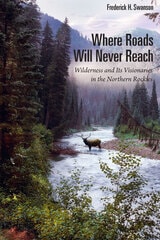
Where Roads Will Never Reach
Wilderness and Its Visionaries in the Northern RockiesFrederick H. Swanson
University of Utah Press, 2015
The Rocky Mountains of Idaho and Montana are home to some of the most important remaining American wilderness areas, preserved because of citizens who stood against massive development schemes that would have diminished important wildlife habitat and the abiding sense of remoteness found in such places. Where Roads Will Never Reach tells the stories of hunters, anglers, outfitters, scientists, and other concerned citizens who devoted themselves to protecting remnant wild lands and ecosystems in the Northern Rockies. Environmental historian Frederick Swanson argues that their heartfelt, dedicated work helped boost the American wilderness movement to its current prominence.
Based on newly available archival sources and interviews with many of the participants, this groundbreaking study explores for the first time the grassroots campaigns that yielded some of the largest designated wilderness areas in America.
Wild Ideas
David Rothenberg
University of Minnesota Press, 1995
A new view of what’s “wild,” and a new path for environmentalism.
At the very heart of American respect for nature, historically and philosophically, is the notion of the wild. This notion comes under scrutiny in Wild Ideas, a collection of essays that bring a fresh and refreshing perspective to the wilderness paradoxically at the center of our civilization.
Blending well-known and new voices, the volume surveys classical and romantic concepts of wilderness, from the scary to the sublime, and shows why neither serves us anymore. Instead, the authors argue for a “wild culture,” in which nature is not opposed to humanity, a mere matter of resources and consumers. A cogent reassessment of the ideas that drive the conservation movement, Wild Ideas points out a new direction for future environmentalism.Among the topics discussed are the confluence of wilderness, empire, and race in the United States; the way the ecology movement uses language; gendered views of the wilderness; maps and topology, and how they affect our view of the wild; healing by the wilderness experience; and the idea of an urban wilderness. Contributors: David Abram; Douglas Buege, U of Wisconsin; Denis Cosgrove, U of London; Robert Greenway, Sonoma State U; Ed Grumbine, Sierra Institute; Marvin Henberg, Linfield College; Irene Klaver, Montana State U; Andrew Light, U of Alberta; Lois Lorentzen, U of San Francisco; Max Oelschlaeger, U of North Texas; R. Murray Schafer; Tom Wolf.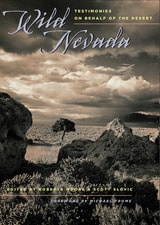
Wild Nevada
Testimonies on Behalf of the DesertRoberta Moore
University of Nevada Press, 2005
Wildbranch
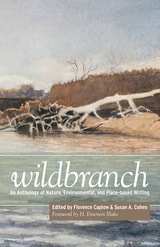
An Anthology of Nature, Environmental, and Place-based WritingEdited by Florence Caplow and Susan A. Cohen. Foreword by H. Emerson Blake
University of Utah Press, 2010
Wildbranch: An Anthology of Nature, Environmental, and Place-based Writing is a powerful collection of mostly unpublished essays and poetry by both prominent American environmental writers and exciting new voices. The poetry and essays by more than fifty contributors offer the reader glimpses into places as diverse as a forest in West Africa, the moors of Ireland, the canyons of the Sonoran desert mountains, and the fields of New England, and they reflect the varied perspectives of field biologists, hunters, farmers, environmental educators, wilderness guides, academics, writers, and artists.
The collection is an intimate portrait of the natural world drawn through the wisdom, ecological consciousness, and open hearts of these exceptional contributors. The Wildbranch Writing Workshop, cosponsored by Orion magazine and Sterling College, has encouraged thoughtful natural history, outdoor, and environmental writing for more than twenty years. The Wildbranch faculty has included its founder E. Anne Proulx, the essayists Edward Hoagland, Janisse Ray, and Scott Russell Sanders, the poet Alison Hawthorne Deming, and many other notable authors. Many have work included in the anthology.
Winner of the New Mexico Book Association's Southwest Book Design & Production Awards for Excellence in the category Trade Books: Non-illustrated.
Wilderness Tapestry
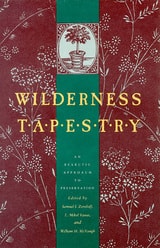
An Eclectic Approach To PreservationVause Zeveloff
University of Nevada Press, 1992
To further understanding of the meanings and values of wilderness, this volume explores wilderness and its significance to humans from myriad viewpoints, based on a meeting of the North American Interdisciplinary Wilderness Conference.
Wildness
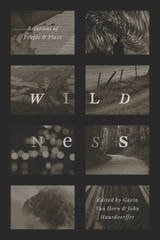
Relations of People and PlaceEdited by Gavin Van Horn and John Hausdoerffer
University of Chicago Press, 2017
This book charts a different path. Exploring how people can become attuned to the wild community of life and also contribute to the well-being of the wild places in which we live, work, and play, Wildness brings together esteemed authors from a variety of landscapes, cultures, and backgrounds to share their stories about the interdependence of everyday human lifeways and wildness. As they show, far from being an all or nothing proposition, wildness exists in variations and degrees that range from cultivated soils to multigenerational forests to sunflowers pushing through cracks in a city alley. Spanning diverse geographies, these essays celebrate the continuum of wildness, revealing the many ways in which human communities can nurture, adapt to, and thrive alongside their wild nonhuman kin.
From the contoured lands of Wisconsin’s Driftless region to remote Alaska, from the amazing adaptations of animals and plants living in the concrete jungle to indigenous lands and harvest ceremonies, from backyards to reclaimed urban industrial sites, from microcosms to bioregions and atmospheres, manifestations of wildness are everywhere. With this book, we gain insight into what wildness is and could be, as well as how it might be recovered in our lives—and with it, how we might unearth a more profound, wilder understanding of what it means to be human.
Wildness: Relations of People and Place is published in association with the Center for Humans and Nature, an organization that brings together some of the brightest minds to explore and promote human responsibilities to each other and the whole community of life. Visit the Center for Humans and Nature's Wildness website for upcoming events and a series of related short films.

Zen of the Plains
Experiencing Wild Western PlacesTyra Olstad
University of North Texas Press, 2014