Results by title
2284 books match the query 'Women' and 165 start with a
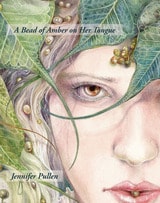
A Bead of Amber on Her Tongue
Jennifer Pullen
Omnidawn, 2019
In this fresh new take on the two women’s stories, Jennifer Pullen takes us away from the familiar and deeper into their experiences. Rewriting Homer, Pullen revitalizes these two figures for the contemporary era. In A Bead of Amber on Her Tongue, Aphrodite maintains autonomy through her experience of her own body, even when forced into marriage. Helen of Troy, meanwhile, harbors a love for her maid, Esme, that no conquering hero can vanquish. Revisiting these classic stories with an inventive twist, Pullen shows that, with a little imagination, the classics may yet bear new insights.
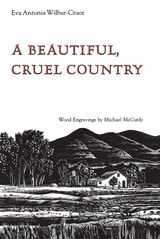
A Beautiful, Cruel Country
Eva Antonia Wilbur-Cruce
University of Arizona Press, 1987
Eva Antonia Wilbur inherited a unique affinity for the land. Granddaughter of a Harvard-educated physician who came to the Territory in the 1860s, she was the firstborn child of a Mexican mother and Anglo father who instilled in her an appreciation for both cultures. Little Toña learned firsthand the responsibilities of ranching—an education usually reserved for boys—and also experienced the racial hostility that occurred during those final years before the Tohono O'odham were confined to a reservation.
Begun as a reminiscence to tell younger family members about their "rawhide tough and lonely" life at the turn of the century, Mrs. Wilbur-Cruce's book is rich with imagery and dialogue that brings the Arivaca area to life. Her story is built around the annual cycle of ranch life—its spring and fall round-ups, planting and harvesting—and features a cavalcade of border characters, anecdotes about folk medicine, and recollections of events that were most meaningful in a young girl's life. Her account constitutes a valuable primary source from a region about which nothing similar has been previously published, while the richness of her story creates a work of literature that will appeal to readers of all ages.
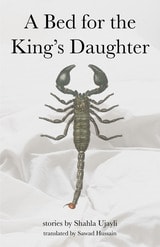
A Bed for the King's Daughter
Stories by Shahla Ujayli; translated by Sawad Hussain
University of Texas Press, 2020
A groundbreaking collection of experimental short fiction by award-winning Syrian author and Booker International Prize for Arabic Fiction nominee Shahla Ujayli, A Bed for the King’s Daughter uses surrealism and irony to examine such themes as women’s agency, the decline of collective life and imagination under modernity, and the effects of social and political corruption on daily life. In “The Memoir of Cinderella’s Shoes,” Cinderella uses her famous glass slipper as a weapon in order to take justice into her own hands. In “Tell Me About Surrealism,” an art history professor’s writing assignment reveals the slipperiness of storytelling, and in “Merry Christmas,” the realities of apartheid interfere with one family’s celebration. Through twenty-two short stories, Ujayli animates—with brevity and inventiveness—themes relevant to both the particularities of life in the Arab world and life outside it.
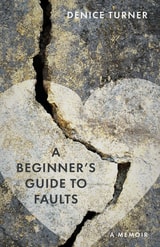
A Beginner's Guide to Faults
A MemoirDenice Turner
University of Nevada Press, 2026
A bighearted memoir of fidelity and forgiveness, A Beginner’s Guide to Faults draws on the language of geology to explore fault lines in a long marriage—deep fractures formed by unmet needs, quiet betrayals, and the human longing for connection and freedom.
After twenty-five years of marriage, Denice is blindsided when her husband reveals his romance with a Las Vegas stripper. This latest move in their tit-for-tat game of infidelity is too much for her. She files for divorce and heads to South Dakota, where she hopes to fulfill her wildest fantasies. Instead, plagued by guilt about her own faults, she wrecks each new relationship, convinced that she is unforgivable.
Through fleeting romances and soul-deep self-reflection, Denice rebuilds a life and a family on her own terms. A Beginner’s Guide to Faults is a memoir of transformation—one that shows how love can change without ever being lost.
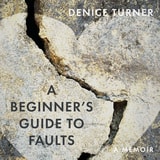
A Beginner's Guide to Faults
A MemoirDenice Turner
University of Nevada Press, 2026
A bighearted memoir of fidelity and forgiveness, A Beginner’s Guide to Faults draws on the language of geology to explore fault lines in a long marriage—deep fractures formed by unmet needs, quiet betrayals, and the human longing for connection and freedom.
After twenty-five years of marriage, Denice is blindsided when her husband reveals his romance with a Las Vegas stripper. This latest move in their tit-for-tat game of infidelity is too much for her. She files for divorce and heads to South Dakota, where she hopes to fulfill her wildest fantasies. Instead, plagued by guilt about her own faults, she wrecks each new relationship, convinced that she is unforgivable.
Through fleeting romances and soul-deep self-reflection, Denice rebuilds a life and a family on her own terms. A Beginner’s Guide to Faults is a memoir of transformation—one that shows how love can change without ever being lost.
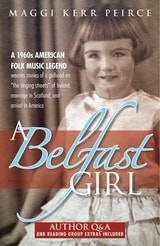
A Belfast Girl
A 1960s American folk music legend weaves stories of a girlhood on “the singing streets” of Ireland, marriage in Scotland, and arrival in AmericaMaggi Kerr Peirce
Parkhurst Brothers, Inc., 2013
A 1960s American folk music legend weaves stories of a girlhood on “the singing streets” of Ireland, marriage in Scotland, and arrival in America
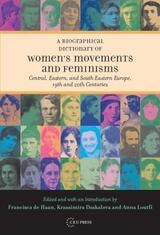
A Biographical Dictionary of Women's Movements and Feminisms
Central, Eastern, and South Eastern Europe, 19th and 20th CenturiesAnna Loutfi
Central European University Press, 2006
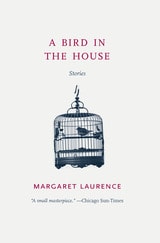
A Bird in the House
StoriesMargaret Laurence
University of Chicago Press, 1974
"Vanessa rebels against the dominance of age; she watches [her grandfather] imitate her aunt Edna; and her rage at times is such that she would gladly kick him. It takes great skill to keep this story within the expanding horizon of this young girl and yet make it so revealing of the adult world."—Atlantic
"A Bird in the House achieves the breadth of scope which we usually associate with the novel (and thereby is as psychologically valid as a good novel), and at the same time uses the techniques of the short story form to reveal the different aspects of the young Vanessa." —Kent Thompson, The Fiddlehead
"I am haunted by the women in Laurence's novels as if they really were alive—and not as women I've known, but as women I've been."—Joan Larkin, Ms. Magazine
"Not since . . . To Kill a Mockingbird has there been a novel like this. It should not be missed by anyone who has a child or was a child."—Pittsburgh Post-Gazette
One of Canada's most accomplished writers, Margaret Laurence (1926-87) was the recipient of many awards including Canada's prestigious Governor General's Literary Award on two separate occasions, once for The Diviners.
A Blockaded Family
Life in Southern Alabama During the Civil WarParthenia Hague
University of Alabama Press, 2005
Parthenia Hague experienced the Civil War while employed as a schoolteacher on a plantation near Eufaula, Alabama. This book recounts how a frightened and war-weary household dealt with privations during the blockade imposed on the South by the federal navy. The memoir of Parthenia Hague is a detailed look at the ingenious industry and self-sufficiency employed by anxious citizens as the northern army closed in.
A Brave and Lovely Woman
Mamah Borthwick and Frank Lloyd WrightMark Borthwick
University of Wisconsin Press, 2025
Little of Wright’s life and work has been left untouched by his many admirers, critics, and biographers. And yet the woman who stood at the center of his emotional life, Mamah Borthwick, has fallen into near obscurity. Mark Borthwick—a distant relative—recenters Mamah Borthwick in her own life, presenting a detailed portrait of a fascinating woman, a complicated figure who was at once a dedicated mother and a faithless spouse, a feminist and a member of a conservative sorority, a vivacious extrovert and a social pariah. Careful research and engaging prose at last give Borthwick, an obscure but crucial character in one of America’s most famous tragedies, center stage.
A Chance for Love
The World War II Letters of Marian Elizabeth Smith and Lt. Eugene T. Petersen, USMCREugene Peterson
Michigan State University Press, 1998
In mid-February 1944 Marian Elizabeth Smith, a young Wisconsin woman, met Marine Corps Lieutenant Eugene T. Petersen on the passenger train, El Capitan, as it made its 42-hour run from Los Angeles to Chicago. After a brief acquaintance, he left the United States to join the Third Marine Division on Guam and eventually to take part in the battle for Iwo Jima in February and March of 1945. The collected letters of their subsequent 18-month correspondence reveal much about wartime life at home and abroad. This correspondence represents a time capsule of current events as Smith and Petersen discuss Franklin Roosevelt, the United Nations, internationalism, popular movies, the French aviator and poet Antoine de St. Exupery, the comic strip Barnaby, and the frustrations of dealing with sometimes less-than- enlightened parents. The loss of Marian's brother during the bombing of Ploesti, Rumania, in June 1944, brought Petersen and Smith closer together, and after hundreds of letters the "chance for love" Marian had suggested early in their correspondence evolved into a marriage that has endured for more than half a century.
A City for Children
Women, Architecture, and the Charitable Landscapes of Oakland, 1850-1950Marta Gutman
University of Chicago Press, 2014
In A City for Children, Marta Gutman focuses on the use and adaptive reuse of everyday buildings in Oakland, California, to make the city a better place for children. She introduces us to the women who were determined to mitigate the burdens placed on working-class families by an indifferent industrial capitalist economy. Often without the financial means to build from scratch, women did not tend to conceive of urban land as a blank slate to be wiped clean for development. Instead, Gutman shows how, over and over, women turned private houses in Oakland into orphanages, kindergartens, settlement houses, and day care centers, and in the process built the charitable landscape—a network of places that was critical for the betterment of children, families, and public life. The industrial landscape of Oakland, riddled with the effects of social inequalities and racial prejudices, is not a neutral backdrop in Gutman’s story but an active player. Spanning one hundred years of history, A City for Children provides a compelling model for building urban institutions and demonstrates that children, women, charity, and incremental construction, renovations, alterations, additions, and repurposed structures are central to the understanding of modern cities.
A Communion of Friendship
Literacy, Spiritual Practice, and Women in RecoveryBeth Daniell
Southern Illinois University Press, 2003
Drawing on interviews and an array of scholarly work, Beth Daniell maps out the relations of literacy and spirituality in A Communion of Friendship: Literacy, Spiritual Practice, and Women in Recovery. Daniell tells the story of a group of women in “Mountain City” who use reading and writing in their search for spiritual growth. Diverse in socioeconomic status, the Mountain City women are, or have been, married to alcoholics. In Al-Anon, they use literacy to practice the Twelve Steps of Alcoholics Anonymous in order to find spiritual solutions to their problems.
In addition, Daniell demonstrates that in the lives of these women, reading, writing, and speaking are intertwined, embedded in one another in rich and complex ways. For the women, private literate practice is of the utmost importance because it aids the development and empowerment of the self. These women engage in literate practices in order to grow spiritually and emotionally, to live more self-aware lives, to attain personal power, to find or make meaning for themselves, and to create community. By looking at the changes in the women’s reading, Daniell shows that Al-Anon doctrine, particularly its oral instruction, serves as an interpretive tool. This discussion points out the subtle but profound transformations in these women’s lives in order to call for an inclusive notion of politics.
Foregrounding the women’s voices, A Communion of Friendship addresses a number of issues important in composition studies and reading instruction. This study examines the meaning of literacy within one specific community, with implications both for pedagogy and for empirical research in composition inside and outside the academy.
A Day, A Night, Another Day, Summer
StoriesChristine Schutt
Northwestern University Press, 2005
Schutt's indomitable, original talent is once again on full display in each of these deeply informed, intensely realized stories. Many of the narratives take place in a space as small as a house, where the doors are many and what is hidden behind these thin domestic barriers tends towards violence, abusive sex, and mental anguish. Schutt opens these doors in sudden, bold moments that also reveal how the characters are often hopeful, even optimistic. With a style that is at once sensual and spare, dreamlike and deliberate, she exposes the terrible intimacy of the rooms and corridors of our innermost lives.
A Feminist Reading of Debt
Luci Cavallero
Pluto Press, 2021
***Winner of an English PEN Award 2021***
In this sharp intervention, authors Lucí Cavallero and Verónica Gago defiantly develop a feminist understanding of debt, showing its impact on women and members of the LGBTQ+ community and examining the relationship between debt and social reproduction.
Exploring the link between financial activity and the rise of conservative forces in Latin America, the book demonstrates that debt is intimately linked to gendered violence and patriarchal notions of the family. Yet, rather than seeing these forces as insurmountable, the authors also show ways in which debt can be resisted, drawing on concrete experiences and practices from Latin America and around the world.
Featuring interviews with women in Argentina and Brazil, the book reveals the real-life impact of debt and how it falls mainly on the shoulders of women, from the household to the wider effects of national debt and austerity. However, through discussions around experiences of work, prisons, domestic labour, agriculture, family, abortion and housing, a narrative of resistance emerges.
Translated by Liz Mason-Deese.

A Feminist Reading of Debt
Luci Cavallero
Pluto Press, 2021
***Winner of an English PEN Award 2021***
"Of great value to those interested in the financialisation of everyday life and social reproduction."—LSE Review of Books
In this sharp evaluation and call to action, authors Lucí Cavallero and Verónica Gago defiantly develop a feminist understanding of debt, showing its impact on women and members of the LGBTQ+ community and examining the relationship between debt and social reproduction.
Exploring the link between financial activity and the rise of conservative forces in Latin America, the book demonstrates that debt is intimately linked to gendered violence and patriarchal notions of the family. Yet, rather than seeing these forces as insurmountable, the authors also show ways in which debt can be resisted, drawing on concrete experiences and practices from Latin America and around the world. Chapters include:
*Debt and Social Reproduction
*Debt as a “Counter-revolution” of Everyday Life
*The writing on the Body of Women
*Neither Victims not Entrepreneurs
*Feminist Insubordination and Fascist Neoliberalism
*The Patriarchy Has My Missing Contributions
*Hunger and Gender Mandates
*Us Against Debt
The authors state in their Introduction, “Our investigations and activism show that there is an urgent need to develop a specifically feminist analysis of finance. Here we do so by bringing together methodological elements, political hypotheses, and narratives of practices elaborated by the feminist movement that are challenging finance.”
Featuring interviews with women in Argentina and Brazil, the book reveals the real-life impact of debt and how it falls mainly on the shoulders of women, from the household to the wider effects of national debt and austerity. However, through discussions around experiences of work, prisons, domestic labor, agriculture, family, abortion and housing, a narrative of resistance emerges.

A Feminist Theory of Violence
A Decolonial PerspectiveFrançoise Vergès
Pluto Press, 2022
***Winner of an English PEN Award 2022***
The mainstream conversation surrounding gender equality is a repertoire of violence: harassment, rape, abuse, femicide. These words suggest a cruel reality. But they also hide another reality: that of gendered violence committed with the complicity of the State.
In this book, Françoise Vergès denounces the carceral turn in the fight against sexism. By focusing on 'violent men', we fail to question the sources of their violence. There is no doubt as to the underlying causes: racial capitalism, ultra-conservative populism, the crushing of the Global South by wars and imperialist looting, the exile of millions and the proliferation of prisons - these all put masculinity in the service of a policy of death.
Against the spirit of the times, Françoise Vergès refuses the punitive obsession of the State in favour of restorative justice.
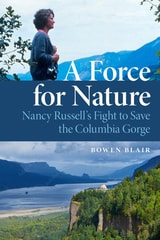
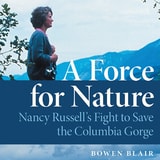
A Force for Nature
Nancy Russell's Fight to Save the Columbia GorgeBowen Blair
Oregon State University Press, 2022
The 85-mile-long Columbia Gorge forms part of the border between Oregon and Washington and is one of the nation’s most historic and scenic landscapes. Many of the region’s cultural divisions boil over here—urban versus rural, west of the mountains versus east—as well as clashes over private property rights, management of public lands, and tribal treaty rights.
In the early 1980s, as a new interstate bridge linked the City of Portland to rural counties in Washington, the Gorge’s renowned vistas were on the brink of destruction. Nancy Russell, forty-eight years old and with no experience in advocacy, fundraising, or politics, built a grassroots movement that overcame 70 years of failed efforts and bitter opposition from both Oregon and Washington governors, five of the six Gorge counties, 41,000 Gorge residents, and the Reagan administration. While building her campaign, Russell stopped subdivisions, factories, and government neglect through litigation brought by her organization, Friends of the Columbia Gorge, and last-second land purchases by the Trust for Public Land (TPL). Initially ignored, then demonized, Russell’s tires were slashed and her life threatened.
The Columbia River Gorge National Scenic Area Act barely passed—on the last day of the congressional session in 1986—and was signed by a reluctant President Reagan hours before the bill would die. Russell positioned the Friends to be a watchdog and orchestrated the purchase of thousands of acres of land for the public. Bowen Blair, an attorney, former executive director of Friends of the Columbia Gorge, and TPL senior vice president, brings an insider’s perspective to the tumultuous and inspiring story of this conservation battle.
A Force for Nature
Nancy Russell's Fight to Save the Columbia GorgeBowen Blair
Oregon State University Press, 2022
The 85-mile-long Columbia Gorge forms part of the border between Oregon and Washington and is one of the nation’s most historic and scenic landscapes. Many of the region’s cultural divisions boil over here—urban versus rural, west of the mountains versus east—as well as clashes over private property rights, management of public lands, and tribal treaty rights.
In the early 1980s, as a new interstate bridge linked the City of Portland to rural counties in Washington, the Gorge’s renowned vistas were on the brink of destruction. Nancy Russell, forty-eight years old and with no experience in advocacy, fundraising, or politics, built a grassroots movement that overcame 70 years of failed efforts and bitter opposition from both Oregon and Washington governors, five of the six Gorge counties, 41,000 Gorge residents, and the Reagan administration. While building her campaign, Russell stopped subdivisions, factories, and government neglect through litigation brought by her organization, Friends of the Columbia Gorge, and last-second land purchases by the Trust for Public Land (TPL). Initially ignored, then demonized, Russell’s tires were slashed and her life threatened.
The Columbia River Gorge National Scenic Area Act barely passed—on the last day of the congressional session in 1986—and was signed by a reluctant President Reagan hours before the bill would die. Russell positioned the Friends to be a watchdog and orchestrated the purchase of thousands of acres of land for the public. Bowen Blair, an attorney, former executive director of Friends of the Columbia Gorge, and TPL senior vice president, brings an insider’s perspective to the tumultuous and inspiring story of this conservation battle.
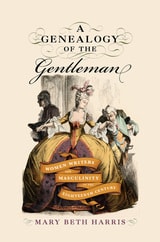
A Genealogy of the Gentleman
Women Writers and Masculinity in the Eighteenth CenturyMary Beth Harris
University of Delaware Press, 2024
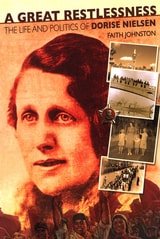
A Great Restlessness
The Life and Politics of Dorise NielsenFaith Johnston
University of Manitoba Press, 2006
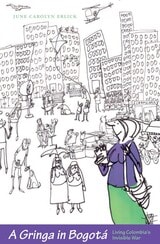
A Gringa in Bogotá
Living Colombia's Invisible WarBy June Carolyn Erlick
University of Texas Press, 2010
To many foreigners, Colombia is a nightmare of drugs and violence. Yet normal life goes on there, and, in Bogotá, it's even possible to forget that war still ravages the countryside. This paradox of perceptions—outsiders' fears versus insiders' realities—drew June Carolyn Erlick back to Bogotá for a year's stay in 2005. She wanted to understand how the city she first came to love in 1975 has made such strides toward building a peaceful civil society in the midst of ongoing violence. The complex reality she found comes to life in this compelling memoir.
Erlick creates her portrait of Bogotá through a series of vivid vignettes that cover many aspects of city life. As an experienced journalist, she lets the things she observes lead her to larger conclusions. The courtesy of people on buses, the absence of packs of stray dogs and street trash, and the willingness of strangers to help her cross an overpass when vertigo overwhelms her all become signs of convivencia—the desire of Bogotanos to live together in harmony despite decades of war. But as Erlick settles further into city life, she finds that "war in the city is invisible, but constantly present in subtle ways, almost like the constant mist that used to drip down from the Bogotá skies so many years ago."
Shattering stereotypes with its lively reporting, A Gringa in Bogotá is must-reading for going beyond the headlines about the drug war and bloody conflict.
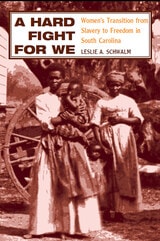
A Hard Fight for We
Women's Transition from Slavery to Freedom in South CarolinaLeslie A. Schwalm
University of Illinois Press, 1997
African-American women fought for their freedom with courage and vigor during and after the Civil War. Leslie Schwalm explores the vital roles of enslaved and formerly enslaved women on the rice plantations of lowcountry South Carolina, both in antebellum plantation life and in the wartime collapse of slavery. From there, she chronicles their efforts as freedwomen to recover from the impact of the war while redefining their lives and labor.
Freedwomen asserted their own ideas of what freedom meant and insisted on important changes in the work they performed both for white employers and in their own homes. As Schwalm shows, these women rejected the most unpleasant or demeaning tasks, guarded the prerogatives they gained under the South's slave economy, and defended their hard-won freedoms against unwanted intervention by Northern whites and the efforts of former owners to restore slavery's social and economic relations during Reconstruction. A bold challenge to entrenched notions, A Hard Fight for We places African American women at the center of the South's transition from a slave society.
A History of Hazardous Objects
A NovelYxta Maya Murray
University of Nevada Press, 2024
Simultaneously, Laura is trying to write the history section of a Congressional report titled the National Near-Earth Object Preparedness Strategy and Action Plan. This report will advise Congress that it must develop a system to detect and deflect PHOs, and the section Laura is working on cites several historical meteorite impacts as proof that the Earth is now undefended against a significant impact event.
A story about family, love, risk, and science, A History of Hazardous Objects contemplates how experiencing trauma and pain may help us secure a safer and more just world.
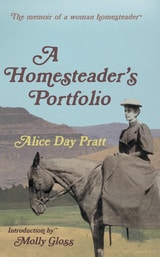
A Homesteader's Portfolio
Alice Day Pratt
Oregon State University Press, 1993
“So much is so skillfully crammed into this little book that the reader comes to admire Pratt’s zest while wondering how she could possibly have endured. . . . A splendid introduction by Molly Gloss, author of The Jump-Off Creek, enhances the book with a biography of the author and a study of her writings.” —Oregon Historical Quarterly
In 1911 Alice Day Pratt, single and nearing forty, boarded a train and left the east coast to file claim on 160 acres of land in the Central Oregon high desert. She was one among tens of thousands of people who took up homesteads in the arid West in the early twentieth century. Perhaps as many as 20 percent of these settlers were single women. Yet homesteading women are largely missing from the literature and histories of the West.
The commonly held image of frontier women as powerless and dependent helpmates stems in part from the scarcity of written accounts by homesteading women. Alice Day Pratt’s powerful memoir presents a rare, fascinating account of the life of a woman homesteader and chronicles her single-handed efforts to overcome the obstacles that faced all homesteaders—men and women—in the dryland West.
Pratt’s independent and adventurous spirit allowed her to hang on to her “homesteading dream” for more than a decade after most other homesteaders had packed their belongings and left the desert. By exploring the life she lived and the choices she made, Pratt offers an important glimpse into the social and cultural history of the American West.
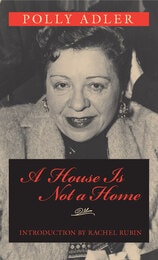
A House Is Not a Home
Polly Adler
University of Massachusetts Press, 2006
Polly Adler's “house”—the brothel that gave this best-selling 1953 autobiography its title—was a major site of New York City underworld activity from the 1920s through the 1940s. Adler's notorious Lexington Avenue house of prostitution functioned as a sort of social club for New York's gangsters and a variety of other celebrities, including Robert Benchley and his friend Dorothy Parker. According to one New York tabloid, it made Adler's name “synonymous with sin.”
This new edition of Adler's autobiography brings back into print a book that was a mass phenomenon, in both hardback and paperback, when it was first published. A self-consciously literary work, A House Is Not a Home provides an informal social history of immigrant mobility, prostitution, Jewish life in New York, police dishonesty, the “white slavery” scare of the early twentieth century, and political corruption.
Adler's story fills an important gap in the history of immigrant life, urban experience, and organized crime in New York City. While most other accounts of the New York underworld focus on the lives of men, from Herbert Asbury's Gangs of New York through more recent works on Jewish and Italian gangsters, this book brings women's lives and problems to the forefront.
A House Is Not a Home is compellingly readable and was popular enough to draw Hollywood's attention in the early 1960s—leading to a film starring Shelley Winters as Adler. The book has been largely forgotten in the ensuing decades, lost both to its initial audience of general readers and to scholars in women's studies, immigration history, and autobiography who are likely to find it a treasure trove. Now, with a new introduction by Rachel Rubin that contextualizes Adler's life and literary achievement, A House Is Not a Home is again available to the many readers who have come to understand such “marginal” life stories as a special refraction of the more typical American success narrative.

A House Is Not a Home
Polly Adler, with an Introduction by Rachel Rubin
University of Massachusetts Press, 2006
Polly Adler's “house”—the brothel that gave this best-selling 1953 autobiography its title—was a major site of New York City underworld activity from the 1920s through the 1940s. Adler's notorious Lexington Avenue house of prostitution functioned as a sort of social club for New York's gangsters and a variety of other celebrities, including Robert Benchley and his friend Dorothy Parker. According to one New York tabloid, it made Adler's name “synonymous with sin.”
This new edition of Adler's autobiography brings back into print a book that was a mass phenomenon, in both hardback and paperback, when it was first published. A self-consciously literary work, A House Is Not a Home provides an informal social history of immigrant mobility, prostitution, Jewish life in New York, police dishonesty, the “white slavery” scare of the early twentieth century, and political corruption.
Adler's story fills an important gap in the history of immigrant life, urban experience, and organized crime in New York City. While most other accounts of the New York underworld focus on the lives of men, from Herbert Asbury's Gangs of New York through more recent works on Jewish and Italian gangsters, this book brings women's lives and problems to the forefront.
A House Is Not a Home is compellingly readable and was popular enough to draw Hollywood's attention in the early 1960s—leading to a film starring Shelley Winters as Adler. The book has been largely forgotten in the ensuing decades, lost both to its initial audience of general readers and to scholars in women's studies, immigration history, and autobiography who are likely to find it a treasure trove. Now, with a new introduction by Rachel Rubin that contextualizes Adler's life and literary achievement, A House Is Not a Home is again available to the many readers who have come to understand such “marginal” life stories as a special refraction of the more typical American success narrative.
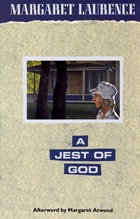
A Jest of God
Margaret Laurence
University of Chicago Press, 1993
Winner of the Governor General's Literary Award, A Jest of God was also the basis of the movie Rachel, Rachel.
"Mrs. Laurence tells [her story] unsparingly, with absolute authority, using her thorough understanding of Rachel to draw us into her anguish. We know Rachel, sympathize with her, and in a sense, become Rachel, so authentic is her voice. . . . A Jest of God has extraordinary clarity, beautiful detail, as well as the emotional impact of honest confession."—Joan J. Hall, Saturday Review
"Laurence's rendition is close to faultless . . . reaffirming her ability to draw, without pathos, life-sized women. . . . Skillfully wrought and eloquently told."—Marilyn Gardner, Christian Science Monitor
One of Canada's most accomplished writers, Margaret Laurence(1926-1987) was the recipient of many awards, including the prestigious Governer General's Litarary Award for The Diviners and A Jest of God.
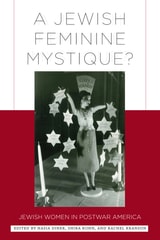
A Jewish Feminine Mystique?
Jewish Women in Postwar AmericaEdited by Hasia R. Diner, Shira Kohn, and Rachel Kranson
Rutgers University Press, 2010
As workers with or without pay, social justice activists, community builders, entertainers, and businesswomen, most Jewish women championed responsibilities outside their homes. Jewishness played a role in shaping their choices, shattering Friedan's assumptions about how middle-class women lived in the postwar years. Focusing on ordinary Jewish women as well as prominent figures such as Judy Holliday, Jennie Grossinger, and Herman Wouk's fictional Marjorie Morningstar, leading scholars explore the wide canvas upon which American Jewish women made their mark after the Second World War.
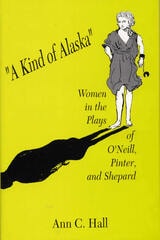
A Kind of Alaska
Women in the Plays of O'Neill, Pinter, and ShepardAnn C. Hall
Southern Illinois University Press, 1993
In an effort to define what constitutes a feminist reading of literary works, Ann C. Hall offers an analytic technique that is both a feminist and a psychoanalytic approach, applying this technique to her study of women characters in the modern dramatic texts of Eugene O’Neill, Harold Pinter, and Sam Shepard.
This is the first study to treat these three writers in tandem, and while Hall uses the work of Jacques Lacan, Luce Irigaray, and other psychoanalytic feminist critics in her close readings of specific dramatic texts, she also brings in commentaries by critics, directors, performers, and historians. Her technique thereby provides us with a new and significant method for addressing female characters as written by male playwrights, a task that she argues is not only a valid and necessary part of feminist dramatic criticism but a part of theatrical production as well.
From Pinter’s play A Kind of Alaska, Hall extracts a metaphor for the patriarchal oppression of women, contextualizing such oppression through an examination of O’Neill’s madonnas, Pinter’s whores, and Shepard’s female saviors as they are represented in O’Neill’s Iceman Cometh, Long Day’s Journey into Night, and A Moon for theMisbegotten; Pinter’s Homecoming, No Man’s Land, Betrayal, and A Kind of Alaska; and Shepard’s Buried Child, True West, and A LieoftheMind.
Since the works of O’Neill, Pinter, and Shepard continue to be performed to popular acclaim, Hall hopes that a better understanding of the female characters in these plays will influence the performances themselves.

A Laboratory of Her Own
Women and Science in Spanish CultureVictoria L. Ketz
Vanderbilt University Press, 2021
While women's historic exclusion from STEM fields has been receiving increased scrutiny worldwide, women within the Spanish context have been perhaps even more peripheral given the complex sociocultural structures emanating from gender norms and political ideologies dominant in nineteenth- and twentieth-century Spain. Nonetheless, Spanish female cultural producers have long been engaged with science and technology, as expressed in literature, art, film, and other genres. Spanish arts and letters offer diverse representations of the relationships between women, gender, sexuality, race, and STEM fields.
A Laboratory of Her Own studies representations of a diverse range of Spanish women and scientific cultural products from the late nineteenth through the twenty-first centuries. STEM topics include the environment, biodiversity, temporal and spatial theories, medicine and reproductive rights, neuroscience, robotics, artificial intelligence, and quantum physics. These scientific themes and other issues are analyzed in narratives, paintings, poetry, photographs, science fiction, medical literature, translation, newswriting, film, and other forms.

A Love Letter to Texas Women
By Sarah Bird
University of Texas Press, 2016
"Sarah Bird is a true eccentric, but one with a straightforward gift for explaining the human heart. . . . A Lone Star girl-legend." —Boston Globe
What is it that distinguishes Texas women—the famous Yellow Rose and her descendants? Is it that combination of graciousness and grit that we revere in First Ladies Laura Bush and Lady Bird Johnson? The rapier-sharp wit that Ann Richards and Molly Ivins used to skewer the good ole boy establishment? The moral righteousness with which Barbara Jordan defended the US constitution? An unnatural fondness for Dr Pepper and queso?
In her inimitable style, Sarah Bird pays tribute to the Texas Woman in all her glory and all her contradictions. She humorously recalls her own early bewildered attempts to understand Lone Star gals, from the big-haired, perfectly made-up ladies at the Hyde Park Beauty Salon to her intellectual, quinoa-eating roommates at Seneca House Co-op for Graduate Women. After decades of observing Texas women, Bird knows the species as few others do. A Love Letter to Texas Women is a must-have guide for newcomers to the state and the ideal gift to tell any Yellow Rose how special she is.
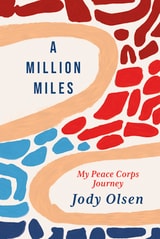
A Million Miles
My Peace Corps JourneyJody Olsen
University of Utah Press, 2024
Olsen’s captivating memoir, A Million Miles, reveals the personal and professional challenges she faced throughout her career, which spanned the Reagan era, 9/11, and the Trump administration. She writes candidly about her struggles as a woman in leadership, as well as personal hardships such as the
sudden death of her brother and her emotionally difficult divorce after her husband’s coming out. This memoir is a sharp, vulnerable portrait, a testament to the transformative power of leadership and self-discovery.
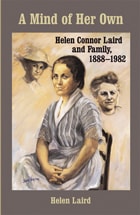
A Mind of Her Own
Helen Connor Laird and Family, 1888–1982Helen L. Laird
University of Wisconsin Press, 2006
A Mind of Her Own: Helen Connor Laird and Family 1888–1982 captures the public achievement and private pain of a remarkable Wisconsin woman and her family, whose interests and influence extended well beyond the borders of the state. Spanning almost a century, the history speaks to the way we were and are: a stridently materialistic nation with a deep and persistent spiritual component.
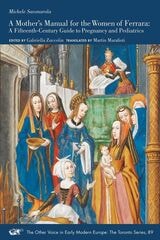
A Mother’s Manual for the Women of Ferrara
A Fifteenth-Century Guide to Pregnancy and PediatricsMichele Savonarola
Iter Press, 2022
Around 1460, Michele Savonarola produced the extraordinary Mother’s Manual for the Women of Ferrara, a gynecological, obstetrical, and pediatric treatise composed in the vernacular so that it could be read not only by the learned but also by pregnant and nursing mothers and the midwives and wet nurses who presided over childbirth. Savonarola’s work is not merely a trivial set of instructions, but the work of a learned scholar who drew on, among others, the ancient Greek physicians Hippocrates and Galen, and Avicenna’s Canon of Medicine. The first of its kind, Savonarola’s Mother’s Manual helps readers understand both the development of late-medieval and early-modern obstetrics and gynecology, as well as the experiences of women who turn to advice books for help with reproductive issues. This book also provides a key to understanding why and how a new genre of book—the midwifery manual or advice book for pregnant women—arose in sixteenth-century Italy and eventually became a popular genre all over Europe from the early modern period to the present day.
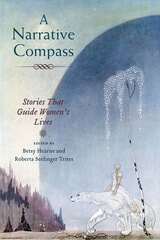
A Narrative Compass
Stories that Guide Women's LivesEdited by Betsy Hearne and Roberta Seelinger Trites
University of Illinois Press, 2008
Each of us has a narrative compass, a story that has guided our lifework. In this extraordinary collection, women scholars from a variety of disciplines identify and examine the stories that have inspired them, haunted them, and shaped their research, from Little House on the Prairie to Little Women, from the fairy tales of Hans Christian Andersen and Alice's Adventures in Wonderland to Nancy Drew, Mary Jane, and even the Chinese memoir Jottings from the Transcendant's Abode at Mt. Youtai. Telling the "story of her story" leads each of the essayists to insights about her own approach to studying narratives and to a deeper, often surprising, understanding of the power of imagination.
Contributors are Deyonne Bryant, Minjie Chen, Cindy L. Christiansen, Beverly Lyon Clark, Karen Coats, Wendy Doniger, Bonnie Glass-Coffin, Betsy Hearne, Joanna Hearne, Ann Hendricks, Rania Huntington, Christine Jenkins, Kimberly Lau, Pamela Riney-Kehrberg, Maria Tatar, Ebony Elizabeth Thomas, Roberta Seelinger Trites, Claudia Quintero Ulloa, and Ofelia Zepeda.
A Nation of Family and Friends?
Sport and the Leisure Cultures of British Asian Girls and WomenAarti Ratna
Rutgers University Press, 2024
Ratna also examines two key cultural objects - the popular films "Bend it Like Beckham" and “Dhan Dhana Dhan Goal” - to examine in detail the gendered representation of South Asian soccer players’ engagement in amateur and elite levels of the sport. She critiques studies of women’s football fandom and sport that fail to acknowledge social differences relating to race, class, age, disability, and sexuality. By linking the social forces (across time and space) that differentially affect their sporting choices and leisure lifestyles, Ratna portrays the women of the South Asian diaspora as active agents in the shaping of their life courses and as skilled navigators of the complexities affecting their own identities. Ultimately Ratna examines the intersections of class, caste, age, generation, gender, and sexuality, to provide a rich and critical exploration of British Asian women's sport and leisure choices, pleasures, and lived realities.
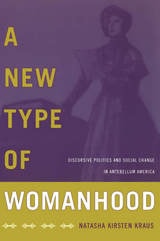
A New Type of Womanhood
Discursive Politics and Social Change in Antebellum AmericaNatasha Kirsten Kraus
Duke University Press, 2008
Enabling Kraus’s retelling of the 1850s woman’s rights movement is her theory of “structural aporias,” which takes the institutional structures of any particular society as fully imbricated with the force of language. Kraus reads the antebellum relations of womanhood, contract, property, the economy, and the nation as a fruitful site for analysis of the interconnected power of language, culture, and the law. She combines poststructural theory, particularly deconstructive approaches to discourse analysis; the political economic history of the antebellum era; and the interpretation of archival documents, including woman’s rights speeches, petitions, pamphlets, and convention proceedings, as well as state legislative debates, reports, and constitutional convention proceedings. Arguing that her method provides critical insight not only into social movements and cultural changes of the past but also of the present and future, Kraus concludes A New Type of Womanhood by considering the implications of her theory for contemporary feminist and queer politics.
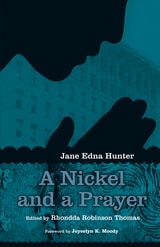
A Nickel and a Prayer
Rhondda Robinson Thomas
University of Delaware Press, 0
Virtually unknown outside of her adopted hometown of Cleveland, Ohio, Jane Edna Hunter was one of the most influential African American social workers and progressive activists of the early to mid-twentieth century.
In her autobiography A Nickel and a Prayer, Hunter presents an enlightening two-part narrative that recollects her formative years in the post–Civil War South and her activist years in Cleveland. Published in 1940, Hunter’s autobiography recalls a childhood filled with the pleasures and pains of family life on the former plantation where her ancestors had toiled, adventures and achievements in schools for African American children, tests and trials during her brief marriage, and recognition and respect while completing nursing training and law school. When sharing the story of her life as an activist, Hunter describes the immense obstacles she overcame while developing an interracial coalition to support the establishment of the Working Girls Home Association (later, the Phillis Wheatley Association), a progressive institution intended to house and help unmarried African American women and girls, and nurture its growth from a rented home that provided accommodations for twenty-two women to a nine-story building that featured 135 rooms.
This new and annotated edition of A Nickel and a Prayer includes the final chapter, “Fireside Musings,” that Hunter added to the second, limited printing of her autobiography and an introduction that lauds her as a multifaceted social activist who not only engaged in racial uplift work, but impacted African American cultural production, increased higher education opportunities for women, and invigorated African American philanthropy. This important text restores Jane Edna Hunter to her rightful place among prominent African American leaders of the twentieth century.
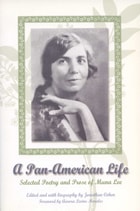
A Pan-American Life
Selected Poetry and Prose of Muna LeeMuna Lee; Edited and with biography by Jonathan M. Cohen
University of Wisconsin Press, 2004
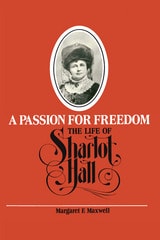
A Passion for Freedom
The Life of Sharlot HallMargaret F. Maxwell
University of Arizona Press, 1982
A Preponderance of Starry Beings
StoriesSamantha Edmonds
Northwestern University Press, 2025
Genre-bending stories of the cosmos and the worlds within our own skin
Blending fairy tale and science fiction with the otherworldliness of adolescence, A Preponderance of Starry Beings is a collection for anyone preoccupied with looking skyward. These stories probe the experience of coming of age on the outskirts of the universe, whether that be a small Midwestern town or a distant galaxy, and of weighing earthly obligations against the vast promises of space.
In a sleepy Ohio neighborhood, two girls seek refuge from their homophobic schoolmates in an antiques shop filled with Star Trek memorabilia. On a generation spaceship, children revolt against their parents’ plans to colonize a distant world. Deep in the Florida Everglades, seven sisters must protect their otherworldly mythology when two men arrive to fix the family automobile.
A Preponderance of Starry Beings invites us into a mundane and whimsical world of night islands, small towns, and faith lost and found, where a safe landing matters less than taking the leap.
A Primer for Teaching World History
Ten Design PrinciplesAntoinette Burton
Duke University Press, 2012
A Private State
StoriesCharlotte Bacon
University of Massachusetts Press, 1998
Here is a finely crafted collection of stories about women who have arrived at awkward edges in their lives. Some are adolescents, some at the brink of old age, and some find themselves suddenly ill or pregnant. Others come to the abrupt discovery that their marriages are not as whole as they had believed, while a few tumble onto startling secrets. But despite their range in age and situation, they all try to use their new knowledge to stitch together a fresh pattern by which to live.
While most of the action unfolds along the East Coast—in Maryland, Maine, Boston, Philadelphia, New York—several of the women travel to Arizona, California, and Jamaica. Often the light is too bright in these glittery places and they wonder why they have come. Many seem to be searching for a sense of home, which one girl describes as a place that is “complete and full of longing all at once.”
Yet this desire for a personal territory, a point of constancy, is not necessarily rewarded: in this book, separations lead to divorce, sisters continue to misread each other, cancers kill. Still, the women refuse to turn their gaze away from what the world has thrown in their path. Often as not, they pick it up, wonder at it, test its relevance, and continue on, not happier perhaps, but certainly more knowing.
With humor and insight, Charlotte Bacon illuminates the unexpected ambiguities of women's lives. A Private State marks the arrival of an extremely talented writer.

A Question of Identity
Women, Science, and LiteratureEdited by Marina Benjamin
Rutgers University Press, 1993
A Salem Witch
The Trial, Execution, and Exoneration of Rebecca NurseDaniel A. Gagnon
Westholme Publishing, 2023
The accusations against Nurse, a well-respected member in the community, seemed unbelievable. Unflinchingly, this ailing elderly woman insisted on her innocence and refused to falsely confess. Supported by many in Salem, Nurse’s family and neighbors challenged her accusers in court and prepared a thorough defense for her, yet nothing could surmount the fear of witchcraft, and she was sentenced to death. Nurse, seen as a martyr for the truth, later became the first person accused of witchcraft to be memorialized in North America.
In A Salem Witch: The Trial, Execution, and Exoneration of Rebecca Nurse, the first full account of Nurse’s life, Daniel A. Gagnon vividly recreates seventeenth-century Salem, and in the process challenges previous interpretations of Nurse’s life and the 1692 witch hunt in general. Through primary source research, he reveals how the Nurse family’s role in several disputes prior to the witch hunt was different than previously thought, as well as how Nurse’s case helps answer the important question of whether the accusations of witchcraft were caused by mental illness or malicious intent. A Salem Witch reveals a remarkable woman whose legacy has transformed how the witch hunt has been remembered and memorialized.
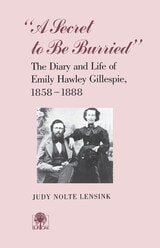
A Secret To Be Burried
Diary Emily Hawley GillespieJudy Nolte Lensink
University of Iowa Press, 1989
The sound of nineteenth-century women, once thought lost to us, is alive because ordinary women like Emily Hawley Gillespie gave voice to their thoughts in diaries. This condensed version of the 2,500-page journals of Emily Gillespie, faithfully written from 1858 to 1888, is a detailed account of rural Iowa life. More than this, it contains the reflections of a woman who dreamed of being a painter and writer and instead became a wife and a mother, a woman whose radical convictions were recorded in her diary, while publicly she conformed to the prescribed life of a Victorian pioneer woman. Through Emily's journals, readers are offered immediate and unmodified contact with settlers in Iowa one hundred years ago. A wealth of facts are included—what produce she harvested and preserved from her garden, how her husband tended his fields and what he raised, the challenges and rewards of family life.
Judy Lensink's skillful analysis shows the larger patterns in Emily Gillespie's life and provides keys that unlock the diary's secrets. Emily's life is revealed as a youth full of promise fading into middle and declining years of lost dreams and eventual tragedy, which caused her to write, "I have written many things in my journal, but the worst is a secret to be burried when I shall cease to be."

A Single Star and Bloody Knuckles
A History of Politics and Race in TexasBy Bill Minutaglio
University of Texas Press, 2021
For John Nance “Cactus Jack” Garner, there was one simple rule in politics: “You’ve got to bloody your knuckles.” It’s a maxim that applies in so many ways to the state of Texas, where the struggle for power has often unfolded through underhanded politicking, backroom dealings, and, quite literally, bloodshed. The contentious history of Texas politics has been shaped by dangerous and often violent events, and been formed not just in the halls of power but by marginalized voices omitted from the official narratives.
A Single Star and Bloody Knuckles traces the state’s conflicted and dramatic evolution over the past 150 years through its pivotal political players, including oft-neglected women and people of color. Beginning in 1870 with the birth of Texas’s modern political framework, Bill Minutaglio chronicles Texas political life against the backdrop of industry, the economy, and race relations, recasting the narrative of influential Texans. With journalistic verve and candor, Minutaglio delivers a contemporary history of the determined men and women who fought for their particular visions of Texas and helped define the state as a potent force in national affairs.
A Small Apocalypse
StoriesLaura Chow Reeve
Northwestern University Press, 2024
In her debut short-story collection A Small Apocalypse, Laura Chow Reeve examines cultural inheritance, hybridity, queerness, and the stickiness of home with an eye for both the uncanny and the realistic: human bodies become reptilian, queer ghosts haunt their friends, a young woman learns to pickle memories, and a theater floods during an apocalyptic movie marathon. The characters in A Small Apocalypse weave in and out of its fourteen stories, confronting their sense of otherness and struggling to find new ways of being and belonging. Heavily steeped in the swampy, feral heat of Florida, these stories venture beyond the problems of constructing an identity to the frontier of characters living their truth in a world that doesn’t yet have a place for them.
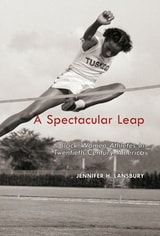
A Spectacular Leap
Black Women Athletes in Twentieth-Century AmericaJennifer H. Lansbury
University of Arkansas Press, 2014