Results by title
22 books match the query 'Workplace Culture'
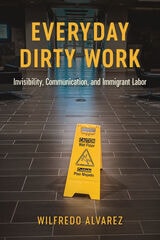
Everyday Dirty Work
Invisibility, Communication, and Immigrant LaborWilfredo Alvarez
The Ohio State University Press, 2022
Winner, 2023 NCA Ethnography Division Best Book Award
Wilfredo Alvarez’s Everyday Dirty Work: Invisibility, Communication, and Immigrant Labor is an exploration into co-cultural communication practices within the workplace. Specifically, Alvarez investigates how Latin American immigrant janitors communicate from their marginalized standpoints in a predominantly White academic organization. He examines how custodial workers perceive, interpret, and thematize routine messages regarding race, ethnicity, social class, immigrant status, and occupation, and how those messages and overall communicative experiences affect both their work and personal lives.
A Latin American immigrant himself, Alvarez relates his own experiences to those of the research participants. His positionality informs and enhances his research as he demonstrates how everyday interpersonal encounters create discursive spaces that welcome or disqualify people based on symbolic and social capital. Alvarez offers valuable insights into the lived experiences of critical––but often undervalued and invisible––organizational members. Through theoretical insights and research data, he provides practical recommendations for organizational leaders to improve how they can relate to and support all stakeholders.

For Love and Money
Portraits of Wisconsin Family BusinessesCarl Corey
Wisconsin Historical Society Press, 2014
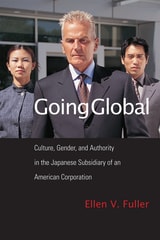
Going Global
Culture, Gender, and Authority in the Japanese Subsidiary of an American CorporationEllen V. Fuller
Temple University Press, 2009
In this intriguing ethnography, Ellen Fuller investigates how issues of gender and identity as they relate to authority are addressed in a globalizing corporate culture. Going Global goes behind the office politics, turf wars and day-to-day workings of a transnational American company in Japan in the late 1990s as employees try to establish a comfortable place within the company.
Fuller looks at how relationships among Asians and between Asians and Americans are tested as individuals are promoted to positions of power and authority. Is there pressure for the Japanese to be more “American” to get ahead in business? Do female employees have to subscribe to certain stereotypes to be promoted or respected? How these American and Japanese workers assess one another raises important questions about international business management and human resources.
Increasing the Odds for High-Performance Teams
Lessons LearnedArlen Leholm
Michigan State University Press, 2006
Have you ever wondered why some work teams greatly out-perform others within the same organizational settings? Have you questioned whether work teams from very different sectors of the economy and society achieved a high performance level by using similar means? Have you considered what you or others might do to help eams increase their chances of becoming truly high performing? Increasing the Odds for High-Performance Teams is written for the business leader who is inquisitive but busy—who seeks new lessons about high team performance but wants them to be succinct and efficient.
The book is intended to assist professionals in private, public, and not-for-profit organizations who want to use teams to enhance job performance. Also, it is intended to be helpful to the team members, team leaders, mentors, coaches, and administrators across these sectors who want to diagnose their team and organizational conditions, in order to make improvements.
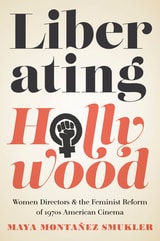
Liberating Hollywood
Women Directors and the Feminist Reform of 1970s American CinemaSmukler, Maya M
Rutgers University Press, 2019
Liberating Hollywood examines the professional experiences and creative output of women filmmakers during a unique moment in history when the social justice movements that defined the 1960s and 1970s challenged the enduring culture of sexism and racism in the U.S. film industry. Throughout the 1970s feminist reform efforts resulted in a noticeable rise in the number of women directors, yet at the same time the institutionalized sexism of Hollywood continued to create obstacles to closing the gender gap. Maya Montañez Smukler reveals that during this era there were an estimated sixteen women making independent and studio films: Penny Allen, Karen Arthur, Anne Bancroft, Joan Darling, Lee Grant, Barbara Loden, Elaine May, Barbara Peeters, Joan Rivers, Stephanie Rothman, Beverly Sebastian, Joan Micklin Silver, Joan Tewkesbury, Jane Wagner, Nancy Walker, and Claudia Weill. Drawing on interviews conducted by the author, Liberating Hollywood is the first study of women directors within the intersection of second wave feminism, civil rights legislation, and Hollywood to investigate the remarkable careers of these filmmakers during one of the most mythologized periods in American film history.
Listen to Your Work
Job-Active Advice from a Battle-Scarred MentorCollins Andrews
Parkhurst Brothers, Inc., 2009
Marx and Digital Machines
Alienation, Technology, CapitalismMike Healy
University of Westminster Press, 2020
“Healy closes his marvellous book by saying that ‘alienation is a constant feature and is experienced as a norm rather than as an aberration’.” - https://marxandphilosophy.org.uk/reviews/19718_marx-and-digital-machines-alienation-technology-capitalism-by-mike-healy-reviewed-by-thomas-klikauer/
This book explores the fundamental contradiction at the heart of the digital environment: technology offers all manner of promises, yet habitually fails to deliver. This failure often arises from numerous problems: the proficiency of the technology or end-user, policy failure at various levels, or a combination of these. Solutions such as better technology and more effective end-user education are often put into place to solve these failures.
Mike Healy argues that such approaches are inherently faulty drawing upon qualitative research informed by Marx’s theory of alienation. Using Marx’s theory, he considers participants in three distinct settings: the workplace of information and communications technology (ICT) professionals; university scholars researching the ethical and societal implications of our digital environment; and a group of pensioners living in South London, UK, undertaking ICT training. By delving beneath the surface of how digital technologies are created, researched and experienced, this study illustrates the contradictory nature of our digital lives, as they directly arise from the needs of capitalism.
The book also places Marx’s theory in contrast to the mainstream approaches derived from Seaman and Blauner. In researching and comprehending ICT, this book reaffirms the superior explanatory power of Marx’s theory of alienation.
On the Line
Harvey Swados
University of Illinois Press, 1957

The Burnout-Belonging Connection
Why Burnout is Not Our Fault and How Community Can Fortify Us Against ItLisa M. Nunn
Rutgers University Press, 2027
For over a decade now, we’ve been hearing the wrong messages about burnout: we are told that we have to fix ourselves in order to fix burnout. This misguided wisdom says that better time management, stronger boundaries, and more yoga-mindfulness-gratitude-exercise-vacation are the solution. Nope. Stronger, healthier communities are the solution. Lisa M. Nunn shows us that the same dynamics that create the social bonds of belonging, when absent, become the drivers of burnout. Greedy communities drive burnout; respectful communities foster belonging. Unfair communities drive burnout; trustworthy communities foster belonging. Negligent communities drive burnout; attentive communities foster belonging. The book offers 35 strategies to cultivate strong belonging—and in doing so minimize burnout—in our workplaces, families, friendship circles, volunteer organizations, athletic clubs, and every other community in our lives.
The Company We Keep
Occupational Community in the High-Tech Network SocietyDaniel Marschall
Temple University Press, 2014
At the birth of the Internet Age, computer technologists in small, aggressive software development companies became part of a unique networked occupational community. They were creative, team-oriented, and enthusiastic workers who built "boundaryless careers," hopping from one employer to another.
In his absorbing ethnography The Company We Keep, sociologist Daniel Marschall immerses himself in IntenSivity, one such technological workplace. Chronicling the employees' experiences, Marschall examines how these workers characterize their occupational culture, share values and work practices, and help one another within their community. He sheds light on the nature of this industry marked by highly skilled jobs and rapid technological change.
The experiences at IntenSivity are now mirrored by employees at Facebook and thousands of other cutting-edge, high-tech start-up firms. The Company We Keep helps us understand the emergence of virtual work communities and the character of the contemporary labor market at the level of a small enterprise.
The Digital Factory
The Human Labor of AutomationMoritz Altenried
University of Chicago Press, 2022
The workers of today’s digital factory include those in Amazon warehouses, delivery drivers, Chinese gaming workers, Filipino content moderators, and rural American search engine optimizers. Repetitive yet stressful, boring yet often emotionally demanding, these jobs require little formal qualification, but can demand a large degree of skills and knowledge. This work is often hidden behind the supposed magic of algorithms and thought to be automated, but it is in fact highly dependent on human labor.
The workers of today’s digital factory are not as far removed from a typical auto assembly line as we might think. Moritz Altenried takes us inside today’s digital factories, showing that they take very different forms, including gig economy platforms, video games, and Amazon warehouses. As Altenried shows, these digital factories often share surprising similarities with factories from the industrial age. As globalized capitalism and digital technology continue to transform labor around the world, Altenried offers a timely and poignant exploration of how these changes are restructuring the social division of labor and its geographies as well as the stratifications and lines of struggle.
The Digital Factory
The Human Labor of AutomationMoritz Altenried
University of Chicago Press, 2022
This is an auto-narrated audiobook edition of this book.
The Digital Factory reveals the hidden human labor that supports today’s digital capitalism.
The workers of today’s digital factory include those in Amazon warehouses, delivery drivers, Chinese gaming workers, Filipino content moderators, and rural American search engine optimizers. Repetitive yet stressful, boring yet often emotionally demanding, these jobs require little formal qualification, but can demand a large degree of skills and knowledge. This work is often hidden behind the supposed magic of algorithms and thought to be automated, but it is in fact highly dependent on human labor.
The workers of today’s digital factory are not as far removed from a typical auto assembly line as we might think. Moritz Altenried takes us inside today’s digital factories, showing that they take very different forms, including gig economy platforms, video games, and Amazon warehouses. As Altenried shows, these digital factories often share surprising similarities with factories from the industrial age. As globalized capitalism and digital technology continue to transform labor around the world, Altenried offers a timely and poignant exploration of how these changes are restructuring the social division of labor and its geographies as well as the stratifications and lines of struggle.
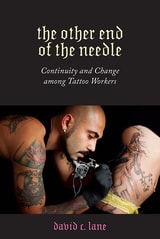
The Other End of the Needle
Continuity and Change among Tattoo WorkersDavid C. Lane
Rutgers University Press, 2021
Yet, Lane notes, prior research has focused almost exclusively on the tattoos—the outcome of an intricate social process—and have ignored the significance of tattoo workers themselves. "Tattooists," as Lane dubs them, make decisions, but they work within a social world that constrains and shapes the outcome of their labor—the tattoo. The goal of this book is to help readers understand the world of tattoo work as an intricate and nuanced form of work. Lane ultimately asks new questions about the social processes occurring prior to the tattoo’s existence.
The Professions
Roles and RulesWilbert Ellis Moore
Russell Sage Foundation, 1970
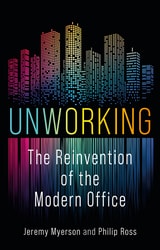
Unworking
The Reinvention of the Modern OfficeJeremy Myserson and Phillip Ross
Reaktion Books, 2022
Over the past one hundred years, the office has been integral to the development of modern society. It has shaped the architecture of our cities, the behavior of our organizations, and the everyday movements of millions of people. In 2020, however, the global pandemic brought our attendance in the office to an abrupt halt and triggered a complete reevaluation of the purpose of the workplace. This book offers a panoramic view of the office and explores what happens next. The authors advance a manifesto for “unworking”—unlearning old habits and rituals established for an outdated office and crafting and creating new ones fit for an age of digital technology, design innovation, and diverse workforces.

Virtue Hoarders
The Case against the Professional Managerial ClassCatherine Liu
University of Minnesota Press, 2021
A denunciation of the credentialed elite class that serves capitalism while insisting on its own progressive heroism
Professional Managerial Class (PMC) elite workers labor in a world of performative identity and virtue signaling, publicizing an ability to do ordinary things in fundamentally superior ways. Author Catherine Liu shows how the PMC stands in the way of social justice and economic redistribution by promoting meritocracy, philanthropy, and other self-serving operations to abet an individualist path to a better world. Virtue Hoarders is an unapologetically polemical call to reject making a virtue out of taste and consumption habits.
Forerunners: Ideas First is a thought-in-process series of breakthrough digital publications. Written between fresh ideas and finished books, Forerunners draws on scholarly work initiated in notable blogs, social media, conference plenaries, journal articles, and the synergy of academic exchange. This is gray literature publishing: where intense thinking, change, and speculation take place in scholarship.

Wall Street Women
Melissa S. Fisher
Duke University Press, 2012
Fisher charts the evolution of the women's careers, the growth of their political and economic clout, changes in their perspectives and the cultural climate on Wall Street, and their experiences of the 2008 financial collapse. While most of the pioneering subjects of Wall Street Women did not participate in the women's movement as it was happening in the 1960s and 1970s, Fisher argues that they did produce a "market feminism" which aligned liberal feminist ideals about meritocracy and gender equity with the logic of the market.
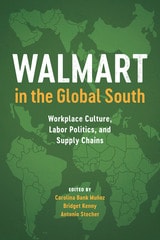
Walmart in the Global South
Workplace Culture, Labor Politics, and Supply ChainsEdited by Carolina Bank Muñoz, Bridget Kenny,and Antonio Stecher
University of Texas Press, 2018
As the largest private employer in the world, Walmart dominates media and academic debate about the global expansion of transnational retail corporations and the working conditions in retail operations and across the supply chain. Yet far from being a monolithic force conquering the world, Walmart must confront and adapt to diverse policies and practices pertaining to regulation, economy, history, union organization, preexisting labor cultures, and civil society in every country into which it enters. This transnational aspect of the Walmart story, including the diversity and flexibility of its strategies and practices outside the United States, is mostly unreported.
Walmart in the Global South presents empirical case studies of Walmart’s labor practices and supply chain operations in a number of countries, including Chile, Brazil, Argentina, Nicaragua, Mexico, South Africa, and Thailand. It assesses the similarities and differences in Walmart’s acceptance into varying national contexts, which reveals when and how state regulation and politics have served to redirect company practice and to what effect. Regulatory context, state politics, trade unions, local cultures, and global labor solidarity emerge as vectors with very different force around the world. The volume’s contributors show how and why foreign workers have successfully, though not uniformly, driven changes in Walmart’s corporate culture. This makes Walmart in the Global South a practical guide for organizations that promote social justice and engage in worker struggles, including unions, worker centers, and other nonprofit entities.

Well-Being and Creative Careers
What Makes You Happy Can Also Make You SickMark Deuze
Intellect Books, 2025
The media and creative industries thrive on passion, but that passion often comes at a cost. Behind the glamour of journalism, filmmaking, games, music, advertising, and online content creation lies a growing crisis—one of burnout, anxiety, substance abuse, and exhaustion. Why do so many creative professionals report feeling both deeply fulfilled and profoundly unwell?
Mark Deuze investigates the systemic issues that make creative work both exhilarating and unsustainable. Drawing on extensive research and in-depth interviews with media professionals, he notes the hidden downsides of doing what you love and offers a candid analysis of how workplace structures, high workloads, and perceived injustices contribute to mental and physical distress.
But this book is not just about what’s broken; it’s about what can be done. Deuze provides a roadmap for rethinking the culture of creative industries and offers strategies for balancing passion with sustainability. A practical resource for media scholars and those navigating the highs and lows of a creative career, this work challenges us to imagine a healthier future for our labor of love.
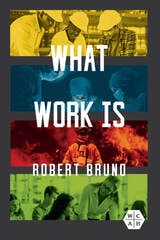
What Work Is
Robert Bruno
University of Illinois Press, 2024
For more than twenty years, Robert Bruno has taught labor history and labor studies to union members from a wide range of occupations and demographic groups. In the class, he asked his students to finish the question “Work is—?” in six words or less. The thousands of responses he collected provide some of the rich source material behind What Work Is. Bruno draws on the thoughts and feelings experienced by workers in the present day to analyze how we might design a future of work. He breaks down perceptions of work into five categories: work and time; the space workers occupy; the impact of work on our lives; the sense of purpose that motivates workers; and the people we work for, in all senses of the term.
Far-seeing and sympathetic, What Work Is merges personal experiences with research, poetry, and other diverse sources to illuminate workers’ lives in the present and envision what work could be in the future.

Women in a Man's World, Crying
EssaysVicki Covington
University of Alabama Press, 2002
This thoughtful, engaging collection examines resilience, identity, and inequality in the modern workplace produced by one of the nation's most observant and incisive writers.
This collection of warm, heartfelt essays from award-winning novelist Vicki Covington chronicles the multitude of "in between" moments in the writer's life. These are her stolen moments in between the writing of four novels-Gathering Home, Bird of Paradise, Night Ride Home, and The Last Hotel for Women; in between coauthoring the edgy memoir Cleaving: The Story of a Marriage with her husband Dennis Covington; in between raising two daughters; in between her husband's struggle with cancer and the author's own heart attack; in between a life full of trials and triumphs, disappointments and celebrations - moments that, as Covington demonstrates here, are always rich and revealing.
In the title essay, the author questions why all seven middle-class women who live on her street confess at a neighborhood cookout that in the past 48 hours each of them has cried. In "A Southern Thanksgiving," Covington reflects on the "family dance" that is Thanksgiving in the South: "In the North they put their crazy family members in institutions, but in the South we put them in the living room for everyone to enjoy." In "My Mother's Brain," the author recounts the onset of Alzheimer's in her mother and how, with the spread of the disease, an untapped vein of love is revealed.
Some of these essays were written as weekly newspaper columns for the Birmingham News. Others were written for specific literary occasions, such as the First Annual Eudora Welty Symposium. They are divided into six thematic sections: "Girls and Women," "Neighborhood," "Death," "The South," "Spiritual Matters," and “Writing.”
Throughout, as Covington casts her candid, attentive eye on a situation, confusion yields to comprehension, fear flourishes into faith, and anger flows into understanding. In memorializing the small moments of her life, she finds that they are far from peripheral; indeed, they are central to a life full of value and meaning.
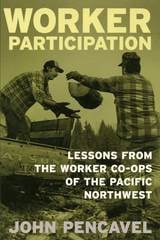
Worker Participation
Lessons from Worker Co-ops of the Pacific NorthwestJohn Pencavel
Russell Sage Foundation, 2001