Results by title

22 books match the query 'World history'
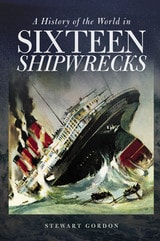
cover of A History of the World in Sixteen Shipwrecks

A History of the World in Sixteen Shipwrecks

Stewart Gordon

University Press of New England, 2017

Stories of disasters at sea, whether about Roman triremes, the treasure fleet of the Spanish Main, or great transatlantic ocean liners, fire the imagination as little else can. From the historical sinkings of the Titanic and the Lusitania to the recent capsizing of a Mediterranean cruise ship, the study of shipwrecks also makes for a new and very different understanding of world history. A History of the World in Sixteen Shipwrecks explores the age-old, immensely hazardous, persistently romantic, and ongoing process of moving people and goods across the seven seas. In recounting the stories of ships and the people who made and sailed them, from the earliest craft plying the ancient Nile to the Exxon Valdez, Stewart Gordon argues that the gradual integration of mainly local and separate maritime domains into fewer, larger, and more interdependent regions offers a unique perspective on world history. Gordon draws a number of provocative conclusions from his study, among them that the European “Age of Exploration” as a singular event is simply a myth: over the millennia, many cultures, east and west, have explored far-flung maritime worlds, and technologies of shipbuilding and navigation have been among the main drivers of science and exploration throughout history. In a series of compelling narratives, A History of the World in Sixteen Shipwrecks shows that the development of institutions and technologies that made the terrifying oceans familiar and turned unknown seas into well-traveled sea-lanes matters profoundly in our modern world.
[more]
cover of A Marxist History of the World: From Neanderthals to Neoliberals

A Marxist History of the World

From Neanderthals to Neoliberals

Neil Faulkner

Pluto Press, 2013

This magisterial analysis of human history - from 'Lucy', the first hominid, to the current Great Recession - combines the insights of earlier generations of Marxist historians with radical new ideas about the historical process.

Reading history against the grain, Neil Faulkner reveals that what happened in the past was not predetermined. Choices were frequent and numerous. Different outcomes - liberation or barbarism - were often possible. Rejecting the top-down approach of conventional history, Faulkner contends that it is the mass action of ordinary people that drives great events.

At the beginning of the 21st century - with economic disaster, war, climate catastrophe and deep class divisions - humans face perhaps the greatest crisis in the long history of our species. The lesson of A Marxist History of the World is that, if we created our past, we can also create a better future.
[more]
cover of A Primer for Teaching Women, Gender, and Sexuality in World History: Ten Design Principles

A Primer for Teaching Women, Gender, and Sexuality in World History

Ten Design Principles

Merry E. Wiesner-Hanks and Urmi Engineer Willoughby

Duke University Press, 2018
A Primer for Teaching Women, Gender, and Sexuality in World History is a guide for college and high school teachers who are teaching women, gender, and sexuality in history for the first time, for experienced teachers who want to reinvigorate their courses, for those who are training future teachers to prepare their own syllabi, and for teachers who want to incorporate these issues into their world history classes. Merry E. Wiesner-Hanks and Urmi Engineer Willoughby present possible course topics, themes, concepts, and approaches while offering practical advice on materials and strategies helpful for teaching courses from a global perspective in today's teaching environment for today's students. In their discussions of pedagogy, syllabus organization, fostering students' historical empathy, and connecting students with their community, Wiesner-Hanks and Willoughby draw readers into the process of strategically designing courses that will enable students to analyze gender and sexuality in history, whether their students are new to this process or hold powerful and personal commitments to the issues it raises.
[more]
cover of A Primer for Teaching World History: Ten Design Principles

A Primer for Teaching World History

Ten Design Principles

Antoinette Burton

Duke University Press, 2012
A Primer for Teaching World History is a guide for college and high school teachers who are designing an introductory-level world history syllabus for the first time, for those who already teach world history and are seeking new ideas or approaches, and for those who train future teachers to prepare any history course with a global or transnational focus. Drawing on her own classroom practices, as well as her career as a historian, Antoinette Burton offers a set of principles to help instructors think about how to design their courses with specific goals in mind, whatever those may be. She encourages teachers to envision the world history syllabus as having an architecture: a fundamental, underlying structure or interpretive focus that runs throughout the course, shaping students' experiences, offering pathways in and out of "the global," and reflecting the teacher's convictions about the world and the work of history.
[more]
cover of A Radical History of the World

A Radical History of the World

Neil Faulkner

Pluto Press, 2018


“Staggeringly ambitious.”―New Internationalist

“One of the finest historians on the left.”—John Newsinger, author, The Blood Never Dried


Rejecting the top-down approach of conventional history, Neil Faulkner contends that it is the mass action of ordinary people that drives the transformative events of our many histories. This is a history of power, abuse, and greed, but also one of liberation, progress, and solidarity.            
 
From the hunter-gatherers two million years ago to the ancient empires of Persia and China, and from the Russian Revolution to modern imperialism, humans have always struggled to create a better society than what came before. All over the world at numerous points in the past, a different way of life has become an absolute necessity, over and over again. This is a history of the humans in these struggles—the hominid and the hunter, the emperor and the slave, the dictator and the revolutionary.
 
Reading against the grain of mainstream histories, Neil Faulkner reveals that what happened in the past has never been predetermined. From antiquity to feudalism, and from fascism to our precarious political present, choices have always been numerous and complex, and the possible outcomes have ranged broadly between liberation and barbarism. His chapters include:
 
*Hunters and Farmers
*The First Class Societies
*Ancient Empires
*The Medieval World
*European Feudalism
*The First Wave of Bourgeois Revolutions
*Absolutist Europe and Capitalist Globalization
*The Rise of Industrial Capitalism
*The Revolutionary Wave
*The Great Depression and the Rise of Fascism
*World War and Cold War
*The New World Disorder
*Capitalism’s Greatest Crisis? The Early Twenty-First Century
 
In our fraught political present—as we face the loss of civil liberties and environmental protections, the rise of ethnonationalism, and the looming threat of nuclear war—we need the perspective of these histories now more than ever. The lesson of A Radical History of the World is that, if we created our past, we can also create a better future.  
[more]
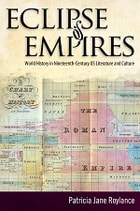
cover of Eclipse of Empires: World History in Nineteenth-Century U.S. Literature and Culture

Eclipse of Empires

World History in Nineteenth-Century U.S. Literature and Culture

Patricia Jane Roylance

University of Alabama Press, 2013

Eclipse of Empires analyzes the nineteenth-century American fascination with what Patricia Jane Roylance calls “narratives of imperial eclipse,” texts that depict the surpassing of one great civilization by another.

Patricia Jane Roylance’s central claim in Eclipse of Empires is that historical episodes of imperial eclipse, for example Incan Peru yielding to Spain or the Ojibway to the French, heightened the concerns of many American writers about specific intranational social problems plaguing the nation at the time—race, class, gender, religion, economics. Given the eventual dissolution of great civilizations previously plagued by these very same problems, many writers, unlike those who confidently emphasized U.S. exceptionalism, exhibited both an anxiety about the stability of American society and a consistent practice of self-scrutiny in identifying the national defects that they felt could precipitate America’s decline.

Roylance studies, among other texts, James Fenimore Cooper’s The Water-Witch (1830) and The Bravo (1831), which address the eclipse of Venice by New York City as a maritime power in the eighteenth century; William Hickling Prescott’s Conquest of Peru (1847), which responds to widespread anxiety about communist and abolitionist threats to the U.S. system of personal property by depicting Incan culture as a protocommunist society doomed to failure; and Henry Wadsworth Longfellow’s The Song of Hiawatha (1855), which resists the total eclipse of Ojibwa culture by incorporating Ojibway terms and stories into his poem and by depicting the land as permanently marked by their occupation.
[more]
cover of Economics and World History: Myths and Paradoxes

Economics and World History

Myths and Paradoxes

Paul Bairoch

University of Chicago Press, 1993

A bracing, no-holds-barred debunking of mistaken views of global economics
 

In Economics and World History, Paul Bairoch clearly and succinctly debunks a number of commonly held beliefs about economic history and the causes and consequences of important events around the world. Taking on twenty commonly held misconceptions, including that free trade and population growth have historically led to periods of economic growth; that a move away from free trade caused the Great Depression; and that colonial powers in the nineteenth and early twentieth centuries became rich through the exploitation of the Third World, Bairoch shows in each case where the mistaken belief originated and why deeper knowledge of economics shows it to b wrong. The resulting book is a treasury for free thinkers, a book that will simultaneously clear up mistakes and help readers avoid making new ones.

 
[more]
cover of Glass: A World History

Glass

A World History

Alan Macfarlane and Gerry Martin

University of Chicago Press, 2002

Picture, if you can, a world without glass. There would be no microscopes or telescopes, no sciences of microbiology or astronomy. People with poor vision would grope in the shadows, and planes, cars, and even electricity probably wouldn't exist. Artists would draw without the benefit of three-dimensional perspective, and ships would still be steered by what stars navigators could see through the naked eye.

In Glass: A World History, Alan Macfarlane and Gerry Martin tell the fascinating story of how glass has revolutionized the way we see ourselves and the world around us. Starting ten thousand years ago with its invention in the Near East, Macfarlane and Martin trace the history of glass and its uses from the ancient civilizations of India, China, and Rome through western Europe during the Renaissance, Enlightenment, and Industrial Revolution, and finally up to the present day. The authors argue that glass played a key role not just in transforming humanity's relationship with the natural world, but also in the divergent courses of Eastern and Western civilizations. While all the societies that used glass first focused on its beauty in jewelry and other ornaments, and some later made it into bottles and other containers, only western Europeans further developed the use of glass for precise optics, mirrors, and windows. These technological innovations in glass, in turn, provided the foundations for European domination of the world in the several centuries following the Scientific Revolution.

Clear, compelling, and quite provocative, Glass is an amazing biography of an equally amazing subject, a subject that has been central to every aspect of human history, from art and science to technology and medicine.
[more]
cover of Growth Recurring: Economic Change in World History

Growth Recurring

Economic Change in World History

E.L. Jones

University of Michigan Press, 2000

This important book compares the growth achieved in Japan and Europe with the frustrated growth in the major societies of mainland Eurasia. More broadly, it is about the conflict in world history between economic growth and political greed. Eric Jones proposes two fundamentally new frameworks. One replaces industrial revolution or great discontinuity as the source of change and challenges the reader to accept early periods and non-western societies as vital to understanding the growth process. The second offers a new explanation in which tendencies for growth were omnipresent but were usually--though not always--suppressed. Finally, the erosion of these negative factors is discussed, explaining the rise of a world economy in which growth has recurred and East Asia takes a prominent place.
Eric Jones has written a substantial new introduction for this edition, which includes discussions of early evidence of growth episodes and the relation of these points to the Industrial Revolution, and the relevance of the East Asian "miracle" to his thesis.
[more]
cover of Islam and World History: The Ventures of Marshall Hodgson

Islam and World History

The Ventures of Marshall Hodgson

Edited by Edmund Burke and Robert J. Mankin

University of Chicago Press, 2018

Published in 1974, Marshall Hodgson’s The Venture of Islam was a watershed moment in the study of Islam. By locating the history of Islamic societies in a global perspective, Hodgson challenged the orientalist paradigms that had stunted the development of Islamic studies and provided an alternative approach to world history. Edited by Edmund Burke III and Robert Mankin, Islam and World History explores the complexity of Hodgson’s thought, the daring of his ideas, and the global context of his world historical insights into, among other themes, Islam and world history, gender in Islam, and the problem of Muslim universality.
 
In our post-9/11 world, Hodgson’s historical vision and moral engagement have never been more relevant. A towering achievement, Islam and World History will prove to be the definitive statement on Hodgson’s relevance in the twenty-first century and will introduce his influential work to a new generation of readers.
 
[more]
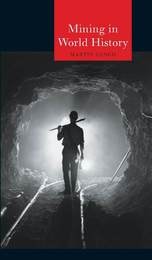
cover of Mining in World History

Mining in World History

Martin Lynch

Reaktion Books, 2004
This book deals with the history of mining and smelting from the Renaissance to the present. Martin Lynch opens with the invention, sometime before 1453, of a revolutionary technique for separating silver from copper. It was this invention which brought back to life the rich copper-silver mines of central Europe, in the process making brass cannon and silver coin available to the ambitious Habsburg emperors, thereby underpinning their quest for European domination. Lynch also discusses the Industrial Revolution and the far-reaching changes to mining and smelting brought about by the steam engine; the era of the gold rushes; the massive mineral developments and technological leaps forward which took place in the USA and South Africa at the end of the 19th century; and, finally, the spread of mass metal-production techniques amid the violent struggles of the 20th century. In an engaging, concise and fast-paced text, he presents the interplay of personalities, politics and technology that have shaped the metallurgical industries over the last 500 years.
[more]
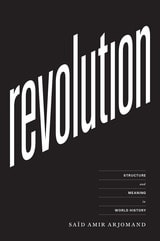
cover of Revolution: Structure and Meaning in World History

Revolution

Structure and Meaning in World History

Saïd Amir Arjomand

University of Chicago Press, 2019

A revolution is a discontinuity: one political order replaces another, typically through whatever violent means are available. Modern theories of revolutions tend neatly to bracket the French Revolution of 1789 with the fall of the Soviet Union two hundred years later, but contemporary global uprisings—with their truly multivalent causes and consequences—can overwhelm our ability to make sense of them.

In this authoritative new book, Saïd Amir Arjomand reaches back to antiquity to propose a unified theory of revolution. Revolution illuminates the stories of premodern rebellions from the ancient world, as well as medieval European revolts and more recent events, up to the Arab Spring of 2011. Arjomand categorizes revolutions in two groups: ones that expand the existing body politic and power structure, and ones that aim to erode—but paradoxically augment—their authority. The revolutions of the past, he tells us, can shed light on the causes of those of the present and future: as long as centralized states remain powerful, there will be room for greater, and perhaps forceful, integration of the politically disenfranchised.
 
[more]
cover of Straight Power Concepts in the Middle East: US Foreign Policy, Israel and World History

Straight Power Concepts in the Middle East

US Foreign Policy, Israel and World History

Gregory Harms

Pluto Press, 2010

How did the US become a world power? How did it become involved in the Middle East? What is the history and nature of its 'special relationship' with Israel?

Given the increase in tensions in the Middle East, and the United States' involvement in them, news coverage is in abundance. Yet, the reportage and discussion of American foreign policy is often narrow in scope, offering little background or context. The subject is routinely treated with the vocabulary provided by government officials, presenting best intentions while conceding occasional mistakes and unfortunate incidents. As Gregory Harms demonstrates in Straight Power Concepts, the historical record bears out a different vocabulary and tells a story that sharply contrasts with the common assumptions.

In this brief and accessible account, the reader is guided through the panoramic sweep of world and American history, reviewing how the US became a world power, how the Middle East became 'modern' and how Israel became an American 'strategic asset.' In so doing, the book provides a broad frame of reference, illustrating that recent developments are closer to business-as-usual and nothing resembling the rhetoric commonly used by heads of state, press secretaries, news media, and commentators.

As in his highly successful book The Palestine-Israel Conflict, Harms makes complex subjects accessible to everyone, without sacrificing analytical rigour. This book should be the first port of call for students and anyone seeking clarity and a historical elucidation of current events involving the United States, Israel, and the Middle East.
[more]
cover of The Scope of History: Studies in the Historiography of Alfonso el Sabio

The Scope of History

Studies in the Historiography of Alfonso el Sabio

Charles F. Fraker

University of Michigan Press, 1996

The Scope of History brings together a selection of classic and new articles in the field of Spanish and specifically Castilian history, focusing on the historiography of Alfonso X, King of Castile. The volume shows how the Alfonsine histories became well-fashioned and independent works of literature, having begun as simple compilations of preexisting texts. The author seeks to point out that the editors of the Alfonsine histories amplify and alter their sources, rejoin them with artistic skill, and generally arrange the elements into an ordered system. In so doing, Fraker explains, the final text speaks uniquely, giving voice to themes alien to the original texts. Fraker also aims to illustrate the scope of the editorial labor which set Alfonso's General Estoria and his Estoria de España apart from their contemporary histories.
In his introduction the author addresses the place of Alfonso's work in its own time, giving the reader a notion of what other works in the genre were like and how they differ. The connecting thread running through these chapters is a continuing focus on the art of the compiler. Medieval historical compilations are by definition scissors-and-paste jobs, stringing older texts together to tell new, different stories. But the Alfonsine editors bend the rules: in the short run they make their work yield the themes they think important, and in the long run they build a literary monument of impressive architecture.
Charles F. Fraker is Professor Emeritus in Romance Languages, University of Michigan.

[more]
cover of The Sea: Thalassography and Historiography

The Sea

Thalassography and Historiography

Peter N. Miller, Editor

University of Michigan Press, 2013
The Seabrings together a group of noted contributors to evaluate the different ways in which seas have served as subjects in historiography and asks how this has changed---and will change---the way history is written. The essays in this volume provide exemplary demonstrations of how a sea-based history-writing that focuses on connectivity, networks, and individuals describes the horizons and the potential of thalassography---the study of the world made by individuals embedded in networks of motion. As Peter N. Miller contends in his introduction, writing about the sea, today, is a way of partaking in the wider historiographical shift toward microhistory; exchange relations; networks; and, above all, materiality, both literally and figuratively. The Sea focuses not on questions of discipline and professionalization as much as on the practice of scholarship: the writing, and therefore the planning and organizing, of histories of the sea.
[more]
cover of The Seven Books of History Against the Pagans

The Seven Books of History Against the Pagans

Roy J. Paulus Orosius

Catholic University of America Press, 1964
This work is valuable as history, containing as it does contemporary information on the period after 278 A.D. It was used widely during the Middle Ages, and the existence today of nearly 200 manuscript copies is evidence of its past popularity.
[more]
cover of The Structure of World History: From Modes of Production to Modes of Exchange

The Structure of World History

From Modes of Production to Modes of Exchange

Kojin Karatani

Duke University Press, 2014
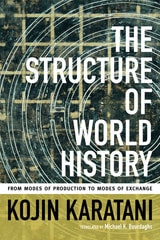
In this major, paradigm-shifting work, Kojin Karatani systematically re-reads Marx's version of world history, shifting the focus of critique from modes of production to modes of exchange. Karatani seeks to understand both Capital-Nation-State, the interlocking system that is the dominant form of modern global society, and the possibilities for superseding it. In The Structure of World History, he traces different modes of exchange, including the pooling of resources that characterizes nomadic tribes, the gift exchange systems developed after the adoption of fixed-settlement agriculture, the exchange of obedience for protection that arises with the emergence of the state, the commodity exchanges that characterize capitalism, and, finally, a future mode of exchange based on the return of gift exchange, albeit modified for the contemporary moment. He argues that this final stage—marking the overcoming of capital, nation, and state—is best understood in light of Kant's writings on eternal peace. The Structure of World History is in many ways the capstone of Karatani's brilliant career, yet it also signals new directions in his thought.
[more]
cover of The Uprooted: The Refugee in World History

The Uprooted

The Refugee in World History

Andreas Kossert

Rutgers University Press, 2027

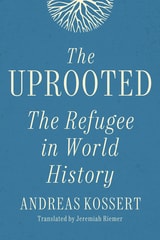
In his new book, Andreas Kossert—the renowned expert on emigration and expulsion in the twentieth century and author of the bestselling Cold Home—places the early twenty-first-century refugee movement in a wider historical context. Movingly told and interwoven with personal accounts, The Uprooted: The Refugee in World History reveals the existential experiences of uprootedness and hostility that go hand in hand with losing one's homeland and explains why refugees and displaced persons have always found it so difficult to settle into a new country. Whether they have come from East Prussia, Syria, or India, refugees are agents of world history—and with this book Kossert gives them a voice.
[more]
cover of The Victorian World Picture

The Victorian World Picture

Newsome, David

Rutgers University Press, 1997

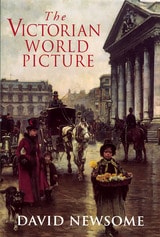
When did the Victorians come to regard themselves as "Victorians" and to use that term to describe the period in which they were living? David Newsome's monumental history takes a good, long look at the Victorian age and what distinguishes it so prominently in the history of both England and the world. The Victorian World Picture presents a vivid canvas of the Victorians as they saw themselves and as the rest of the world saw them.

The Victorian era was a time of unprecedented population growth and massive industrialization. Darwinian theory shook people's religious beliefs and foreign competition threatened industry and agriculture. The transformation of this nineteenth-century world was overhwelming, pervading the social, cultural, intellectual, economic, and political spheres. By the time of the Great Exhibition in 1851, the British were calling themselves Victorians and Prince Albert was able to proclaim, "We are living at a period of most wonderful transition." David Newsome weaves all these strands of Victorian life into a compelling evocation of the spirit of a fascinating time that laid the foundation for the modern age.
[more]
cover of Unmaking the West: "What-If?" Scenarios That Rewrite World History

Unmaking the West

"What-If?" Scenarios That Rewrite World History

Philip E. Tetlock, Richard Ned Lebow, and Geoffrey Parker, editors

University of Michigan Press, 2006

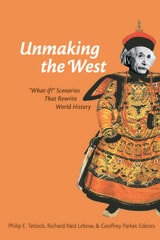
What if the Persians had won at Salamis? What if Christ had not been crucified? What if the Chinese had harnessed steam power before the West? Disparaged by some as a mere parlor game, counterfactual history is seen by others as an indispensable historical tool. Taking as their point of inquiry the debate over the inevitability of the rise of the West, the eminent scholars in Unmaking the West argue that there is no escaping counterfactual history. Whenever we make claims of cause and effect, we commit ourselves to the assumption that if key links in the causal chain were broken, history would have unfolded otherwise. Likewise, without counterfactual history we all too easily slip into the habit of hindsight bias, forgetting, as soon as we learn what happened, how unpredictable the world looked beforehand, and closing our minds to all the ways the course might have changed. This collection is thus both an exploration of alternative scenarios to world history and an exercise in testing the strengths and weaknesses of counterfactual experiments.

"If ever there was an argument for the usefulness of counterfactual history, this admirable, and admirably focused, collection has convincingly made it."
—Robert Cowley, editor of the What If?TM series

"With chapters ranging from politics to war to religion to economics and to science and technology, this is the most thematically wide-ranging collection on counterfactuality. An intelligent, cutting-edge study with important things to say."
—Jonathan C. D. Clark, Department of History, University of Kansas
"This volume is likely to become a standard reference in the literature on historical methodology, and could have a dramatic impact on the way future generations of historians approach disciplinary inquiry. . . . By allowing readers to share in the doubts and epiphanies that lead up to the authors' epistemological revelations, the volume allows readers to grasp the rich potential of approaching their own research from a counterfactual perspective."
—Aaron Belkin, Associate Professor of Political Science, University of California, Santa Barbara

Philip E. Tetlock is Mitchell Professor, Haas School of Business, University of California, Berkeley, and author of Expert Political Judgment: How Good Is It? How Can We Know?
Richard Ned Lebow is James O. Freedman Presidential Professor of Government at Dartmouth College and author of The Tragic Vision of Politics: Ethics, Interests and Orders, winner of the Alexander L. George Award for the best book in political psychology.
Geoffrey Parker is Andreas Dorpalen Professor of History at Ohio State University, a Fellow of the British Academy, and author of The Military Revolution: Military Innovation and the Rise of the West, 1500-1800, winner of two book prizes.
[more]
cover of Untaming the Frontier in Anthropology, Archaeology, and History

Untaming the Frontier in Anthropology, Archaeology, and History

Edited by Bradley J. Parker and Lars Rodseth

University of Arizona Press, 2005
Despite a half century of attempts by social scientists to compare frontiers around the world, the study of these regions is still closely associated with the nineteenth-century American West and the work of Frederick Jackson Turner. As a result, the very concept of the frontier is bound up in Victorian notions of manifest destiny and rugged individualism. The frontier, it would seem, has been tamed. This book seeks to open a new debate about the processes of frontier history in a variety of cultural contexts, untaming the frontier as an analytic concept, and releasing it in a range of unfamiliar settings. Drawing on examples from over four millennia, it shows that, throughout history, societies have been formed and transformed in relation to their frontiers, and that no one historical case represents the normal or typical frontier pattern. The contributors—historians, anthropologists, and archaeologists—present numerous examples of the frontier as a shifting zone of innovation and recombination through which cultural materials from many sources have been unpredictably channeled and transformed. At the same time, they reveal recurring processes of frontier history that enable world-historical comparison: the emergence of the frontier in relation to a core area; the mutually structuring interactions between frontier and core; and the development of social exchange, merger, or conflict between previously separate populations brought together on the frontier. Any frontier situation has many dimensions, and each of the chapters highlights one or more of these, from the physical and ideological aspects of Egypt’s Nubian frontier to the military and cultural components of Inka outposts in Bolivia to the shifting agrarian, religious, and political boundaries in Bengal. They explore cases in which the centripetal forces at work in frontier zones have resulted in cultural hybridization or “creolization,” and in some instances show how satellite settlements on the frontiers of core polities themselves develop into new core polities. Each of the chapters suggests that frontiers are shaped in critical ways by topography, climate, vegetation, and the availability of water and other strategic resources, and most also consider cases of population shifts within or through a frontier zone. As these studies reveal, transnationalism in today’s world can best be understood as an extension of frontier processes that have developed over thousands of years. This book’s interdisciplinary perspective challenges readers to look beyond their own fields of interest to reconsider the true nature and meaning of frontiers.
[more]
cover of Work, Sex, and Power: The Forces that Shaped Our History

Work, Sex, and Power

The Forces that Shaped Our History

Willie Thompson

Pluto Press, 2015

This is the history of the world, from the origins of the Cosmos to the present day, seen through three major narratives: work, sex and power - the forces that have done more than any other to shape the world as we see it now.

It expertly explores the foundations of our developing society by showing how these grand themes have recurred throughout the various phases of global history. From communities of Palaeolithic hunter-gatherers, through feudalism and onto the capitalistic machine-civilisation of recent centuries, Willie Thompson takes us on a journey that is fundamentally opposed to mainstream histories which concentrate on monarchs, politicians and military commanders.

At the centre of this book lies the interaction between humans and their environment. By exploring history in this way, it reveals a simple yet powerful materialist understanding of how we got to where we are today, and opens a door to a different reading of our world.
[more]