Results by title
40 books match the query 'Young Men'
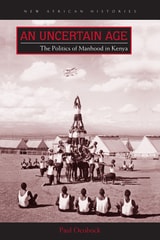
An Uncertain Age
The Politics of Manhood in KenyaPaul Ocobock
Ohio University Press, 2017
In twentieth-century Kenya, age and gender were powerful cultural and political forces that animated household and generational relationships. They also shaped East Africans’ contact with and influence on emergent colonial and global ideas about age and masculinity. Kenyan men and boys came of age achieving their manhood through changing rites of passage and access to new outlets such as town life, crime, anticolonial violence, and nationalism. And as they did, the colonial government appropriated masculinity and maturity as means of statecraft and control.
In An Uncertain Age, Paul Ocobock positions age and gender at the heart of everyday life and state building in Kenya. He excavates in unprecedented ways how the evolving concept of “youth” motivated and energized colonial power and the movements against it, exploring the masculinities boys and young men debated and performed as they crisscrossed the colony in search of wages or took the Mau Mau oath. Yet he also considers how British officials’ own ideas about masculinity shaped not only young African men’s ideas about manhood but the very nature of colonial rule.
An Uncertain Age joins a growing number of histories that have begun to break down monolithic male identities to push the historiographies of Kenya and empire into new territory.

Be Faithful Unto Death
Zsigmond Móricz
Central European University Press, 1996
Be Faithful unto Death is the moving story of a bright and sensitive schoolboy growing up in an old-established boarding school in the city of Debrecen in eastern Hungary. Misi, a dreamer and would-be writer, is falsely accused of stealing a winning lottery ticket. The torments through which he goes – and grows – are superbly described.
The novel is brimming with vivid detail from the provincial life that Móricz knew so well and shot through with a sense of the tragic fate of a newly truncated Hungary.
Class Acts
Young Men and the Rise of LifestyleMary Rizzo
University of Nevada Press, 2015
Mary Rizzo traces the development of the concept of lifestyle marketing, showing how marketers disconnected class identity from material reality, focusing instead on a person’s attitudes, opinions, and behaviors. The book includes discussions of the rebel of the 1950s, the hippie of the 1960s, the white suburban hip-hop fan of the 1980s, and the poverty chic of the 1990s. Class Acts illuminates how the concept of “lifestyle,” particularly as expressed through fashion, has disconnected social class from its material reality and diffused social critique into the opportunity to simply buy another identity. The book will appeal to scholars and other readers who are interested in American cultural history, youth culture, fashion, and style.
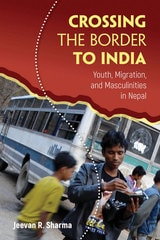
Crossing the Border to India
Youth, Migration, and Masculinities in NepalJeevan R. Sharma
Temple University Press, 2018
Given the limited economic opportunities in rural Nepal, the desire of young men of all income and education levels, castes and ethnicities to migrate has never been higher. Crossing the Border to India provides an ethnography of male labor migration from the western hills of Nepal to Indian cities. Jeevan Sharma shows how a migrant’s livelihood and gender, as well as structural violence impacts his perceptions, experiences, and aspirations.
Based on long-term fieldwork, Sharma captures the actual experiences of crossing the border. He shows that Nepali migration to India does not just allow young men from poorer backgrounds to “save there and eat here,” but also offers a strategy to escape the more regimented social order of the village. Additionally, migrants may benefit from the opportunities offered by the “open-border” between India and Nepal to attain independence and experience a distant world. However, Nepali migrants are subjected to high levels of ill treatment. Thus, while the idea of freedom remains extremely important in Nepali men’s migration decisions, their actual experience is often met with unfreedom and suffering.
Cue Lazarus
Carl Marcum
University of Arizona Press, 2001
In this collection of poetry by Carl Marcum, a young man traces his rise to consciousness, his coming of age in the Southwest as a medio, an individual of mixed race. Displaying his Hispanic heritage as fact, emblem, and music in his poems, Marcum balances hip humor with larger themes of loss and reinvention to paint a work of seriousness and imagination, wrestling sense from the giddy rush of experience. The lead poem, "Cue Lazarus," conveys the sense of loss that permeates the collection, revisiting time the author spent with a friend he now knows will die. It sets the tone for the explorations to follow as the poet haunts his past: death, traumatic experience, the uneasiness that comes from being unable to forestall tragedy, all combine to create a sense of paradox, that he who endures becomes a ghost compelled to haunt his own life.
As poetry becomes a subtle game of language, experience is refigured as an array of possibilities; Marcum finds meaning and epiphany through close observation as he revels in images of constant motion and sustained search. Here is a suite in celebration of Chevys ("That Camaro ran nearly on machismo alone") and a prayer for breakfast ("I'd like to renounce the salt and pepper shakers / of this life. But the eggs are here / twelve lines into this poem / and getting cold"). He dreams of himself as Pancho Villa, "my poetry at the end of a pistol," and invokes the spirits of poets past, "beggars on the media of Limbo, holding shabby signs: WILL WORK FOR TRUTH."
Ultimately, Cue Lazarus is about resurrection—of the spirit, of a life, of an identity. It marks the emergence of a vital new voice that, in baring his soul, reveals lessons as old as time.

Drowning in Fire
Craig S. Womack
University of Arizona Press, 2001
Josh Henneha has always been a traveler, drowning in dreams, burning with desires.
As a young boy growing up within the Muskogee Creek Nation in rural Oklahoma, Josh experiences a yearning for something he cannot tame. Quiet and skinny and shy, he feels out of place, at once inflamed and ashamed by his attraction to other boys. Driven by a need to understand himself and his history, Josh struggles to reconcile the conflicting voices he hears—from the messages of sin and scorn of the non-Indian Christian churches his parents attend in order to assimilate, to the powerful stories of his older Creek relatives, which have been the center of his upbringing, memory, and ongoing experience.
In his fevered and passionate dreams, Josh catches a glimpse of something that makes the Muskogee Creek world come alive. Lifted by his great-aunt Lucille’s tales of her own wild girlhood, Josh learns to fly back through time, to relive his people’s history, and uncover a hidden legacy of triumphs and betrayals, ceremonies and secrets he can forge into a new sense of himself.
When as a man, Josh rediscovers the boyhood friend who first stirred his desires, he realizes a transcendent love that helps take him even deeper into the Creek world he has explored all along in his imagination.
Interweaving past and present, history and story, explicit realism and dreamlike visions, Craig Womack’s Drowning in Fire explores a young man’s journey to understand his cultural and sexual identity within a framework drawn from the community of his origins. A groundbreaking and provocative coming-of-age story, Drowning in Fire is a vividly realized novel by an impressive literary talent.
Dust Devils
A NovellaRobert Laxalt
University of Nevada Press, 1997
Fada
Boredom and Belonging in NigerAdeline Masquelier
University of Chicago Press, 2019

From South Central to Southside
Gang Transnationalism, Masculinity, and Disorganized Violence in Belize CityAdam Baird
Temple University Press, 2024
From South Central to Southside charts the genesis and evolution of a transnational gang culture. Baird provides firsthand interviews with gang members and “narco” families and explains the surprising source of Belize City’s severe violence and skyrocketing homicide rates. He identifies gang violence in the U.S. and Belize as stemming from populations blighted by historical, brutal inequality and marginalization. Analyzing the gendered dynamics as young men and women face the temptations, risks, and dangers of gang life, Baird shines a light on “chronic vulnerability" in Belize City.
Generations Past
Youth in East African HistoryAndrew Burton
Ohio University Press, 2010
Contemporary Africa is demographically characterized above all else by its youthfulness. In East Africa the median age of the population is now a striking 17.5 years, and more than 65 percent of the population is age 24 or under. This situation has attracted growing scholarly attention, resulting in an important and rapidly expanding literature on the position of youth in African societies.
While the scholarship examining the contemporary role of youth in African societies is rich and growing, the historical dimension has been largely neglected in the literature thus far. Generations Past seeks to address this gap through a wide-ranging selection of essays that covers an array of youth-related themes in historical perspective. Thirteen chapters explore the historical dimensions of youth in nineteenth-, twentieth-, and twenty-first–century Ugandan, Tanzanian, and Kenyan societies. Key themes running through the book include the analytical utility of youth as a social category; intergenerational relations and the passage of time; youth as a social and political problem; sex and gender roles among East African youth; and youth as historical agents of change. The strong list of contributors includes prominent scholars of the region, and the collection encompasses a good geographical spread of all three East African countries.
Grandmothers
A Family PortraitWith a New Introduction by Sargent Bush Jr.
University of Wisconsin Press, 1996
The Grandmothers is the chronicle of Alwyn’s ancestors: the bitter Henry Tower, who returned from Civil War battlefields to find his beautiful wife Serena lost in a fatal fever; Rose Hamilton, robust and eager, who yearned to leave the cabin of her bearded, squirrel-hunting brothers for the company of courteous Leander Tower; the boy-soldier Hilary Tower, whose worship of his brother made him desperate; fastidious Nancy Tower, whose love for her husband Jesse Davis could not overcome her disgust with the dirt under his fingernails; Ursula Duff, proud and silent, maligned among her neighbors by her venal husband; Alwyn’s parents, Ralph Tower and Marianne Duff, whose happiness is brought about only by the intervention of a determined spinster.

I Thought of Daisy
Edmund Wilson
University of Iowa Press, 2001
Originally published in 1929, I Thought of Daisy is the first of three novels by Edmund Wilson. Written while he was still balancing his ambitions as a novelist against a successful career in literary criticism, I Thought of Daisy marries Wilson's two vocations to create an unusual and revealing work of fiction.

Life after Guns
Reciprocity and Respect among Young Men in LiberiaHardgrove, Abby
Rutgers University Press, 2017
Download open access ebook here.

Locked Up, Locked Out
Young Men in the Juvenile Justice SystemAnne M. Nurse
Vanderbilt University Press, 2010
Status is key to everyday life in prison, and it is often played out in demonstrations of masculinity, misogyny, and violence. Some gangs and some "area codes" (as the old neighborhoods are called) are seen as tougher than others and are given more respect. Even letters from family members and girlfriends are important signs of whether a prisoner matters: one young man says, "I'd write letters every day to people to beg 'em to write me back." Another reports, "There would be people in there writing girls, saying, hey, write me this nasty letter of things we're going to do and things we did. And they'd write back with these letters. And now he'll get to walk around with his letter bragging, like, hey, check this out. These are the kind of girls I got."
Incarcerated youth also work hard at impression management. Coping with prison requires a young man to present one face to fellow prisoners and another to the authorities who will decide his release date.
The author pays substantial attention to the programs youth are offered, including those focusing on education, anger management, job training, and parenting skills. Another section looks at contact between incarcerated youth and the outside world, including a discussion of the impact of incarceration on families.
Based on her extensive knowledge of policies in other states, the author also provides a broad overview of the juvenile justice system nationally, describing how the system is organized, administered, and funded. Readers are taken through the juvenile justice process from conviction through parole with special attention paid to new state initiatives and sentencing structures.
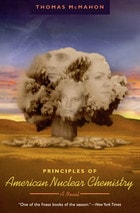
Principles of American Nuclear Chemistry
A NovelThomas McMahon
University of Chicago Press, 1970

Red and Black
A Chronicle of 1830Raymond N. Stendhal
University of Minnesota Press, 2022
A masterpiece of nineteenth-century literature in a fresh translation that fully captures the language, psychology, and social reach of Stendhal’s original
Fueled with a combustible mix of ambition, naivete, and Napoleonic ideals, Julien Sorel sets his sights on the heights of French society. But for the son of a provincial carpenter in post-Napoleonic France, the prospects for advancement are vanishingly narrow, the chances for glory rarer yet. After securing a toehold as a tutor to a wealthy family, Julien proceeds through a series of misadventures, illicit affairs, and lucky reversals to breach the ranks of French aristocracy—only to be undone by treasonous schemes, cynical romantic calculations, and an unexpectedly genuine and ultimately disastrous passion.
Shocking at the time of its original publication, startling in its relevance today, Stendhal’s masterpiece is a scorching social satire, a remarkably detailed portrait of a fraught moment in history and, as perhaps the first psychological novel, a brilliant precursor to modern literature at once comical and tragic, cerebral and passionate. This new translation faithfully reproduces the nimble wit, emotional depth, and social acuity of Stendhal’s text. Distinguished translator Raymond N. MacKenzie includes an extensive introduction to Stendhal’s world and time, as well as copious annotations that explain allusions and terms for the modern reader.
Redburn
Works of Herman Melville Volume FourHerman Melville
Northwestern University Press, 1969
Melville so disliked the novel that he submitted it to his publisher without polishing it. This scholarly edition corrects a number of errors that have persisted in subsequent editions. Based on collations of the editions published during his lifetime, it incorporates corrections made in the English edition and emendations made by the present editors.
As with all the books in the Northwestern-Newberry series, this edition of Redburn is an Approved Text of the Center for Editions of American Authors (Modern Language Association of America).

Richard Hurdis
A Tale of AlabamaSimms, William Gilmore
University of Arkansas Press, 1995

Saving The Young Men Of Vienna
David Kirby
University of Wisconsin Press, 1987
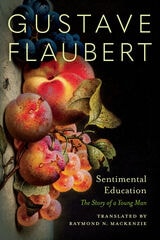
Sentimental Education
The Story of a Young ManGustave Flaubert
University of Minnesota Press, 2024
A fresh and vivid translation of Flaubert’s influential bildungsroman
Gustave Flaubert conceived Sentimental Education, his final complete novel, as the history of his own generation, one that failed to fulfill the promise of the Revolution of 1848. Published a few months before the start of the 1870 Franco–Prussian War, it offers both a sweeping panorama of French society over three decades and an intimate bildungsroman of a young man from a small town who arrives in Paris when protests against the monarchy are increasing.
The novel’s protagonist, Frédéric Moreau, alternates between aimlessness and ambition as he searches for a meaningful life through love affairs and republican politics. Flaubert’s narrative includes scenes of high drama, as scattered protests across Paris swell into revolution, and quiet moments of self-aware romanticism, crafting a story that possesses the sweep and scope of a historical novel combined with deep emotion and scandalous intimacy. Suffused with tragedy and the poignancy of lost chances and wasted lives, Sentimental Education is sharpened by satirical observations of what Flaubert condemned as the Second Empire’s endemic hypocrisy and willful blindness.
This vibrant, new translation by Raymond N. MacKenzie includes an extensive critical introduction and annotations to help the modern reader appreciate Flaubert’s achievement. Sentimental Education intertwines the personal, the intimate, and the subjective with the political, social, and cultural, embedding Frédéric’s story in the larger arc of what Flaubert saw as France’s decline into mediocrity and imbecility in its politics and manners.

Setting the Lawn on Fire
A NovelMack Friedman
University of Wisconsin Press, 2007
Setting the Lawn on Fire, the first novel by critically acclaimed writer Mack Friedman, trails its narrator through his obsessions with sex, drugs, art, and poison. Ivan, a young Jewish boy from Milwaukee, embarks on a journey of sexual discovery that leads him from Wisconsin to Alaska, Philadelphia, and Mexico through stints as a fishery worker, artist, and finally a hustler who learns to provide the blank canvas for other people’s dreams. The result is a new kind of coming-of-age story that sees passion from every angle because its protagonist is every kind of lover: the seducer and the seduced, the pornographer and the model, the hunter and the prey, the trick and the john. In the end, Setting the Lawn on Fire is also something rare—a fully realized, contemporary romance that illuminates the power of desire and the rituals of the body, the brain, and the heart that attempt to contain our passions.

Sex and Drugs before Rock 'n' Roll
Youth Culture and Masculinity during Holland's Golden AgeBenjamin B. Roberts
Amsterdam University Press, 2012

Shadows of Your Black Memory
Donato Ndongo
Swan Isle Press, 2007
Now in paperback, Shadows of Your Black Memory masterfully exposes the cultural fissures of Ndongo’s native land. “Spanish Guinea” is a heated, sensual landscape with exotic animals and trees, ancient rituals, ghosts, saints, and sinners. We come to know the narrator’s extended family, the people of his village, merchants, sorcerers, and Catholic priests; we see them critically at times, even humorously, yet always with compassion and a magical dignity. Michael Ugarte’s sensitive translation captures the spirit of the original Spanish prose and makes Ndongo’s powerful, gripping tale available to English-speaking readers for the first time.
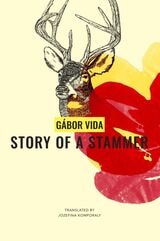
Story of a Stammer
Gábor Vida
Seagull Books, 2022
In the novel Story of a Stammer, Gábor Vida asks a fundamental question: Where does stammering come from? In the process of answering this question, he discovers that an entire historical period and an entire world have been stammering, too. Through Vida’s eyes, we see that stammering comprises all the lies accumulated over time and over generations because nobody had ever articulated what they felt or thought, nor done what they really wanted. Nobody, Vida shows, had ever told the truth.
Describing life in the 1970s and ’80s under Romanian Communist dictator Nicolae Ceauçescu’s authoritarian regime, Vida writes with disarming honesty, breaking taboos and chronicling the ways in which tyranny and exploitation seep into family relationships. The novel charts the first two decades of a young Hungarian man’s life in Romania, telling a story of coming to terms with a stammer, loneliness, and an unstimulating environment where religion, alcoholism, and suicide are the most common escape strategies. A Bildungsroman, a novel about Transylvania, a chronicle of minority life, a sociological analysis of cultural identity, and ultimately a deeply personal account of a historical era, Story of a Stammer is a major contribution to contemporary Hungarian literature—an unfailingly serious yet humorously delightful witness to a turbulent period in recent history.
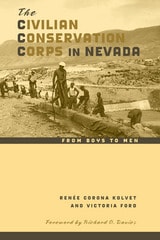
The Civilian Conservation Corps in Nevada
From Boys to MenRenée Corona Kolvet
University of Nevada Press, 2015
The Civilian Conservation Corps in Nevada is the first comprehensive history of the Nevada CCC, a program designed to help the nation get back on its feet, and of the “boys” who did so much to restore Nevada’s lands and resources. The book is based on extensive research in private manuscript collections, unpublished memoirs, CCC inspectors’ reports, and other records. The book also includes period photographs depicting the Nevada CCC and its activities.
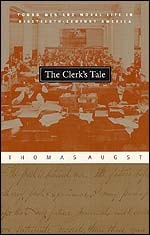
The Clerk's Tale
Young Men and Moral Life in Nineteenth-Century AmericaThomas Augst
University of Chicago Press, 2003
Thomas Augst follows clerks as they made their way through the boarding houses, parlors, and offices of the big city. Tracing the course of their everyday lives, Augst shows how these young men used acts of reading and writing to navigate the anonymous world of market culture and claim identities for themselves within it. Clerks, he reveals, calculated their prospects in diaries, composed detailed letters to friends and family, attended lectures by key thinkers of the day, joined libraries where they consumed fiction, all while wrestling with the boredom of their work. What results, then, is a poignant look at the literary practices of ordinary people and an affecting meditation on the moral lives of men in antebellum America.

The Intestines of the State
Youth, Violence, and Belated Histories in the Cameroon GrassfieldsNicolas Argenti
University of Chicago Press, 2007
Beginning his study with a political analysis of youth in the Grassfields from the eighteenth century to the present, Argenti pays special attention to the repeated violent revolts staged by young victims of political oppression. He then combines this history with extensive ethnographic fieldwork in the Oku chiefdom, discovering that the specter of past violence lives on in the masked dance performances that have earned intense devotion from today’s youth. Argenti contends that by evoking the imagery of past cataclysmic events, these masquerades allow young Oku men and women to address the inequities they face in their relations with elders and state authorities today.
The Last Shepherd
Martin Etchart
University of Nevada Press, 2012
Matt’s journey to manhood takes place in a vividly depicted landscape populated by lively, memorable characters. This is the powerful story of a young man’s search for an identity that encompasses two cultures and one complex, scattered family.
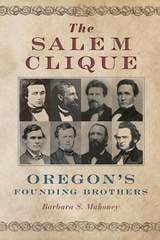
The Salem Clique
Oregon's Founding BrothersBarbara S. Mahoney
Oregon State University Press, 2017
While not in agreement with some of the more extreme contemporary accusations against the Clique, many historians have concluded that its members were vicious men who were able, because of their command of the Democratic party, to impose their hegemony on the Oregon Territory’s inhabitants. Other scholars have seen them as merely another instance of the contentious politics of the period.
Although the Salem Clique has been given considerable prominence in nearly every account of Oregon’s Territorial period, there has not been a detailed study of its role until now. What sort of people were these men? What was their impact on the issues, events, and movements of the period? What role did they play in the years after Oregon became a state? In The Salem Clique, Historian Barbara Mahoney sets out to answer these and many other questions in this comprehensive and deeply researched history.
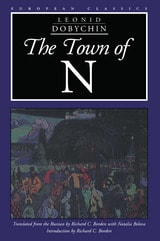
The Town of N
Leonid Dobychin
Northwestern University Press, 1998

The Untidy Pilgrim
Eugene Walter
University of Alabama Press, 2001
Eugene Walter’s first novel, and winner of the 1954 Lippincott Fiction Prize for Young Novelists, is about a young man from a small central Alabama town who goes south of the “salt line” to Mobile to work in a bank and study law. As soon as this unnamed pilgrim arrives, he realizes that—although he is still in Alabama—he has entered a separate physical kingdom of banana trees and palm fronds, subtropical heat and humidity, and old houses and lacy wrought-iron balconies. In Mobile, Alabama, the town that can claim the oldest Mardi Gras in America, there is no Puritan work ethic; the only ruling forces are those of chaos, craziness, and caprice. Such forces overtake the pilgrim, seduce him away from the beaten career path, and set him on a zigzag course through life.
The Untidy Pilgrim celebrates the insularity as well as the eccentricity of southerners—and Mobilians, in particular—in the mid-twentieth century. Cut off from the national mainstream, they are portrayed as devoid of that particularly American angst over what to “do” and accomplish with one’s life, and indulge instead in art, music, cooking, nature, and love. In this novel Walter dispels the gloomy southern literary tradition established by Faulkner, Capote, and McCullers to illuminate the joyous quirkiness of human existence.

The War Machines
Young Men and Violence in Sierra Leone and LiberiaDanny Hoffman
Duke University Press, 2011
Hoffman argues that in contemporary West Africa, space, sociality, and life itself are organized around making young men available for all manner of dangerous work. Drawing on his ethnographic research over the past nine years, as well as the anthropology of violence, interdisciplinary security studies, and contemporary critical theory, he maintains that the mobilization of West African men exemplifies a global trend in the outsourcing of warfare and security operations. A similar dynamic underlies the political economy of violence in Iraq, Afghanistan, and a growing number of postcolonial spaces. An experienced photojournalist, Hoffman integrates more than fifty of his photographs of young West Africans into The War Machines.

There Is a Tree More Ancient Than Eden
Leon Forrest
University of Chicago Press, 2001

Two Wheels North
Bicycling the West Coast in 1909Evelyn Gibb
Oregon State University Press, 2000

Windy McPherson's Son
Sherwood Anderson
University of Illinois Press, 1993
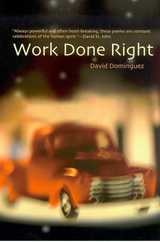
Work Done Right
David Dominguez
University of Arizona Press, 2003
I pulled into Galdini Sausage at noon.
The workers walked out of production
and swatted away the flies desperate for pork.
Pork gripped the men and was everywhere,
in the form of blood, in the form of fat,
and in pink meat that stuck to the workers' shoes.
Work Done Right is a sequence of narrative poems, told with a lyricist's tenderness and an eye for detail, that address the human condition in unexpected ways. David Dominguez explores Abraham's struggle to maintain personal dignity in harsh circumstances, juxtaposing bleak images of the sausage factory with the hope of finding one's true place in the world. Through his sensuously textured words, he pays tribute to people and place as he takes readers on a mystic journey toward redemption.
Young Men and Fire
Norman Maclean
University of Chicago Press, 1992
Young Men and Fire won the National Book Critics Circle Award in 1992.
"A magnificent drama of writing, a tragedy that pays tribute to the dead and offers rescue to the living.... Maclean's search for the truth, which becomes an exploration of his own mortality, is more compelling even than his journey into the heart of the fire. His description of the conflagration terrifies, but it is his battle with words, his effort to turn the story of the 13 men into tragedy that makes this book a classic."—from New York Times Book Review Editor's Choice, Best Books of 1992
"A treasure: part detective story, part western, part tragedy, part elegy and wholly eloquent ghost story in which the dead and the living join ranks cheerfully, if sometimes eerily, in a search for truth and the rest it brings."—Joseph Coates, Chicago Tribune
"An astonishing book. In compelling language, both homely and elegant, Young Men and Fire miraculously combines a fascinating primer on fires and firefighting, a powerful, breathtakingly real reconstruction of a tragedy, and a meditation on writing, grief and human character.... Maclean's last book will stir your heart and haunt your memory."—Timothy Foote, USA Today
"Beautiful.... A dark American idyll of which the language can be proud."—Robert M. Adams, The New York Review of Books
"Young Men and Fire is redolent of Melville. Just as the reader of Moby Dick comes to comprehend the monstrous entirety of the great white whale, so the reader of Young Men and Fire goes into the heart of the great red fire and comes out thoroughly informed. Don't hesitate to take the plunge."—Dennis Drabelle, Washington Post Book World
"Young Men and Fire is a somber and poetic retelling of a tragic event. It is the pinnacle of smokejumping literature and a classic work of 20th-century nonfiction."—John Holkeboer, The Wall Street Journal
"Maclean is always with the brave young dead. . . . They could not have found a storyteller with a better claim to represent their honor. . . . A great book."—James R. Kincaid, New York Times Book Review
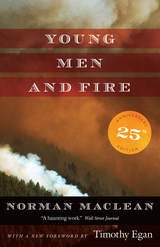
Young Men and Fire
Twenty-fifth Anniversary EditionNorman Maclean
University of Chicago Press, 2017
Alongside Maclean’s now-canonical A River Runs through It and Other Stories, Young Men and Fire is recognized today as a classic of the American West. This twenty-fifth anniversary edition of Maclean’s later triumph—the last book he would write—includes a powerful new foreword by Timothy Egan, author of The Big Burn and The Worst Hard Time. As moving and profound as when it was first published, Young Men and Fire honors the literary legacy of a man who gave voice to an essential corner of the American soul.
Young Men, Time, and Boredom in the Republic of Georgia
Martin Frederiksen
Temple University Press, 2016
In the midst of societal optimism, how do young men cope with the loss of a vibrant future? Young Men, Time, and Boredom in the Republic of Georgia provides a vivid exploration of the tension between subjective and societal time and the ways these tensions create experiences of marginality among under- or unemployed young men in the Republic of Georgia.
Based on long-term ethnographic fieldwork, Martin Demant Frederiksen shows how the Georgian state has attempted to make the so-called post-Soviet transition a thing of the past as it creates new ideas about the future. Yet some young men in the regional capital of Batumi do not feel that they are part of the progression these changes create. Instead, they feel marginalized both by space and time—passed over and without prospects.
This distinctive case study provides empirical evidence for a deeper understanding of contemporary societal developments and their effects on individual experiences.
Youth Employment and Joblessness in Advanced Countries
Edited by David G. Blanchflower and Richard B. Freeman
University of Chicago Press, 2000
This volume brings together key studies, providing detailed analyses of the difficult economic situation plaguing young workers. Why have demographic changes and additional schooling failed to resolve youth unemployment? How effective have those economic policies been which aimed to improve the labor skills and marketability of young people? And how have youths themselves responded to the deteriorating job market confronting them? These questions form the empirical and organizational bases upon which these studies are founded.