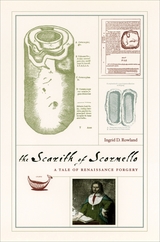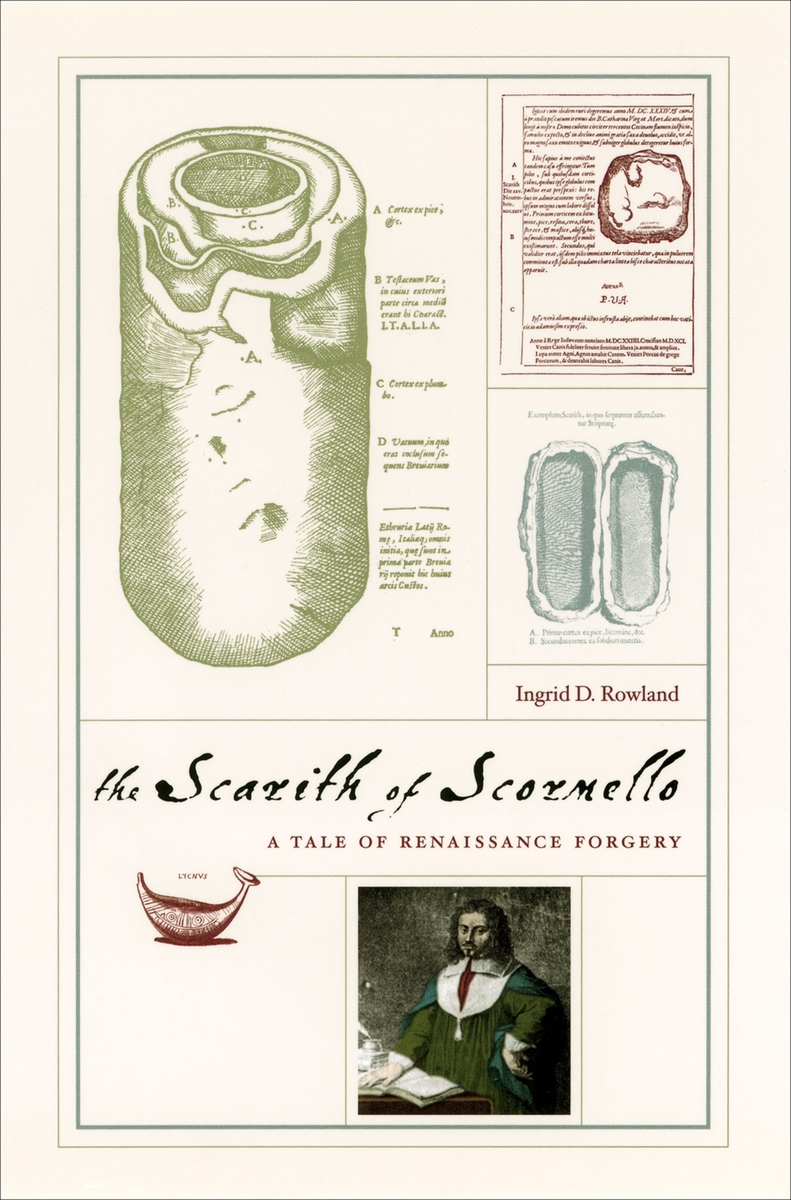
The Scarith of Scornello: A Tale of Renaissance Forgery
University of Chicago Press, 2004
Cloth: 978-0-226-73036-3 | Paper: 978-0-226-73037-0 | eISBN: 978-0-226-82118-4 (all)
Library of Congress Classification DG975.V9R68 2004
Dewey Decimal Classification 937.5
Cloth: 978-0-226-73036-3 | Paper: 978-0-226-73037-0 | eISBN: 978-0-226-82118-4 (all)
Library of Congress Classification DG975.V9R68 2004
Dewey Decimal Classification 937.5
ABOUT THIS BOOK | AUTHOR BIOGRAPHY | REVIEWS | TOC
ABOUT THIS BOOK
A precocious teenager, bored with life at his family's Tuscan villa Scornello, Curzio Inghirami staged perhaps the most outlandish prank of the seventeenth century. Born in the age of Galileo to an illustrious family with ties to the Medici, and thus an educated and privileged young man, Curzio concocted a wild scheme that would in the end catch the attention of the Vatican and scandalize all of Rome.
As recounted here with relish by Ingrid D. Rowland, Curzio preyed on the Italian fixation with ancestry to forge an array of ancient Latin and Etruscan documents. For authenticity's sake, he stashed the counterfeit treasure in scarith (capsules made of hair and mud) near Scornello. To the seventeenth-century Tuscans who were so eager to establish proof of their heritage and history, the scarith symbolized a link to the prestigious culture of their past. But because none of these proud Italians could actually read the ancient Etruscan language, they couldn't know for certain that the documents were frauds. The Scarith of Scornello traces the career of this young scam artist whose "discoveries" reached the Vatican shortly after Galileo was condemned by the Inquisition, inspiring participants on both sides of the affair to clash again—this time over Etruscan history.
An expert on the Italian Renaissance and one of only a few people in the world to work with the Etruscan language, Rowland writes a tale so enchanting it seems it could only be fiction. In her investigation of this seventeenth-century caper, Rowland will captivate readers with her sense of humor and obvious delight in Curzio's far-reaching prank. And even long after the inauthenticity of Curzio's creation had been established, this practical joke endured: the scarith were stolen in the 1980s by a thief who mistook them for the real thing.
See other books on: 1434-1737 | 17th century | Literary forgeries and mystifications | Rowland, Ingrid D. | Tuscany (Italy)
See other titles from University of Chicago Press