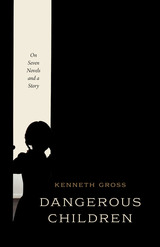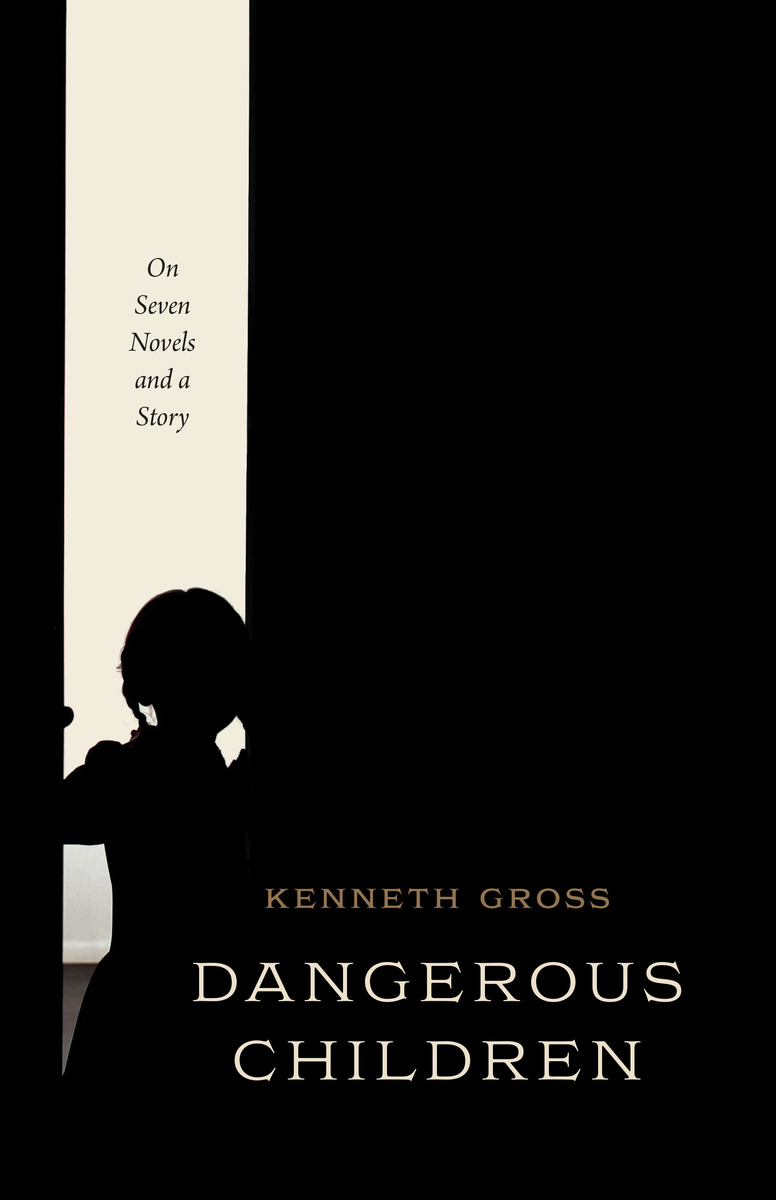
Dangerous Children: On Seven Novels and a Story
University of Chicago Press, 2022
Cloth: 978-0-226-81977-8 | eISBN: 978-0-226-81978-5
Library of Congress Classification PN56.5.C48G 2022
Dewey Decimal Classification 809.393523
Cloth: 978-0-226-81977-8 | eISBN: 978-0-226-81978-5
Library of Congress Classification PN56.5.C48G 2022
Dewey Decimal Classification 809.393523
ABOUT THIS BOOK | AUTHOR BIOGRAPHY | REVIEWS | TOC | REQUEST ACCESSIBLE FILE
ABOUT THIS BOOK
Gross explores our complex fascination with uncanny children in works of fiction.
Ranging from Victorian to modern works—Lewis Carroll’s Alice in Wonderland, Carlo Collodi’s Pinocchio, Henry James’s What Maisie Knew, J. M. Barrie’s Peter and Wendy, Franz Kafka’s “The Cares of a Family Man,” Richard Hughes’s A High Wind in Jamaica, Elizabeth Bowen’s The Death of the Heart, and Vladimir Nabokov’s Lolita—Kenneth Gross’s book delves into stories that center around the figure of a strange and dangerous child.
Whether written for adults or child readers, or both at once, these stories all show us odd, even frightening visions of innocence. We see these children’s uncanny powers of speech, knowledge, and play, as well as their nonsense and violence. And, in the tales, these child-lives keep changing shape. These are children who are often endangered as much as dangerous, haunted as well as haunting. They speak for lost and unknown childhoods. In looking at these narratives, Gross traces the reader’s thrill of companionship with these unpredictable, often solitary creatures—children curious about the adult world, who while not accommodating its rules, fall into ever more troubling conversations with adult fears and desires. This book asks how such imaginary children, objects of wonder, challenge our ways of seeing the world, our measures of innocence and experience, and our understanding of time and memory.
Ranging from Victorian to modern works—Lewis Carroll’s Alice in Wonderland, Carlo Collodi’s Pinocchio, Henry James’s What Maisie Knew, J. M. Barrie’s Peter and Wendy, Franz Kafka’s “The Cares of a Family Man,” Richard Hughes’s A High Wind in Jamaica, Elizabeth Bowen’s The Death of the Heart, and Vladimir Nabokov’s Lolita—Kenneth Gross’s book delves into stories that center around the figure of a strange and dangerous child.
Whether written for adults or child readers, or both at once, these stories all show us odd, even frightening visions of innocence. We see these children’s uncanny powers of speech, knowledge, and play, as well as their nonsense and violence. And, in the tales, these child-lives keep changing shape. These are children who are often endangered as much as dangerous, haunted as well as haunting. They speak for lost and unknown childhoods. In looking at these narratives, Gross traces the reader’s thrill of companionship with these unpredictable, often solitary creatures—children curious about the adult world, who while not accommodating its rules, fall into ever more troubling conversations with adult fears and desires. This book asks how such imaginary children, objects of wonder, challenge our ways of seeing the world, our measures of innocence and experience, and our understanding of time and memory.
See other books on: Children in literature | Children's & Young Adult Literature | Comparative Literature | Gross, Kenneth | Story
See other titles from University of Chicago Press