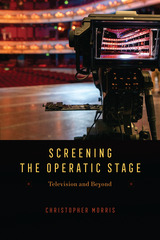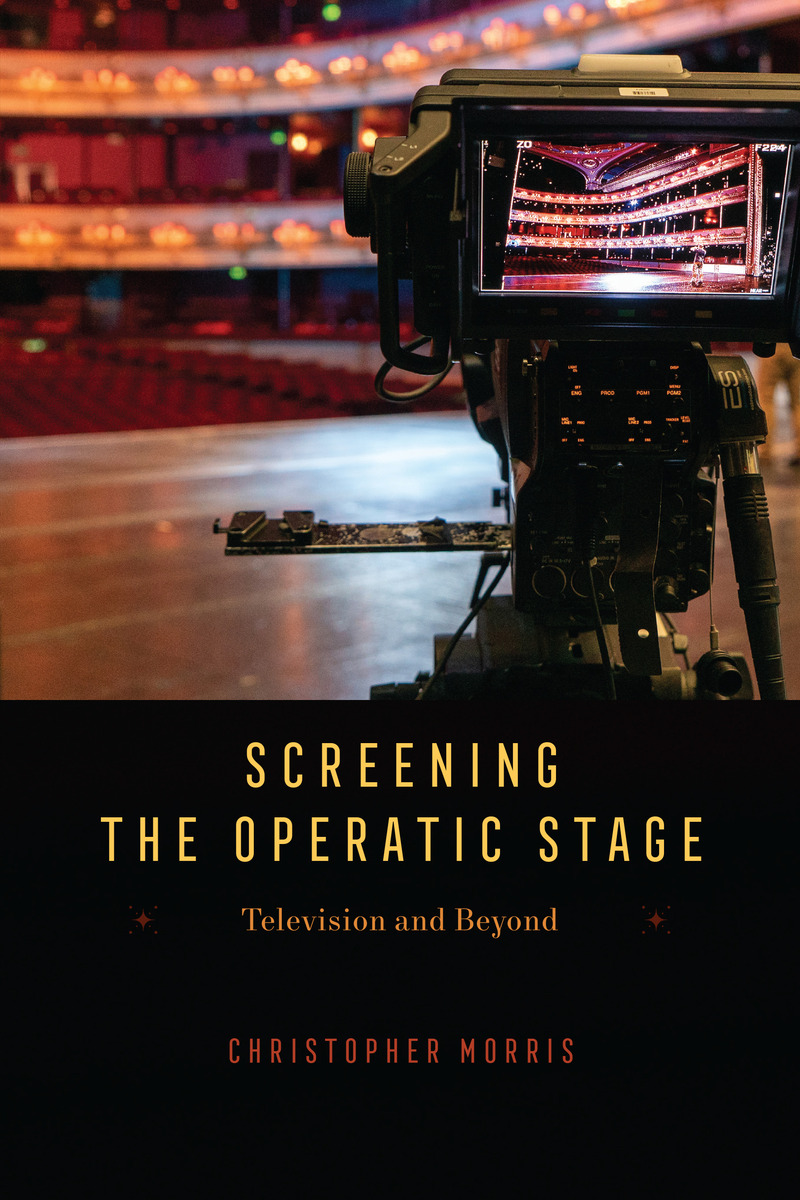
Screening the Operatic Stage: Television and Beyond
University of Chicago Press, 2024
Cloth: 978-0-226-83127-5 | Paper: 978-0-226-83129-9 | eISBN: 978-0-226-83128-2 (all)
Library of Congress Classification ML1700.M78 2024
Dewey Decimal Classification 782.1154
Cloth: 978-0-226-83127-5 | Paper: 978-0-226-83129-9 | eISBN: 978-0-226-83128-2 (all)
Library of Congress Classification ML1700.M78 2024
Dewey Decimal Classification 782.1154
ABOUT THIS BOOK | AUTHOR BIOGRAPHY | REVIEWS | TOC | REQUEST ACCESSIBLE FILE
ABOUT THIS BOOK
An ambitious study of the ways opera has sought to ensure its popularity by keeping pace with changes in media technology.
From the early days of television broadcasts to today’s live streams, opera houses have embraced technology as a way to reach new audiences. But how do these new forms of remediated opera extend, amplify, or undermine production values, and what does the audience gain or lose in the process? In Screening the Operatic Stage, Christopher Morris critically examines the cultural implications of opera’s engagement with screen media.
Foregrounding the potential for a playful exchange and self-awareness between stage and screen, Morris uses the conceptual tools of media theory to understand the historical and contemporary screen cultures that have transmitted the opera house into living rooms, onto desktops and portable devices, and across networks of movie theaters. If these screen cultures reveal how inherently “technological” opera is as a medium, they also highlight a deep suspicion among opera producers and audiences toward the intervention of media technology. Ultimately, Screening the Operatic Stage shows how the conventions of televisual representation employed in opera have masked the mediating effects of technology in the name of fidelity to live performance.
See other books on: Film adaptations | Opera | Operas | Screening | Television adaptations
See other titles from University of Chicago Press