
 A SCHOLARLY BOOK REPOSITORY
8 start with A start with A
The critical edition, the first publication in full score, draws on the autograph of Sigismondo and Rossini's drafts for setting the new texts as well as the autograph of Adina. In his preface discussing Adina's uncertain genesis and successive history, Fabrizio Della Seta examines the documents extant in Portugal and Italy and considers hypotheses about the identity of the commissioner, the dedicatee, and the collaborator.
Because the success of the premiere was not repeated, Alzira fell out of the repertory and no orchestral score was ever published. The critical edition, based on Verdi's autograph score and important secondary sources, provides the first reliable full score of the work. It is complemented by an introduction tracing the opera's genesis, sources and performance history and practices. Together with the detailed critical commentary, discussing problems and ambiguities in the sources, the edition provides scholars and performers alike with unequalled means for interpretation and study of this poorly known work.
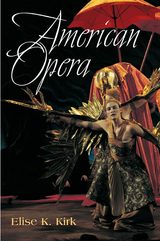
Tired of Tannhäuser? Bored with Bohème? Open your imagination to boundless creativity and wide-ranging repertory of American opera. Elise K. Kirk provides a treasure trove of information that fills in the long-neglected history of opera in the United States. Looking at more than 100 works, Kirk sketches the musical traits, provides plot summaries, describes sets and stagings, and offers in-depth profiles of performers, composers, and librettists.
Beginning with the English-influenced harle-quinade of the revolutionary period, Kirk follows the development of comic opera, the rise of melodramatic romanticism, the emergence of American grand opera and verismo, and the explosion of eclectic forms that characterized American opera in the twentieth century. Devoting particular attention to women and African American composers and librettists, Kirk explores how American operas incorporated indigenous elements such as jazz, popular song, folk music, Native American motifs, and Hollywood's cinematic techniques. She also discusses radio and television's impact, the advent of opera workshops in universities, the integration of multimedia effects into productions, and the ways innovations such as co-commissioning and joint staging have helped sustain the genre in the face of declining federal support.


Bringing Salieri, his operas, and eighteenth-century Viennese theater vividly to life, Rice places Salieri where he belongs: no longer lurking in Mozart's shadow, but standing proudly among the leading opera composers of his age. Rice's research in the archives of Vienna and close study of his scores reveal Salieri to have been a prolific, versatile, and adventurous composer for the stage. Within the extraordinary variety of Salieri's approaches to musical dramaturgy, Rice identifies certain habits of orchestration, melodic style, and form as distinctively "Salierian"; others are typical of Viennese opera in general. A generous selection of excerpts from Salieri's works, most previously unpublished, will give readers a fuller appreciation for his musical style—and its influence on Mozart—than was previously possible.
Verdi’s Attila, his ninth opera, had its premiere at Venice’s Teatro La Fenice in March 1846. Based on the German play Attila, King of the Huns, the libretto has its own storied history: as Verdi fell seriously ill before the work’s completion, the main librettist moved permanently to Madrid, leaving the last act of Attila only a sketch. It was then that Verdi called upon Francesco Maria Piave, the librettist for two of his earlier works, who at the composer’s behest scratched plans for a large choral finale and decided instead to concentrate on the dramatic roles of the protagonists.
In years since, Attila has become one of Verdi’s most popular and oft-staged early works. The composer's inimitable vitality, soaring arcs of melody, grand choruses, and passion are here amply apparent. This critical edition, based on Verdi’s autograph full score preserved at the British Library, restores the opera’s original text and accurately reflects the composer's colorful and elaborate musical setting, while Helen M. Greenwald’s masterful introduction discusses the opera’s origins, sources, and performance questions, and her critical commentary details editorial problems and their solutions.

READERS
Browse our collection.
PUBLISHERS
See BiblioVault's publisher services.
STUDENT SERVICES
Files for college accessibility offices.
RECENTLY PUBLISHED





UChicago Accessibility Resources
home | accessibility | search | about | contact us
BiblioVault ® 2001 - 2025
The University of Chicago Press