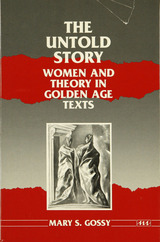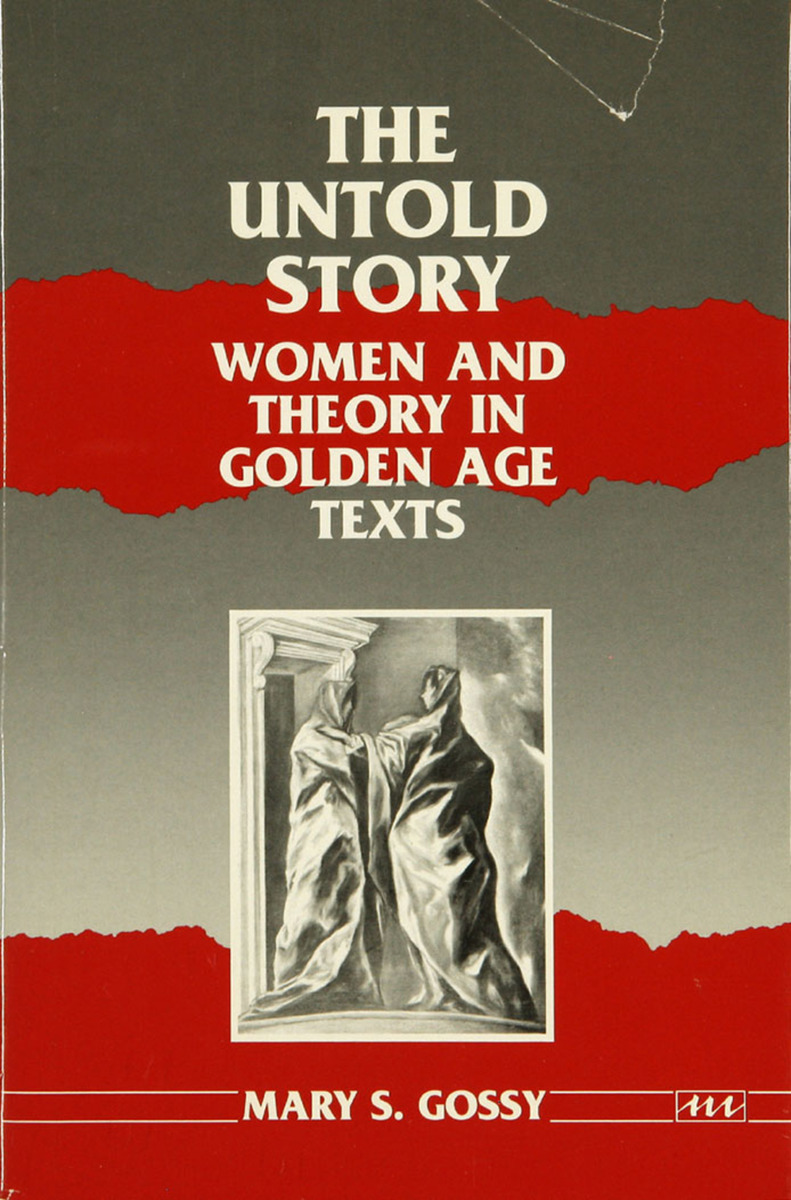
The Untold Story: Women and Theory in Golden Age Texts
University of Michigan Press, 1990
Cloth: 978-0-472-10132-0 | eISBN: 978-0-472-22588-0 (standard)
Library of Congress Classification PQ6066.G68 1989
Dewey Decimal Classification 860.9003
Cloth: 978-0-472-10132-0 | eISBN: 978-0-472-22588-0 (standard)
Library of Congress Classification PQ6066.G68 1989
Dewey Decimal Classification 860.9003
ABOUT THIS BOOK | AUTHOR BIOGRAPHY | REQUEST ACCESSIBLE FILE
ABOUT THIS BOOK
Choosing as her texts three works of the Spanish Golden Age, Mary Gossy uses feminist, reader-response, psychoanalytic, and narratological theory to examine gaps in narrative. The study surveys various critical approaches to such gaps, which, though intolerable to the reader, are necessary to the operations of desire that make reading possible. It then examines the ways in which the treatment of gaps by traditional reading strategies reflects the treatment of women and women’s bodies, making of the gap a fetishized feminine object.Gossy explores the ways in which these deviant women, the witches, prostitutes, and hymen-menders that inhabit these three works— La Celestina (Celestina), El casamiento engarioso/Coloquio de los perros (Deceitful Marriage/Colloquy of the Dogs), and La tia fingida (The Pretended Aunt) —can be seen to undermine the narrative expectations of the reader. In so doing, Gossy provides an important exploration of the heretofore neglected intersection of feminist theory and Spanish texts. The author concludes that the insights about reading, writing, and gender that they can help decode and reveal make contemporary literary theory and Spanish literature a dangerous and necessary couple.
See other books on: Classical period, 1500-1700 | Prostitutes in literature | Spanish literature | Untold Story | Women in literature
See other titles from University of Michigan Press