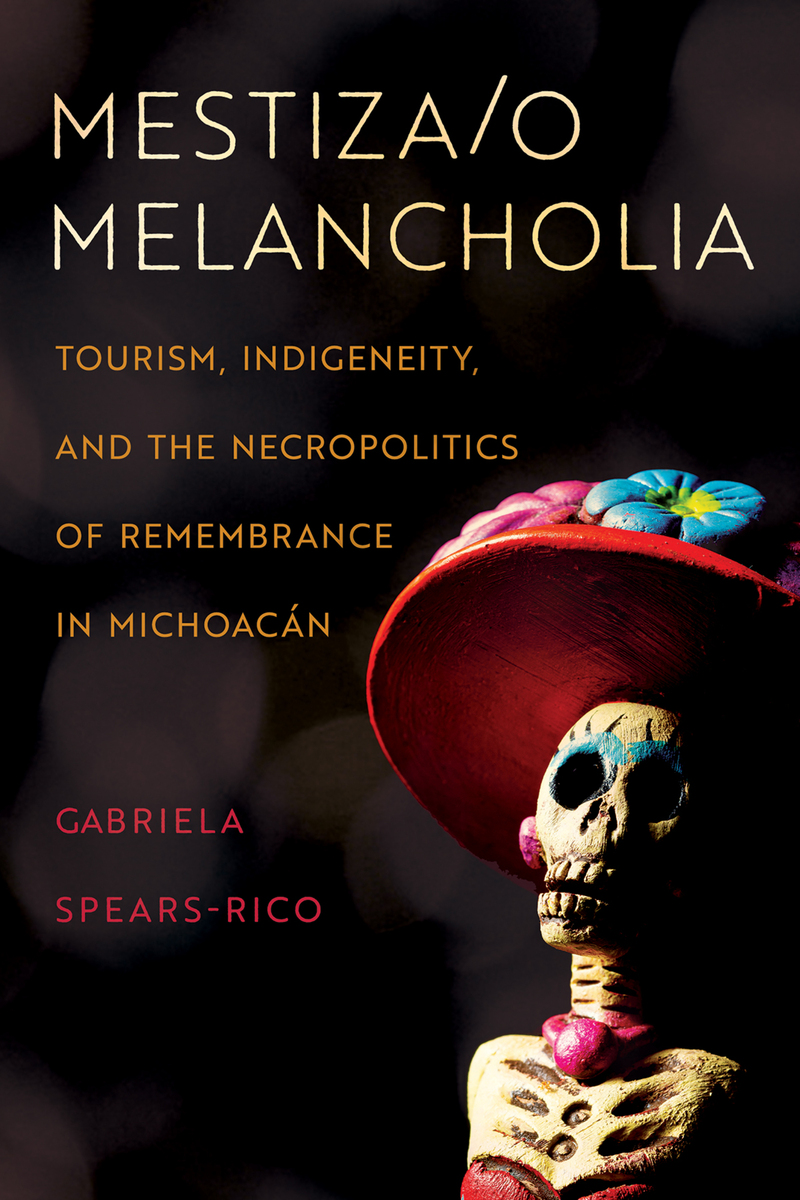
“Mestiza/o Melancholia denudes and upends mestizaje in insightful, necessary, and healing ways. Spears-Rico’s powerful and robust ethnography brilliantly demonstrates P’urhépecha ancestral wisdom, collective survivance, and carefully crafted agency in the modern world. This book will undoubtedly become a fundamental text on mestizaje and indigeneity across disciplines and fields for years to come.”—Luis Urrieta Jr., co-editor of Cultural Constructions of Identity: Meta-Ethnography and Theory
“Spears-Rico’s brilliant and groundbreaking book provides a nuanced and in-depth look at how mestizos/as and Indigenous peoples (specifically P’urhépecha) in México construct and perform ideas of each other. Grounded in Native American and Indigenous studies scholarship, together with rich ethnography, Spears-Rico’s concept of mestizo/a melancholia highlights the dangers of mestizaje and how it continues the legacy of colonialism, killing Indigenous peoples and cultures. And, as Spears-Rico powerfully demonstrates, P’urhépecha Juchari Uinapekua and the Pindekua are two of the guiding forces to resist and fight against mestizo/a melancholia.”—Mintzi Auanda Martínez-Rivera, author of Creating Culture, Performing Community: An Angahuan Wedding Story
“Mestiza/o Melancholia is a rich and powerful reexamination of Mexican mestizaje through ethnographic research and interviews with Mexican mestizo, Chicanx and P’urhepecha people. Providing a well-rounded analysis of how the tensions between mestizaje and indigeneity come to a head during Day of the Dead celebrations in Michoacán, Spears-Rico reminds us that the colonial violence that produced mestizaje continues to shape social relations in Mexico in concrete and deeply troubling ways. This book invites readers to sit with the discomfort of how anti-Indigenous attitudes are present even as mestizos seek out or directly benefit from Indigenous culture.”—Floridalma Boj Lopez, author of Indigenous Archives: The Maya Diaspora and Mobile Cultural Production
“This is what an ethnography of the Pátzcuaro region looks like when P’urhépecha thought and epistemologies such as sesi irekani, kuxumbekua, marhuatspekua, cuerpo-territorio set the analytical terms rather than serving as ethnographic data. Spears-Rico’s work is urgently needed to confront Mexico’s national mestizaje project and the melancholia insistent on romanticizing an Indigenous past that seems impossible to comprehend for the turixi. Spears-Rico has produced the indispensable companion text for everyone working on mestizaje, indigeneity, and Indigenous-led decolonization in Mexico.”—United StatesP’urhépecha Studies Working Group