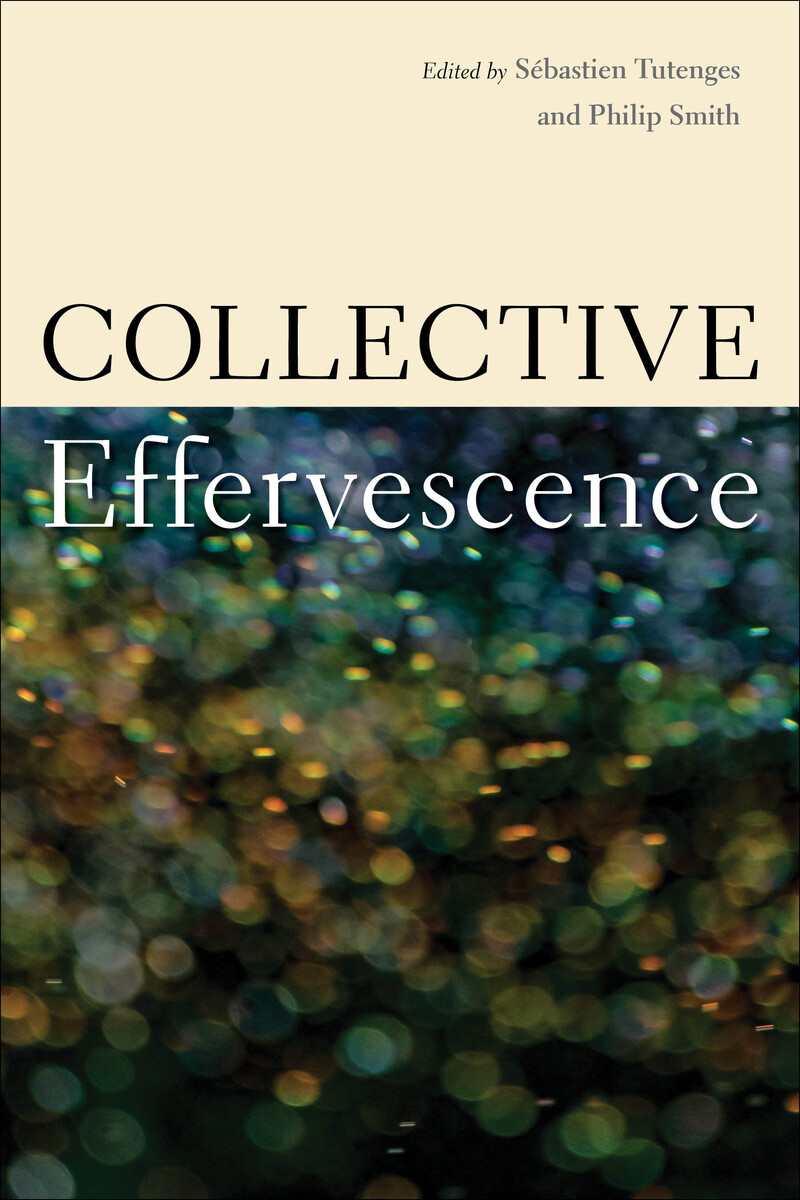
Collective Effervescence
Temple University Press, 2026
Cloth: 978-1-4399-2682-6 | Paper: 978-1-4399-2683-3 | eISBN: 978-1-4399-2684-0
See other books on: Popular Culture | Smith, Philip | Social Psychology | Sociology of Religion | Tutenges, Sébastien
See other titles from Temple University Press
Cloth: 978-1-4399-2682-6 | Paper: 978-1-4399-2683-3 | eISBN: 978-1-4399-2684-0
ABOUT THIS BOOK | AUTHOR BIOGRAPHY
ABOUT THIS BOOK
Sociologist Émile Durkheim’s theory of collective effervescence describes an overwhelming sense of excitement, empowerment, and unity. While originally tailored to examine religious phenomena, the theory has proven remarkably powerful in explaining secular experiences, from raves and military marches to sporting events and protest crowds.
The editors and contributors to Collective Effervescence make a deep dive into new waters. They investigate solo experiences, virtual collectivities, low-intensity effervescence, and negative outcomes. Through studies of drug ceremonies, occupational subcultures, bookshops, online activities, and much more, each chapter discovers and theorizes something previously unknown. Collective Effervescence finds new potentials in a familiar theoretical resource.
Contributors: Sarah H. Awad, Pierre Bouchat, Randall Collins, Silvia da Costa, Scott Draper, Lisa Flower, Romulo Lelis, Heather Margrsion, Sharon Mascall-Dare, Ashley Mears, Margit Anne Petersen, José J. Pizarro, Bernard Rimé, Dario Páez, David Sausdal, Daniel Smith, Femke Vandenberg, Brady Wagoner, David Wästerfors, Brad West, and the editors
The editors and contributors to Collective Effervescence make a deep dive into new waters. They investigate solo experiences, virtual collectivities, low-intensity effervescence, and negative outcomes. Through studies of drug ceremonies, occupational subcultures, bookshops, online activities, and much more, each chapter discovers and theorizes something previously unknown. Collective Effervescence finds new potentials in a familiar theoretical resource.
Contributors: Sarah H. Awad, Pierre Bouchat, Randall Collins, Silvia da Costa, Scott Draper, Lisa Flower, Romulo Lelis, Heather Margrsion, Sharon Mascall-Dare, Ashley Mears, Margit Anne Petersen, José J. Pizarro, Bernard Rimé, Dario Páez, David Sausdal, Daniel Smith, Femke Vandenberg, Brady Wagoner, David Wästerfors, Brad West, and the editors
See other books on: Popular Culture | Smith, Philip | Social Psychology | Sociology of Religion | Tutenges, Sébastien
See other titles from Temple University Press