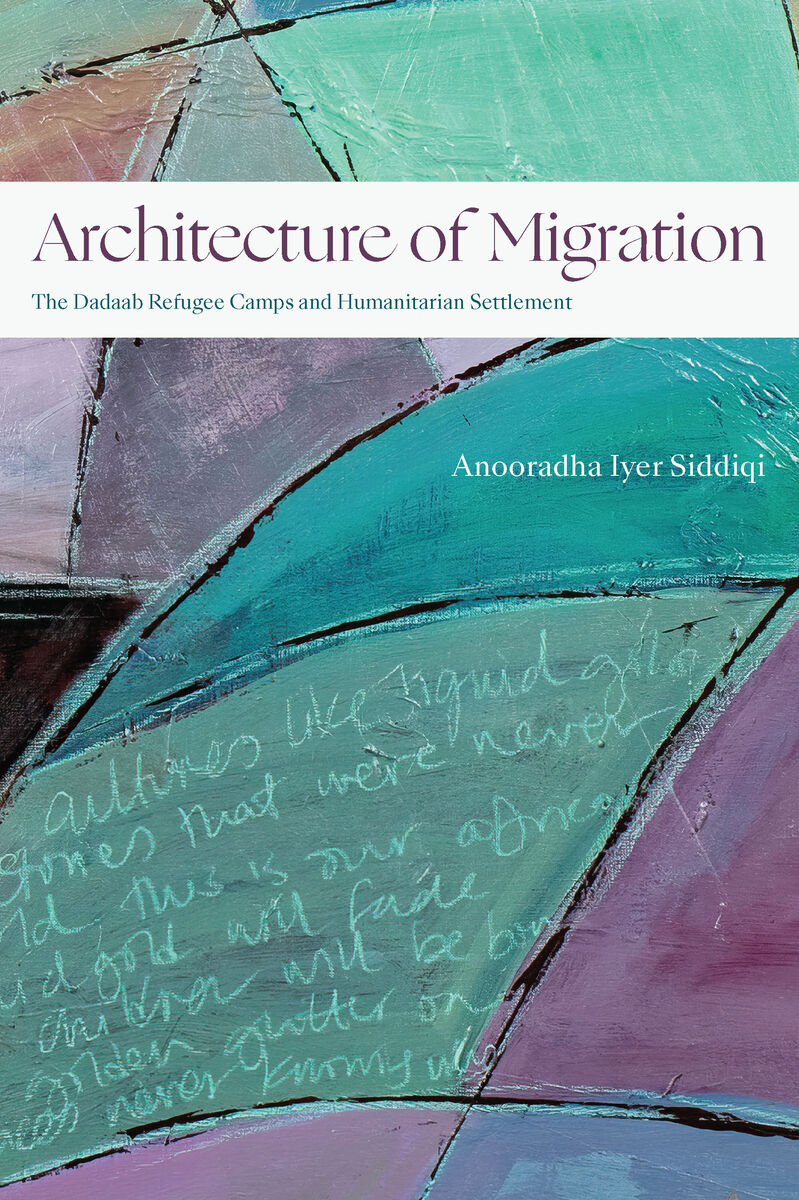
Architecture of Migration: The Dadaab Refugee Camps and Humanitarian Settlement
Duke University Press, 2024
Paper: 978-1-4780-2524-5 | eISBN: 978-1-4780-2737-9 | Cloth: 978-1-4780-2038-7
Library of Congress Classification NA2543.S6S575 2023
See other books on: Design and construction | East | Housing | Migration | Refugees
See other titles from Duke University Press
Paper: 978-1-4780-2524-5 | eISBN: 978-1-4780-2737-9 | Cloth: 978-1-4780-2038-7
Library of Congress Classification NA2543.S6S575 2023
ABOUT THIS BOOK | AUTHOR BIOGRAPHY | REVIEWS | TOC | REQUEST ACCESSIBLE FILE
ABOUT THIS BOOK
Environments associated with migration are often seen as provisional, lacking both history and architecture. As Anooradha Iyer Siddiqi demonstrates in Architecture of Migration, a refugee camp’s aesthetic and material landscapes—even if born out of emergency—reveal histories, futures, politics, and rhetorics. She identifies forces of colonial and humanitarian settlement, tracing spatial and racial politics in the Dadaab refugee camps established in 1991 on the Kenya-Somalia border—at once a dense setting that manifests decades of architectural, planning, and design initiatives and a much older constructed environment that reflects its own ways of knowing. She moves beyond ahistorical representations of camps and their inhabitants by constructing a material and visual archive of Dadaab, finding long migratory traditions in the architecture, spatial practices, landscapes, and iconography of refugees and humanitarians. Countering conceptualizations of refugee camps as sites of border transgression, criminality, and placelessness, Siddiqi instead theorizes them as complex settlements, ecologies, and material archives created through histories of partition, sedentarization, domesticity, and migration.
See other books on: Design and construction | East | Housing | Migration | Refugees
See other titles from Duke University Press