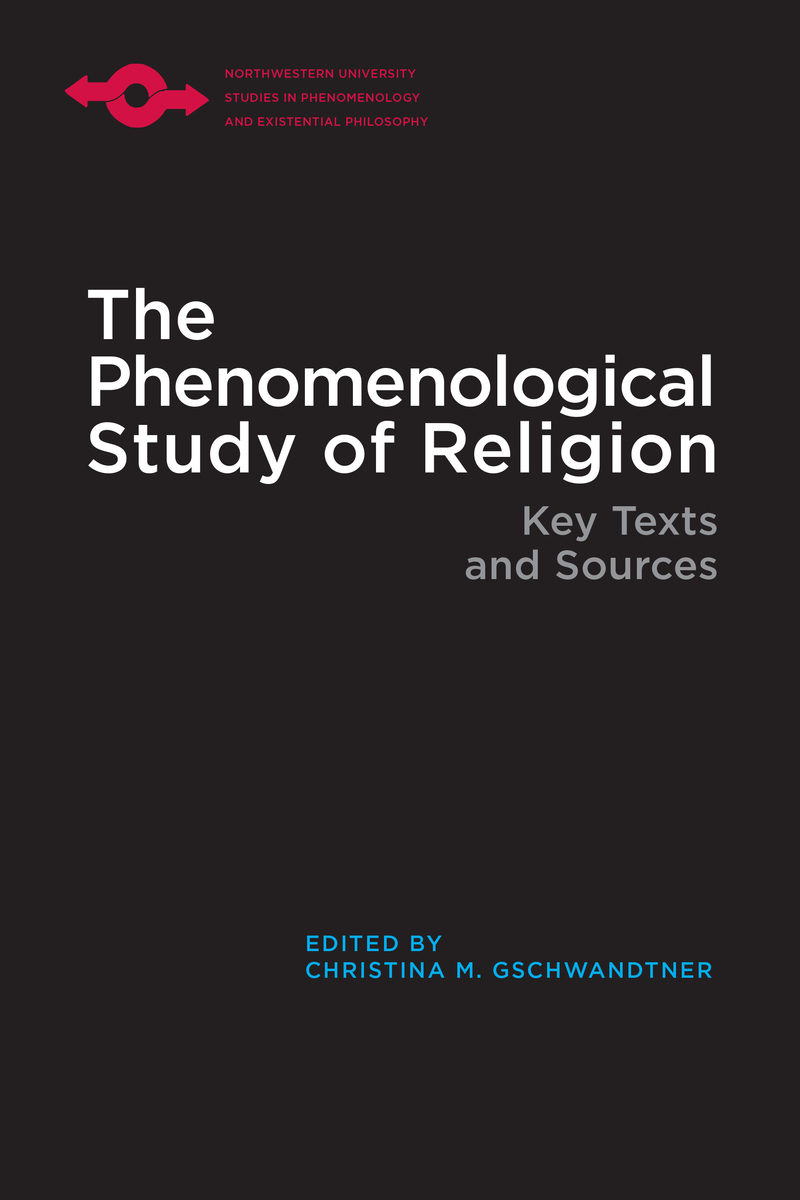
The Phenomenological Study of Religion: Key Texts and Sources
The Phenomenological Study of Religion: Key Texts and Sources
edited by Christina M. Gschwandtner contributions by John D. Caputo, Richard Kearney, Carla Canullo, Stefano Bancalari, Jeffrey Bloechl, Jean-Luc Marion, Robert Sokolowski, Natalie Depraz, Tamsin Jones, Angela Ales Bello, Olga Louchakova-Schwartz, Kevin Hart, Espen Dahl, Neal DeRoo, Jean-Yves Lacoste, Emmanuel Falque and Merold Westphal
ABOUT THIS BOOK | AUTHOR BIOGRAPHY | REVIEWS | TOC
ABOUT THIS BOOK
Presenting a wide-ranging selection of works and commentary in religious phenomenology
Phenomenology is a central method employed to study religious phenomena within religious studies, philosophy of religion, and philosophical theology. This expertly edited collection brings together historical sources and newly commissioned essays from various ways of investigating religion phenomenologically both to diversify the field and to make available important works that have not been previously translated into English. The Phenomenological Study of Religion includes not only representative texts from well-known phenomenological philosophers and scholars of religion but also selections from significant thinkers that have not been studied as widely, along with contributions from leading contemporary voices. This volume offers scholars and students at all levels of expertise broad exposure to the various configurations of the phenomenological study of religion.
AUTHOR BIOGRAPHY
CHRISTINA M. GSCHWANDTNER is a professor of philosophy at Fordham University. Her many books include Ways of Living Religion: Philosophical Investigations into Religious Experience.
REVIEWS
“This reasoned selection of all-too-often neglected key contributions to the emergence of the modern phenomenology of religion offers a timely intellectual resource and repository for contemporary philosophy, theology, and critical theory alike. Brilliantly presented by one of the most eminent specialists in the field, this volume opens up an immense archive whose conceptual depths and argumentative reach we have not yet fully fathomed.” —Hent de Vries, New York University
“This is a very welcome volume from one of the most important voices in phenomenology, bringing together readings within the phenomenology of religion and presenting a comprehensive overview of this important field of inquiry relevant to theology, religion, and philosophy.” —Gavin Flood, University of Oxford
— -
TABLE OF CONTENTS
Editor’s Introduction
Part I: The Study of Religion: Religionswissenschaft and Phenomenology of Religion
1. Pierre D. Chantepie de la Saussaye, “Phenomenology of Religion”
2. Ernst Troeltsch, “The Nature of the Study of Religion”
3. Rudolf Otto, “The Feeling of the Numinous”
4. W. Brede Kristensen, “Symbol and Reality”
5. Gerardus van der Leeuw, “Phenomenology as a Method for the Study of Religion”
6. Friedrich Heiler, “Ascertaining the Nature of Religion”
7. Joachim Wach, “Idea and Reality in the History of Religion”
8. Mircea Eliade, “The Sacred in the Secular World”
9. Hans Blumenberg, “Seeing and Hearing”
10. Paul Ricœur, “Experience and Language in Religious Discourse”
11. Henry Duméry, “Manifest Religion”
Interlude: Tamsin Jones, “Phenomenology in Religious Studies Today”
Part II: The Nature of Religion: Munich and Göttingen School Phenomenology
12. Alexander Pfänder, “From Faith to Cognition”
13. Max Scheler, “The Religious Act”
14. Adolf Reinach, “Experience of the Absolute”
15. Hedwig Conrad-Martius, “The Meaning of Being for Theistic Metaphysics”
16. Dietrich von Hildebrand, “Phenomenology and Personality”
17. Otto Gründler, “Elements of a Phenomenology of Religion”
18. Jean Héring, “Religious Consciousness”
19. Gerda Walther, “Mystical Communion with God”
20. Erich Przywara, “The Problematic of the Religious”
21. Karol Wojtyła, “The Degrees of Being in Phenomenology”
22. Anna-Teresa Tymieniencka, “From the Sacred to the Divine”
Part III: The Manifestation of Religion: Husserlian Phenomenology
23. Edmund Husserl, “God as Bearer of Absolute Logos”
24. Edith Stein, “Paths toward Knowing God”
25. Michel Henry, “Christianity: A Phenomenological Approach”
26. Robert Sokolowski, “The Theology of Disclosure”
27. Angela Ales Bello, “A Philosophical-Phenomenological Approach to Religious Experience”
28. Anthony Steinbock, “Phenomenology of Religious Experience”
29. Natalie Depraz, “Method in Practical Theo-Phenomenology”
30. Olga Louchakova-Schwartz, “The Ground of Religion: Reclaiming Intuited Reality”
31. Kevin Hart, “Phenomenology and the Kingdom”
32. Espen Dahl, “Hidden and Present: Horizontality and the Experience of God”
33. Neal DeRoo, “Transcendental Phenomenology of Religion”
Part IV: The Experience of Religion: Heidegger and French Phenomenology
34. Martin Heidegger, “The Problem of Sin”
35. Emmanuel Lévinas, “Philosophy and the Idea of the Infinite”
36. Jean-Luc Marion, “The Witness and the Paradox: Remarks on Phenomenality in a Biblical Text”
37. Jean-Louis Chrétien, “Phenomenology of Response”
38. Jean-Yves Lacoste, “Less Religion, Less Religious Experience”
39. Emmanuel Falque, “A Phenomenology at the Limit”
40. Merold Westphal, “Hermeneutical Phenomenology on Sunday Morning”
41. John D. Caputo, “The Phenomenological Structure of Theopoetics”
42. Richard Kearney, “An Apprenticeship to Religious Hermeneutics”
43. Carla Canullo, “The Bond that Redeems: Religion and Phenomenology”
44. Stefano Bancalari, “Toward a Critical Phenomenology of Religious Experience”
Afterword, Jeffrey Bloechl
Bibliography