
 A SCHOLARLY BOOK REPOSITORY
12 start with P start with P

Amid the political turmoil of China’s Cultural Revolution, a small group of painters in Beijing defied state control, creating art in secrecy that challenged the ideological constraints of their time. Painting into Being is the first in-depth study of underground art during this period, focusing on the Wuming (No Name) Painting Group, active from 1972 to 1981, in conjunction with other clandestine cultural movements.
Aihe Wang brings a singular perspective to this history as both a former Wuming artist and a Harvard-trained historian and anthropologist. Analyzing nearly one hundred oil paintings against sophisticated theoretical frameworks and intricate historical narratives, she examines how underground artists cultivated individual agency, forged collective solidarity, and subtly resisted authoritarianism. This book also illustrates how Wuming aesthetically engaged with both modern Western art and traditional Chinese art in creating a distinct form of Chinese modernism.
Interweaving history, theory, and lived experience, Painting into Being expands our understanding of modern Chinese history, global modernism, and the power of creative expression within repressive regimes.

Featuring contributions from more than forty current and former graduate students raising children, Parenting While PhDing offers valuable advice for students and administrators. Parents will get practical recommendations on both child care and self-care, learning how to form supportive personal and professional networks while establishing a healthy work/life balance. The collection also offers thoughtful suggestions on how to make graduate programs less toxic and more inclusive.
Recognizing that not all graduate students have similar backgrounds or needs, Parenting While PhDing features a diverse range of viewpoints, including queer, trans, disabled, BIPOC, immigrant, and first-generation college students. The authors represent a variety of disciplines, from the natural and social sciences to the humanities and health care professions. Together, they share fresh perspectives on the experiences of graduate students with children and offer strategies they can use to navigate the dual pressures of the academy and parenting.
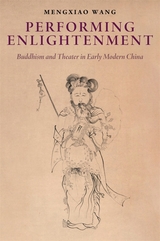
In early modern China, a major revival of Buddhism coincided with a surging fascination with theater. Buddhist monastics and laypeople increasingly participated in viewing, discussing, and writing plays. Far from merely serving as a medium for conveying religious teachings and practices, drama became a source of deep concern for Buddhists due to the perceived tension between spiritual discipline and worldly entertainment.
In Performing Enlightenment, Mengxiao Wang examines how Buddhist clerics and laypeople engaged with and drove innovations in theater during the late Ming and early Qing dynasties in the sixteenth and seventeenth centuries. Drawing on an extensive range of sources—including clerical sermons, scriptural commentaries, temple gazetteers, morality books, literati prose, and dramatic texts and paratexts—Wang argues that Ming-Qing Buddhists resolved the conflict between religion and entertainment by transforming theater into a creative mode of devotional practice. Consequently, playwriting, stage performance, and theatergoing all emerged as legitimate pathways to spiritual enlightenment. This interdisciplinary work provides fresh insights into Chinese studies, Buddhist studies, and theater studies while offering a comparative perspective on the complex interplay between religion, literature, and performance across cultures.

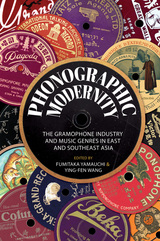
A roster of experts on countries from Japan to Indonesia explores the complicated relationship between the gramophone industry and music genres in East and Southeast Asia. Extending the boundaries of their research across multiple disciplines, the contributors connect the gramophone industry to theories surrounding phonography and modernity. Their focus on phonography combines an interest in discs with an interest in the sounds contributing to the recent sonic-auditory turn in sound studies.
Ambitious and expansive, Phonographic Modernity examines the bloc of East and Southeast Asia within the larger global history of sound recording.
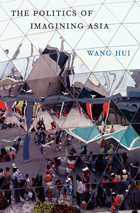
In this bold, provocative collection, Wang Hui confronts some of the major issues concerning modern China and the status quo of contemporary Chinese thought.
The book’s overarching theme is the possibility of an alternative modernity that does not rely on imported conceptions of Chinese history and its legacy. Wang Hui argues that current models, based largely on Western notions of empire and the nation-state, fail to account for the richness and diversity of pre-modern Chinese historical practice. At the same time, he refrains from offering an exclusively Chinese perspective and placing China in an intellectual ghetto. Navigating terrain on regional language and politics, he draws on China’s unique past to expose the inadequacies of European-born standards for assessing modern China’s evolution. He takes issue particularly with the way in which nation-state logic has dominated politically charged concerns like Chinese language standardization and “The Tibetan Question.” His stance is critical—and often controversial—but he locates hope in the kinds of complex, multifaceted arrangements that defined China and much of Asia for centuries.
The Politics of Imagining Asia challenges us not only to re-examine our theories of “Asia” but to reconsider what “Europe” means as well. As Theodore Huters writes in his introduction, “Wang Hui’s concerns extend beyond China and Asia to an ambition to rethink world history as a whole.”
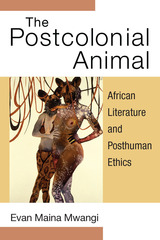
Despite the central role that animals play in African writing and daily life, African literature and African thinkers remain conspicuously absent from the field of animal studies. The Postcolonial Animal: African Literature and Posthuman Ethics demonstrates the importance of African writing to animal studies by analyzing how postcolonial African writing—including folktales, religion, philosophy, and anticolonial movements—has been mobilized to call for humane treatment of nonhuman others. Mwangi illustrates how African authors grapple with the possibility of an alternative to eating meat, and how they present postcolonial animal-consuming cultures as shifting toward an embrace of cultural and political practices that avoid the use of animals and minimize animal suffering. The Postcolonial Animal analyzes texts that imagine a world where animals are not abused or used as a source of food, clothing, or labor, and that offer instruction in how we might act responsibly and how we should relate to others—both human and nonhuman—in order to ensure a world free of oppression. The result is an equitable world where even those who are utterly foreign to us are accorded respect and where we recognize the rights of all marginalized groups.
Collectively, these essays question the implications of specific phenomena, like literature, architecture, rock music, and film, in a postsocialist society. Some essays address China’s complicity in—as well as its resistance to—the culture of global capitalism. Others evaluate the impact of efforts to redefine national culture in terms of enhanced freedoms and expressions of the imagination in everyday life. Still others discuss the general relaxation of political society in post-Mao China, the emergence of the market and its consumer mass culture, and the fashion and discourse of nostalgia. The contributors make a clear case for both the historical uniqueness of Chinese postmodernism and the need to understand its specificity in order to fully grasp the condition of postmodernity worldwide. Although the focus is on mainland China, the volume also includes important observations on social and cultural realities in Hong Kong and Taiwan, whose postmodernity has so far been confined—in both Chinese and English-speaking worlds—to their economic and consumer activities instead of their political and cultural dynamism.
First published as a special issue of boundary 2, Postmodernism and China includes seven new essays. By juxtaposing postmodernism with postsocialism and by analyzing China as a producer and not merely a consumer of the culture of the postmodern, it will contribute to critical discourses on globalism, modernity, and political economics, as well as to cultural and Asian studies.
Contributors. Evans Chan, Arif Dirlik, Dai Jinhua, Liu Kang, Anthony D. King, Jeroen de Kloet, Abidin Kusno, Wendy Larson, Chaoyang Liao, Ping-hui Liao, Sebastian Hsien-hao Liao, Sheldon Hsiao-peng Lu, Wang Ning, Xiaobing Tang, Xiaoying Wang, Chen Xiaoming, Xiaobin Yang, Zhang Yiwu, Xudong Zhang
Thomas J Billard and Silvio Waisbord curate essays from a wide range of specialties within the study of communication. Aimed at scholars and students alike, the contributors use approaches from critical meditations to case studies to how-to guides as they explore the possibilities of seeing shared knowledge not as a gift to be granted but as an imperative urging readers to address the problems of the world. Throughout the volume, the works show that a pivot to ideas of scholarship as public service is already underway in corners of communication studies across the country.
Visionary and provocative, Public Scholarship in Communication Studies proposes a needed reconsideration of knowledge and a roadmap to its integration with community.
Contributors: Elaine Almeida, Becca Beets, Thomas J Billard, Danielle K. Brown, Aymar Jean Christian, Stacey L. Connaughton, Paula Gardner, Larry Gross, Amy Jordan, Daniel Kreiss, Rachel Kuo, Susan Mancino, Shannon C. McGregor, Philip M. Napoli, Todd P. Newman, Srividya Ramasubramanian, Chad Raphael, Sue Robinson, Silvio Waisbord, Yidong Wang, and Holley Wilkin
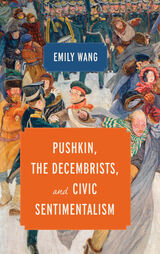
Through careful readings of the literature of Pushkin and others active in the northern branch of the Decembrist movement, such as Kondraty Ryleev, Wilhelm Küchelbecker, and Fyodor Glinka, Wang traces the development of “emotional communities” among the members and adjacent writers. This book illuminates what Wang terms “civic sentimentalism”: the belief that cultivating noble sentiments on an individual level was the key to liberal progress for Russian society, a core part of Decembrist ideology that constituted a key difference from their thought and Pushkin’s. The emotional program for Decembrist community members was, in other ways, a civic program for Russia as a whole, one that they strove to enact by any means necessary.
READERS
Browse our collection.
PUBLISHERS
See BiblioVault's publisher services.
STUDENT SERVICES
Files for college accessibility offices.
RECENTLY PUBLISHED


UChicago Accessibility Resources
home | accessibility | search | about | contact us
BiblioVault ® 2001 - 2025
The University of Chicago Press