
 A SCHOLARLY BOOK REPOSITORY
33 start with B start with B
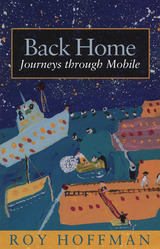
After twenty years in New York City, a prize-winning writer takes a "long look back" at his hometown of Mobile, Alabama.
In Back Home: Journeys through Mobile, Roy Hoffman tells stories—through essays, feature articles, and memoir—of one of the South's oldest and most colorful port cities. Many of the pieces here grew out of Hoffman's work as Writer-in-Residence for his hometown newspaper, the Mobile Register, a position he took after working in New York City for twenty years as a journalist, fiction writer, book critic, teacher, and speech writer. Other pieces were first published in the New York Times, Southern Living, Preservation, and other publications. Together, this collection comprises a long, second look at the Mobile of Hoffman's childhood and the city it has since become.
Like a photo album, Back Home presents close-up portraits of everyday places and ordinary people. There are meditations on downtown Mobile, where Hoffman's grandparents arrived as immigrants a century ago; the waterfront where longshoremen labor and shrimpers work their nets; the back roads leading to obscure but intriguing destinations. Hoffman records local people telling their own tales of race relations, sports, agriculture, and Mardi Gras celebrations. Fishermen, baseball players, bakers, authors, political figures--a strikingly diverse population walks across the stage of Back Home.
Throughout, Hoffman is concerned with stories and their enduring nature. As he writes, "When buildings are leveled, when land is developed, when money is spent, when our loved ones pass on, when we take our places a little farther back every year on the historical time-line, what we have still are stories."

Nevada sheep rancher Joe Juaristi spoke for years about making a trip back to the Spanish Basque Country that he left sixty years earlier, but each time the subject came up the discussion evolved into a family debate about the scope and members of the journey. Finally Joe's son, Vince, secretly resolved to organize the trip that his father wanted and needed--the two of them, traveling alone, making a quiet reunion with Joe's twin sister, who suffers from Alzheimer's, visiting other aging siblings and friends, and recounting the places that formed Joe's memories of his youth.
Back to Bizkaia is part travel book, part memoir of two men exploring their mutual roots and their unique father-son bond. The narrative intertwines an engaging account of the contemporary Basque Country with Joe's experiences as an immigrant making his way in a new country and Vince's memories of growing up in a close Basque-American community in the American West. This is a book about Basques and their American families, but on another level it is every immigrant's story of return to a beloved homeland.
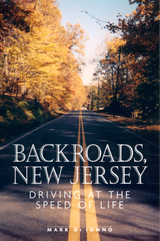
Mark Di Ionno is a Jersey guy through and through. He’s lived in fifteen different towns in six different New Jersey counties. He’s been a journalist for the state’s top newspapers, currently the Star-Ledger, where his first job was to go out and write about things that were “interesting.” Who better to take readers on a personal tour of the backroads of New Jersey?
In Backroads, New Jersey, Di Ionno leads readers off the congested interstates with their commonplace scenery to the seldom-explored secondary roads, where the real life of the state can be found. These inter-county or 500 series roads are a 6,788-mile network of mostly one-lane highways. Marked by blue-and-yellow five-sided shields bearing county names, they make up more than 20 percent of New Jersey’s public roads. They are never the fastest or most direct way to get anywhere, but when you break out of the towns and hit the country, they are a pleasure to drive.
Travel with Di Ionno as he takes readers to see the state’s amazing beauty¾from the dizzying cliffs of the Palisades, to the blunted peaks of the Highlands and Kittatinny Ridges, to the rolling hills of Morris, Hunterdon, and Somerset counties, to the topsoil-wealthy agricultural belts of Monmouth and the southern counties, to the flat, sandy beaches of the 127-mile Jersey Shore. Travel with him as he shows us the homes of New Jersey’s culturally diverse population, whose men and women work at everything from farms to pharmacies, from banks to auto assembly lines. And travel with him as he recounts the history made along the back country roads in towns like Rocky Hill, where George Washington wrote his farewell orders. Di Ionno calls New Jersey “a place of infinite natural beauty, a place of intricate human patterns. A place where you can see a lot in a little time. This is, simply put, the overriding theme of this book. New Jersey is a restless state for restless people. A state for wanderers to explore.” Backroads, New Jersey is a rare chance to see it all through the eyes of a well-traveled Jerseyan. Happy wandering!

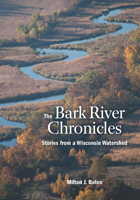
The Bark River valley in southeastern Wisconsin is a microcosm of the state's - indeed, of the Great Lakes region's - natural and human history. "The Bark River Chronicles" reports one couple's journey by canoe from the river's headwaters to its confluence with the Rock River and several miles farther downstream to Lake Koshkonong. Along the way, it tells the stories of Ice Age glaciation, the effigy mound builders, the Black Hawk War, early settlement and the development of waterpower sites, and recent efforts to remove old dams and mitigate the damage done by water pollution and invasive species.
Along with these big stories, the book recounts dozens of little stories associated with sites along the river. The winter ice harvest, grain milling technology, a key supreme court decision regarding toxic waste disposal, a small-town circus, a scheme to link the Great Lakes to the Mississippi River by canal, the murder of a Chicago mobster, controversies over race and social class in Waukesha County's lake country, community efforts to clean up the river and restore a marsh, visits to places associated with the work of important Wisconsin writers - these and many other stories belong to the Bark River chronicles.
For the two voyageurs who paddle the length of the Bark, it is a journey of rediscovery and exploration. As they glide through marshes, woods, farmland, and cities, they acquire not only historical and environmental knowledge but also a renewed sense of the place in which they live. Maps and historical photographs help the reader share their experience.
Between the Nile River and the Red Sea, in the northern half of Egypt's Eastern Desert, live the Bedouins of the Ma'aza tribe. Joseph Hobbs lived with the Khushmaan Ma'aza clan for almost two years, gathering information for a study of traditional Bedouin life and culture. The resulting work, Bedouin Life in the Egyptian Wilderness, is the first modern ethnographic portrait of the Ma'aza Bedouins.
From June of 1941 through the following summer, Fredericka Martin lived with her husband, Dr. Samuel Berenberg, on remote St. Paul Island in Alaska. During that time, Martin delved into the complex history of the Unangan people, and Before the Storm draws from her personal accounts of that year and her research to present a fascinating portrait of a time and a people facing radical change. A government-ordered evacuation of all Aleuts from the island in the face of World War II, which Martin recounts in her journal, proved but the first step in a long struggle by native peoples to gain independence, and, as editor Raymond L. Hudson explains, Martin came to play a significant role in the effort.
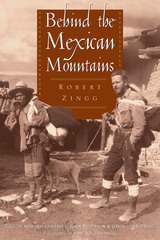
In 1930, anthropologists Robert Zingg and Wendell Bennett spent nine months among the Tarahumara of Chihuahua, Mexico, one of the least acculturated indigenous societies in North America. Their fieldwork resulted in The Tarahumara: An Indian Tribe of Northern Mexico (1935), a classic ethnography still familiar to anthropologists. In addition to this formal work, Zingg also penned a personal, unvarnished travelogue of his sojourn among the Tarahumara. Unpublished in his lifetime, Behind the Mexican Mountains is now available in print for the first time.
This colorful account provides a compelling description of the landscape, people, traditions, language, and archaeology of the Tarahumara region. Abandoning the scientific detachment of the observer, Zingg frankly records his reactions to the people and their customs as he vividly evokes the daily experience of doing fieldwork. In the introduction, Howard Campbell examines Zingg's writing in light of current critiques of anthropology as literature. He makes a strong case that although earlier anthropological writing reveals unacceptable cultural biases, it also demonstrates the ongoing importance and vitality of field research.
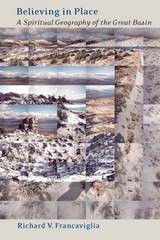
The austere landscape of the Great Basin has inspired diverse responses from the people who have moved through or settled in it. Author Richard V. Francaviglia is interested in the connection between environment and spirituality in the Great Basin, for here, he says, "faith and landscape conspire to resurrect old myths and create new ones." As a geographer, Francaviglia knows that place means more than physical space. Human perceptions and interpretations are what give place its meaning. In Believing in Place, he examines the varying human perceptions of and relationships with the Great Basin landscape, from the region's Native American groups to contemporary tourists and politicians, to determine the spiritual issues that have shaped our connections with this place. In doing so, he considers the creation and flood myths of several cultures, the impact of the Judeo-Christian tradition and individualism, Native American animism and shamanist traditions, the Mormon landscape, the spiritual dimensions of gambling, the religious foundations of Cold War ideology, stories of UFOs and alien presence, and the convergence of science and spirituality.
Believing in Place is a profound and totally engaging reflection on the ways that human needs and spiritual traditions can shape our perceptions of the land. That the Great Basin has inspired such a complex variety of responses is partly due to its enigmatic vastness and isolation, partly to the remarkable range of peoples who have found themselves in the region. Using not only the materials of traditional geography but folklore, anthropology, Native American and Euro-American religion, contemporary politics, and New Age philosophies, Francaviglia has produced a fascinating and timely investigation of the role of human conceptions of place in that space we call the Great Basin.

Barkan, voraciously curious and witty, offers a self-deprecating guide to the history of Jewish life in Berlin, revealing how, beginning in the early nineteenth century, Jews became prominent in the arts, the sciences, and the city’s public life. With him, we tour the ivy-covered confines of the Schönhauser Allee cemetery, where many distinguished Jewish Berliners have been buried, and we stroll through Bayerisches Viertel, an elegant neighborhood created by a Jewish developer and that came to be called Berlin’s “Jewish Switzerland.” We travel back to the early nineteenth century to the salon of Rahel Varnhagen, a Jewish society doyenne, who frequently hosted famous artists, writers, politicians, and the occasional royal. Barkan also introduces us to James Simon, a turn-of-the-century philanthropist and art collector, and we explore the life of Walter Benjamin, who wrote a memoir of his childhood in Berlin as a member of the assimilated Jewish upper-middle class. Throughout, Barkan muses about his own Jewishness, while celebrating the rich Jewish culture on view in today’s Berlin.
A winning, idiosyncratic travel companion, Berlin for Jews offers a way to engage with German history, to acknowledge the unspeakable while extolling the indelible influence of Jewish culture.


Between Sea and Sahara gives us Algeria in the third decade of colonization. Written in the 1850s by the gifted painter and extraordinary writer Eugene Fromentin, the many-faceted work is travelogue, fiction, stylized memoir, and essay on art. Fromentin paints a compelling word picture of Algeria and its people, questioning France’s—and his own—role there. He shows French dynamism tending to arrogance, tinged with malaise, as well as the complexity of the Algerians and their canny survival tactics. In his efforts to capture the non-Western world on paper as well as on canvas, Fromentin reveals much about the roots of a colonial relationship that continues to affect the Algeria of today. He also reveals his own development as painter, writer—and human being.
Now available for the first time in English, Between Sea and Sahara appeals to today’s reader on many levels—as a story of color, romance, and dramatic tension; as an eywitness account of the colonial experience in Algeria; as a study in trans-genre text, foreshadowing Fromentin’s psychological masterpiece, the novel Dominique. And, as Valérie Orlando points out in her introduction, Fromentin opens a window on the ethos informing the fashion of Orientalism that flourished with colonialism.

The bibliography volume of the three-volume East Looks West: East European Travel Writing in Europe collates travel writing published in book form by east Europeans travelling in Europe from ca. 1550 to 2000. It is intended as a fundamental research tool, collecting together travel writings within each national/linguistic tradition, and enabling comparative analysis of such material. It fills an important gap in the existing reference literature, both in western and east European languages, and will be of use to those working in the growing fields of comparative travel writing, regional and national identities, and postcolonialism.
These texts exist in surprisingly large numbers, and include writings of high literary quality as well as of historical interest, but they have been relatively little studied as a genre. Much of this material is rare and difficult to find, even in national libraries. As a result, there are few bibliographical surveys of the literature of east European travel and self-representation, and none that are region-wide or comparative in scope.
This is the third volume of a three-part set of East Looks West.
Vol. 1. Orientations. An Anthology of East European Travel Writing on Europe.
Vol. 2. Undern Eastern Eyes. A Comparative Introduction to East European Travel Writing on Europe.
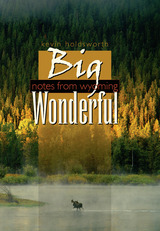
Growing up in Utah, Holdsworth couldn't wait to move away. Once ensconced on the East Coast, however, he found himself writing westerns and dreaming of the mountains he'd skied and climbed. Fed up with city life, he moved to a small Wyoming town.
In Big Wonderful, he writes of a mountaineering companion's death, the difficult birth of his son, and his father's terminal illness - encounters with mortality that sharpened his ideas about risk, care, and commitment. He puts a new spin on mountaineering literature, telling wild tales from his reunion with the mountains but also relating the surprising willpower it took to turn back from risks he would have taken before he became a father. He found he needed courage to protect and engage deeply with his family, his community, and the wild places he loves.
Holdsworth's essays and poems are rich with anecdotes, characters, and vivid images. Readers will feel as if they themselves watched a bear destroy an entire expedition's food, walked with his great-great-grandmother along the icy Mormon Trail, and tried to plant a garden in Wyoming's infamous wind.
Readers who love the outdoors will enjoy this funny and touching take on settling down and adventuring in the West's most isolated country.
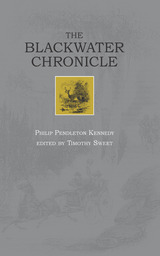
This wilderness travelogue about the exploration of Canaan Valley, West Virginia was originally published in 1853. With appeal far beyond its time and region, first editions of this chronicle reached New York, London, and even Germany. This often humorous and always fascinating story reveals Kennedy's journey into an unexplored territory.

Through stark observations and visceral experiences, Blood Orchid begins Charles Bowden’s dizzying excavation of the brutal, systemic violence and corruption at the roots of American society. Like a nightmarish fever dream that turns out to be our own reality, Bowden visits dying friends in skid row apartments in Los Angeles, traverses San Francisco byways lined with clubs and joints, and roams through village bars and streets in the Sierra Madre mountains. In these wanderings resides a yearning for the understanding of past and present sins, the human penchant for warfare, abuse, and oppression, and the true war between humanity, the industrialized world, and the immense tolls of our shared land. Deeply personal, hauntingly prophetic, and bracingly sharp, the start to Bowden’s harrowed quest to unearth our ugly truths remains strikingly poignant today.
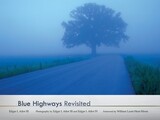
Through illustrative photography and text, Ailor and his son capture once more the local color and beauty of the back roads, cafes, taverns, and people of Heat-Moon’s original trek. Almost every photograph in Blue Highways Revisited is referenced to a page in the original work. With side-by-side photographic comparisons of eleven of Heat-Moon’s characters, this new volume reflects upon and develops the memoir of Heat-Moon’s cross-country study of American culture and spirit. Photographs of Heat-Moon’s logbook entries, original manuscript pages, Olympia typewriter, Ford van, and other artifacts also give readers insight into Heat-Moon’s approach to his trip. Discussions with Heat-Moon about these archival images provide the reader insight into the travels and the writing of Blue Highways that only the perspective of the author could provide.
Blue Highways Revisited reaffirms that the "blue highway" serves as a romantic symbol of the free and restless American spirit, as the Ailors lose themselves to the open road as Heat-Moon did thirty years previously. This book reminds readers of the insatiable attraction of the “blue highway”—“But in those brevities just before dawn and a little after dusk—times neither day or night—the old roads return to the sky some of its color. Then, in truth, they carry a mysterious cast of blue, and it's that time when the pull of the blue highway is strongest, when the open road is a beckoning, a strangeness, a place where a man can lose himself” (Introduction to Blue Highways).
Cultivated from the fierce ideas seeded in Blood Orchid, Blues for Cannibals is an elegiac reflection on death, pain, and a wavering confidence in humanity’s own abilities for self-preservation. After years of reporting on border violence, sex crimes, and the devastation of the land, Bowden struggles to make sense of the many ways in which we destroy ourselves and whether there is any way to survive. Here he confronts a murderer facing execution, sex offenders of the most heinous crimes, a suicidal artist, a prisoner obsessed with painting portraits of presidents, and other people and places that constitute our worst impulses and our worst truths. Painful, heartbreaking, and forewarning, Bowden at once tears us apart and yearns for us to find ourselves back together again.

This winding journey features literati both past and present, indigenous and foreign. These characters live alongside Luque’s own comments and observations in a narrative that is rich in historical and personal detail. The writer who inspired this great journey, Borges himself, becomes a character in this narrative that is infused with extracts and reflections from his essays and poetry. Borges in Sicily acts as a travel diary, a guide to the most fascinating places in Sicily, a recounting of Borges’s journey around the island, and a deeply poetic story of Luque’s own adventures. The book also includes twenty-three photographs from the renowned Magnum photographer Ferdinando Scianna, and it won the 1st Premio International del Libros de Viajes.
When writer Merrill Joan Gerber is invited to join her husband, a history professor, as he takes a class of American college students to study in Florence, Italy, she feels terrified at the idea of leaving her comforts, her friends, and her aged mother in California. Her husband tries to assure her that her fear of Italy—and her lack of knowledge of the Italian language—will be offset by the discoveries of travel. "I can’t tell you exactly what will happen, but something will. And it will all be new and interesting." Botticelli Blue Skies is the tale of a woman who readily admits to fear of travel, a fear that many experience but are embarrassed to admit. When finally she plunges into the new adventure, she describes her experiences in Florence with wit, humor, and energy.
Instead of sticking to the conventional tourist path, Gerber follows her instincts. She makes discoveries without tour guides droning in her ear and reclaims the travel experience as her own, taking time to shop in a thrift shop, eat in a Chinese restaurant that serves "Dragon chips," make friends with her landlady who turns out to be a Countess, and visit the class of a professor at the university. She discovers a Florence that is not all museums and wine. With newfound patience and growing confidence, Gerber makes her way around Florence, Venice, and Rome. She visits famous places and discovers obscure ones—in the end embracing all that is Italian. Botticelli Blue Skies (accompanied by the author’s own photographs) is an honest, lyrical, touching account of the sometimes exhausting, often threatening, but always enriching physical and emotional challenge that is travel.
Nothing indeed. In 1932, Peter Fleming, a literary editor, traded his pen for a pistol and took off as part of the celebrated search for missing English explorer Colonel P.H. Fawcett. With meager supplies, faulty maps, and packs of rival newspapermen on their trail, Fleming and his companions marched, canoed, and hacked through 3,000 miles of wilderness and alligator-ridden rivers in search of the fate of the lost explorer. One of the great adventure stories, Brazilian Adventure is as fresh a story today as it was when originally published in 1933.
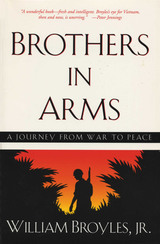
Reviews of the Knopf edition:
"A wonderful book—fresh and intelligent. Broyles's eye for Vietnam, then and now, is unerring." —Peter Jennings
"[A] superbly written, often moving story of Broyles' journey back to the killing ground in Vietnam where he once served as a Marine lieutenant. A cool, clear meditation that stings the heart." —Kirkus Reviews
"A first-rate piece of work, infused with an ideal American common decency and common sense." —Kurt Vonnegut
"Exceptional and memorable." —Gay Talese
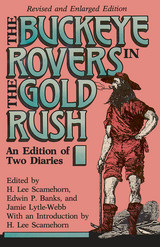
When “California Fever” raced through southeastern Ohio in the spring of 1849, a number of residents of Athens County organized a cooperative venture for traveling overland to the mines. Known as the “Buckeye Rovers,” the company began its trip westward in early April. The Buckeye Rovers, along with thousands who traveled the overland route to California, endured numerous hardships and the seemingly constant threat of attacks from hostile Indians. On reaching their destination, the Ohioans discovered that rich deposits of gold were extremely rare, and that except for a few lucky fortune–seekers, mining required hard physical labor and yielded small rewards. They persisted nonetheless and most of the company returned to Athens in late 1851 or early 1852 with modest fortunes.
The arduous experiences of the overland trek were recorded by two Buckeye Rover diarists. The more compete account was compiled by John Banks. He wrote effusively while on the trail and throughout his stay of more than two years in the gold regions. J. Elza Armstrong, by contrast, was brief, even laconic, and his journal ended upon reaching California. The contrast between the two brings into focus the divergent personalities who were drawn to California by the lure of gold.
A nine–month segment of Bank’s diary, from February to November, 1851, had been missing at the time the story of the Buckeye Rovers was first published in 1965. This revised and enlarged edition contains the complete diaries. They offer valuable record of the Buckeyes’ adventures from the time they left home until the time they departed California for the return trip to Ohio.

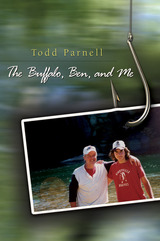
The Buffalo River in northwest Arkansas is one of the longest free-flowing, undammed rivers west of the Mississippi—and one of the most beautiful waterways on earth. Almost lost to development, it proved to be the perfect testing ground for a young boy almost lost to mediocrity.
Middle-schooler Ben is struggling with learning challenges that have left him resentful and underachieving. His father, middle-ager Todd, wants to help his son gain self-confidence but is searching for his own identity. For twelve adventure-filled days on the river—all 125 miles of her navigable course, from Ponca to the White River—father and son discover the formative, curative, and redemptive powers of nature.
Leaving video games and cell phones behind isn’t easy for kids these days, but in the great outdoors parents and youngsters can connect in unimaginable ways. The Buffalo, Ben, and Me shares such a connection in an adventure story set on a wild river. It is a captivating tale featuring a host of colorful characters and enlivened by photos that reflect the essence of the wilderness.
But deeper than that, it is the story of crossing a threshold from dream to possibility—of one man’s search for meaning in his life and his efforts to motivate his son, blending love of family with love of nature in a tale of transformation. It tells how a rebellious teen and a bored banker conspired to buck a system keyed to predictability, and how a wild river inspired both to a better use of their lives. “This trip hit me as hard as it did Ben,” writes Parnell, “as a wake-up call to life, to what is important, to what is not.”
The trip down the Buffalo was one that even Ben admits changed his life in more ways than one, as he later went on to earn a master of science degree specializing in stream ecology. For any reader who loves the outdoors—and especially those seeking to connect with their children—The Buffalo, Ben, and Me is essential reading that reminds us of possibilities to be had in facing life head-on as it raises awareness of the need to protect the Ozarks’ water resources and heritage.
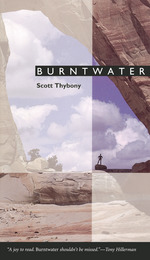
This book takes the backroads, crossing the Colorado Plateau from the headwaters of the Virgin River to the mouth of the Dirty Devil, from the badlands below Twin Angels to a remote mesa in Bandelier. As the miles go by and the stories unfold, there is a growing sense of mystery, of words not spoken, of messages carried on the wind. Reaching the Shrine of the Stone Lions, the writer recounts a near-fatal descent into the Grand Canyon where he finds a way to reconnect with the beauty of life. There his journey ends with an emotional punch that goes straight to the mind and the heart.
READERS
Browse our collection.
PUBLISHERS
See BiblioVault's publisher services.
STUDENT SERVICES
Files for college accessibility offices.
RECENTLY PUBLISHED



UChicago Accessibility Resources
home | accessibility | search | about | contact us
BiblioVault ® 2001 - 2026
The University of Chicago Press