
 A SCHOLARLY BOOK REPOSITORY
48 start with B start with B
To help untangle these apparent paradoxes, the editors of Baltimore Revisited have assembled a collection of over thirty experts from inside and outside academia. Together, they reveal that Baltimore has been ground zero for a slew of neoliberal policies, a place where inequality has increased as corporate interests have eagerly privatized public goods and services to maximize profits. But they also uncover how community members resist and reveal a long tradition of Baltimoreans who have fought for social justice.
The essays in this collection take readers on a tour through the city’s diverse neighborhoods, from the Lumbee Indian community in East Baltimore to the crusade for environmental justice in South Baltimore. Baltimore Revisited examines the city’s past, reflects upon the city’s present, and envisions the city’s future.
"White's Barack Obama's America eloquently captures both the important nuances of the current political scene and its long-term consequences."
---Richard Wirthlin, former pollster for Ronald Reagan
"This delightfully written and accessible book is the best available account of the changes in culture, society, and politics that have given us Barack Obama's America."
---Stan Greenberg, pollster for Bill Clinton and Chairman and CEO of Greenberg Quinlan Rosner Research
"From one of the nation's foremost experts on how values shape our politics, a clear and compelling account of the dramatic shifts in social attitudes that are transforming American political culture. White's masterful blend of narrative and data illuminates the arc of electoral history from Reagan to Obama, making a powerful case for why we are entering a new progressive political era."
---Matthew R. Kerbel, Professor of Political Science, Villanova University, and author of Netroots
"John Kenneth White is bold. He asks the big questions . . . Who are we? What do we claim to believe? How do we actually live? What are our politics? John Kenneth White writes compellingly about religion and the role it played in making Barack Obama president. White's keen insight into America's many faiths clarifies why Barack Obama succeeded against all odds. It is a fascinating description of religion and politics in twenty-first-century America---a must-read."
---Kathleen Kennedy Townsend, former Lieutenant Governor of Maryland and author of Failing America's Faithful
"In Barack Obama's America, John Kenneth White has written the political equivalent of Baedeker or Michelin, the definitive guide to and through the new, uncharted political landscape of our world. White captures and explains what America means---and what it means to be an American---in the twenty-first century."
---Mark Shields, nationally syndicated columnist and political commentator for PBS NewsHour
"John White has always caught important trends in American politics that others missed. With his shrewd analysis of why Barack Obama won, he's done it again."
---E. J. Dionne, Jr., Senior Fellow, Brookings Institution, and University Professor in the Foundations of Democracy and Culture at Georgetown University
The election of Barack Obama to the presidency marks a conclusive end to the Reagan era, writes John Kenneth White in Barack Obama's America. Reagan symbolized a 1950s and 1960s America, largely white and suburban, with married couples and kids at home, who attended church more often than not.
Obama's election marks a new era, the author writes. Whites will be a minority by 2042. Marriage is at an all-time low. Cohabitation has increased from a half-million couples in 1960 to more than 5 million in 2000 to even more this year. Gay marriages and civil unions are redefining what it means to be a family. And organized religions are suffering, even as Americans continue to think of themselves as a religious people. Obama's inauguration was a defining moment in the political destiny of this country, based largely on demographic shifts, as described in Barack Obama's America.
John Kenneth White is Professor of Politics at the Catholic University of America in Washington, D.C.
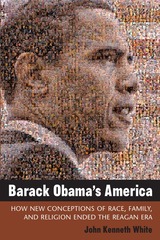
Cover image: "Out of many, we are one: Dare to Hope: Faces from 2008 Obama Rallies" by Anne C. Savage, view and buy full image at http://revolutionaryviews.com/obama_poster.html.

An in-depth look at how one high school addressed racial inequality head-on.
The new superintendent stood before the faculty of “Oakmont High,” a large, diverse public school, and spoke a cold truth about American education. He described seeing the vibrant mix of students in the school’s hallways disperse into racially segregated classrooms when the bell rang. The fact was that students were sorted into tracks—supposedly race-neutral, “ability-based” pathways—that led to sharply unequal experiences and opportunities throughout high school and often their whole lives. “Why is it fair for white kids to have a better education than Black kids?” the superintendent asked his faculty. “It’s racism pure and simple, and it’s going to stop!”
Racial inequality persists because racism is systemic, baked into countless interlacing beliefs, practices, and structures that make up the way we do school. Tracking is one of many such practices. In Beautiful Struggle, Sharon M. Chubbuck and Cynthia M. Ellwood examine eleven years of transformation by administrators, teachers, students, and others as they tackled systemic racism head-on, starting with tracking. The people of OHS encountered intense resistance and made extraordinary inroads. They fought inequality with hard conversations and concrete steps. They dramatically increased Black and brown students’ access to rich, rigorous learning from the moment students entered as freshmen. They questioned and restructured the interconnected web of policy and practices in every aspect of the school. Students themselves propelled major changes in academic opportunity and the very culture of the school.
Chubbuck and Ellwood argue that taking on racial inequality requires an unrelenting focus on racial justice, challenging systems on every front, broad collective leadership across race and role, and the will to navigate difference and conflict. The story within Beautiful Struggle offers a hopeful though sobering path forward.

According to popular media and scholarship, Detroit, the once-vibrant city that crumbled with the departure of the auto industry, is where dreams can be reborn. It is a place that, like America itself, is gritty and determined. It has faced the worst kind of adversity, and supposedly now it’s back. But what does this narrative of “new Detroit” leave out? Beautiful Wasteland reveals that the contemporary story of Detroit’s rebirth is an upcycled version of the American Dream, which has long imagined access to work, home, and upward mobility as race-neutral projects. They’re not. As Rebecca J. Kinney shows, the narratives of Detroit’s rise, decline, and potential to rise again are deeply steeped in material and ideological investments in whiteness.
By remapping the narratives of contemporary Detroit through an extension of America’s frontier mythology, Kinney analyzes a cross-section of twentieth and twenty-first century cultural locations—an Internet forum, ruin photography, advertising, documentary film, and print and online media. She illuminates how the stories we tell about Detroit as a frontier of possibility enable the erasure of white privilege and systemic racism. By situating Detroit as a “beautiful wasteland,” both desirable and distressed, this shows how the narrative of ruin and possibility form a mutually constituted relationship: the city is possible precisely because of its perceived ruin.
Beautiful Wasteland tackles the key questions about the future of postindustrial America. As cities around the country reckon with their own postindustrial landscapes, Rebecca Kinney cautions that development that elides considerations of race and class will only continue to replicate uneven access to the city for the poor, working class, and people of color.
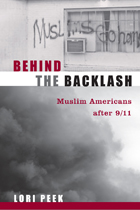
As the nation tried to absorb the shock of the 9/11 attacks, Muslim Americans were caught up in an unprecedented wave of backlash violence. Public discussion revealed that widespread misunderstanding and misrepresentation of Islam persisted, despite the striking diversity of the Muslim community.
Letting the voices of 140 ordinary Muslim American men and women describe their experiences, Lori Peek's path-breaking book, Behind the Backlash presents moving accounts of prejudice and exclusion. Muslims speak of being subjected to harassment before the attacks, and recount the discrimination they encountered afterwards. Peek also explains the struggles of young Muslim adults to solidify their community and define their identity during a time of national crisis.
Behind the Backlash seeks to explain why blame and scapegoating occur after a catastrophe. Peek sets the twenty-first century experience of Muslim Americans, who were vilified and victimized, in the context of larger sociological and psychological processes. Peek’s book will be of interest to those in disaster research studies, sociology of religion, and race and ethnic relations.
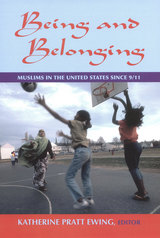
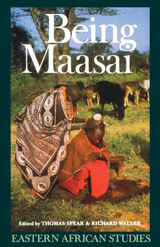
Everyone “knows” the Maasai as proud pastoralists who once dominated the Rift Valley from northern Kenya to central Tanzania.
But many people who identity themselves as Maasai, or who speak Maa, are not pastoralist at all, but farmers and hunters. Over time many different people have “become” something else. And what it means to be Maasai has changed radically over the past several centuries and is still changing today.
This collection by historians, archaeologists, anthropologists and linguists examines how Maasai identity has been created, evoked, contested, and transformed from the time of their earliest settlement in Kenya to the present, as well as raising questions about the nature of ethnicity generally.
Integration and discrimination are two of the most salient yet contradictory forces shaping contemporary European politics. In Between Belonging and Exclusion Lara-Zuzan Golesorkhi asserts that this tension exists because integration politics do not facilitate non-discrimination, nor do they address experiences of discrimination. She draws on interviews with refugees and other key actors in integration politics to examine the barriers hindering refugee women’s labor market participation in Germany.
Golesorkhi introduces four explanatory tropes that reveal how and why integration efforts have often fallen short. She examines the power relations and limitations in migration governance as well as the identity narratives of Germanness/Europeanness, and the gendered and racialized mechanisms of “othering” that contribute to discrimination.
Between Belonging and Exclusion delineates what Germany and the EU “get wrong” about integration and anti-discrimination as it outlines conceptual and practical suggestions for expanding the terms of inclusion.

Their voices come from Bethlehem and Hebron. You can hear them from Jerusalem to Nazareth, and witness their protests in Gaza and Ramallah. From the refugee camps in the West Bank, you can hear the voices of the Palestinian people call out to demand self-determination and a better quality of life. But outside of Israel and the occupied territories, these individual voices are rarely heard—until now.
In Beyond the Wall: Writing a Path through Palestine, internationally renowned feminist critic and writer Bidisha collects the testimonies of an occupied people—ordinary citizens, activists, and children—alongside those of international aid workers and foreign visitors for a revelatory look at a population on the margins.
Called “beautifully belligerent, [and] fiercely intelligent” by The Independent and a “dazzlingly creative writer” by the London Times, Bidisha amplifies the voices of the Palestinian people in this book and lends them her own considerable strength.

Drawing on interviews, archival data, and participant observations, Bueker examines how Italian, Jewish, and Chinese newcomers influenced and were influenced by the established Wellesley community. She examines the ways in which immigrant and ethnic groups assimilate, retain their cultural backgrounds, and respond to discrimination, sometimes simultaneously, and, in doing so, alter the mainstream. Some new residents responded to Wellesley by assimilating to it. They developed relationships with long-term resident neighbors, volunteered in their children’s schools, and ran for elected positions. In adapting themselves to their new community, however, they also influenced it by virtue of their distinct cultural backgrounds.
Other new residents worked to preserve their cultures by establishing ethnic-specific organizations, lobbying to have new holidays incorporated into the calendar, and hewing to their own ethnic culinary traditions. Their efforts also influenced the established community. When newcomers attempted to retain their culture by requesting ethnic-specific food items be stocked at the local grocery store, opening ethic restaurants, or renting space for a new organization, for example, they impacted the established community. New individuals and groups also responded to experiences of hostility and discrimination. Italian residents fought against attempts at school redistricting targeting them in the 1930s, Jewish residents pushed back against housing discrimination in the 1950s and 1960s, and Chinese residents responded to anti-Asian incidents in the wake of the COVID-19 pandemic in 2020. These groups had to engage with the larger community to rectify these injustices. Some of the changes in Wellesley have come about with little recognition or response, others have been met with resistance and anger. Whether the changes are subtle or obvious and whether new groups are embraced or resisted, the whole town is altered in an ongoing process as new groups continue to move to and settle in Wellesley.
Beyond White Picket Fences is a timely and compelling examination of the ways newcomers become part of and shape American communities.
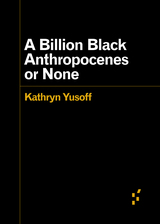
Rewriting the “origin stories” of the Anthropocene
No geology is neutral, writes Kathryn Yusoff. Tracing the color line of the Anthropocene, A Billion Black Anthropocenes or None examines how the grammar of geology is foundational to establishing the extractive economies of subjective life and the earth under colonialism and slavery. Yusoff initiates a transdisciplinary conversation between feminist black theory, geography, and the earth sciences, addressing the politics of the Anthropocene within the context of race, materiality, deep time, and the afterlives of geology.
Forerunners is a thought-in-process series of breakthrough digital works. Written between fresh ideas and finished books, Forerunners draws on scholarly work initiated in notable blogs, social media, conference plenaries, journal articles, and the synergy of academic exchange. This is gray literature publishing: where intense thinking, change, and speculation take place in scholarship.
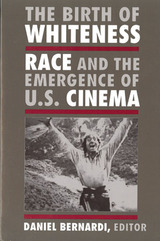
As indelible components of the history of the United States, race and racism have permeated nearly all aspects of life: cultural, economic, political, and social. In this first anthology on race in early cinema, fourteen scholars examine the origins, dynamics, and ramifications of racism and Eurocentrism and the resistance to both during the early years of American motion pictures. Any discussion of racial themes and practices in any arena inevitably begins with the definition of race. Is race an innate and biologically determined "essence" or is it a culturally constructed category? Is the question irrelevant? Perhaps race exists as an ever-changing historical and social formation that, regardless of any standard definition, involves exploitation, degradation, and struggle. In his introduction, Daniel Bernardi writes that "early cinema has been a clear partner in the hegemonic struggle over the meaning of race" and that it was steadfastly aligned with a Eurocentric world view at the expense of those who didn't count as white.
The contributors to this work tackle these problems and address such subjects as biological determinism, miscegenation, Manifest Destiny, assimilation, and nativism and their impact on early cinema. Analyses of The Birth of a Nation, Romona, Nanook of the North and Madame Butterfly and the directorial styles of D. W. Griffith, Oscar Micheaux, and Edwin Porter are included in the volume.
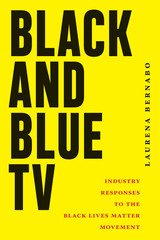
Black and Blue TV explores the ways television productions have responded to the Black Lives Matter movement. Television programs’ engagement with BLM was common before George Floyd’s murder sparked international protests in the summer of 2020, at which point it became nearly unavoidable for many series. Images of police using violence against Black Americans fueled criticisms of the role of television—especially cop shows—in perpetuating “copaganda,” highlighting the fact that television’s cops are nearly always the good guys, even when they break the law and use excessive force. Black and Blue TV identifies trends and anomalies in television’s engagement with BLM but also investigates the people who influence what those representations look like. Pairing textual criticism with interviews with television creatives, executives, and media activists, author Laurena Bernabo traces shifts in how these individuals understand their role in televisual culture and the cultural forum of narratives that are produced and distributed as a result.

'Focusing on the period from the 1960s onward, Brian Dooley suggests that the black rights struggle in the US had a formative influence on Northern Ireland's civil rights movement which adopted similar tactics of protest marches and sit-ins ... A well researched book, written from an unusual angle that illuminates this understudied international influence on the Ulster conflict' Political Studies
Ties between political activists in Black America and Ireland span several centuries, from the days of the slave trade to the close links between Frederick Douglass and Daniel O’Connell, and between Marcus Garvey and Eamon de Valera. This timely book traces those historic links and examines how the struggle for black civil rights in America in the 1960s helped shape the campaign against discrimination in Northern Ireland. The author includes interviews with key figures such as Angela Davis, Bernadette McAliskey and Eamonn McCann.
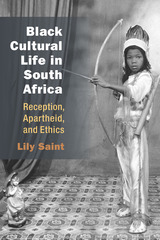
This study provocatively posits that states of oppression, including colonial and postcolonial rule, can elicit ethical responses to imaginative identification through encounters with popular culture, and it asks whether and how they carry over into ethical action. Its consideration of how globalized popular culture “travels” not just in material form, but also through the circuits of the imaginary, opens a new window for exploring the ethical and liberatory stakes of popular culture. Each chapter focuses on a separate genre, yet the overall interdisciplinary approach to the study of genre and argument for an expansion of ethical theory that draws on texts beyond the Western canon speak to growing concerns about studying genres and disciplines in isolation. Freed from oversimplified treatments of popular forms—common to cultural studies and ethical theory alike—this book demonstrates that people can do things with mass culture that reinvigorate ethical life.
Lily Saint’s new volume will interest Africanists across the humanities and the social sciences, and scholars of Anglophone literary, globalization, and cultural studies; race; ethical theories and philosophies; film studies; book history and material cultures; and the burgeoning field of comics and graphic novels.

Black Flag over Dixie: Racial Atrocities and Reprisals in the Civil War highlights the central role that race played in the Civil War by examining some of the ugliest incidents that played out on its battlefields. Challenging the American public’s perception of the Civil War as a chivalrous family quarrel, twelve rising and prominent historians show the conflict to be a wrenching social revolution whose bloody excesses were exacerbated by racial hatred.
Edited by Gregory J. W. Urwin, this compelling volume focuses on the tendency of Confederate troops to murder black Union soldiers and runaway slaves and divulges the details of black retaliation and the resulting cycle of fear and violence that poisoned race relations during Reconstruction. In a powerful introduction to the collection, Urwin reminds readers that the Civil War was both a social and a racial revolution. As the heirs and defenders of a slave society’s ideology, Confederates considered African Americans to be savages who were incapable of waging war in a civilized fashion. Ironically, this conviction caused white Southerners to behave savagely themselves. Under the threat of Union retaliation, the Confederate government backed away from failing to treat the white officers and black enlisted men of the United States Colored Troops as legitimate combatants. Nevertheless, many rebel commands adopted a no-prisoners policy in the field. When the Union’s black defenders responded in kind, the Civil War descended to a level of inhumanity that most Americans prefer to forget.
In addition to covering the war’s most notorious massacres at Olustee, Fort Pillow, Poison Spring, and the Crater, Black Flag over Dixie examines the responses of Union soldiers and politicians to these disturbing and unpleasant events, as well as the military, legal, and moral considerations that sometimes deterred Confederates from killing all black Federals who fell into their hands. Twenty photographs and a map of massacre and reprisal sites accompany the volume.
The contributors are Gregory J. W. Urwin, Anne J. Bailey, Howard C. Westwood, James G. Hollandsworth Jr., David J. Coles, Albert Castel, Derek W. Frisby, Weymouth T. Jordan Jr., Gerald W. Thomas, Bryce A. Suderow, Chad L. Williams, and Mark Grimsley.
An in-depth look at Black food and the challenges it faces today
For Black Americans, the food system is broken. When it comes to nutrition, Black consumers experience an unjust and inequitable distribution of resources. Black Food Matters examines these issues through in-depth essays that analyze how Blackness is contested through food, differing ideas of what makes our sustenance “healthy,” and Black individuals’ own beliefs about what their cuisine should be.
Primarily written by nonwhite scholars, and framed through a focus on Black agency instead of deprivation, the essays here showcase Black communities fighting for the survival of their food culture. The book takes readers into the real world of Black sustenance, examining animal husbandry practices in South Carolina, the work done by the Black Panthers to ensure food equality, and Black women who are pioneering urban agriculture. These essays also explore individual and community values, the influence of history, and the ongoing struggle to meet needs and affirm Black life.
A comprehensive look at Black food culture and the various forms of violence that threaten the future of this cuisine, Black Food Matters centers Blackness in a field that has too often framed Black issues through a white-centric lens, offering new ways to think about access, privilege, equity, and justice.
Contributors: Adam Bledsoe, U of Minnesota; Billy Hall; Analena Hope Hassberg, California State Polytechnic U, Pomona; Yuson Jung, Wayne State U; Kimberly Kasper, Rhodes College; Tyler McCreary, Florida State U; Andrew Newman, Wayne State U; Gillian Richards-Greaves, Coastal Carolina U; Monica M. White, U of Wisconsin–Madison; Brian Williams, Mississippi State U; Judith Williams, Florida International U; Psyche Williams-Forson, U of Maryland, College Park; Willie J. Wright, Rutgers U.
Contributors. Rémy Bazenguissa-Ganga, Allison Blakely, Jennifer Anne Boittin, Marcus Bruce, Fred Constant, Mamadou Diouf, Arlette Frund, Michel Giraud, Bennetta Jules-Rosette, Trica Danielle Keaton, Jake Lamar, Patrick Lozès, Alain Mabanckou, Elisabeth Mudimbe-Boyi, T. Denean Sharpley-Whiting, Tyler Stovall, Christiane Taubira, Dominic Thomas, Gary Wilder
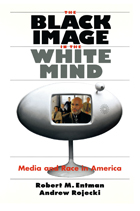
Using the media, and especially television, as barometers of race relations, Robert Entman and Andrew Rojecki explore but then go beyond the treatment of African Americans on network and local news to incisively uncover the messages sent about race by the entertainment industry-from prime-time dramas and sitcoms to commercials and Hollywood movies. While the authors find very little in the media that intentionally promotes racism, they find even less that advances racial harmony. They reveal instead a subtle pattern of images that, while making room for Blacks, implies a racial hierarchy with Whites on top and promotes a sense of difference and conflict. Commercials, for example, feature plenty of Black characters. But unlike Whites, they rarely speak to or touch one another. In prime time, the few Blacks who escape sitcom buffoonery rarely enjoy informal, friendly contact with White colleagues—perhaps reinforcing social distance in real life.
Entman and Rojecki interweave such astute observations with candid interviews of White Americans that make clear how these images of racial difference insinuate themselves into Whites' thinking.
Despite its disturbing readings of television and film, the book's cogent analyses and proposed policy guidelines offer hope that America's powerful mediated racial separation can be successfully bridged.
"Entman and Rojecki look at how television news focuses on black poverty and crime out of proportion to the material reality of black lives, how black 'experts' are only interviewed for 'black-themed' issues and how 'black politics' are distorted in the news, and conclude that, while there are more images of African-Americans on television now than there were years ago, these images often don't reflect a commitment to 'racial comity' or community-building between the races. Thoroughly researched and convincingly argued."—Publishers Weekly
"Drawing on their own research and that of a wide array of other scholars, Entman and Rojecki present a great deal of provocative data showing a general tendency to devalue blacks or force them into stock categories."—Ben Yagoda, New Leader
Winner of the Frank Luther Mott Award for best book in Mass Communication and the Robert E. Lane Award for best book in political psychology.
A birder strolling in Central Park. A college student lounging on a university quad. Two men sitting in a coffee shop. Perfectly ordinary actions in ordinary settings—and yet, they sparked jarring and inflammatory responses that involved the police and attracted national media coverage. Why? In essence, Elijah Anderson would argue, because these were Black people existing in white spaces.
In Black in White Space, Anderson brings his immense knowledge and ethnography to bear in this timely study of the racial barriers that are still firmly entrenched in our society at every class level. He focuses in on symbolic racism, a new form of racism in America caused by the stubbornly powerful stereotype of the ghetto embedded in the white imagination, which subconsciously connects all Black people with crime and poverty regardless of their social or economic position. White people typically avoid Black space, but Black people are required to navigate the “white space” as a condition of their existence. From Philadelphia street-corner conversations to Anderson’s own morning jogs through a Cape Cod vacation town, he probes a wealth of experiences to shed new light on how symbolic racism makes all Black people uniquely vulnerable to implicit bias in police stops and racial discrimination in our country.
An unwavering truthteller in our national conversation on race, Anderson has shared intimate and sharp insights into Black life for decades. Vital and eye-opening, Black in White Space will be a must-read for anyone hoping to understand the lived realities of Black people and the structural underpinnings of racism in America.
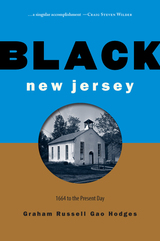
Black New Jersey tells the rich and complex story of the African American community’s remarkable accomplishments and the colossal obstacles they faced along the way. Drawing from rare archives, historian Graham Russell Gao Hodges brings to life the courageous black men and women who fought for their freedom and eventually built a sturdy and substantial middle class. He explores how the state’s unique mix of religious, artistic, and cultural traditions have helped to produce such world-renowned figures as Paul Robeson, Cory Booker, and Queen Latifah, as well as a host of lesser-known but equally influential New Jersey natives.
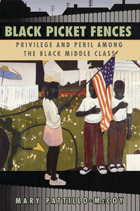
"An insightful look at the socio-economic experiences of the black middle class. . . . Through the prism of a South Side Chicago neighborhood, the author shows the distinctly different reality middle-class blacks face as opposed to middle-class whites." —Ebony
"A detailed and well-written account of one neighborhood's struggle to remain a haven of stability and prosperity in the midst of the cyclone that is the American economy." —Emerge
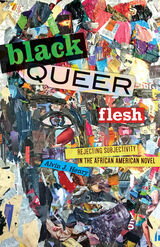
A groundbreaking examination of how twentieth-century African American writers use queer characters to challenge and ultimately reject subjectivity
Black Queer Flesh reinterprets key African American novels from the Harlem Renaissance to Black Modernism to contemporary literature, showing how authors have imagined a new model of Black queer selfhood. African American authors blame liberal humanism’s model of subjectivity for double consciousness and find that liberal humanism’s celebration of individual autonomy and agency is a way of disciplining Black queer lives. These authors thus reject subjectivity in search of a new mode of the self that Alvin J. Henry names “Black queer flesh”—a model of selfhood that is collective, plural, fluctuating, and deeply connected to the Black queer past.
Henry begins with early twentieth-century authors such as Jessie Redmon Fauset and James Weldon Johnson. These authors adapted the Bildungsroman, the novel of self-formation, to show African Americans gaining freedom and agency by becoming a liberal, autonomous subjects. These authors, however, discovered that the promise of liberal autonomy held out by the Bildungsroman was yet another tool of antiblack racism. As a result, they tentatively experimented with repurposing the Bildungsroman to throw off subjectivity and its attendant double consciousness. In contrast, Nella Larsen, Henry shows, was the first author to fully reject subjectivity. In Quicksand and Passing, Larsen invented a new genre showing her queer characters—characters whose queerness already positioned them on the margins of subjectivity—escaping subjectivity altogether. Using Ralph Ellison’s archival drafts, Henry then powerfully rereads Invisible Man, revealing that the protagonist as a queer, disabled character taught by the novel’s many other queer, disabled characters to likewise seek a selfhood beyond subjectivity. Although Larsen and Ellison sketch glimpses of this selfhood beyond subjectivity, only Saidiya Hartman’s Wayward Lives, Beautiful Experiments shows a protagonist fully inhabiting Black queer flesh—a new mode of selfhood that is collective, plural, always evolving, and no longer alienated from the black past.
Black Queer Flesh is an original and necessary contribution to Black literary studies, offering new ways to understand and appreciate the canonical texts and far more.
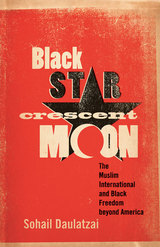
“The same rebellion, the same impatience, the same anger that exists in the hearts of the dark people in Africa and Asia,” Malcolm X declared in a 1962 speech, “is existing in the hearts and minds of 20 million black people in this country who have been just as thoroughly colonized as the people in Africa and Asia.” Four decades later, the hip-hop artist Talib Kweli gave voice to a similar Pan-African sentiment in the song “K.O.S. (Determination)”: “The African diaspora represents strength in numbers, a giant can't slumber forever.”
Linking discontent and unrest in Harlem and Los Angeles to anticolonial revolution in Algeria, Egypt, and elsewhere, Black leaders in the United States have frequently looked to the anti-imperialist movements and antiracist rhetoric of the Muslim Third World for inspiration. In Black Star, Crescent Moon, Sohail Daulatzai maps the rich, shared history between Black Muslims, Black radicals, and the Muslim Third World, showing how Black artists and activists imagined themselves not as national minorities but as part of a global majority, connected to larger communities of resistance. Daulatzai traces these interactions and alliances from the Civil Rights movement and the Black Power era to the “War on Terror,” placing them within a broader framework of American imperialism, Black identity, and the global nature of white oppression.
From Malcolm X and Muhammad Ali to contemporary artists and activists like Rakim and Mos Def, Black Star, Crescent Moon reveals how Muslim resistance to imperialism came to occupy a central position within the Black radical imagination, offering a new perspective on the political and cultural history of Black internationalism from the 1950s to the present.
In the pre-Civil War and Civil War periods the Illinois black code deprived blacks of suffrage and court rights, and the Illinois Free Schools Act kept most black children out of public schooling. But, as McCaul documents, they did not sit idly by. They applied the concepts of “bargaining power” (rewarding, punishing, and dialectical) and the American ideal of “community” to participate in winning two major victories during this era.
By the use of dialectical power, exerted mainly via John Jones’ tract, The Black Laws of Illinois, they helped secure the repeal of the state’s black code; by means of punishing power, mainly through boycotts and ‘‘invasions,’’ they exerted pressures that brought a cancellation of the Chicago public school policy of racial segregation.
McCaul makes clear that the blacks’ struggle for school rights is but one of a number of such struggles waged by disadvantaged groups (women, senior citizens, ethnics, and immigrants). He postulates a “stage’’ pattern for the history of the black struggle—a pattern of efforts by federal and state courts to change laws and constitutions, followed by efforts to entice, force, or persuade local authorities to comply with the laws and constitutional articles and with the decrees of the courts.
Race relations in twenty-first-century America will not be just a black-and-white issue. The 2000 census revealed that Hispanics already slightly outnumber African Americans as the largest ethnic group, while together Blacks and Hispanics constitute the majority population in the five largest U.S. cities. Given these facts, black-brown relations could be a more significant racial issue in the decades to come than relations between minority groups and Whites.
Offering some of the first in-depth analyses of how African Americans and Hispanics perceive and interact with each other, this pathfinding study looks at black-brown relations in Houston, Texas, one of the largest U.S. cities with a majority ethnic population and one in which Hispanics outnumber African Americans. Drawing on the results of several sociological studies, the authors focus on four key issues: how each group forms and maintains stereotypes of the other, areas in which the two groups conflict and disagree, the crucial role of women in shaping their communities' racial attitudes, and areas in which Hispanics and African Americans agree and can cooperate to achieve greater political power and social justice.

A Black-Jewish dialogue lifts a veil on these groups’ unspoken history, shedding light on the challenges and promises facing American democracy from its inception to the present
In this uniquely structured conversational work, two scholars—one of African American politics and religion, and one of contemporary American Jewish culture—explore a mystery: Why aren't Blacks and Jews presently united in their efforts to combat white supremacy? As alt-right rhetoric becomes increasingly normalized in public life, the time seems right for these one-time allies to rekindle the fires of the civil rights movement.
Blacks and Jews in America investigates why these two groups do not presently see each other as sharing a common enemy, let alone a political alliance. Authors Terrence L. Johnson and Jacques Berlinerblau consider a number of angles, including the disintegration of the “Grand Alliance” between Blacks and Jews during the civil rights era, the perspective of Black and Jewish millennials, the debate over Louis Farrakhan and the Nation of Islam, and the Israel-Palestine conflict.
Ultimately, this book shows how the deep roots of the Black-Jewish relationship began long before the mid-twentieth century, changing a narrative dominated by the Grand Alliance and its subsequent fracturing. By engaging this history from our country’s origins to its present moment, this dialogue models the honest and searching conversation needed for Blacks and Jews to forge a new understanding.
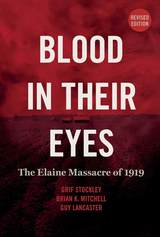
The first edition of Grif Stockley’s Blood in Their Eyes, published in 2001, brought renewed attention to the Elaine Massacre and sparked valuable new studies on racial violence and exploitation in Arkansas and beyond. With contributions from fellow historians Brian K. Mitchell and Guy Lancaster, this revised edition draws from recently uncovered source material and explores in greater detail the actions of the mob, the lives of those who survived the massacre, and the regime of fear and terror that prevailed under Jim Crow.

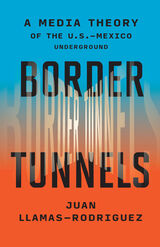
A comparative media analysis of the representation of the U.S.–Mexico border
Border tunnels at the U.S.–Mexico border are ubiquitous in news, movies, and television, yet, because they remain hidden and inaccessible, the public can encounter them only through media. Analyzing the technologies, institutional politics, narrative tropes, and aesthetic decisions that go into showing border tunnels across multiple forms of media, Juan Llamas-Rodriguez argues that we cannot properly address border issues without attending to—and fully understanding—the fraught relationship between their representation and reality.
Llamas-Rodriguez reveals that every media text about border tunnels, whether meant for entertainment, cable news, video games, or speculative design, implicitly takes a position on the politics of the border. The examples laid out in Border Tunnels will teach readers how to look differently at the border as it is commonly presented in various forms of media, from ABC’s Nightline and CNN’s Anderson Cooper 360º to reality TV, propaganda videos, and even digital effects in Hollywood action films. Llamas-Rodriguez examines how creative decisions in the production, promotion, and distribution of these media texts either emphasize or downplay issues such as border security, racial dynamics of migration, and sustainability of the borderlands.
Focusing on tunnels to show how media representations can influence all kinds of audiences—even those physically near the border—Border Tunnels helps us make sense of this pressing social issue, ultimately advancing understanding of the U.S.–Mexico border in all of its complexity and precariousness.
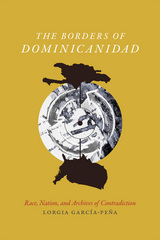

What is “brown” in—and beyond—the context of American identity politics? How has the concept changed since 9/11? In the most sustained examination of these questions to date, Kumarini Silva argues that “brown” is no longer conceived of solely as a cultural, ethnic, or political identity. Instead, after 9/11, the Patriot Act, and the wars in Iran, Iraq, and Afghanistan, it has also become a concept and, indeed, a strategy of identification—one rooted in xenophobic, imperialistic, and racist ideologies to target those who do not neatly fit or subscribe to ideas of nationhood.
Interweaving personal narratives, ethnographic research, analyses of popular events like the Miss America pageant, and films and TV shows such as the Harold and Kumar franchise and Black-ish, Silva maps junctures where the ideological, political, and mediated terrain intersect, resulting in an appetite for all things “brown” (especially South Asian brown) by U.S. consumers, while political and nationalist discourses and legal structures (immigration, emigration, migration, outsourcing, incarceration) conspire to control brown bodies both within and outside the United States.
Silva explores this contradictory relationship between representation and reality, arguing that the representation mediates and manages the anxieties that come from contemporary global realities, in which brown spaces, like India, Pakistan, and the Middle East pose key economic, security, and political challenges to the United States. While racism is hardly new, what makes this iteration of brown new is that anyone or any group, at any time, can be branded as deviant, as a threat.
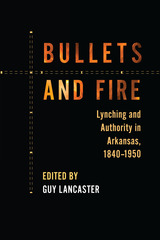
Among the topics discussed are the lynching of slaves, the Arkansas Council of the Association of Southern Women for the Prevention of Lynching, the 1927 lynching of John Carter in Little Rock, and the state’s long opposition to a federal anti-lynching law.
Throughout, the work reveals how the phenomenon of lynching—as the means by which a system of white supremacy reified itself, with its perpetrators rarely punished and its defenders never condemned—served to construct authority in Arkansas. Bullets and Fire will add depth to the growing body of literature on American lynching and integrate a deeper understanding of this violence into Arkansas history.
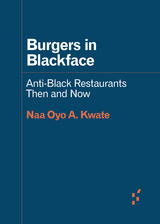
Exposes and explores the prevalence of racist restaurant branding in the United States
Aunt Jemima is the face of pancake mix. Uncle Ben sells rice. Chef Rastus shills for Cream of Wheat. Stereotyped Black faces and bodies have long promoted retail food products that are household names. Much less visible to the public are the numerous restaurants that deploy unapologetically racist logos, themes, and architecture. These marketing concepts, which center nostalgia for a racist past and commemoration of our racist present, reveal the deeply entrenched American investment in anti-blackness. Drawing on wide-ranging sources from the late 1800s to the present, Burgers in Blackface gives a powerful account, and rebuke, of historical and contemporary racism in restaurant branding.
Forerunners: Ideas First
Short books of thought-in-process scholarship, where intense analysis, questioning, and speculation take the lead
READERS
Browse our collection.
PUBLISHERS
See BiblioVault's publisher services.
STUDENT SERVICES
Files for college accessibility offices.
RECENTLY PUBLISHED




UChicago Accessibility Resources
home | accessibility | search | about | contact us
BiblioVault ® 2001 - 2026
The University of Chicago Press