
 A SCHOLARLY BOOK REPOSITORY
28 start with B start with B
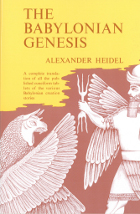
The Babylonian Genesis offers, in one compact, accessible volume, a complete translation of all the published cuneiform tablets of the various Babylonian creation stories, of both the Semitic Babylonian and the Sumerian material. Each creation account is preceded by a brief introduction from renowned scholar and translator Alexander Heidel dealing with the age and provenance of the tablets, the aim and purpose of the story, and everything else that a reader of any level of knowledge needs to understand these stories in their context. Also included is a translation and discussion of two Babylonian creation versions written in Greek. The final chapter presents a detailed examination of the Babylonian creation accounts in their relation to our Old Testament literature.

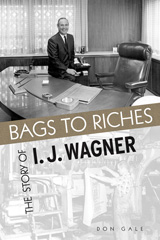
His sense of humor was legendary. His tenacity in pursuit of goals was unwavering. His grasp of past, present, and future opportunities was profound. Bags to Riches shows the personal side of an 'outsider' who became an 'insider' through congeniality, good humor, and integrity.

Based on interviews with over 150 people, including more than thirty hours with Frank himself, this biography reconstructs for the first time his life and career, from his working-class childhood in Bayonne, New Jersey, to his years at Harvard and in Boston politics, through his rise to national prominence. Stuart Weisberg captures Frank in all his quirkiness, irreverence, and complexity. He also examines his less appealing side—his gruff exterior, his legendary impatience, his aversion to wasting time. Weisberg reveals the pressure Frank has felt as the most prominent openly gay politician in the United States, one whose career was nearly derailed by a highly publicized sex scandal involving a male prostitute.
Above all, this book shows Frank to be a superb legislator—a pragmatic politician who has dedicated his career to pursuing an unabashedly liberal agenda and whose depth of intellect and sense of humor have made him one of the most influential and colorful figures in Washington.
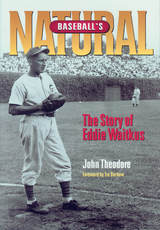
Baseball’s Natural: The Story of Eddie Waitkus is John Theodore’s true account of the slick-fielding first baseman who played for the Cubs and Phillies in the 1940s and became an immortalized figure in baseball lore as the inspiration for Roy Hobbs in Bernard Malamud’s The Natural.
The son of Lithuanian immigrants, Edward Stephen Waitkus (1919–1972) grew up in Boston and served in the Pacific during World War II. His army service in some of the war’s bloodiest combat earned him four Bronze Stars. Following the war, Waitkus became one of the most popular players of his era. As a rookie he led the Cubs in hitting in 1946 and quickly established himself as one of the best first basemen in the National League. To the disappointment of fans, the Cubs traded Waitkus to the Phillies in December of 1948. When he returned to Chicago in a Philadelphia uniform in June of the following year, he was hitting .306 and seemed destined for the All Star team.
On the night of June 14 at the Edgewater Beach Hotel, Waitkus’s bright career took an infamously tragic turn. He received a cryptic note summoning him to meet a young fan, Ruth Steinhagen. When Waitkus entered her hotel room, she proclaimed, “I have a surprise for you,” and then she just as quickly shot him in the chest. Steinhagen, then only nineteen, was one of the many young women—called “Baseball Annies”–who were fanatic about the game and its players, though her obsession proved more dangerous than most. A criminal court indicted Steinhagen and confined her to a state mental hospital for nearly three years.
Waitkus survived the shooting, made an inspirational return to baseball in 1950, and led the Phillies to the World Series. While Waitkus triumphed over his assault, he could not conquer his private demons. Depression stemming from the attack led to a severe problem with alcohol, a failed marriage, and a nervous breakdown. Waitkus found some happiness in his final summers working with youngsters at the Ted Williams baseball camp. Cancer claimed him in 1972, just days after his fifty-third birthday.
Through interviews with Waitkus’s family, fellow servicemen, former ballplayers, and childhood friends, and aided by fifteen photographs, Theodore chronicles Waitkus’s remarkable comeback as well as the difficult years following his eleven-year major league career.
Becoming the Story examines the transformation of war reporting in the decade after 9/11. Lindsay Palmer delves into times when print or television correspondents themselves received intense public scrutiny because of an incident associated with the work of war reporting. Such instances include Daniel Pearl’s kidnapping and murder; Bob Woodruff’s near-fatal injury in Iraq; the expulsions of Maziar Bahari and Nazila Fathi from Iran in 2009; the sexual assault of Lara Logan; and Marie Colvin’s 2012 death in Syria. Merging analysis with in-depth interviews of Woodruff and others, Palmer shows what these events say about how post-9/11 conflicts transformed the day-to-day labor of reporting. But they also illuminate how journalists’ work became entangled with issues ranging from digitization processes to unprecedented hostility from all sides to the political logic of the War on Terror.
The Pigitliano Befanata is distinct in its emphasis on song and strong in its richly symbolic use of food, which is not only consumed at each home but is also carried away as a gift. The characters who make up the squad are unique to the Italian practice. They always include the Befana and her husband, the Befano, but other members of the befanotti vary from place to place over time. Siporin combines fieldwork and archival evidence to introduce the Befanata and its historical and social contexts: what it is, what it means, and how it feels. The Befana Is Returning is a deeply researched, deftly insightful presentation of this living tradition that adds a large missing piece to the array of contemporary ethnographic scholarship on mumming.
2025 Foreword INDIES Finalist for Political and Social Sciences
- 2026 Nautilus Silver Book Award in World Cultures' Transformational Growth & Development
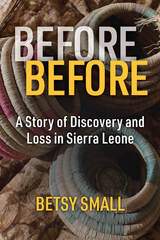
Sierra Leone is often sensationalized as a place of extreme violence and suffering—of blood diamonds, child soldiers, war amputations, and Ebola and now the highly addictive drug Kush. Before Before captures daily life in a different country, one Betsy Small first encountered as a Peace Corps worker between 1984–1987, and then rediscovered when she returned decades later with her daughter. Living in Tokpombu, a remote community of forty rice-farming families, the author faced struggles that changed her forever and witnessed the growing tensions in this rainforest village—between the young and old, between the traditions of oral history and honoring the ancestors valued by the elders and the siren call of the illicit diamond mines faced by the youth.
Before Before offers a rare portrait of everyday people, with particular focus on the lives of women and girls, before the brutal war of 1991 tore the country apart. Through Small’s account of immersion in another world as she witnessed injustice and was welcomed as a friend, readers are invited to explore the shared ground of our humanity.

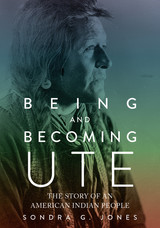
Neither a portrait of a people frozen in a past time and place nor a tragedy in which vanishing Indians sank into oppressed oblivion, the history of the Ute people is dynamic and evolving. While it includes misfortune, injustice, and struggle, it reveals the adaptability and resilience of an American Indian people.
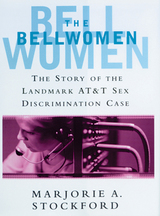
In the early 1970s, David Copus, a young, long-haired lawyer, teamed up with his government colleagues to confront the mature and staid executives of AT&T over the company’s treatment of its female and minority employees. Their disagreement resulted in a $38 million settlement that benefited 15,000 employees, more than 13,000 of them women, and changed our perceptions of women’s and men’s roles in the workplace forever.
Copus, who worked for the Equal Employment Opportunity Commission (EEOC), was charged with representing American citizens who suffered from employment discrimination. Time and again he saw young, black women in the South being turned down for available jobs in local phone companies—usually as telephone operators—often for no valid reason at all. He and the EEOC decided to challenge AT&T’s company-wide sex discrimination practices. Eventually, AT&T’s corporate colleagues, witnessing AT&T’s capitulation, began to hire and promote women into better jobs themselves. At the same time, the EEOC started to more aggressively push corporate America to give women better opportunities.
The Bellwomen recounts the history of this case in a novelistic style, illuminating the motivations, strengths, and weaknesses of all the players, from AT&T corporate leaders, to the lawyers of the EEOC, to the female activists fighting for what they believed. Stockford also profiles three beneficiaries of the case, presenting their ambitions and achievements.
Combined with the power of America’s civil rights laws and the influence of the second wave women’s movement, this case provided a catalyst that drove many more women into the paid workforce in non-traditional jobs. By the late twentieth century, when women could be seen working everywhere, from construction sites to corporate offices, it appeared that they belonged there and always had.

"Mr. Sobol has produced a readable yet fully researched and detailed study of the operation of the bankruptcy and its effects upon all concerned—the women who were injured, the swarms of lawyers who represented parties in the bankruptcy, and the court which oversaw the bankruptcy in Richmond. . . . This book adds greatly to the current debate about how strong a managerial federal judge our system should have."—Paul D. Rheingold, New York Law Journal
"Bending the Law is polemical and relentless. It is also minutely researched, fluidly written, and persuasive."—Paul Reidinger, ABA Journal
"Bending the Law is a must read for bankruptcy practitioners, and for anyone else concerned about the use of bankruptcy law to deal with mass torts. Although its author is a civil rights lawyer, he details the subtle art of practicing bankruptcy law with a discerning eye, and is a gifted storyteller as well."—Joryn Jenkins, Federal Bar News and Journal
"This is an accessible history of the case by a veteran civil-rights lawyer."—Washington Post Book World

First published in 1968, this engrossing and beautiful picture book about wildlife on Isle Royale is available again
Isle Royale, “the big island” of this book, is a wilderness national park in Lake Superior and home to a unique and fascinating ecosystem of animals, most notably the iconic wolf and majestic moose. Here is author Julian May’s story about the island’s beginning, the kinds of animals that came to populate it, and their effects on the pristine landscape. Among them were the moose, who swam to the island from the distant shore to fend off starvation. The moose found conditions on Isle Royale so favorable that they reproduced quickly—but then faced another food shortage. The wolves arrived by floating to the island on an ice floe in winter and soon became important to the island’s ecology as successful predators of the moose.
Complementing this fascinating text, John Schoenherr’s magnificent illustrations convey the strength of these animals and the beauty of the island that is their home.
First published in 1968, and reprinted here with a new note by renowned wolf expert L. David Mech, The Big Island is an enchanting introduction to the wilderness and wildlife of Isle Royale.
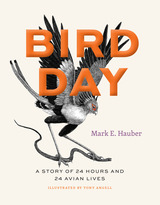
From morning to night and from the Antarctic to the equator, birds have busy days. In this short book, ornithologist Mark E. Hauber shows readers exactly how birds spend their time. Each chapter covers a single bird during a single hour, highlighting twenty-four different bird species from around the globe, from the tropics through the temperate zones to the polar regions. We encounter owls and nightjars hunting at night and kiwis and petrels finding their way in the dark. As the sun rises, we witness the beautiful songs of the “dawn chorus.” At eleven o’clock in the morning, we float alongside a common pochard, a duck resting with one eye open to avoid predators. At eight that evening, we spot a hawk swallowing bats whole, gorging on up to fifteen in rapid succession before retreating into the darkness.
For each chapter, award-winning artist Tony Angell has depicted these scenes with his signature pen and ink illustrations, which grow increasingly light and then dark as our bird day passes. Working closely together to narrate and illustrate these unique moments in time, Hauber and Angell have created an engaging read that is a perfect way to spend an hour or two—and a true gift for readers, amateur scientists, and birdwatchers.
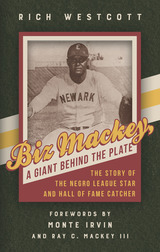
“The best all-around catcher in black baseball history”—Cumberland Posey, Owner of the Homestead Grays
National Baseball Hall of Fame catcher James Raleigh “Biz” Mackey’s professional career spanned nearly three decades in the Negro Leagues and elsewhere. He distinguished himself as a defensive catcher who also had an impressive batting average and later worked as a manager of the Newark Eagles and the Baltimore Elite Giants.
Using archival materials and interviews with former Negro League players, baseball historian Rich Westcott chronicles the catcher’s life and remarkable career in Biz Mackey, a Giant behind the Plate as well as providing an in-depth look at Philadelphia Negro League history. Westcott traces Mackey’s childhood in Texas as the son of sharecroppers to his success on the baseball diamond where he displayed extraordinary defensive skills and an exceptional ability to hit and to handle pitchers. Mackey spent one third of his career playing in Philadelphia, winning championships with the Hilldale Daisies and the Philadelphia Stars. Mackey also mentored famed catcher Roy Campanella and had an unlikely role in the story of baseball’s development in Japan.
A celebrated ballplayer before African Americans were permitted to join Major League Baseball, Biz Mackey ranks as one of the top catchers ever to play the game. With Biz Mackey, he finally gets the biography he deserves.
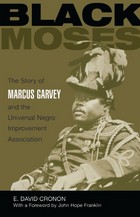
In the early twentieth century, Marcus Garvey sowed the seeds of a new black pride and determination. Attacked by the black intelligentsia and ridiculed by the white press, this Jamaican immigrant astonished all with his black nationalist rhetoric. In just four years, he built the Universal Negro Improvement Association (UNIA), the largest and most powerful all-black organization the nation had ever seen. With hundreds of branches, throughout the United States, the UNIA represented Garvey’s greatest accomplishment and, ironically, the source of his public disgrace. Black Moses brings this controversial figure to life and recovers the significance of his life and work.
“Those who are interested in the revolutionary aspects of the twentieth century in America should not miss Cronon’s book. It makes exciting reading.”—The Nation
“A very readable, factual, and well-documented biography of Marcus Garvey.”—The Crisis, NAACP
“In a short, swiftly moving, penetrating biography, Mr. Cronon has made the first real attempt to narrate the Garvey story. From the Jamaican's traumatic race experiences on the West Indian island to dizzy success and inglorious failure on the mainland, the major outlines are here etched with sympathy, understanding, and insight.”—Mississippi Valley Historical Review (Now the Journal of American History).
“Good reading for all serious history students.”—Jet
“A vivid, detailed, and sound portrait of a man and his dreams.”—Political Science Quarterly
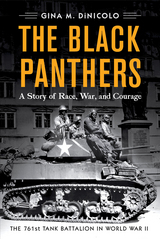
Known primarily for being the first African American armored unit to see combat in World War II and as future baseball star Jackie Robinson’s onetime outfit, the 761st Tank Battalion was forged in a devil’s cauldron of heat and prejudice at Camp Claiborne, Louisiana. Here, most viewed the tankers as tokens in a racial experiment, rather than as fellow American soldiers who would actually be deployed to fight a common enemy. Led by a small cadre of white and black officers, the 761st trained to the pinnacle of its craft. The Black Panthers, as they soon were called, proved their battle prowess against other units bound for combat on the parched Texas training fields. For this, they earned a coveted assignment to fight under General George S. Patton and go head-to-head with the best of Hitler’s arsenal. Moving to the front in November 1944, trial by fire soon shook the unit to its core. Ambushed by a veteran German force, the 761st suffered heavy casualties in the confusion as they cut their way out of the trap. But the men rallied to overcome self-doubt and vindicate their losses. Quickly battle hardened, the tankers saw intense combat through November and when Germany launched its last-ditch offensive through the Ardennes in December, the 761st fought side-by-side with Patton’s Third Army. Moving swiftly, the unit helped check the German advance, cut resupply routes to the forces surrounding beleaguered Bastogne, and drove the enemy back, recapturing towns crucial to the final defeat of Germany.
In The Black Panthers: A Story of Race, War, and Courage—the 761st Tank Battalion in World War II, historian Gina M. DiNicolo tells the full and unvarnished history of this important American fighting force. Relying on extensive archival research, including documents that had not been consulted in previous accounts, and interviews with surviving soldiers and family members, the author describes the unit’s training, deployment, combat, and individuals, such as Sgt. Ruben Rivers, one of only seven African American men awarded the Medal of Honor for World War II heroism. The professionalism, dedication, and courage of the 761st and other non-white units made clear that the strength of the American army in the future lay with integration—one of the enduring accomplishments of these servicemen.
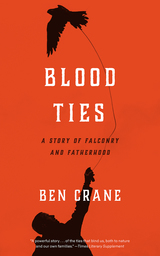
In this artful and moving memoir, we follow Crane on his remarkable journey of flight and return. Traveling from the United Kingdom to Pakistan, we learn first about the history and practice of falconry, a beautiful and brutal partnership between humans and birds that has persisted for thousands of years. And as Crane’s personal story unfolds, we come to understand how he found solace and insight through his relationships with these animals. “I saw that my feelings toward nature, and birds of prey in particular, ran in parallel with my feelings for my son,” Crane writes. “I worked out that they were, in fact, two sides of the same coin—the deep love of one could, with gentle observation, inform and unlock the deep love for the other. . . . Perhaps this then is the central theme of my story.”
Many of us rely upon animal companions to provide a sense of joy, compassion, and empathy. But as Blood Ties teaches us, our relationships with the creatures among us can also transform us, illuminating what it means both to be human and to be part of the greater wild—what it means to be alive.

Blue Ice relates the tale of the University of Michigan's hockey program--from its fight to become a varsity sport in the 1920s to its 1996 and 1998 NCAA national championships.
This history of the hockey program profiles the personalities who shaped the program--athletic directors, coaches, and players. From Fielding Yost, who made the decision to build the team a rink with artificial ice before the Depression (which ensured hockey would be played during those lean years), to coaches Joseph Barss, who survived World War I and the ghastly Halifax explosion before becoming the program's first coach, to Red Berenson, who struggled to return his alma mater's hockey team to prominence in the 1980s and 1990s. Players from Eddie Kahn, who scored Michigan's first goal in 1923, to Brendan Morrison, who upon winning the 1996 national championship with his goal said, "This is for all the [Michigan] guys who never had a chance to win it."
Blue Ice also explores the players' exotic backgrounds, from Calumet in the Upper Peninsula to Minnesota's Iron Range to Regina, Saskatchewan; how coach Vic Heygliger launched the NCAA tournament at the glamorous Broadmoor Hotel; and how commissioner Bill Beagan transformed the country's premier hockey conference.
In Blue Ice, fans of hockey will learn the stories behind the curse of the Boston University Terriers, the hockey team's use of the winged helmet, and the unlikely success of Ann Arbor's home-grown talent.
Unlike other sports at the collegiate level, the hockey players at Michigan haven't been motivated by fame or fortune; rather, they came to Michigan get an education and to play the game they loved.
John U. Bacon has won numerous national writing awards and now freelances for Sports Illustrated,Time,ESPN Magazine,and the New York Times, among others.
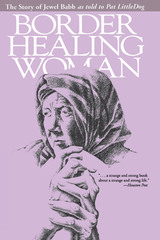
The story of Jewel Babb, from her early years as a tenderfoot ranch wife to her elder years as a desert healing woman, has enthralled readers since Border Healing Woman was first published in 1981. In this second edition, Pat LittleDog adds an epilogue to conclude the story, describing the mixed blessings that publicity brought to Jewel Babb before her death in 1991.
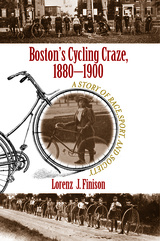
Lorenz J. Finison explores the remarkable rise of Boston cycling through the lives of several participants, including Kittie Knox, a biracial twenty-year-old seamstress who challenged the color line; Mary Sargent Hopkins, a self-proclaimed expert on women's cycling and publisher of The Wheelwoman; and Abbot Bassett, a longtime secretary of the League of American Wheelman and a vocal cycling advocate for forty years. Finison shows how these riders and others interacted on the road and in their cycling clubhouses, often constrained by issues of race, class, religion, and gender. He reveals the challenges facing these riders, whether cycling for recreation or racing, in a time of segregation, increased immigration, and debates about the rights of women.
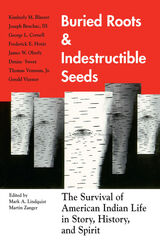
This anthology highlights central values and traditions in Native American societies, exploring the ongoing struggles and survival power of Native American people today. The essays and stories by well-known writers provide an excellent introduction for general readers as well as high school and college students. The stories and historical events are drawn especially from the tribes of the Great Lakes region, such as the Ojibwa (Chippewa) of Wisconsin, and are part of a continuing, sustaining storytelling tradition.
Starting with the opening selection, “The Circle of Stories,” which reaffirms the relationship of humans to all living things, the anthology emphasizes themes of connectedness and survival in essays on the environment, identity, community allegiance and treaty rights, marginalization and assimilation in American society, and conflict within the educational system. Several selections about Trickster tales introduce traditions of humor, irony, and imagination that have come to embody native survival, liberation, and continuance.
The authors included in Buried Roots and Indestructible Seeds are Kim Blaeser, Joseph Bruchac, George Cornell, Fred Hoxie, James Oberly, Denise Sweet, Tom Vennum, and Gerald Vizenor.

Business Without Boundary was first published in 1954. Minnesota Archive Editions uses digital technology to make long-unavailable books once again accessible, and are published unaltered from the original University of Minnesota Press editions.
The firm of General Mills is probably best known to millions of people as the maker of Gold Medal Flour and as the progenitor of that first lady of the kitchen and the airwaves, Betty Crocker. But, although its greatest fame is as a flour miller, the company engages in a host of other activities that attest to the foresight and creative thinking of its executives. In fact, the sky seems to be the only limit as the company extends its sights upward in Operation Skyhook, a United States navy research project for which General Mills makes and launches into the stratosphere giant plastic balloons.
James Gray relates not only the history of General Mills since its founding in 1928 but also the background of the major companies that merged to form the larger corporation: the Washburn Crosby Company of Minneapolis, the Sperry Company of San Francisco, the Kell group of Texas and Oklahoma mills, and the Larrowe Milling Company of Detroit.
Anyone interested in advertising and promotion will find fascinating the accounts of the early successes in radio advertising, including the first use of singing commercials and the phenomenal rise of Betty Crocker (voted the second best-known woman in America!) The scientific and technical research that is a cornerstone of the modern corporation is described in detail, as is the development of the products control method, a General Mills innovation now widely adopted in industry.
For those curious to understand how business expands, for those interested in a close-up of industrial leaders, for anyone who wants to sharpen his view of America at work, this is an important book.
READERS
Browse our collection.
PUBLISHERS
See BiblioVault's publisher services.
STUDENT SERVICES
Files for college accessibility offices.
RECENTLY PUBLISHED


UChicago Accessibility Resources
home | accessibility | search | about | contact us
BiblioVault ® 2001 - 2026
The University of Chicago Press