
 A SCHOLARLY BOOK REPOSITORY
17 start with B start with B

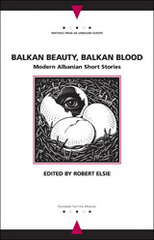
Albania's more established writers (including Dritëro Agolli, Ismail Kadare, Teodor Laço, and Eqrem Basha) appear here alongside newer talents (such as Ylljet Aliçka, Mimoza Ahmeti, Elivra Dones, Lindita Arapi, and Kim Mehmeti), providing English-speaking readers with an elucidating and entertaining overview of the recent history, and the future, of the nation's literature.

Set in the early years of Brazil’s Old Republic after the abolition of slavery, Júlia Lopes de Almeida's The Bankruptcy depicts the rise and fall of a wealthy coffee exporter against a kaleidoscopic background of glamour, poverty, seduction, and financial speculation. The novel introduces readers to a turbulent period in Brazilian history seething with new ideas about democracy, women’s emancipation, and the role of religion in society. Originally published in 1901, its prescient critiques of financial capitalism and the patriarchal family remain relevant today.
In her lifetime, Júlia Lopes de Almeida was compared to Machado de Assis, the most important Brazilian writer of the nineteenth century. She was also considered for the inaugural list of members of the Brazilian Academy of Letters but was excluded because of her gender. In the decades after her death, her work was largely forgotten. This publication, a winner of the English PEN award, includes an introduction to the novel and a translators' preface and accompanies a general rediscovery of her extraordinary body of work in Brazil.

A peasant family, driven by the drought, walks to exhaustion through an arid land. As they shelter at a deserted ranch, the drought is broken and they linger, tending cattle for the absentee ranch owner, until the onset of another drought forces them to move on, homeless wanderers again. Yet, like the desert plants that defeat all rigors of wind and weather, the family maintains its will to survive in the harsh and solitary land. Intimately acquainted with the region of which he writes and keenly appreciative of the character of its inhabitants, into whose minds he has penetrated as few before him, Graciliano Ramos depicts them in a style whose austerity well becomes the spareness of the subject, creating a gallery of figures that rank as classic in contemporary Brazilian literature.

Be Faithful unto Death is the moving story of a bright and sensitive schoolboy growing up in an old-established boarding school in the city of Debrecen in eastern Hungary. Misi, a dreamer and would-be writer, is falsely accused of stealing a winning lottery ticket. The torments through which he goes – and grows – are superbly described.
The novel is brimming with vivid detail from the provincial life that Móricz knew so well and shot through with a sense of the tragic fate of a newly truncated Hungary.

Beggar’s Bedlam is a surreal novel that unleashes the chaos of the carnival on the familiar. Part literary descendent of Bulgakov’s The Master and Margarita and part a reconstruction of lost Bengali history, Nabarun Bhattacharya’s masterpiece is a jubilant, fizzing wire of subaltern anarchy and insurrection.
Marshall Bhodi Sarkar and his lieutenant Sarkhel surreptitiously dig on the banks of the Ganges River looking for crude oil reserves. Instead, they unearth curved daggers, rusty broadswords, and a Portuguese cannon. Bhodi is an occasional military man and the lead sorcerer of the secret black-magic sect named Choktar. He joins forces with the flying Flaperoos—men with a predilection for alcohol and petty vandalism—to declare outright war against the Marxist–Leninist West Bengal government. In a bloodless revolution that is fascinating in its utter implausibility, a motley crew of yet more implausible characters come together in a magic-realist fictional remapping of Calcutta.
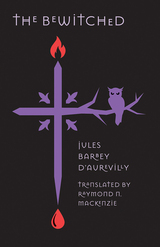
A haunting, resonant novel of passion and betrayal—in its first English translation since 1928
“When we bring true passions into our works, we don’t fear the cries of the offended.” So declared Jules Barbey d’Aurevilly in 1853 as he prepared to publish The Bewitched in book form, restoring the sections that were unceremoniously deleted from its serialized release by an editor who deemed them too explicit, irreverent, and inflammatory. Newly translated into English for modern readers, The Bewitched is a beguiling tale of politics, obsession, and horror set against the backdrop of Normandy in postrevolutionary France.
Late at night in a foggy moor, the far clock tower rends the still air to mark the midnight hour. As the darkness settles back into silence, another bell rings out, slow and somber, calling all who hear it to the Abbé de La Croix-Jugan’s Mass of the Dead. Returned to the priesthood in shame after breaking his vows by shedding blood in battle and attempting suicide in defeat, the disfigured man enthralls the inhabitants of this small village. Before long, a young married woman becomes infatuated with the enigmatic priest, and their fates are irrevocably intertwined. When she succumbs to despair over her unrequited love, her husband is consumed by jealousy and vows revenge.
Layering stories within stories and continually shifting points of view, Barbey d’Aurevilly engages a mosaic of narrators to depict the era’s tensions between the aristocracy, the peasant class, and the church. Raymond N. MacKenzie’s lively translation is accompanied by his detailed introduction and notes that ground the novel in its historical, political, and literary contexts. A classic of French Gothic literature, The Bewitched blends religious transgression, satanic possession, and political upheaval into a fatal love story that is as gripping now as it was nearly two centuries ago.
Retail e-book files for this title are screen-reader friendly.
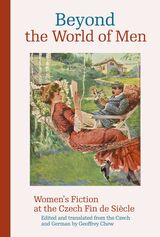
Bringing together Czech fiction published by women between 1890 and 1910, Beyond the World of Men presents works that confront pivotal issues of the time, including the “woman question” and women’s rights, class conflict, lesbian love, and the relationship between the aristocracy and the Czech peasantry (as in two stories originally written in German by the aristocrat Marie von Ebner-Eschenbach). The collection contains stories that are of literary merit, but also hold historical value. In these works, the authors offer trenchant social commentary while injecting both comic and sentimental elements into their writing, employing humanity and subtlety.
As a whole, the collection suggests a revision of the critical understanding of Czech literary modernism; these writers represent voices that were not usually heard in the male writing of the period. They also demand evaluation in their differing (but constant) reactions to earlier women’s writing in Czech and in other European languages, but particularly that of the central figure of Božena Nemcová, to whose canonic novel Babicka they constantly return.
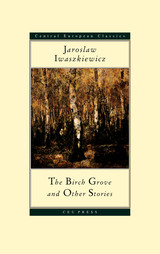
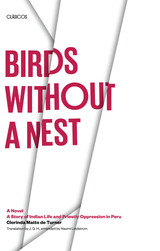
"I love the native race with a tender love, and so I have observed its customs closely, enchanted by their simplicity, and, as well, the abjection into which this race is plunged by small-town despots, who, while their names may change, never fail to live up to the epithet of tyrants. They are no other than, in general, the priests, governors, caciques, and mayors." So wrote Clorinda Matto de Turner in Aves sin nido, the first major Spanish American novel to protest the plight of native peoples.
First published in 1889, Birds without a Nest drew fiery protests for its unsparing expose of small town officials, judicial authorities, and priests who oppressed the native peoples of Peru. Matto de Turner was excommunicated by the Catholic Church and burned in effigy. Yet her novel was strongly influential; indeed, Peruvian President Andres Avelino Caceres credited it with stimulating him to pursue needed reforms.
In 1904, the novel was published in a bowdlerized English translation with a modified ending. This edition restores the original ending and the translator's omissions. It will be important reading for all students of the indigenous cultures of South America.
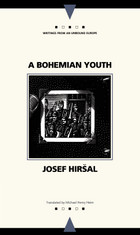
Josef Hiršal's experimental novel is a Dada-like romp through the life of a young man born into a Bohemian peasant family. Told in five parts, A Bohemian Youth begins with a word to the wise, moves on to the text, continues with notes and with notes to the note, and ends with a note on the notes to the notes.
More than just a tongue-in-cheek parody of a literary memoir, A Bohemian Youth is a glimpse of the First Czechoslovak Republic as seen through the eyes of a young peasant from the provinces. Abounding in intimate details--the manners of a servant girl, the habits of the town homosexual, the sounds of popular music; the way people eat in wartime—Hiršal's novel is a wrenching and hilarious tale of a young man's emotional and sexual awakening.

This farcical tale tells how the British bombing of a Finnish port city changes the life of the Russian governor, his wife, their cook, and the cook's Finnish fiancé. The story takes place during a Nordic offshoot of the Crimean conflict, known as the Åland War, in which a British-French naval force attacked military and civilian facilities on the coast of the Grand Duchy of Finland in 1854–1856. The location of the novella is Åbo, today’s Turku, where soldiers in the Russian garrison enjoy life, Cossacks dance and drink, and the governor’s wife is preoccupied about her cook’s marriage to a local lad, against which the governor and the English admiral devise a plot.
After studies in Swiss and German universities, Carl Spitteler worked in Russia between 1871 and 1879 as the private tutor in the family of a Finnish general. In the process he came to know Finnish and Baltic noble families in Saint Petersburg and Finland. He published this story in 1889, and went on to become, in 1919, the first Swiss winner of the Nobel Prize for literature. The Bombardment of Åbo is an ironic Western gaze on life and culture in the Tsarist Empire. Spitteler’s deeply held pacifism breaks through his otherwise sarcastic description of the characters and episodes in the novella.
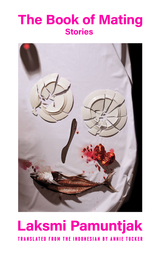
Winner of the Humanities in Translation Prize
The Book of Mating is a masterfully translated collection of stories in which Indonesian women explore the full spectrum of mating: marital, sexual, and spiritual; forced and free; transcendent, ruinous, and mundane. Laksmi Pamuntjak portrays both the constraints and opportunities facing women caught between the enduring restrictions of local norms and hierarchies and the tantalizing promises of globalized modern life, between internalized myths and social realities.
An experimental melding of Pamuntjak’s creative, journalistic, and activist work, these stories read as urgent dispatches from the Indonesian archipelago and diaspora—and as universal narratives of women’s lived experiences. Annie Tucker’s nuanced translation takes us from the prison island of Buru and the Bogor Botanical Gardens to Paris’s Left Bank, offering a polyphonic testament to the universal fight for women’s autonomy over their bodies and their lives.

An immediate sensation upon its 1993 publication in Europe, already translated into more than a dozen languages, Border State is a brilliantly realized account of a man in the grip of Western excess, emotionally crippled by a world that is subsuming his own and inhabiting a West in which "all countries have become imaginary deserts of ruins where crowds of nomads roam from one attraction to the other." His tale, in which disillusion and murder become inextricably linked, is a compelling exploration of scarcity, longing, and madness.
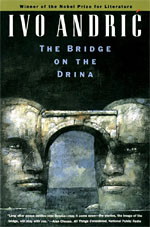
Internationally acclaimed since its original publication just after World War II, The Bridge on the Drina is a vivid historical novel that uses the Mehmed Paša Sokolović Bridge as the centerpiece of the story of Bosnia and its people from the late sixteenth century to the beginning of World War I. As we seek to make sense of the current nightmare in this region, this remarkable, timely book serves as a reliable guide to its people and history. Through powerful stories of the people who make history—and the people suffer under those who do—Ivo Andric traces the story of the Bosnian people from the Ottoman Empire through the domination of Austria-Hungary and into the rising tide of competing nationalist ideologies that set the stage for the tragedy of World War I.
Written while Andric was under house arrest during the Nazi occupation, The Bridge on the Drina is as gripping as a soap opera, bringing history down to the level of compelling individual lives and experiences. It is one of the landmark works of twentieth-century literature, as powerful today as it ever was.
A poignant and graceful story collection about the clash and harmony of finding one’s place in an adult world that feels “other”
Brown Girls, Grown Up shines a light on the nuances of modern womanhood with grace, honesty, and charm. The stories in Qadeer’s debut collection delve into the subtleties and blatant struggles of navigating shifting identities as one matures, into the joys and challenges of intimacy and aging, and into the changing tides of motherhood. Middle-aged Amira takes radical action after meeting a new friend who lulls her into feeling safe and accepted; Hanna enrolls her biracial children in a local Sunday school after worrying they have no real connection to her Muslim heritage; betrayals and secrets come to light when a group of college friends reunite to take stock and compare achievements. Filled with humor and heartache, this collection offers a fresh and profoundly relatable perspective on the lifelong search for belonging in a world shaped by tradition, modernity, and individual ambition.
READERS
Browse our collection.
PUBLISHERS
See BiblioVault's publisher services.
STUDENT SERVICES
Files for college accessibility offices.
RECENTLY PUBLISHED





UChicago Accessibility Resources
home | accessibility | search | about | contact us
BiblioVault ® 2001 - 2026
The University of Chicago Press