
 A SCHOLARLY BOOK REPOSITORY
2150 start with C start with C
Using a case study from a predominantly Black, urban high school in Washington, D.C., Youniss and Yates build on the insights of Erik Erikson on the social and historical nature of identity development. They show that service at a soup kitchen as part of a course on social justice gives youth the opportunity to reflect on their status in society, on how society is organized, on how government should use its power, and on moral principles related to homelessness and poverty. Developing a sense of social responsibility and a civic commitment, youth come to see themselves as active agents in society.
The most authoritative work to date on the subject, this book challenges negative stereotypes of contemporary adolescents and illustrates how youth, when given the opportunity, can use their talents for social good. It will interest readers concerned with the development of today's youth and tomorrow's society.
In resource-challenged Athens County, Ohio, staff and volunteers at the nonprofit Athens County Foundation came up with a daring idea: to host a locally sourced, gourmet dinner for four hundred people. The meal would be held on the brick-paved main street of the city of Athens, to raise funds for the food bank, and increase awareness of the persistent local struggle with food insecurity, as well as raise the visibility of the foundation. The logistical challenges were daunting, but the plan would unite the community around the common theme of providing for its own.
Since then, Bounty on the Bricks has become a touchstone event that raises close to one hundred thousand dollars for the food bank. In The Community Table, Athens County Foundation executive director Susan Urano translates her years of nonprofit experience with large-scale annual fundraisers into a step-by-step guide for development professionals, community leaders, and volunteers.
Urano guides readers to consider when to mount a fundraiser, who the stakeholders are, what social and financial value the event will bring to the community, and how partnerships might augment the payoff. Using real-life examples, she explains how organizers can learn from mistakes and illustrates methods of team building, conflict resolution, and problem solving. Sample ideas, timelines, budgets, publicity plans, and committee structures round out The Community Table.

Now available in paperback with a new preface by the author, this award-winning book breaks new ground by challenging traditional concepts of community in political theory. William Corlett brings the diverse (and sometimes contradictory) work of Foucault and Derrida to bear on the thought of Pocock, Burke, Lincoln, and McIntyre, among others, to move beyond the conventional dichotomy of "individual vs. community," arguing instead that community is best advanced within a politics of difference.

Contributors include Finn Danielsen, Noor Johnson, Olivia Lee, Maryann Fidel, Lisbeth Iversen, Michael K. Poulsen, Hajo Eicken, Ania Albin, Simone G. Hansen, Peter L. Pulsifer, Peter Thorne, and Martin Enghoff.
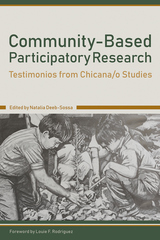
The testimonies tell of projects that stem from community demands for truly collaborative research addressing locally identified issues and promoting community social change. Contributors share their personal experiences in conducting CBPR, focusing on the complexities of implementing this method and how it may create sustainable change and community empowerment. Along with a retrospective analysis of how CBPR has been at the center of the Chicana/o Movement and Chicana/o studies, the book includes a discussion of consejos y advertencias (advice and warnings).
The most knowledgeable people on community issues are the very members of the communities themselves. Recognizing a need to identify the experiences and voices (testimonios) of communities of color, activist-scholars showcase how to incorporate the perspectives of the true experts: the poor, women, farmworkers, students, activists, elders, and immigrants.
The Community-Based PhD brings together the experiences of PhD students from a range of disciplines discussing CBPR in the arts, humanities, social sciences, public health, and STEM fields. They write honestly about what worked, what didn’t, and what they learned. Essays address the impacts of extended research time frames, why specialized skill sets may be needed to develop community-driven research priorities, the value of effective relationship building with community partners, and how to understand and navigate inter- and intra-community politics.
This volume provides frameworks for approaching dilemmas that graduate student CBPR researchers face. They discuss their mistakes, document their successes, and also share painful failures and missteps, viewing them as valuable opportunities for learning and pushing the field forward. Several chapters are co-authored by community partners and provide insights from diverse community perspectives. The Community-Based PhD is essential reading for graduate students, scholars, and the faculty who mentor them in a way that truly crosses disciplinary boundaries.
Contributors: Anna S. Antoniou, Amy Argenal, Sonya Atalay, Stacey Michelle Chimimba Ault, Victoria Bochniak, Megan Butler, Elias Capello, Ashley Collier-Oxandale, Samantha Cornelius, Annie Danis, Earl Davis, John Doyle, Margaret J. Eggers, Cyndy Margarita García-Weyandt, R. Neil Greene, D. Kalani Heinz, Nicole Kaechele, Myra J. Lefthand, Emily Jean Leischner, Christopher B. Lowman, Geraldine Low-Sabado, Alexandra G. Martin, Christine Martin, Alexandra McCleary, Chelsea Meloche, Bonnie Newsom, Katherine L. Nichols, Claire Novotny, Nunanta (Iris Siwallace), Reidunn H. Nygård, Francesco Ripanti, Elena Sesma, Eric Simons, Cassie Lynn Smith, Tanupreet Suri, Emery Three Irons, Arianna Trott, Cecilia I. Vasquez, Kelly D. Wiltshire, Julie Woods, Sara L. Young
Andrea Wenzel models new practices of community-centered journalism that build trust across boundaries of politics, race, and class, and prioritize solutions while engaging the full range of local stakeholders. Informed by case studies from rural, suburban, and urban settings, Wenzel's blueprint reshapes journalism norms and creates vigorous storytelling networks between all parts of a community. Envisioning a portable, rather than scalable, process, Wenzel proposes a community-centered journalism that, once implemented, will strengthen lines of local communication, reinvigorate civic participation, and forge a trusting partnership between media and the people they cover.
The fourth volume in the Interdisciplinary Community-Engaged Research for Health series departs from the traditional view of resilience driven by individuals and reconstructs it to hinge on the community of context. Editors Kelli E. Canada and Clark Peters identified six scholar-practitioner teams who worked to promote resilience in communities across the nation facing health crises and other structural barriers to health, such as low socioeconomic positions, structural racism, and discrimination. This research is part of a two-pronged approach to public health, intending to increase resilience and communities’ internal support while simultaneously reducing barriers to health care access.
The efforts featured in Community-Engaged Research for Resilience and Health highlight community-based solutions, points of strength, and sources of resilience to help communities that are struggling to survive and thrive in the face of adversity. Whether these communities are facing opioid addiction or other substance abuse issues, domestic violence, armed conflict, trauma, or cultural discrimination, the editors and contributors in this volume share examples of Community-Based Participatory Research (CBPR) practices where through a collaborative partnership, the community actively participates in every aspect of the alongside the interdisciplinary research team. What transpires demonstrates how researchers and communities come together to turn adversity into improved health through resilience-focused programs and interventions.

This reference work examines the ways in which some medieval behaviours and identities were categorized as criminal or deviant. It also explores the implications of modern demonization of the Middle Ages. As well as discussing constructions of deviance, this book further explores the behaviours and identities which provoked these labels and processes. The model is one of reciprocity between behaviours and processes of demonization and criminalization. Each authoritative essay engages carefully with this approach, examining behaviours, the ways they were demonized, and the relationship between the two processes. The three parts of the volume are centred around forms of discursive and normative power—religious ideologies, political ideologies, and legalism. The authors also explore issues of political discourse, spiritual censure, justice and punishment, and the construction of taboos.
Some of the interviewees are religious, some not; some encouraged their loved ones to accept death, others to fight it to the end. There are stories of heroic nurses and of indifferent hospital bureaucracies, of deaths that came too soon, and those that came at the end of a long, rich life. Possessing an affirmative quality that is anything but sentimental, ultimately these stories celebrate the experience of being present at the death of a loved one.

While research on interracial social ties has often focused on whites and blacks, Hispanics are the largest minority group and Asian Americans are the fastest growing racial group in the United States. The Company We Keep examines friendships and romantic relationships among blacks, whites, Hispanics, and Asian Americans to better understand the full spectrum of contemporary race relations. Using data from the National Longitudinal Study of Adolescent to Adult Health, the authors explore the social ties of more than 15,000 individuals from their first survey responses as middle and high school students in the mid-1990s through young adulthood nearly fifteen years later. They find that while approval for interracial marriages has increased and is nearly universal among young people, interracial friendships and romantic relationships remain relatively rare, especially for whites and blacks. Black women are particularly disadvantaged in forming interracial romantic relationships, while Asian men are disadvantaged in the formation of any romantic relationships, both as adolescents and as young adults. They also find that people in same-sex romantic relationships are more likely to have partners from a different racial group than are people in different-sex relationships. The authors pay close attention to how the formation of interracial friendships and romantic relationships depends on opportunities for interracial contact. They find that the number of students choosing different-race friends and romantic partners is greater in schools that are more racially diverse, indicating that school segregation has a profound impact on young people’s social ties.
Kao, Joyner, and Balistreri analyze the ways school diversity and adolescent interracial contact intersect to lay the groundwork for interracial relationships in young adulthood. The Company We Keep provides compelling insights and hope for the future of living and loving across racial divides.
At the birth of the Internet Age, computer technologists in small, aggressive software development companies became part of a unique networked occupational community. They were creative, team-oriented, and enthusiastic workers who built "boundaryless careers," hopping from one employer to another.
In his absorbing ethnography The Company We Keep, sociologist Daniel Marschall immerses himself in IntenSivity, one such technological workplace. Chronicling the employees' experiences, Marschall examines how these workers characterize their occupational culture, share values and work practices, and help one another within their community. He sheds light on the nature of this industry marked by highly skilled jobs and rapid technological change.
The experiences at IntenSivity are now mirrored by employees at Facebook and thousands of other cutting-edge, high-tech start-up firms. The Company We Keep helps us understand the emergence of virtual work communities and the character of the contemporary labor market at the level of a small enterprise.



The contributors to Comparative Approaches to Informal Housing Around the Globe engage with a sweeping variety of topics and contribute specialist knowledge from Africa, Asia, Australia, the Middle East, North and South America, and Eastern and Western Europe. Bringing together such a wide range of authors and subjects demonstrates the power of comparative research to open new perspectives.
The effects of colonization on the Indigenous peoples of the Américas over the past 500 years have varied greatly. So too have the forms of resistance, resilience, and sovereignty. In the face of these differences, the contributors to this volume contend that understanding the commonalities in these Indigenous experiences will strengthen resistance to colonial forces still at play. This volume marks a critical moment in bringing together transnational and interdisciplinary scholarship to articulate new ways of pursuing critical Indigenous studies.
Comparative Indigeneities of the Américas highlights intersecting themes such as indigenísmo, mestizaje, migration, displacement, autonomy, sovereignty, borders, spirituality, and healing that have historically shaped the experiences of Native peoples across the Américas. In doing so, it promotes a broader understanding of the relationships between Native communities in the United States and Canada and those in Latin America and the Caribbean and invites a hemispheric understanding of the relationships between Native and mestiza/o peoples.
Through path-breaking approaches to transnational, multidisciplinary scholarship and theory, the chapters in this volume advance understandings of indigeneity in the Américas and lay a strong foundation for further research. This book will appeal to scholars and students in the fields of anthropology, literary and cultural studies, history, Native American and Indigenous studies, women and gender studies, Chicana/o studies, and critical ethnic studies.
Ultimately, this deeply informative and empowering book demonstrates the various ways that Indigenous and mestiza/o peoples resist state and imperial attempts to erase, repress, circumscribe, and assimilate them.

The essays range from studies of myths of incest and sexuality to those of economic development projects, from South America to Africa. The result is an astonishing assortment of works from one of the most respected legal anthropologists in the field, one who brought together disparate places and ideas in enriching comparisons that showcase the possibilities—and impossibilities—of anthropology.

Received an Honorable Mention for the 2015 Society for Social Work and Research Outstanding Social Work Book Award
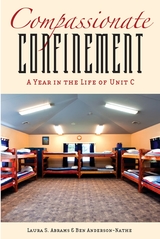
To date, knowledge of the everyday world of the juvenile correction institution has been extremely sparse. Compassionate Confinement brings to light the challenges and complexities inherent in the U.S. system of juvenile corrections. Building on over a year of field work at a boys’ residential facility, Laura S. Abrams and Ben Anderson-Nathe provide a context for contemporary institutions and highlight some of the system’s most troubling tensions.
This ethnographic text utilizes narratives, observations, and case examples to illustrate the strain between treatment and correctional paradigms and the mixed messages regarding gender identity and masculinity that the youths are expected to navigate. Within this context, the authors use the boys’ stories to show various and unexpected pathways toward behavior change. While some residents clearly seized opportunities for self-transformation, others manipulated their way toward release, and faced substantial challenges when they returned home.
Compassionate Confinement concludes with recommendations for rehabilitating this notoriously troubled system in light of the experiences of its most vulnerable stakeholders.
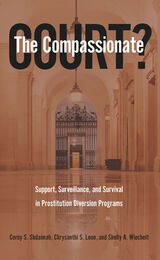
The authors of The Compassionate Court? provide case studies of such programs and draw upon interviews and observations conducted over a decade to reveal how participants and professionals perceive court-affiliated PDPs, clients, and staff. Considering the motivations, vision, and goals of these programs as well as their limitations—the inequity and disempowerment of their participants—the authors also present their own changing perspectives on prostitution courts, diversion programs, and criminalization of sex work.

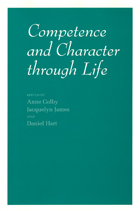
In this collection, leading psychologists, sociologists, and criminologists highlight the potential for positive development in different domains. By positing the possibility of multiple pathways of development rather than a single universal sequence, the contributors view the individual as potentially advancing in a wide range of interrelated and overlapping competencies. The nine essays in the book cover the years from youth to middle age, and they examine a range of social, political, and moral components of "competence and character" from teenage pregnancy and life-planning skills to voting records and educational attainment in low income households. Unlike comparable studies, this original and comprehensive volume frames issues, events, and longitudinal data through the lens of possibility rather than the pathology of defeat, stressing a positive approach to our conception of human potential.

The wrenching decision facing successful women choosing between demanding careers and intensive family lives has been the subject of many articles and books, most of which propose strategies for resolving the dilemma. Competing Devotions focuses on broader social and cultural forces that create women's identities and shape their understanding of what makes life worth living.
Mary Blair-Loy examines the career paths of women financial executives who have tried various approaches to balancing career and family. The professional level these women have attained requires a huge commitment of time, energy, and emotion that seems natural to employers and clients, who assume that a career deserves single-minded allegiance. Meanwhile, these women must confront the cultural model of family that defines marriage and motherhood as a woman's primary vocation. This ideal promises women creativity, intimacy, and financial stability in caring for a family. It defines children as fragile and assumes that men lack the selflessness and patience that children's primary caregivers need. This ideal is taken for granted in much of contemporary society.
The power of these assumptions is enormous but not absolute. Competing Devotions identifies women executives who try to reshape these ideas. These mavericks, who face great resistance but are aided by new ideological and material resources that come with historical change, may eventually redefine both the nuclear family and the capitalist firm in ways that reduce work-family conflict.
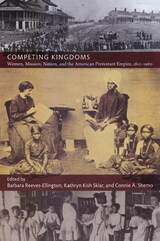
An international and interdisciplinary group of scholars, the contributors bring under-utilized evidence from U.S. and non-U.S. sources to bear on the study of American women missionaries abroad and at home. Focusing on women from several denominations, they build on the insights of postcolonial scholarship to incorporate the agency of the people among whom missionaries lived. They explore how people in China, the Congo Free State, Egypt, India, Japan, Ndebeleland (colonial Rhodesia), Ottoman Bulgaria, and the Philippines perceived, experienced, and negotiated American cultural expansion. They also consider missionary work among people within the United States who were constructed as foreign, including African Americans, Native Americans, and Chinese immigrants. By presenting multiple cultural perspectives, this important collection challenges simplistic notions about missionary cultural imperialism, revealing the complexity of American missionary attitudes toward race and the ways that ideas of domesticity were reworked and appropriated in various settings. It expands the field of U.S. women’s history into the international arena, increases understanding of the global spread of American culture, and offers new concepts for analyzing the history of American empire.
Contributors: Beth Baron, Betty Bergland, Mary Kupiec Cayton, Derek Chang, Sue Gronewold, Jane Hunter, Sylvia Jacobs, Susan Haskell Khan, Rui Kohiyama, Laura Prieto, Barbara Reeves-Ellington, Mary Renda, Connie A. Shemo, Kathryn Kish Sklar, Ian Tyrrell, Wendy Urban-Mead
Contributors
Barry D. Adam, Elizabeth Anne Davis, Filippa Lentzos, Jessica Robbins-Ruszkowski, Nikolas Rose, Rosalind Shaw, Cris Shore, Jessica M. Smith, Susanna Trnka, Catherine Trundle, Jarrett Zigon
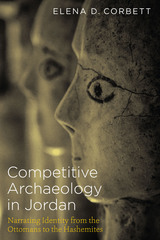
An examination of archaeology in Jordan and Palestine, Competitive Archaeology in Jordan explores how antiquities have been used to build narratives and national identities. Tracing Jordanian history, and the importance of Jerusalem within that history, Corbett analyzes how both foreign and indigenous powers have engaged in a competition over ownership of antiquities and the power to craft history and geography based on archaeological artifacts. She begins with the Ottoman and British Empires—under whose rule the institutions and borders of modern Jordan began to take shape—asking how they used antiquities in varying ways to advance their imperial projects. Corbett continues through the Mandate era and the era of independence of an expanded Hashemite Kingdom, examining how the Hashemites and other factions, both within and beyond Jordan, have tried to define national identity by drawing upon antiquities.
Competitive Archaeology in Jordan traces a complex history through the lens of archaeology’s power as a modern science to create and give value to spaces, artifacts, peoples, narratives, and academic disciplines. It thus considers the role of archaeology in realizing Jordan’s modernity—drawing its map; delineating sacred and secular spaces; validating taxonomies of citizens; justifying legal frameworks and institutions of state; determining logos of the nation for display on stamps, currency, and in museums; and writing history. Framing Jordan’s history in this way, Corbett illustrates the manipulation of archaeology by governments, institutions, and individuals to craft narratives, draw borders, and create national identities.

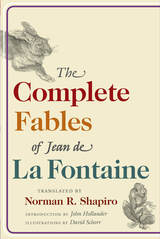
Told in an elegant style, Jean de la Fontaine's (1621-95) charming animal fables depict sly foxes and scheming cats, vain birds and greedy wolves, all of which subtly express his penetrating insights into French society and the beasts found in all of us. Norman R. Shapiro has been translating La Fontaine's fables for over twenty years, capturing the original work's lively mix of plain and archaic language. This newly complete translation is destined to set the English standard for this work.
Awarded the Lewis Galantière Prize by the American Translators Association, 2008.
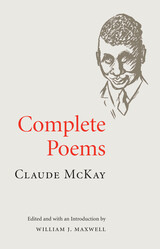
Containing more than three hundred poems, including nearly a hundred previously unpublished works, this unique collection showcases the intellectual range of Claude McKay (1889-1948), the Jamaican-born poet and novelist whose life and work were marked by restless travel and steadfast social protest. McKay's first poems were composed in rural Jamaican creole and launched his lifelong commitment to representing everyday black culture from the bottom up. Migrating to New York, he reinvigorated the English sonnet and helped spark the Harlem Renaissance with poems such as "If We Must Die." After coming under scrutiny for his communism, he traveled throughout Europe and North Africa for twelve years and returned to Harlem in 1934, having denounced Stalin's Soviet Union. By then, McKay's pristine "violent sonnets" were giving way to confessional lyrics informed by his newfound Catholicism.
McKay's verse eludes easy definition, yet this complete anthology, vividly introduced and carefully annotated by William J. Maxwell, acquaints readers with the full transnational evolution of a major voice in twentieth-century poetry.
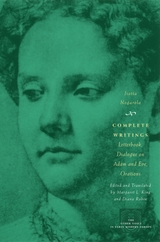
This volume presents English translations of all of Nogarola's extant works and highlights just how daring and original her convictions were. In her letters and orations, Nogarola elegantly synthesized Greco-Roman thought with biblical teachings. And striding across the stage in public, she lectured the Veronese citizenry on everything from history and religion to politics and morality. But the most influential of Nogarola's works was a performance piece, Dialogue on Adam and Eve, in which she discussed the relative sinfulness of Adam and Eve—thereby opening up a centuries-long debate in Europe on gender and the nature of woman and establishing herself as an important figure in Western intellectual history. This book will be a must read for teachers and students of Women's Studies as well as of Renaissance literature and history.

A brilliant scholar and one of the finest writers of her day, Olympia Morata (1526-1555) was attacked by some as a "Calvinist Amazon" but praised by others as an inspiration to all learned women. This book publishes, for the first time, all her known writings—orations, dialogues, letters, and poems—in an accessible English translation.
Raised in the court of Ferrara in Italy, Morata was educated alongside the daughters of the nobility. As a youth she gave public lectures on Cicero, wrote commentaries on Homer, and composed poems, dialogues, and orations in both Latin and Greek. She also became a prominent Protestant evangelical, studying the Bible extensively and corresponding with many of the leading theologians of the Reformation. After fleeing to Germany in search of religious freedom, Morata tutored students in Greek and composed what many at the time felt were her finest works—a series of translations of the Psalms into Greek hexameters and sapphics.
Feminists and historians will welcome these collected writings from one of the most important female humanists of the sixteenth century.
Even as the number of students attending college has more than doubled in the past forty years, it is still the case that nearly half of all college students in the United States will not complete their degree within six years. It is clear that much remains to be done toward improving student success. For more than twenty years, Vincent Tinto’s pathbreaking book Leaving College has been recognized as the definitive resource on student retention in higher education. Now, with Completing College, Tinto offers administrators a coherent framework with which to develop and implement programs to promote completion.
Deftly distilling an enormous amount of research, Tinto identifies the essential conditions enabling students to succeed and continue on within institutions. Especially during the early years, he shows that students thrive in settings that pair high expectations for success with structured academic, social, and financial support, provide frequent feedback and assessments of their performance, and promote their active involvement with other students and faculty. And while these conditions may be worked on and met at different institutional levels, Tinto points to the classroom as the center of student education and life, and therefore the primary target for institutional action.
Improving retention rates continues to be among the most widely studied fields in higher education, and Completing College carefully synthesizes the latest research and, most importantly, translates it into practical steps that administrators can take to enhance student success.
These settlements emerged during a period of recovery following the political and economic collapse of Bronze Age Mediterranean societies. Scholars have characterized west-central Jordan’s political organization during this time as an incipient Moabite state. Complex Communities argues instead that the settlements were a collection of independent, self-organizing entities. Each community constructed substantial villages with fortifications, practiced both agriculture and pastoralism, and built and stocked storage facilities. From these efforts to produce and store resources, especially food, wealth was generated and wealthier households gained power over their neighbors. However, power was limited by the fact that residents could—and did—leave communities and establish new ones.
Complex Communities reveals that these settlements moved through adaptive cycles as they adjusted to a changing socionatural system. These sustainability-seeking communities have lessons to offer not only the archaeologists studying similar struggles in other locales, but also to contemporary communities facing negative climate change. Readers interested in resilience studies, Near Eastern archaeology, historical ecology, and the archaeology of communities will welcome this volume.
The Plateau region of the Pacific Northwest witnessed the emergence, persistence, and decline of a diverse array of hunter-gatherer communities during the course of a past several thousand year period. Consequently, the region contains an archaeological record of groups who lived at times in permanent villages, employed complex resource procurement and processing strategies, participated in wide-ranging trade networks, and maintained social organizations featuring high degrees of social inequality.
Complex Hunter-Gatherers presents a broad synthesis of the archaeology of the Plateau, inclusive of the Columbia and Fraser-Thompson drainages. The contributors seek to further our understanding of the nature of prehistoric social organization, subsistence practices, and lifeways of those living on the Plateau, and to expand upon this foundation to understand the evolution and organization of complex hunter-gatherers in general.
Complexity science transects many fields ranging from physics to economics to biology. Its focus is the study of systems of interacting factors, which has lately been extended to include behavior in human societies. In prehistoric societies, whether these agents are defined at the scale of individuals, groups, households, or villages all agents are connected in such a way that change in the actions of one affects many others.
Complex Systems and Archaeology presents a useful introduction to complexity theory followed by a series of case studies in which human societies and environments are viewed as open systems into and out of which matter or energy can flow. Examples of such systems include the introduction of new crops, the creation of new artifacts, or the flux of products in a market.
This volume will have important implications for how archaeologists understand the dynamics of culture change and how they think about chronological stages, unique events, and the role of human agents.
Complexities mobilizes experts from several fields of anthropology—cultural , archaeological, linguistic, and biological—to offer a compelling challenge to the resurgence of reductive theories of human biological and social life. This book presents evidence to contest such theories and to provide a multifaceted account of the complexity and variability of the human condition. Charting a course that moves beyond any simple opposition between nature and nurture, Complexities argues that a nonreductive perspective has important implications for how we understand and develop human potential.
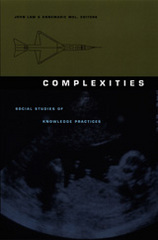
Individual essays study complexity from a variety of perspectives, addressing market behavior, medical interventions, aeronautical design, the governing of supranational states, ecology, roadbuilding, meteorology, the science of complexity itself, and the psychology of childhood trauma. Other topics include complex wholes (holism) in the sciences, moral complexity in seemingly amoral endeavors, and issues relating to the protection of African elephants. With a focus on such concepts as multiplicity, partial connections, and ebbs and flows, the collection includes narratives from Kenya, Great Britain, Papua New Guinea, the Netherlands, France, and the meetings of the European Commission, written by anthropologists, economists, philosophers, psychologists, sociologists, and scholars of science, technology, and society.
Contributors. Andrew Barry, Steven D. Brown, Michel Callon, Chunglin Kwa, John Law, Nick Lee, Annemarie Mol, Marilyn Strathern, Laurent Thévenot, Charis Thompson

Complicated Lives focuses on the lives of sixty-five drug-using girls in the juvenile justice system (living in group homes, a residential treatment center, and a youth correctional facility) who grew up in families characterized by parental drug use, violence, and child maltreatment. Vera Lopez situates girls’ relationships with parents who fail to live up to idealized parenting norms and examines how these relationships change over time, and ultimately contribute to the girls’ future drug use and involvement in the justice system.
While Lopez’s subjects express concerns and doubt in their chances for success, Lopez provides an optimistic prescription for reform and improvement of the lives of these young women and presents a number of suggestions ranging from enhanced cultural competency training for all juvenile justice professionals to developing stronger collaborations between youth and adult serving systems and agencies.
This is an auto-narrated audiobook edition of this book.
Composition and Cornel West: Notes toward a Deep Democracy identifies and explains key aspects of the work of Cornel West—the highly regarded scholar of religion, philosophy, and African American studies—as they relate to composition studies, focusing especially on three rhetorical strategies that West suggests we use in our questioning lives as scholars, teachers, students, and citizens.
In this study, author Keith Gilyard examines the strategies of Socratic Commitment (a relentless examination of received wisdom), Prophetic Witness (an abiding concern with justice and the plight of the oppressed), and Tragicomic Hope (a keep-on-pushing sensibility reflective of the African American freedom struggle). Together, these rhetorical strategies comprise an updated form of cultural criticism that West calls prophetic pragmatism.
This volume, which contains the only interview in which Cornel West directly addresses the field of composition,sketches the development of Cornel West’s theories of philosophy, political science, religion, and cultural studies and restates the link between Deweyan notions of critical intelligence and the notion of critical literacy developed by Ann Berthoff, Ira Shor, and Henry Giroux. Gilyard provides examples from the classroom to illustrate the possibilities of Socratic Commitment as part of composition pedagogy, shows the alignment of Prophetic Witness with traditional aims of critical composition, and in his chapter on Tragicomic Hope, addresses African American expressive culture with an emphasis on music and artists such as Curtis Mayfield, Marvin Gaye, Aretha Franklin, and Kanye West.
The first book to comprehensively connect the ideas of one of America's premier scholars of religion, philosophy and African American studies with composition theory and pedagogy, Composition and Cornel West will be valuable to scholars, teachers, and students interested in race, class, critical literacy, and the teaching of writing.
The book opens by tracking the jagged emergence of “Asian American women” as a distinct social identity over the past three decades. Kang then directs critical attention to how the attempts to compose them as discrete subjects of consciousness, visibility, and action demonstrate a broader, ongoing tension between socially particularized subjects and disciplinary knowledges. In addition to the shifting meanings and alignments of “Asian,” “American,” and “women,” the book examines the discourses, political and economic conditions, and institutional formations that have produced Asian/American women as generic authors, as visibly desirable and desiring bodies, as excludable aliens and admissible citizens of the United States, and as the proper labor for transnational capitalism. In analyzing how these enfigurations are constructed and apprehended through a range of modes including autobiography, cinematography, historiography, photography, and ethnography, Kang directs comparative attention to the very terms of their emergence as Asian/American women in specific disciplines.
Finally, Kang concludes with a detailed examination of selected literary and visual works by Korean women artists located in the United States and Canada, works that creatively and critically contend with the problematics of identification and representation that are explored throughout the book. By underscoring the forceful and contentious struggles that animate all of these compositional gestures, Kang proffers Asian/American women as a vexing and productive figure for cultural, political and epistemological critique.
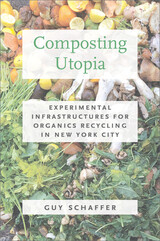
New Yorkers generate millions of tons of trash annually, which, through the magic of infrastructure and one of the largest waste management systems in the world, disappears from city sidewalks each night. Under pressure from environmentalists, activists, policymakers, and industry, the New York City Department of Sanitation started exploring ways to divert organic material from the waste stream, and in 2013, launched its composting pilot program.
Drawing on three years of ethnographic fieldwork with community composters and microhaulers in New York City, alongside the rollout of the city’s curbside organics collection system, Composting Utopia describes how local, grassroots organizations intervened in the city’s waste system, enacting change and presenting an alternative vision of the composting city. As Guy Shaffer argues, movement-driven infrastructure projects develop new tools for organizing the world, give communities agency over urban design, and promote just sustainability.

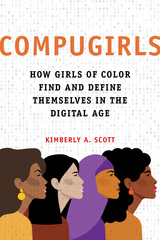
Kimberly A. Scott explores this question and others as she details the National Science Foundation-funded enrichment project COMPUGIRLS. This groundbreaking initiative teaches tech skills to adolescent girls of color but, as importantly, offers a setting that emphasizes empowerment, community advancement, and self-discovery. Scott draws on her experience as an architect of COMPUGIRLS to detail the difficulties of translating participants' lives into a digital context while tracing how the program evolved. The dramatic stories of the participants show them blending newly developed technical and communication skills in ways designed to spark effective action and bring about important change.
A compelling merger of theory and storytelling, COMPUGIRLS provides a much-needed roadmap for understanding how girls of color can find and define their selves in today's digital age.

The first book to intervene in debates on computation in the digital humanities
Bringing together leading experts from across North America and Europe, Computational Humanities redirects debates around computation and humanities digital scholarship from dualistic arguments to nuanced discourse centered around theories of knowledge and power. This volume is organized around four questions: Why or why not pursue computational humanities? How do we engage in computational humanities? What can we study using these methods? Who are the stakeholders?
Recent advances in technologies for image and sound processing have expanded computational approaches to cultural forms beyond text, and new forms of data, from listservs and code repositories to tweets and other social media content, have enlivened debates about what counts as digital humanities scholarship. Providing case studies of collaborations between humanities-centered and computation-centered researchers, this volume highlights both opportunities and frictions, showing that data and computation are as much about power, prestige, and precarity as they are about p-values.
Contributors: Mark Algee-Hewitt, Stanford U; David Bamman, U of California, Berkeley; Kaspar Beelen, U of London; Peter Bell, Philipps U of Marburg; Tobias Blanke, U of Amsterdam; Julia Damerow, Arizona State U; Quinn Dombrowski, Stanford U; Crystal Nicole Eddins, U of Pittsburgh; Abraham Gibson, U of Texas at San Antonio; Tassie Gniady; Crystal Hall, Bowdoin College; Vanessa M. Holden, U of Kentucky; David Kloster, Indiana U; Manfred D. Laubichler, Arizona State U; Katherine McDonough, Lancaster U; Barbara McGillivray, King’s College London; Megan Meredith-Lobay, Simon Fraser U; Federico Nanni, Alan Turing Institute; Fabian Offert, U of California, Santa Barbara; Hannah Ringler, Illinois Institute of Technology; Roopika Risam, Dartmouth College; Joshua D. Rothman, U of Alabama; Benjamin M. Schmidt; Lisa Tagliaferri, Rutgers U; Jeffrey Tharsen, U of Chicago; Marieke van Erp, Royal Netherlands Academy of Arts and Sciences; Lee Zickel, Case Western Reserve U.

With Computer Game Worlds, Claus Pias sets out to answer these questions. Tracing computer games from their earliest forms to the unstoppable commercial and cultural phenomena they have become today, Pias then provides a careful epistemological reconstruction of the process of playing games, both at computers and by computers themselves. The book makes a valuable theoretical contribution to the ongoing discussion about computer games.
Computers, Surveillance, and Privacy was first published in 1996. Minnesota Archive Editions uses digital technology to make long-unavailable books once again accessible, and are published unaltered from the original University of Minnesota Press editions.
From computer networks to grocery store checkout scanners, it is easier and easier for governments, employers, advertisers, and individuals to gather detailed and sophisticated information about each of us. In this important new collection, the authors question the impact of these new technologies of surveillance on our privacy and our culture.
Although surveillance-literally some people "watching over" others-is as old as social relationships themselves, with the advent of the computer age this phenomenon has acquired new and distinctive meanings. Technological advances have made it possible for surveillance to become increasingly global and integrated-both commercial and government-related personal data flows more frequently across national boundaries, and the flow between private and public sectors has increased as well.
Addressing issues of the global integration of surveillance, social control, new information technologies, privacy violation and protection, and workplace surveillance, the contributors to Computers, Surveillance, and Privacy grapple with the ramifications of these concerns for society today. Timely and provocative, this collection will be of vital interest to anyone concerned with resistance to social control and incursions into privacy.
Contributors: Jonathan P. Allen, Colin J. Bennett, Simon G. Davies, Oscar H. Gandy Jr., Calvin C. Gotlieb, Rob Kling, Gary T. Marx, Abbe Mowshowitz, Judith A. Perrolle, Mark Poster, Priscilla M. Regan, James B. Rule.
David Lyon is professor of sociology at Queen's University, Canada. His previous books include The Electronic Eye: The Rise of Surveillance Society (Minnesota, 1994). Elia Zureik is also professor of sociology at Queen's University, Canada, and coedited (with Dianne Hartling) The Social Context of the New Information and Communication Technologies (1987).

A deconstruction of gender through the voices of Siri, HAL 9000, and other computers that talk
Although computer-based personal assistants like Siri are increasingly ubiquitous, few users stop to ask what it means that some assistants are gendered female, others male. Why is Star Trek’s computer coded as female, while HAL 9000 in 2001: A Space Odyssey is heard as male? By examining how gender is built into these devices, author Liz W. Faber explores contentious questions around gender: its fundamental constructedness, the rigidity of the gender binary, and culturally situated attitudes on male and female embodiment.
Faber begins by considering talking spaceships like those in Star Trek, the film Dark Star, and the TV series Quark, revealing the ideologies that underlie space-age progress. She then moves on to an intrepid decade-by-decade investigation of computer voices, tracing the evolution from the masculine voices of the ’70s and ’80s to the feminine ones of the ’90s and ’00s. Faber ends her account in the present, with incisive looks at the film Her and Siri herself.
Going beyond current scholarship on robots and AI to focus on voice-interactive computers, The Computer’s Voice breaks new ground in questions surrounding media, technology, and gender. It makes important contributions to conversations around the gender gap and the increasing acceptance of transgender people.
Winner of the Adele E. Clarke Book Award from ReproNetwork
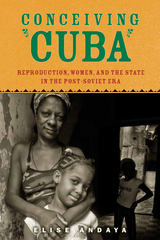
After Cuba’s 1959 revolution, the Castro government sought to instill a new social order. Hoping to achieve a new and egalitarian society, the state invested in policies designed to promote the well-being of women and children. Yet once the Soviet Union fell and Cuba’s economic troubles worsened, these programs began to collapse, with serious results for Cuban families.
Conceiving Cuba offers an intimate look at how, with the island’s political and economic future in question, reproduction has become the subject of heated public debates and agonizing private decisions. Drawing from several years of first-hand observations and interviews, anthropologist Elise Andaya takes us inside Cuba’s households and medical systems. Along the way, she introduces us to the women who wrestle with the difficult question of whether they can afford a child, as well as the doctors who, with only meager resources at their disposal, struggle to balance the needs of their patients with the mandates of the state.
Andaya’s groundbreaking research considers not only how socialist policies have profoundly affected the ways Cuban families imagine the future, but also how the current crisis in reproduction has deeply influenced ordinary Cubans’ views on socialism and the future of the revolution. Casting a sympathetic eye upon a troubled state, Conceiving Cuba gives new life to the notion that the personal is always political.
Shelley Mallett is Research Fellow at the Key Centre for Women's Health in Society at Melbourne University.
In Conceiving Masculinity, Liberty Walther Barnes puts the world of male infertility under the microscope to examine how culturally pervasive notions of gender shape our understanding of disease, and how disease impacts our personal ideas about gender.
Taking readers inside male infertility clinics, and interviewing doctors and couples dealing with male infertility, Barnes provides a rich account of the social aspects of the confusing and frustrating diagnosis of infertility. She explains why men resist a stigmatizing label like "infertile," and how men with poor fertility redefine for themselves what it means to be manly and masculine in a society that prizes male virility. Conceiving Masculinity also details how and why men embrace medical technologies and treatment for infertility.
Broaching a socially taboo topic, Barnes emphasizes that infertility is not just a women's issue. She shows how gender and disease are socially constructed within social institutions and by individuals.

This ground-breaking rhetorical analysis examines a 1987 Massachusetts law affecting infertility treatment and the cultural context that makes such a law possible
Elizabeth C. Britt uses a Massachusetts statute requiring insurance coverage for infertility as a lens through which the work of rhetoric in complex cultural processes can be better understood. Countering the commonsensical notion that mandatory insurance coverage functions primarily to relieve the problem of infertility, Britt argues instead that the coverage serves to expose its contours.
Britt finds that the mandate, operating as a technology of normalization, helps to identify the abnormal (the infertile) and to create procedures by which the abnormal can be subjected to reform. In its role in normalizing processes, the mandate is more successful when it sustains, rather than resolves, the distinction between the normal and the abnormal. This distinction is achieved in part by the rhetorical mechanism of the double bind. For the middle-class white women who are primarily served by the mandate, these double binds are created both by the desire for success, control, and order and by adherence to medical models that often frustrate these same desires. The resulting double binds help to create and sustain the tension between fertility and infertility, order and discontinuity, control and chaos, success and failure, tensions that are essential for the process of normalization to continue.
Britt uses extensive interviews with women undergoing fertility treatments to provide the foundation for her detailed analysis. While her study focuses on the example of infertility, it is also more broadly a commentary on the power of definition to frame experience, on the burdens and responsibilities of belonging to social collectives, and on the ability of rhetorical criticism to interrogate cultural formations.
As John Philip Reid goes on to make clear, "liberty" did not mean to the eighteenth-century mind what it means today. In the twentieth century, we take for granted certain rights—such as freedom of speech and freedom of the press—with which the state is forbidden to interfere. To the revolutionary generation, liberty was preserved by curbing its excesses. The concept of liberty taught not what the individual was free to do but what the rule of law permitted. Ultimately, liberty was law—the rule of law and the legalism of custom. The British constitution was the charter of liberty because it provided for the rule of law.
Drawing on an impressive command of the original materials, Reid traces the eighteenth-century notion of liberty to its source in the English common law. He goes on to show how previously problematic arguments involving the related concepts of licentiousness, slavery, arbitrary power, and property can also be fit into the common-law tradition. Throughout, he focuses on what liberty meant to the people who commented on and attempted to influence public affairs on both sides of the Atlantic. He shows the depth of pride in liberty—English liberty—that pervaded the age, and he also shows the extent—unmatched in any other era or among any other people—to which liberty both guided and motivated political and constitutional action.
In this book, Michael Brown provides original and critical analysis of the state of the social sciences and the humanities. He examines the different disciplines that address human affairs--from sociology, philosophy, political science, and anthropology to the humanities in general--to understand their common ground. He probes the ways in which we investigate the meaning of individuality in a society for which individuals are not the agents of the activities in which they participate, and he develops a critical method for studying the relations among activities, objects, and situations.
The Concept of the Social in Uniting the Humanities and Social Sciences restores the centrality of sociality to all disciplines that provide for and depend on the social dimension of human life. Ultimately, he establishes a theory of the unity of the human sciences that will surely make readers rethink the current state and future of theory in those fields for years to come.

The monumental Harvard Encyclopedia of American Ethnic Groups is the most authoritative single source available on the history, culture, and distinctive characteristics of ethnic groups in the United States. The Dimensions of Ethnicity series is designed to make this landmark scholarship available to everyone in a series of handy paperbound student editions. Selections in this series will include outstanding articles that illuminate the social dynamics of a pluralistic nation or masterfully summarize the experience of key groups. Written by the best-qualified scholars in each field, Dimensions of Ethnicity titles will reflect the complex interplay between assimilation and pluralism that is a central theme of the American experience.
The tightening and loosening of ethnic identity under changing definitions of “Americanism” is emphasized in this volume.


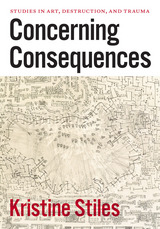
The essays in this book focus primarily on performance art and photography. From war and environmental pollution to racism and sexual assault, Stiles analyzes the consequences of trauma as seen in the works of artists like Marina Abramovic, Pope.L, and Chris Burden. Assembling rich intellectual explorations on everything from Paleolithic paintings to the Bible’s patriarchal legacies to documentary images of nuclear explosions, Concerning Consequences explores how art can provide a distinctive means of understanding trauma and promote individual and collective healing.

"Professor Davidson---an accomplished literary critic---offers a focused and balanced analysis of poetry, film, and the arts honed with his excellent knowledge of the latest advances in disability studies. He is brilliant at reading texts in a sophisticated and aesthetically pleasurable way, making Concerto for the Left Hand one of the smartest books to date in disability studies."
---Lennard Davis, University of Illinois, Chicago
---Rachel Blau DuPlessis, Temple University
Concerto for the Left Hand is at the cutting edge of the expanding field of disability studies, offering a wide range of essays that investigate the impact of disability across various art forms---including literature, performance, photography, and film. Rather than simply focusing on the ways in which disabled persons are portrayed, Michael Davidson explores how the experience of disability shapes the work of artists and why disability serves as a vital lens through which to interpret modern culture. Covering an eclectic range of topics---from the phantom missing limb in film noir to the poetry of American Sign Language---this collection delivers a unique and engaging assessment of the interplay between disability and aesthetics.
Written in a fluid, accessible style, Concerto for the Left Hand will appeal to both specialists and general audiences. With its interdisciplinary approach, this book should appeal not only to scholars of disability studies but to all those working in minority art, deaf studies, visual culture, and modernism.
Michael Davidson is Professor of American Literature at the University of California, San Diego. His other books include Guys Like Us: Citing Masculinity in Cold War Poetics and Ghostlier Demarcations: Modern Poetry and the Material World.

While the literature of hybrid regimes has given up the presumption that post-communist countries must democratize, its language and concepts still mostly relate to Western democracies. Magyar and Madlovics strongly argue for a vocabulary and grammar tailored to the specifics of the region. In 120 theses they unfold a conceptual framework with (1) a typology of post-communist regimes and (2) a detailed presentation of ideal-type actors and the political, economic, and social phenomena in these regimes. The book is a more digestible companion to the 800-page The Anatomy of Post-Communist Regimes (CEU Press, 2020), which was a detailed theoretical study with plenty of empirical illustrations.
Each of the 120 theses contains a statement and its concise discussion supported by illustrative tables, figures, and QR-codes that connect the interested reader to the more detailed analysis in the Anatomy. In a condensed variety, this book has kept the holistic approach of the Anatomy and treats the spheres of political, market, and communal action as parts of a single, coherent whole. The endeavor to synthesize a vast range of ideas does not, however, result in a too complicated text. On the contrary, freed from the implicit presumptions of democracy theory, the new terminology yields a readily usable toolkit of unambiguous means of expression to speak about post-communism.
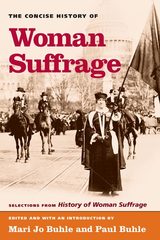
In their Concise History of Woman Suffrage, Mari Jo Buhle and Paul Buhle have revitalized this classic text by carefully selecting from among its best material. The eighty-two chosen documents, now including interpretative introductory material by the editors, give researchers easy access to material that the original work's arrangement often caused readers to ignore or to overlook.
The volume contains the work of many reform agitators, among them Angelina Grimké, Lucy Stone, Carrie Chapman Catt, Charlotte Perkins Gilman, Anna Howard Shaw, Jane Addams, Sojourner Truth, and Victoria Woodhull, as well as Elizabeth Cady Stanton, Susan B. Anthony, Matilda Joslyn Gage, and Ida Husted Harper.
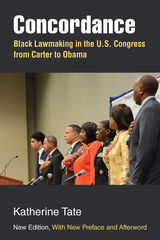
Focusing on the Congressional Black Caucus (CBC), Katherine Tate studies the ways in which the nation’s most prominent group of Black legislators has developed politically. Organized in 1971, the CBC set out to increase the influence of Black legislators. Indeed, over the past four decades, they have made progress toward the goal of becoming recognized players within Congress. And yet, Tate argues, their incorporation is transforming their policy preferences. Since the Clinton Administration, CBC members—the majority of whom are Democrats—have been less willing to oppose openly congressional party leaders and both Republican and Democratic presidents. Tate documents this transformation with a statistical analysis of Black roll-call votes, using the important Poole-Rosenthal scores from 1977 to 2010. While growing partisanship has affected Congress as a whole, not just minority caucuses, Tate warns that incorporation may mute the independent voice of Black political leaders.
During the height of the civil rights movement, Blacks were among the most liberal Americans. Since the 1970s, however, increasing representation in national, state, and local government has brought about a more centrist outlook among Black political leaders.
Focusing on the Congressional Black Caucus (CBC), Katherine Tate studies the ways in which the nation’s most prominent group of Black legislators has developed politically. Organized in 1971, the CBC set out to increase the influence of Black legislators. Indeed, over the past four decades, they have made progress toward the goal of becoming recognized players within Congress. And yet, Tate argues, their incorporation is transforming their policy preferences. Since the Clinton Administration, CBC members—the majority of whom are Democrats—have been less willing to oppose openly congressional party leaders and both Republican and Democratic presidents. Tate documents this transformation with a statistical analysis of Black roll-call votes, using the important Poole-Rosenthal scores from 1977 to 2010. While growing partisanship has affected Congress as a whole, not just minority caucuses, Tate warns that incorporation may mute the independent voice of Black political leaders.
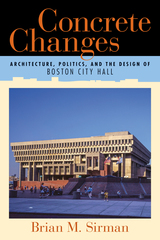
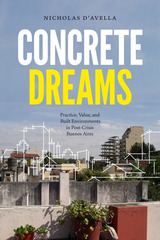
And yet Boston City Hall frequently ranks among the country's ugliest buildings. Concrete Changes seeks to answer a common question for contemporary viewers: How did this happen? In a lively narrative filled with big personalities and newspaper accounts, Brian M. Sirman argues that this structure is more than a symbol of Boston's modernization; it acted as a catalyst for political, social, and economic change.
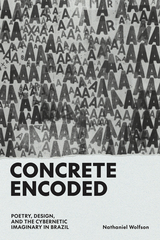
A study of concrete art and poetry, its implications, and influence in Brazil.
Concrete art and poetry burst onto Brazil’s cultural stage in the 1950s, while the country was embarking on a dizzying period of modernization. Bringing together key poets and visual artists alongside less recognized figures, Nathaniel Wolfson shows that concretism was hardly socially inert, as pundits have suggested. Rather, it presciently grappled with an emerging information age that would soon reorganize human relations globally.
Concrete Encoded describes a nascent cybernetic imaginary. Concretism has long been considered Brazil’s most global aesthetic movement. Wolfson traces new circles of international theorists and practitioners involved in critical technological thought. Wolfson argues that concrete poetry is the quintessential literary genre of the early information age. He shows that Brazilian poets, artists, and designers contested the military dictatorship’s technological authoritarianism and information-gathering operations. Vigorous experimentalists, their attention to form and semantics unveiled both the creative and nefarious possibilities of algorithmic writing. A highly original work, Concrete Encoded reckons with aesthetic responses from Brazil to an advancing capitalist and digital era.
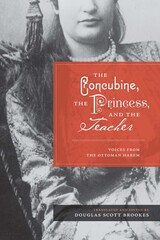
In the Western imagination, the Middle Eastern harem was a place of sex, debauchery, slavery, miscegenation, power, riches, and sheer abandon. But for the women and children who actually inhabited this realm of the imperial palace, the reality was vastly different. In this collection of translated memoirs, three women who lived in the Ottoman imperial harem in Istanbul between 1876 and 1924 offer a fascinating glimpse "behind the veil" into the lives of Muslim palace women of the late nineteenth and early twentieth centuries.
The memoirists are Filizten, concubine to Sultan Murad V; Princess Ayse, daughter of Sultan Abdulhamid II; and Safiye, a schoolteacher who instructed the grandchildren and harem ladies of Sultan Mehmed V. Their recollections of the Ottoman harem reveal the rigid protocol and hierarchy that governed the lives of the imperial family and concubines, as well as the hundreds of slave women and black eunuchs in service to them. The memoirists show that, far from being a place of debauchery, the harem was a family home in which polite and refined behavior prevailed. Douglas Brookes explains the social structure of the nineteenth-century Ottoman palace harem in his introduction.
These three memoirs, written across a half century and by women of differing social classes, offer a fuller and richer portrait of the Ottoman imperial harem than has ever before been available in English.
African Studies Association Women’s Caucus’s Aidoo-Snyder Book Prize winner
A Choice Outstanding Academic Title
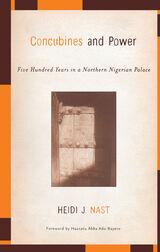
The monumental palace of Kano, Nigeria, was built circa 1500 and is today inhabited by more than one thousand persons. Historically, its secluded interior housed hundreds of concubines whose role in the politics, economics, and culture of Kano city-state has been largely overlooked. In this pioneering work, Heidi J. Nast demonstrates how human-geographical methods can tell us much about a site like the palace, a place bereft of archaeological work or relevant primary sources.
Drawing on extensive ethnographic work and mapping data, Concubines and Power presents new evidence that palace concubines controlled the production of indigo-dyed cloth centuries before men did. The women were also key players in the assessment and collection of the state's earliest grain taxes, forming a complex and powerful administrative hierarchy that used the taxes for palace community needs. In addition, royal concubines served as representatives of their places of origin, their freeborn children providing the king with additional human capital to cement territorial alliances through marriage.
Social forces undoubtedly shaped and changed concubinage for hundreds of years, but Nast shows how the women’s reach extended far beyond the palace walls to the formation of the state itself.
Winner of the John Hope Franklin Prize
A Moyers & Company Best Book of the Year
“[A] brilliant work that tells us how directly the past has formed us.”
—Darryl Pinckney, New York Review of Books
Lynch mobs, chain gangs, and popular views of black southern criminals that defined the Jim Crow South are well known. We know less about the role of the urban North in shaping views of race and crime in American society.
Following the 1890 census, the first to measure the generation of African Americans born after slavery, crime statistics, new migration and immigration trends, and symbolic references to America as the promised land of opportunity were woven into a cautionary tale about the exceptional threat black people posed to modern urban society. Excessive arrest rates and overrepresentation in northern prisons were seen by many whites—liberals and conservatives, northerners and southerners—as indisputable proof of blacks’ inferiority. In the heyday of “separate but equal,” what else but pathology could explain black failure in the “land of opportunity”?
The idea of black criminality was crucial to the making of modern urban America, as were African Americans’ own ideas about race and crime. Chronicling the emergence of deeply embedded notions of black people as a dangerous race of criminals by explicit contrast to working-class whites and European immigrants, Khalil Gibran Muhammad reveals the influence such ideas have had on urban development and social policies.
Winner of the John Hope Franklin Prize
A Moyers & Company Best Book of the Year
“A brilliant work that tells us how directly the past has formed us.”
—Darryl Pinckney, New York Review of Books
How did we come to think of race as synonymous with crime? A brilliant and deeply disturbing biography of the idea of black criminality in the making of modern urban America, The Condemnation of Blackness reveals the influence this pernicious myth, rooted in crime statistics, has had on our society and our sense of self. Black crime statistics have shaped debates about everything from public education to policing to presidential elections, fueling racism and justifying inequality. How was this statistical link between blackness and criminality initially forged? Why was the same link not made for whites? In the age of Black Lives Matter and Donald Trump, under the shadow of Ferguson and Baltimore, no questions could be more urgent.
“The role of social-science research in creating the myth of black criminality is the focus of this seminal work…[It] shows how progressive reformers, academics, and policy-makers subscribed to a ‘statistical discourse’ about black crime…one that shifted blame onto black people for their disproportionate incarceration and continues to sustain gross racial disparities in American law enforcement and criminal justice.”
—Elizabeth Hinton, The Nation
“Muhammad identifies two different responses to crime among African-Americans in the post–Civil War years, both of which are still with us: in the South, there was vigilantism; in the North, there was an increased police presence. This was not the case when it came to white European-immigrant groups that were also being demonized for supposedly containing large criminal elements.”
—New Yorker

David Harvey’s The Condition of Postmodernity rationalised capitalism’s transformation during an extraordinary year: 1989. It gave theoretical expression to a material and cultural reality that was just then getting properly started – globalisation and postmodernity – whilst highlighting the geo-spatial limits to accumulation imposed by our planet.
However this landmark publication, author Robert Hassan argues, did not address the arrival of digital technology, the quantum leap represented by the move from an analogue world to a digital economy and the rapid creation of a global networked society. Considering first the contexts of 1989 and Harvey’s work, then the idea of humans as analogue beings he argues this arising new human condition of digitality leads to alienation not only from technology but also the environment. This condition he suggests, is not an ideology of time and space but a reality stressing that Harvey’s time-space compression takes on new features including those of ‘outward’ and ‘inward’ globalisation and the commodification of all spheres of existence.
Lastly the author considers culture’s role drawing on Rahel Jaeggi’s theories to make the case for a post-modern Marxism attuned to the most significant issue of our age. Stimulating and theoretically wide-ranging The Condition of Digitality recognises post-modernity’s radical new form as a reality and the urgent need to assert more democratic control over digitality.
Decades of neoliberal authoritarianism have propelled Turkey into crisis. Regime change, economic disaster and Erdogan’s ambition to impose ‘one-man rule’ have shaken the foundations of Turkish political life, but what does this mean for workers?
Moving beyond the headlines and personalities, this book uncovers the real condition of the working class in modern Turkey. Combining field research and in-depth interviews, it offers cutting-edge analyses of workplace struggles, trade unionism, the AKP’s relationship with neoliberalism, migration, gender, agrarian change and precarity, as well as the Covid-19 pandemic and its impact on workers.
Bringing together Turkish activists and scholars, this book is an inside look at the dynamics and contradictions of working-class resistance against Turkey’s neoliberal authoritarian regime; from worker self-management to organized labor and rural struggles.
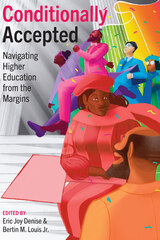
A collection of essays that provides advice and strategies for BIPOC scholars on how to survive, thrive, and resist in academic institutions.
Conditionally Accepted builds upon an eponymous blog on InsideHigherEd.com, which is now a decade-old national platform for BIPOC academics in the United States. Bringing together perspectives from academics of color on navigating intersecting forms of injustice in the academy, each chapter offers situated knowledge about experiencing—and resisting—marginalization in academia. Contextualized within existing scholarship, these personal narratives speak to institutional betrayals while highlighting agency and sharing stories of surviving on treacherous terrain. Covering topics from professional development to the emptiness of diversity, equity, and inclusion efforts, and redefining what it means to be an academic in our contemporary moment, this edited collection directly confronts issues of systemic exclusion, discrimination, harassment, microaggressions, tokenism, and surveillance. Letting marginalized scholars know they are not alone, Conditionally Accepted offers concrete wisdom for readers seeking to navigate and transform oppressive academic institutions.
READERS
Browse our collection.
PUBLISHERS
See BiblioVault's publisher services.
STUDENT SERVICES
Files for college accessibility offices.
RECENTLY PUBLISHED




UChicago Accessibility Resources
home | accessibility | search | about | contact us
BiblioVault ® 2001 - 2025
The University of Chicago Press