
 A SCHOLARLY BOOK REPOSITORY
45 start with C start with C
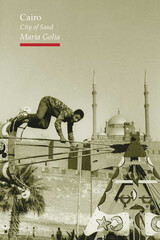
Cairo steps inside the interactions between Cairenes, examining the roles of family, tradition and bureaucracy in everyday life. The book explores Cairo's relationship with its "others", from the French and British occupations to modern influences like tourism and consumerism. Cairo also discusses characteristic styles of communication, and linguistic mêmes, including slang, grandiloquence, curses and jokes.
Cairo exists by virtue of these interactions, synergies of necessity, creativity and the presence or absence of power. Cairo: City of Sand reveals a peerless balancing act, and transmits the city's overriding message: the breadth of the human capacity for loss, astonishment and delight.
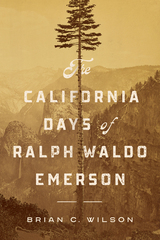
In the spring of 1871, Ralph Waldo Emerson boarded a train in Concord, Massachusetts, bound for a month-and-a-half-long tour of California—an interlude that became one of the highlights of his life. On their journey across the American West, he and his companions would take in breathtaking vistas in the Rockies and along the Pacific Coast, speak with a young John Muir in the Yosemite Valley, stop off in Salt Lake City for a meeting with Brigham Young, and encounter a diversity of communities and cultures that would challenge their Yankee prejudices.
Based on original research employing newly discovered documents, The California Days of Ralph Waldo Emerson maps the public story of this group’s travels onto the private story of Emerson’s final years, as aphasia set in and increasingly robbed him of his words. Engaging and compelling, this travelogue makes it clear that Emerson was still capable of wonder, surprise, and friendship, debunking the presumed darkness of his last decade.

Ultimately, whether in his native Swiss Alps or among the cedars of Lebanon, the same question pervades Philippe Jaccottet’s work: How should we live? More than a simple palliative to a depressing news cycle, Calm Fire captures a true sense of place by celebrating and pondering ways of life through the immersive experience of travel.
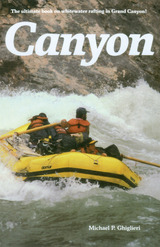
From Lee's Ferry to Diamond Creek, Ghiglieri leads you down 226 miles of wild river and through some of the most breathtaking scenery on earth. Along the way, he navigates the Colorado River's dozens of notorious rapids—many of which drop fifteen feet or more—and shares the excitement of waves and boulders, thunder and foam. Recounting a real journey through this geological wonder, Canyon interweaves heart-pounding adventure with factual insights into the world of Grand Canyon. Between the rapids, Ghiglieri relates tales of river runners past and present, lessons in geology and wildlife, observations on the impact of Glen Canyon Dam, and stories of Native inhabitants, from Anasazi ancestors to Havasupai Rastafarians. This trip also offers more than its share of human drama for the passengers aboard, leaving them with tales of their own to tell.
"Running the Colorado River in the Grand Canyon is to me the most impressive journey on our planet," writes Ghiglieri, "an adventure that leaves no traveler unchanged." For anyone who has ever shared or contemplated that adventure, Canyon recreates an unforgettable ride.
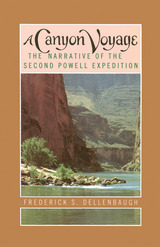
"One of the seminal books on western history . . . The author was only 17 when he began the expedition, and he honestly hero-worshipped Powell all his life. Yet this bright, sharp account is so detailed and truthful that the reader can see through his enthusiasm to discover Powell's mean spirit and sometimes reckless nature. It's also a great river-running book." —Deseret News
"It was decidedly worth writing, this detailed record: a more absorbing, and at times stirring, story of adventure has not seen the light in a long time, and the author's unadorned, yet vivid, style enables the reader to share all the emotions of the explorers:" —The Nation
"In these later years (1909) when amateur travel in the west is frequent, a detailed record of this kind will be of value to seekers after adventure." —Science
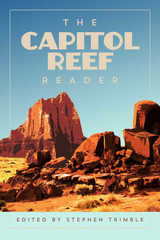
The volume features nearly fifty writers who have anchored their attention and imagination in Utah’s least-known national park. The bedrock elders of Colorado Plateau literature are here (Clarence Dutton, Wallace Stegner, Edward Abbey), as are generations of writers who love this land (including Ellen Meloy, Craig Childs, Charles Bowden, Renny Russell, Ann Zwinger, Gary Ferguson, and Rose Houk). Their pieces are a pleasure to read and each reveals a facet of Capitol Reef’s story, creating a gem of a volume. Editor Stephen Trimble guides and orients with commentary and context.
A visual survey of the park in almost 100 photographs adds another layer to our understanding of this place. Historic photos, pictures from Trimble’s forty-five years of hiking the park, as well as images from master visual artists who have worked in Capitol Reef are included. No other book captures the essence of Capitol Reef like this one.
Part of the National Park Reader series, edited by Lance Newman and David Stanley
Although Obregón’s role in the Ibarra expedition was that of soldier-explorer, and despite his lacking an advanced education, he would go on to compose Historia de los descubrimientos de Nueva España twenty years later, expanding his narrative to include the years before and after his own firsthand experiences with Ibarra. Obregón depicts the storied landscape of the northern borderlands with vivid imagery, fusing setting and situation, constructing a new reality of what was, is, and should be, and presenting it as truth.
In Capturing the Landscape of New Spain, Rebecca A. Carte explains how landscape performs a primary role in Obregón’s retelling, emerging at times as protagonist and others as antagonist. Carte argues that Obregón’s textualization offers one of the first renderings of the region through the Occidental cultural lens, offering insight into Spanish cultural perceptions of landscape during a period of important social and political shifts.
By examining mapping and landscape discourse, Carte shows how history and geography, past and present, people and land, come together to fashion the landscape of northern New Spain.

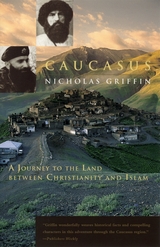
Delving deep into the Caucasus, Griffin transcends the headlines trumpeting Chechen insurgency to give the land and its conflicts dimension: evoking the weather, terrain, and geography alongside national traditions, religious affiliations, and personal legends as barriers to peaceful co-existence. In focusing his tale on Shamil while retracing his steps, Griffin compellingly demonstrates the way history repeats itself.

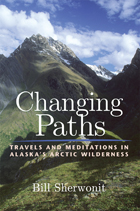
Changing Paths: Travels and Meditations in Alaska’s Arctic Wilderness is an autobiographical exploration of author Bill Sherwonit’s relationship with the Alaska wilderness. Written in three parts, it first describes Sherwonit’s introduction to the Brooks Range and his years as an exploration geologist. Taking a step back, the author then takes us into the past to explore his childhood roots in rural Connecticut and his recognition of wild nature as a refuge. He concludes with his emergence as a nature writer and wilderness advocate.
An engrossing, fascinating, and eye-opening tale of one man’s life and of wilderness conceptions, this vivid description of an area of Alaska that few people get to experience is authentic and enlightening. It is an extraordinary contribution to the literature of place from one of Alaska’s most accomplished nature writers.
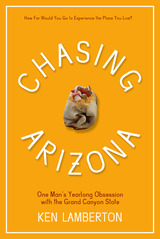
Lamberton chases the four corners of Arizona, attempts every county, every reservation, and every national monument and state park, from the smallest community to the largest city. He drives his Kia Rio through the longest tunnels and across the highest suspension bridges, hikes the hottest deserts, and climbs the tallest mountain, all while visiting the people, places, and treasures that make Arizona great.
In the vivid, lyrical, often humorous prose the author is known for, each destination weaves together stories of history, nature, and people, along with entertaining side adventures and excursions. Maps and forty-four of the author’s detailed pencil drawings illustrate the journey.
Chasing Arizona is unlike any book of its kind. It is an adventure story, a tale of Arizona, a road-warrior narrative. It is a quest to see and experience as much of Arizona as possible. Through intimate portrayals of people and place, readers deeply experience the Grand Canyon State and at the same time celebrate what makes Arizona a wonderful place to visit and live.
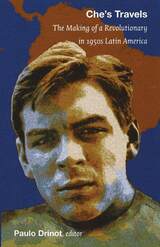
Contributors
Malcolm Deas
Paulo Drinot
Eduardo Elena
Judith Ewell
Cindy Forster
Patience A. Schell
Eric Zolov
Ann Zulawski
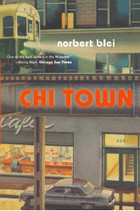
Chi Townis the story of Norbert Blei's love affair with a city that shaped both his life and work. Along the route of this walking tour of the Windy City, you'll dine with Petros in Greek Town, see Studs Terkel in action at WFMT interviewing Dave Brubeck, listen to Mike Royko describe his own neighborhood, share the thoughts of Chicago sportswriter Jerome Holtzman, and meet newspaper vendors, trash collectors, bankers and more.
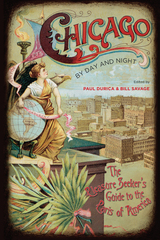
Chicago by Day and Night: The Pleasure Seeker’s Guide to the Paris of America is an actual guidebook to Chicago for visitors to the World’s Columbian Exposition of 1893. This unauthorized handbook to the rowdy city outside the elegant fairgrounds explores pleasures high and low. The theaters and music, architectural glories, parks and boulevards, churches and synagogues, and other elevated pursuits the authors included in 1893 gave the book a veneer of high culture. But the book owed its popularity to its insider tips about Chicago's lurid and louche entertainments—drink, gambling, and sex. With a wink and tongue firmly in cheek, the original authors condemned Gilded Age vice while offering curious travelers precise directions to the dubious, decadent, and debauched quarters of the Windy City.
To introduce this compulsively readable, gift-quality journey through the Chicago of 1893, Chicago writers and humorists Paul Durica and Bill Savage have added an expert introduction to Gilded Age Chicago and the World's Columbian Exposition. Showcasing the first Ferris wheel, dazzling new electrification technologies, and exhibits from around the world, the Exposition was Chicago’s chance to prove it had risen from the ashes of the Great Fire and would claim a place among the world’s great cities.
Both a perfect keepsake or gift for Chicago travelers as well as an invaluable text for readers interested in the history of Chicago, the Midwest, or Gilded Age urban life, Chicago by Day and Night is a beloved classic of Chicago writing.
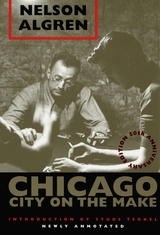
"This short, crisp, fighting creed is both a social document and a love poem, a script in which a lover explains his city's recurring ruthlessness and latent power; in which an artist recognizes that these are portents not of death, but of life."—New York Herald Tribune
Nelson Algren (1909-1981) won the National Book Award in 1950 for The Man with the Golden Arm. His other works include Walk on the Wild Side, The Neon Wilderness, and Conversations with Nelson Algren, the last available from the University of Chicago Press. David Schmittgens teaches English at St. Ignatius College Prep in Chicago, Illinois. Bill Savage is a lecturer at Northwestern University and coeditor of the 50th Anniversary Critical Edition of The Man with the Golden Arm.
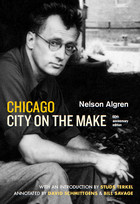
“Once you’ve become a part of this particular patch, you’ll never love another. Like loving a woman with a broken nose, you may well find lovelier lovelies. But never a lovely so real.”
Ernest Hemingway once said of Nelson Algren’s writing that “you should not read it if you cannot take a punch.” The prose poem, Chicago: City on the Make, filled with language that swings and jabs and stuns, lives up to those words. In this sixtieth anniversary edition, Algren presents 120 years of Chicago history through the lens of its “nobodies nobody knows”: the tramps, hustlers, aging bar fighters, freed death-row inmates, and anonymous working stiffs who prowl its streets.
Upon its original publication in 1951, Algren’s Chicago: City on the Make was scorned by the Chicago Chamber of Commerce and local journalists for its gritty portrayal of the city and its people, one that boldly defied City Hall’s business and tourism initiatives. Yet the book captures the essential dilemma of Chicago: the dynamic tension between the city’s breathtaking beauty and its utter brutality, its boundless human energy and its stifling greed and violence.
The sixtieth anniversary edition features historic Chicago photos and annotations on everything from defunct slang to Chicagoans, famous and obscure, to what the Black Sox scandal was and why it mattered. More accessible than ever, this is, as Studs Terkel says, “the best book about Chicago.”
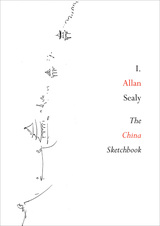
Sealy is known for both his fiction and his travelogue From Yukon to Yukatan: A Western Journey. This facsimile edition of The China Sketchbook, however, adds a special dimension to a travel narrative—the sketches and scribbles give readers a more immediate and unrestrained insight into the mind of a very fine writer and chart an unusual and quirky travel diary.
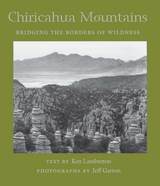
Lamberton shares insights about the geology, habitats, and diversity of wildlife in a place of such isolation that species must either adapt or become extinct. The Chiricahuas are one link in a chain of mountains connecting the Rockies to the Sierra Madre Occidental in Mexico, and some Madrean species reach the northernmost extension of their ranges here: birds like sulphur-bellied flycatchers, mammals like jaguarundis, and trees like the Apache pine. But this is not an untraveled wilderness. We learn why the Chiricahuas are so popular with birders, who flock to these mountains from around the world in the hopes of spotting some of the nearly four hundred avian species found here. We also learn something of the Chiricahua's rich human culture, from Apache warriors to European settlers.
Gracing the text are more than a dozen black-and-white photographs by Jeff Garton that offer views of the Chiricahuas different from those usually found in tourist brochures: landscapes and riparian settings, rock formations and plant studies that give readers a lasting impression of the beauty and tranquility of this wilderness. Together words and images convey an intimate view of one of the Southwest's most exotic locations—stronghold, paradise, and everlasting island in the vast and rolling desert.
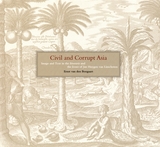
Divine and Spoiled Asia reproduces these engravings and their captions (in English), together with an extensive analysis of them by historian Ernst van den Boogaart. In addition to providing unparalleled insights into early modern European views of the East, the engravings also contain valuable depictions of the peoples, customs, and flora and fauna of late sixteenth-century India and neighboring countries.
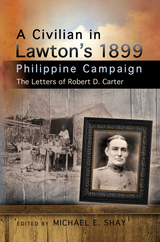
In the midst of the Philippine-American War, twenty-two-year-old Robert Dexter Carter served in Manila as a civilian quartermaster clerk. Through his letters to his family, he provided a vivid picture of army life in Manila—the sights, the smells, and his responses to the native culture. In addition to his letters, his diary and several related articles present a firsthand account of the historic voyage of the United States Army Transport Grant through the Suez Canal to Manila in early 1899. Carter’s writings not only tell of his sometimes harrowing experiences, but also reveal the aspirations and fears of a young man not quite sure of his next steps on life’s journey.
Carter’s father, Robert Goldthwaite Carter, was a war hero and a longtime friend of Maj. Gen. Henry W. Lawton. Carter obtained his position through Lawton’s influence, and his respect for Lawton is clear throughout his writings. A frequent guest in the Lawton home, the young clerk was introduced to many notable figures both military and civilian. Carter’s letters, particularly to his father, are full of news and gossip related to his commander. In other letters, he reveals the kindness and generosity of Mrs. Lawton, who took time to look out for Carter while he was in the hospital and often loaned him books.
This well-researched and expertly edited work casts light on the role of support troops in war, a subject too often minimized or ignored. Shay begins each chapter with an introduction that establishes the setting, the context of events, and the disposition of Carter and his compatriots and provides notes and commentary to place the letters in context. By choosing not to edit the offensive expletives of a sometimes arrogant and racist young man, Shay presents a fully nuanced portrait of a young American exploring the larger world in a time of turmoil.
Enhanced by photographs from collections at the Library of Congress and the Military History Institute, as well as many of Carter’s own whimsical drawings, the book will appeal to armchair historians and scholars alike.
Melville’s long poem Clarel: A Poem and Pilgrimage in the Holy Land (1876) was the last full-length book he published. Until the mid-twentieth century even the most partisan of Melville’s advocates hesitated to endure a four-part poem of 150 cantos and almost 18,000 lines about a naive American named Clarel, on pilgrimage through the Palestinian ruins with a provocative cluster of companions.
But modern critics have found Clarel a much better poem than was ever realized. Robert Penn Warren called it a precursor of The Waste Land. It abounds with revelations of Melville’s inner life. Most strikingly, it is argued that the character Vine is a portrait of Melville’s friend Nathaniel Hawthorne. Clarel is one of the most complex theological explorations of faith and doubt in all of American literature, and this edition brings Melville’s poem to new life.
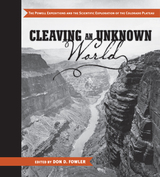
In 2009 the University of Utah Press and the Utah State Historical Society co-published three volumes of long out-of-print journals, letters, and other documents from John Wesley Powell’s expeditions down the Colorado River. We are proud to announce the fourth and final volume. Cleaving an Unknown World collects Powell’s journal (Smithsonian Journal of History, 1968); Jack Hillers’s diary and photographs, previously published as Photographed All the Best Scenery, edited by Don D. Fowler (University of Utah Press, 1972); original maps from Francis Marion Bishop (Utah Historical Quarterly, 1969); Frederick S. Dellenbaugh’s letters (Utah Historical Quarterly, 1969); and John C. Sumner’s journal from the first Powell expedition (Utah Historical Quarterly, 1969). Roy Webb’s foreword provides the context for these disparate pieces.
This beautifully illustrated book features Hillers’s photographs—long regarded as a remarkable and unique record of the Colorado River and the Grand Canyon. Cleaving an Unknown World belongs in the library of any reader interested in the exploration of the American West.
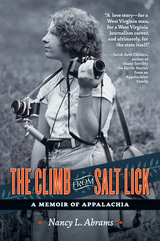
The Climb from Salt Lick is the remarkable memoir of an outsider coming into adulthood. It is the story of a unique place and its people from the perspective of a woman who documents its burdens and its beauty, using words and pictures to tell the rich stories of those around her.
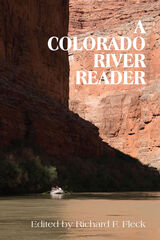
"This canyon world where water yearns toward the ocean is a place so large I can’t take it in. Instead, I am taken in, traveling a near dream as we journey by water, contained by rock walls. In order to see this shorn-away world, I narrow my vision to the small and nearly secret. Never mind the stone’s illusion of permanence or the great strength of water. I look to the most fragile of things here, to the plant world of the canyon. The other river travelers seem taken in by stone, time, and water, and do not see the small things that tempt my attention, the minute fern between stones, the tiny black snails in a pond of water. I am drawn in by the growing life and not by the passing."
- from 'Plant Journey' by Linda Hogan
The mystique of the Colorado River is no less enduring and powerful than is its physical presence in the landscape of the West. Little wonder that narratives about the Colorado still arouse and intrigue readers, or that the river continues to inspire new writing among contemporary authors. What is surprising is that no anthology offering a comprehensive introduction to these works existed - until now.
A Colorado River Reader spans hundreds of years and many cultures and voices to capture an array of responses to this mighty river and tributaries. The collection opens with a Paiute creation myth set in the Grand Canyon and progresses through time, encompassing the Spanish and American exploration narratives of the eighteenth and nineteenth centuries and culminating in the adventure and nature writings of the twentieth.
This is a book that deserves a place next to every armchair and in a pocket of every backpack.
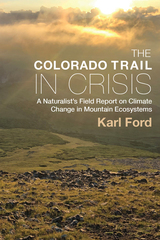
Using his hike along the popular five-hundred-mile Colorado Trail to present his personal observations about more than a hundred miles of dead and dying forest, Karl Ford presents a brief environmental history of these areas of the state, weaving in scientific studies about forest mortality caused by insect infestations, wildfire, drought, and loss of snowpack, and describes the poor current prospects for reforestation as the climate continues to warm. His own Lakota ancestry, as well as historical references to local Tabeguache Ute Chief Ouray and displaced Ute populations, meaningfully frames important conversations about caretaking and connection to place. Ford also proposes potential solutions to drought and forest mortality problems, as well as varying approaches and limitations to mitigation efforts.
The Colorado Trail in Crisis appeals to hikers and nature lovers seeking to learn about the natural history, beauty, and serenity of the Colorado Trail, as well as students, conservationists, and scientists researching climate change effects on Colorado mountain ecosystems.
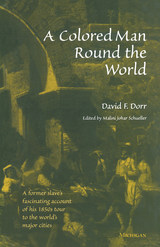
Malini Johar Schueller has edited and annotated the 1858 text and added a critical introduction that provides a useful context for understanding and appreciating this important but heretofore neglected document. Her edition of A Colored Man Round the World provides a fascinating account of Dorr's negotiation of the conflicting roles of slave versus man, taking into account all of the racial complexities that existed at the time. As a traveler abroad, Dorr claimed an American selfhood that allowed him mobility in Europe, and he benefited from the privileges accorded American "Orientalists" venturing in the near East. However, any empowerment that Dorr experienced while a tourist vanished upon his return to America.
The book will be welcomed for the rare perspective it provides of the mid-nineteenth century, through the eyes of an African-American slave and for the light it casts on world and U.S. history as well as on questions of racial and national identity.
Malini Johar Schueller is Professor of English, University of Florida.
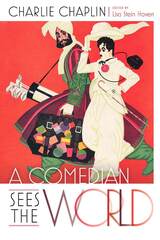
Available only in the USA and Canada.

In the summer of 2005, distinguished geographer Yi-Fu Tuan ventured to China to speak at an international architectural conference, returning for the first time to the place he had left as a child sixty-four years before. He traveled from Beijing to Shanghai, addressing college audiences, floating down the Yangtze River on a riverboat, and visiting his former home in Chongqing.
In this enchanting volume, Tuan’s childhood memories and musings on the places encountered during this homecoming are interspersed with new lectures, engaging overarching principles of human geography as well as the changing Chinese landscape. Throughout, Tuan’s interactions with his hosts, with his colleague’s children, and even with a garrulous tour guide, offer insights into one who has spent his life studying place, culture, and self.
At the beginning of his trip, Tuan wondered if he would be a stranger among people who looked like him. By its end, he reevaluates his own self-definition as a hyphenated American and sheds new light on human identity’s complex roots in history, geography, and language.
Yi-Fu Tuan is author of Cosmos and Hearth, Dear Colleague, and Space and Place, all from Minnesota. He retired from the University of Wisconsin-Madison in 1998.

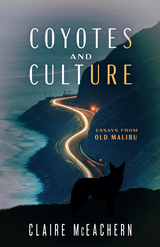
This unique collection of essays offers a gripping exploration of the precarious beauty and peril of California’s iconic coastline. Through essays blending personal narrative, cultural analysis, and history, author Claire McEachern takes us behind the scenes of surf and celebrities to paint a vivid portrait of life on the edge —both literally and metaphorically. From the rugged Santa Monica Mountains to the shimmering Pacific, this work captures the paradoxes of Old Malibu: a place of luxury and risk, natural splendor and ecological vulnerability.
As an East Coast academic married to a fifth-generation Californian cowboy, McEachern brings a wry yet tender lens to the modern American story, delving into what happens to love and community in a land of both devastating wildfires and extravagant wildflowers. Her reflections weave together questions of beauty, resilience, and humanity’s uneasy relationship with nature, creating an unforgettable narrative of place and survival. Readers drawn to the drama of human stories set against larger cultural and environmental forces will find this book both thought-provoking and deeply moving.
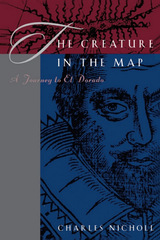
"Walter Raleigh . . . was one of those Elizabethan all-rounders who still seem staggeringly larger than life. . . . Mr. Nicholl's cogent reconstruction of the journey uses Raleigh's own account, 'The Discoverie of Guiana'—part truth, part advertising, part rhapsody—and much well-found ancillary material."—Anthony Bailey, New York Times
"Like The Reckoning, his brilliant account of the murder of Christopher Marlowe, Nicholl's new book might be called an exercise in historical conjuring. The Creature in the Map is an effort not only to analyse but also to call into presence the lived experience of the voyage Raleigh undertook in 1595 to the Orinoco Delta in what is now Venezuela."—Stephen Greenblatt, Times Literary Supplement
"Charles Nicholl belongs to an elite company, that of historians who know how to make research into arcane matters and distant times as engrossing as In Cold Blood or All the President's Men."—Michael Dirda, Washington Post
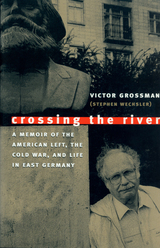
What could possibly impel a relatively privileged twenty-four-year-old American-serving in the U.S. Army in Germany in 1952 to swim across the Danube River to what was then referred to as the Soviet Zone? How are we to understand his decision to forsake the land of his birth and build a new life in the still young German Democratic Republic? These are the questions at the core of this memoir by Victor Grossman, who was born Stephen Wechsler but changed his name after defecting to the GDR.
A child of the Depression, Grossman witnessed firsthand the dislocations wrought by the collapse of the U.S. economy during the 1930s. Widespread unemployment and poverty, CIO sit-down strikes, and the fight to save Republican Spain from fascism-all made an indelible impression as he grew up in an environment that nurtured a commitment to left-wing causes. He continued his involvement with communist activities as a student at Harvard in the late 1940s and after graduation, when he took jobs in two factories in Buffalo, New York, and tried to organize their workers.
Fleeing McCarthyite America and potential prosecution, Grossman worked in the GDR with other Western defectors and eventually became, as he notes, the “only person in the world to attend Harvard and Karl Marx universities.” Later, he was able to establish himself as a freelance journalist, lecturer, and author. Traveling throughout East Germany, he evaluated the failures as well as the successes of the GDR's “socialist experiment.” He also recorded his experiences, observations, and judgments of life in East Berlin after reunification, which failed to bring about the post-Communist paradise so many had expected.
Written with humor as well as candor, Crossing the River provides a rare look at the Cold War from the other side of the ideological divide.
Mark Solomon, a distinguished historian of the American left, provides a historical afterword that places Grossman's experiences in a larger Cold War context.
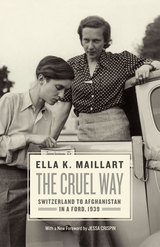
While the core of the book is the journey itself and their interactions with people oppressed by political conflict and poverty, towards the end of the trip the women’s increasingly troubled relationship takes center stage. By then the glamorous, androgynous Schwarzenbach, whose own account of the trip can be found in All the Roads Are Open, is fighting a losing battle with her own drug addiction, and Maillart’s frustrated attempts to cure her show the profound depth of their relationship.
Complete with thirteen of Maillart’s own photographs from the journey, The Cruel Way is a classic of travel writing, and its protagonists are as gripping and fearless as any in literature.
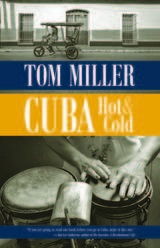
A brilliant raconteur and expert on Cuba, Miller is full of enthralling behind-the-scenes stories. His subjects include one of the world’s most resourceful master instrument makers, the famous photo of Che Guevara, and the explosion of the USS Maine. A veteran of the underground press of the 1960s, Miller describes the day Cuba’s State Security detained him for distributing copies of the United Nations Human Rights Declaration of 1948 and explains how the dollar has become the currency of necessity. His warm reminiscences explain the complexities of life in Cuba.
Since his first visit to the island thirty years ago, Miller has shown us the real people of Havana and the countryside, the Castros and their government, and the protesters and their rigor. His first book on Cuba, Trading with the Enemy, brought readers into the “Special Period,” Fidel’s name for the country’s period of economic free fall. Cuba, Hot and Cold brings us up to date, providing intimate and authentic glimpses of day-to-day life.
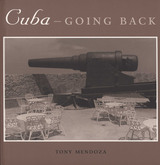
Imagine being unable to return to your homeland for thirty-six years. What would you do if you finally got a chance to go back?
In 1996, after travel restrictions between the United States and Cuba were relaxed, Cuban exile Tony Mendoza answered that question. Taking his cameras, notebooks, and an unquenchable curiosity, he returned for his first visit to Cuba since summer of 1960, when he emigrated with his family at age eighteen. In this book he presents over eighty evocative photographs accompanied by a beautifully written text that mingles the voices of many Cubans with his own to offer a compelling portrait of a resilient people awaiting the inevitable passing of the socialist system that has failed them.
His photographs and interviews bear striking witness to the hardships and inequalities that exist in this workers' "paradise," where the daily struggle to make ends meet on an average income of eight dollars a month has created a longing for change even in formerly ardent revolutionaries. At the same time, Cuba—Going Back is an eloquent record of a personal journey back in time and memory that will resonate with viewers and readers both within and beyond the Cuban American community. It belongs on the shelves of anyone who values excellent photography and well-crafted prose.
READERS
Browse our collection.
PUBLISHERS
See BiblioVault's publisher services.
STUDENT SERVICES
Files for college accessibility offices.
RECENTLY PUBLISHED




UChicago Accessibility Resources
home | accessibility | search | about | contact us
BiblioVault ® 2001 - 2026
The University of Chicago Press