
 A SCHOLARLY BOOK REPOSITORY
6 start with C start with C

The legends that die hardest are those of the romantic outlaw, and those of swashbuckling pirates are surely among the most durable. Swift ships, snug inns, treasures buried by torchlight, palm-fringed beaches, fabulous riches, and, most of all, freedom from the mean life of the laboring man are the stuff of this tradition reinforced by many a novel and film.
It is disconcerting to think of such dashing scoundrels as slaves to economic forces, but so they were—as Robert Ritchie demonstrates in this lively history of piracy. He focuses on the shadowy figure of William Kidd, whose career in the late seventeenth century swept him from the Caribbean to New York, to London, to the Indian Ocean before he ended in Newgate prison and on the gallows. Piracy in those days was encouraged by governments that could not afford to maintain a navy in peacetime. Kidd’s most famous voyage was sponsored by some of the most powerful men in England, and even though such patronage granted him extraordinary privileges, it tied him to the political fortunes of the mighty Whig leaders. When their influence waned, the opposition seized upon Kidd as a weapon. Previously sympathetic merchants and shipowners did an about-face too and joined the navy in hunting down Kidd and other pirates.
By the early eighteenth century, pirates were on their way to becoming anachronisms. Ritchie’s wide-ranging research has probed this shift in the context of actual voyages, sea fights, and adventures ashore. What sort of men became pirates in the first place, and why did they choose such an occupation? What was life like aboard a pirate ship? How many pirates actually became wealthy? How were they governed? What large forces really caused their downfall?
As the saga of the buccaneers unfolds, we see the impact of early modern life: social changes and Anglo-American politics, the English judicial system, colonial empires, rising capitalism, and the maturing bureaucratic state are all interwoven in the story. Best of all, Captain Kidd and the War against the Pirates is an epic of adventure on the high seas and a tale of back-room politics on land that captures the mind and the imagination.
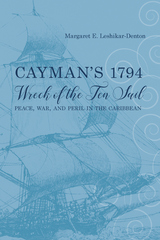
The story has been passed through generations for more than two centuries. Details vary depending on who is doing the telling, but all refer to this momentous maritime event as the Wreck of the Ten Sail. Sometimes misunderstood as the loss of a single ship, it was in fact the wreck of ten vessels at once, comprising one of the most dramatic maritime disasters in all of Caribbean naval history. Surviving historical documents and the remains of the wrecked ships in the sea confirm that the narrative is more than folklore. It is a legend based on a historical event in which HMS Convert, formerly L’Inconstante, a recent prize from the French, and 9 of her 58-ship merchant convoy sailing from Jamaica to Britain, wrecked on the jagged eastern reefs of Grand Cayman in 1794.
The incident has historical significance far beyond the boundaries of the Cayman Islands. It is tied to British and French history during the French Revolution, when these and other European nations were competing for military and commercial dominance around the globe. The Wreck of the Ten Sail attests to the worldwide distribution of European war and trade at the close of the eighteenth century.
In Cayman’s 1794 Wreck of the Ten Sail: Peace, War, and Peril in the Caribbean, Margaret E. Leshikar-Denton focuses on the ships, the people, and the wreck itself to define their place in Caymanian, Caribbean, and European history. This well-researched volume weaves together rich oral folklore accounts, invaluable supporting documents found in archives in the United Kingdom, Jamaica, and France, and tangible evidence of the disaster from archaeological sites on the reefs of the East End.
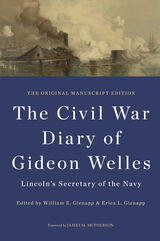
Perhaps the hardest-working member of the cabinet, Welles still found time to keep a detailed diary that has become one of the key documents for understanding the inner workings of the Lincoln administration. In this new edition, William E. and Erica L. Gienapp have restored Welles’s original observations, gleaned from the manuscript diaries at the Library of Congress and freed from his many later revisions, so that the reader can experience what he wrote in the moment. With his vitriolic pen, Welles captures the bitter disputes over strategy and war aims, lacerates colleagues from Secretary of State William H. Seward to General-in-Chief Henry Halleck, and condemns the actions of the self-serving southern elite he sees as responsible for the war. He just as easily waxes eloquent about the Navy's wartime achievements, extols the virtues of Lincoln, and drops in a tidbit of Washington gossip.
Carefully edited and extensively annotated, this edition contains a wealth of supplementary material. The appendixes include short biographies of the members of Lincoln’s cabinet, the retrospective Welles wrote after leaving office covering the period missing from the diary proper, and important letters regarding naval matters and international law.
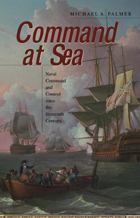
Commanders at sea struggle not only with the unpredictability of natural elements, but also with a shroud of uncertainty often referred to as the "fog of war." Over the centuries most admirals yielded to the natural temptation to find in new technologies a means to assert centralized control over their forces. But other commanders have recognized the fog for what it is: a constant level of uncertainty resistant to mere technological solution.
In this grand history of naval warfare, Michael Palmer observes five centuries of dramatic encounters under sail and steam. From reliance on signal flags in the seventeenth century to satellite communications in the twenty-first, admirals looked to the next advance in technology as the one that would allow them to control their forces. But while abilities to communicate improved, Palmer shows how other technologies simultaneously shrank admirals' windows of decision. The result was simple, if not obvious: naval commanders have never had sufficient means or time to direct subordinates in battle.
Successful commanders as distant as Horatio Nelson (1758-1805) and Arleigh Burke (1901-1996) accepted this reality. They sought solutions to the dilemmas of command in the personal indoctrination of subordinates through discussion, comradeship, and displays of trust and confidence. Such leaders created a commonality of vision and fostered a high degree of individual initiative. Their decentralized approach to command resulted in a resiliency that so often provided the key to success in battle.
Palmer's exciting and enlightening history reveals the myriad efforts of naval commanders to navigate the fog of war.
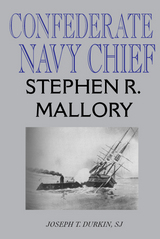
The book tells of Stephen R. Mallory's support of naval inventions, strategy, and ideas. It also sheds light on the the successes and failures of Jefferson Davis. Durkin gives a well-balanced biography of Mallory and his life in the Confederate navy.

READERS
Browse our collection.
PUBLISHERS
See BiblioVault's publisher services.
STUDENT SERVICES
Files for college accessibility offices.
RECENTLY PUBLISHED






UChicago Accessibility Resources
home | accessibility | search | about | contact us
BiblioVault ® 2001 - 2025
The University of Chicago Press