
 A SCHOLARLY BOOK REPOSITORY
13 start with E start with E
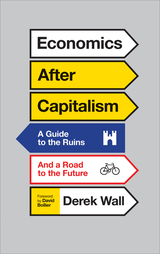
Challenging the arguments for markets, mainstream economics and capitalism from Adam Smith onwards, Economics After Capitalism provides a step-by-step guide to various writers, movements and schools of thought, critical of neoliberal globalisation. These range from Keynesian-inspired reformists such as Geroge Soros and Joseph Stiglitz, critics of inequality like Thomas Piketty and Amaitya Sen, to more radical voices including Naomi Klein, Marxists such as David Harvey, anarchists, and autonomists including Toni Negri and Michael Hardt.
By providing a clear and accessible guide to the economics of anti-capitalism, Derek Wall successfully demonstrates that an open source eco-socialist alternative to rampant climate change, elite rule and financial chaos is not just necessary, but possible.


Melissa A. Johnson interviews communicators at cultural heritage museums to understand the challenges of representing communities based on racial and ethnic, generational, immigrant, and language identities. Exploring how communications professionals function as cultural intermediaries by negotiating competing and intersecting identities and mastering linguistic and visual code-switching, she presents an analysis of the communication tactics of more than two hundred art, history, African American, American Indian, and other diverse museums. Engaging Diverse Communities illuminates best public relations practices, especially in media relations, digital press relations, website content production, social media, and event planning. This essential text for museum professionals also addresses visual aesthetics, cultural expression, and counter-stereotypes, and offers guidance on how to communicate cultural attractiveness.

Featuring the work of: About Face Youth Theatre • Albany Park Theater Project • Barrel of Monkeys • Every house has a door • FEMelanin • 500 Clown • Free Street Theater • Honey Pot Performance • Lookingglass Theater • The Neo-Futurists • The Second City • Southside Ignoramus Quartet • Teatro Luna • Walkabout Theater • Young Fugitives
Ensemble-Made Chicago brings together a wide range of Chicago theater companies to share strategies for cocreating performance. Cocreated theater breaks down the traditional roles of writer, director, and performer in favor of a more egalitarian approach in which all participants contribute to the creation of original material. Each chapter offers a short history of a Chicago company, followed by detailed exercises that have been developed and used by that company to build ensemble and generate performances. Companies included range in age from two to fifty years, represent different Chicago neighborhoods, and reflect both the storefront tradition and established cultural institutions. The book pays special attention to the ways the fight for social justice has shaped the development of this aesthetic in Chicago.
Assembled from interviews and firsthand observations, Ensemble-Made Chicago is written in a lively and accessible style and will serve as an invaluable guide for students and practitioners alike, as well as an important archive of Chicago’s vibrant ensemble traditions. Readers will find new creative methods to enrich their own practice and push their work in new directions.

Envisioning Brazil is a comprehensive and sweeping assessment of Brazilian studies in the United States. Focusing on synthesis and interpretation and assessing trends and perspectives, this reference work provides an overview of the writings on Brazil by United States scholars since 1945.
"The Development of Brazilian Studies in the United States," provides an overview of Brazilian Studies in North American universities. "Perspectives from the Disciplines" surveys the various academic disciplines that cultivate Brazilian studies: Portuguese language studies, Brazilian literature, art, music, history, anthropology, Amazonian ethnology, economics, politics, and sociology. "Counterpoints: Brazilian Studies in Britain and France" places the contributions of U.S. scholars in an international perspective. "Bibliographic and Reference Sources" offers a chronology of key publications, an essay on the impact of the digital age on Brazilian sources, and a selective bibliography.


Social class is a neglected, misunderstood, yet overwhelmingly powerful factor in the United States. In Everyone Has Class Allison L. Hurst and Sean McCloud draw on both personal stories and insights from recent studies to recount the many ways class influences American life. The authors explore the material conditions we live in, the social relationships we develop, and the unconscious and conscious psychological and physical habits we form based on our social class location. Each chapter reveals the profound presence and complex influence of social class—beyond that of money, education, and occupation—providing readers with an understanding of what social class is and how it operates in our everyday lives.
Starting with “what is class?” in chapter one, personal narratives alongside interviews with key researchers and scholars allow entrée for everyone to the meaning of the term class, the impact of class, and the broader applications and perspectives within the study of class. Can one overcome class? Does recognizing its effects allow us to navigate our own social standing? Through twelve stand-alone chapters, Hurst and McCloud show how class shapes and influences both individual and social lives in consequential ways.
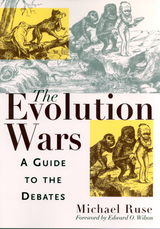
The Evolution Wars draws on history, science, and philosophy to examine the development of evolutionary thought through the past two and a half centuries. It focuses on the debates that have engaged, divided, and ultimately provoked scientists to ponder the origins of organisms—including humankind—paying regard to the nineteenth-century clash over the nature of classification and debates about the fossil record, genetics, and human nature. Much attention is paid to external factors and the underlying motives of scientists.
In these pages you will meet Charles Darwin’s ebullient grandfather Erasmus, the contentious Frenchmen Georges Cuvier and Etienne Geoffroy Stain-Hillaire, new creationist Phillip Johnson, the brilliant J. B. S. Haldane, outspoken Richard Dawkins, and many other stars of the debates.
The Evolution Wars explores the ten greatest controversies surrounding evolution in world history, with emphasis on recent times, including the infamous Scopes trial of the 1920s: the search for human origins and speculation about the “missing link,” spurred by the discovery of “Lucy;” the debate surrounding the new theory of paleontology proposed by Stephen Jay Gould; and the rise of teaching “creation science” in public school as a subject on par with evolution.
Although the author takes a strong stand on the side of evolution, he also shows respect for dissenting viewpoints. Thus, the book is intellectually rewarding not only for evolutionists but also for opponents of evolution theory, especially those who want to see how one of the great ideas of Western civilization resonates through time, both within and beyond the scientific community.
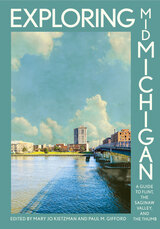
Inspired by the iconic American Guide Series published by the Federal Writers Project in the 1930s, this new guide to Flint, the Saginaw Valley, and the Thumb showcases the industrial-agricultural heart of Michigan—a region that has been beating irregularly for the last three decades, but whose importance to its people has lasted millennia. The ten counties featured in the book have lost population, industries, small farms, natural resources, and clean water. Instead of focusing on loss, the authors uncover the region’s unique history and culture, characterized by the productive tension between factories and farms, urban and rural spaces, labor and management, migrants and the mainstream, conservatives and progressives. The book documents the genesis of an ecological awareness that grew out of deforestation, habitat and species loss, and a succession of water crises. Encyclopedic in scope like their WPA forebears, the book is a functional guide that offers suggestions and strategies for enriching travel while celebrating the tenacity of those who came, worked, and stayed: lumberjacks, farmers, foundry workers, labor activists, judges, Indigenous peoples, African Americans, artists, poets, and environmental warriors.

Existential philosophy has perhaps captured the public imagination more completely than any other philosophical movement in the twentieth century. But less is known about the phenomenological method lying behind existentialism. In this solid introduction to phenomenological philosophy, authors David Stewart and Algis Mickunas show that phenomenology is neither new nor bizarre but is a contemporary way of raising afresh the major problems of philosophy that have dominated the traditions of Western thought. The authors carefully lead the reader trough the maze of terminology, explaining the major problems phenomenology has treated and showing how these are a consistent extension of the traditional concerns of philosophy.
In concise, uncluttered, and straightforward terms, the history, development, and contemporary status of phenomenology is explained with a copiously annotated bibliography following each chapter. Nothing in print combines the extensive introductory materials with a guide to the massive literature that has been produced by phenomenological and existential studies.
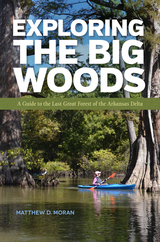
Exploring the Big Woods: A Guide to the Last Great Forest of Eastern Arkansas is both a natural history and a guide to one of the last remnants of Mississippi bottomland forest, an ecosystem that once stretched from southern Illinois to the Gulf Coast.
Crossed by the White River and its tributaries, which periodically flood and release nutrients, the Big Woods is one of the few places in the Mississippi River Valley where this life-giving flood cycle persists. As a result, it is home to an unusual abundance of animals and plants.
Immense cypresses, hickories, sweetgums, oaks, and sycamores; millions of migrating waterfowl; incredible scenery; and the complex relationship between humans and nature are all to be discovered here.
Exploring the Big Woods will introduce readers to the natural features, plants, animals, and hiking and canoeing trails going deep into the forests and swamps of this rare and beautiful natural resource.
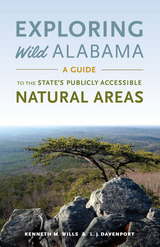
The most comprehensive guide available to Alabama’s publicly accessible natural destinations.
Exploring Wild Alabama is an exceptionally detailed guide to the most beautiful natural destinations in the state. From the rocky outcrops of the Appalachian plateaus to the sugar-white beaches of the Gulf Coast’s Orange Beach and Dauphin Island, Alabama offers a wealth of remarkable sites to explore by car or canoe, bicycle or motorcycle, or on foot.
Intrepid explorers Kenneth M. Wills and L. J. Davenport divide Alabama into eleven geographic regions that feature state parks and preserves, national monuments and forests, wildlife management areas, Nature Conservancy and Forever Wild properties, botanical gardens and arboreta, as well as falls, caverns, and rock cliffs. Exploring Wild Alabama provides detailed site entries to one hundred and fifty destinations. Each section is beautifully illustrated with color photographs and area maps.
Exploring Wild Alabama includes a large state map and numerous local topographic maps to help readers locate each site. Individual site entries include
· written directions to each site and GPS coordinates;
· engaging notes about the ecology, landscape features, and local species of plants and animals of the sites; and
· international recreation symbols for hiking, fishing, boating, camping, hunting, and other fun outdoor activities.
Wills and Davenport guide travelers to Alabama jewels such as Sand Mountain’s Chitwood Barrens, which harbors the rare Green Pitcher Plant and other exotic botanical species; Blowing Springs Cave in Lauderdale County, named for the cool air and the clear spring flowing out of the cave opening; Jackson Prairies in the Lime Hills region; and Booker’s Mill in Conecuh County, offering diverse habitats and historic structures.
Long a favorite destination for outdoor sports enthusiasts, Alabama is fast becoming a major “ecotourism” destination, with thousands of travelers discovering the state’s unsung natural treasures. Exploring Wild Alabama will be used and trusted by anyone who loves the outdoors—birders, botanists, cave explorers, cyclists, hunters, fishermen, rock climbers, canoeists, teachers, and other outdoor enthusiasts.
READERS
Browse our collection.
PUBLISHERS
See BiblioVault's publisher services.
STUDENT SERVICES
Files for college accessibility offices.
RECENTLY PUBLISHED




UChicago Accessibility Resources
home | accessibility | search | about | contact us
BiblioVault ® 2001 - 2026
The University of Chicago Press