
 A SCHOLARLY BOOK REPOSITORY
5 start with E start with E
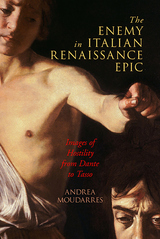
Published by University of Delaware Press. Distributed worldwide by Rutgers University Press.

The collection ranges across topics such as eighteenth-century sensibility, nineteenth-century concerns with the transmission of emotions, early twentieth-century cinematic affect, and the contemporary mobilization of political emotions including those regarding nonstate national identities. The complexities and effects of emotions are explored in a variety of forms—political rhetoric, literature, personal letters, medical writing, cinema, graphic art, soap opera, journalism, popular music, digital media—with attention paid to broader European and transatlantic implications.
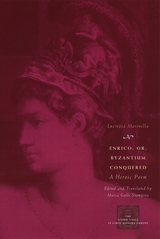
Lucrezia Marinella (1571–1653) is, by all accounts, a phenomenon in early modernity: a woman who wrote and published in many genres, whose fame shone brightly within and outside her native Venice, and whose voice is simultaneously original and reflective of her time and culture. In Enrico; or, Byzantium Conquered, one of the most ambitious and rewarding of her numerous narrative works, Marinella demonstrates her skill as an epic poet.
Now available for the first time in English translation, Enrico retells the story of the conquest of Byzantium in the Fourth Crusade (1202–04). Marinella intersperses historical events in her account of the invasion with numerous invented episodes, drawing on the rich imaginative legacy of the chivalric romance. Fast-moving, colorful, and narrated with the zest that characterizes Marinella’s other works, this poem is a great example of a woman engaging critically with a quintessentially masculine form and subject matter, writing in a genre in which the work of women poets was typically shunned.
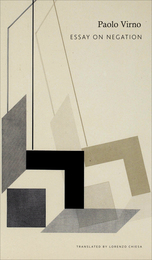
As speaking animals, we continuously make use of an unassuming grammatical particle, without suspecting that what is at work in its inconspicuousness is a powerful apparatus, which orchestrates language, signification, and the world at large. What particle might this be? The word not.
In Essay on Negation, Paolo Virno argues that the importance of the not is perhaps comparable only to that of money—that is, the universality of exchange. Negation is what separates verbal thought from silent cognitive operations, such as feelings and mental images. Speaking about what is not happening here and now, or about properties that are not referable to a given object, the human animal deactivates its original neuronal empathy, which is prelinguistic; it distances itself from the prescriptions of its own instinctual endowment and accesses a higher sociality, negotiated and unstable, which establishes the public sphere. In fact, the speaking animal soon learns that the negative statement does not amount to the linguistic double of unpleasant realities or destructive emotions: while it rejects them, negation also names them and thus includes them in social life. Virno sees negation as a crucial effect of civilization, one that is, however, also always exposed to further regressions. Taking his cue from a humble word, the author is capable of unfolding the unexpected phenomenology of the negating consciousness.
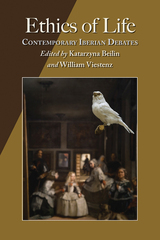
• What are the different rhetorical strategies employed by writers, artists, filmmakers, and activists to react to the degradation of life and climate change?
• How are urban movements using environmental issues to resist corporate privatization of the commons?
• What is the shape of Spanish debates on reproductive rights and biotechnology?
• What is the symbolic significance of the bullfighting debate and other human/animal issues in today's political turmoil in Spain?
Hispanic Issues Series
Nicholas Spadaccini, Editor-in-Chief
Hispanic Issues Online
hispanicissues.umn.edu/online_main.html
READERS
Browse our collection.
PUBLISHERS
See BiblioVault's publisher services.
STUDENT SERVICES
Files for college accessibility offices.
RECENTLY PUBLISHED


UChicago Accessibility Resources
home | accessibility | search | about | contact us
BiblioVault ® 2001 - 2026
The University of Chicago Press