
 A SCHOLARLY BOOK REPOSITORY
39 start with E start with E
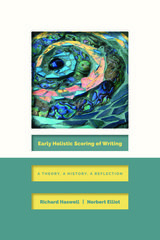
Early Holistic Scoring of Writing addresses the history of holistic essay assessment in the United Kingdom and the United States from the mid-1930s to the mid-1980s—and newly conceptualizes holistic scoring by philosophically and reflectively reinterpreting the genre’s origin, development, and significance.
The book chronicles holistic scoring from its initial origin in the United Kingdom to the beginning of its heyday in the United States. Chapters cover little-known history, from the holistic scoring of school certificate examination essays written by Blitz evacuee children in Devon during WWII to teacher adaptations of holistic scoring in California schools during the 1970s. Chapters detail the complications, challenges, and successes of holistic scoring from British high-stakes admissions examinations to foundational pedagogical research by Bay Area Writing Project scholars. The book concludes with lessons learned, providing a guide for continued efforts to assess student writing through evidence models.
Exploring the possibility of actionable history, Early Holistic Scoring of Writing reconceptualizes writing assessment. Here is a new history that retells the origins of our present body of knowledge in writing studies.
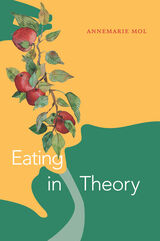
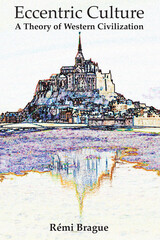

Ecofeminism is a practical movement for social change that discerns interconnections among all forms of oppression: the exploitation of nature, the oppression of women, class exploitation, racism, colonialism. Against binary divisions such as self/other, culture/nature, man/woman, humans/animals, and white/non-white, ecofeminist theory asserts that human identity is shaped by more fluid relationships and by an acknowledgment of both connection and difference.
Once considered the province of philosophy and women's studies, ecofeminism in recent years has been incorporated into a broader spectrum of academic discourse. Ecofeminist Literary Criticism assembles some of the most insightful advocates of this perspective to illuminate ecofeminism as a valuable component of literary criticism.
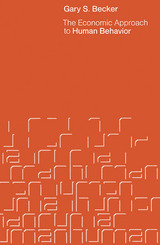
"Becker's highly regarded work in economics is most notable in the imaginative application of 'the economic approach' to a surprising breadth of human activity. Becker's essays over the years have inevitably inspired a surge of research activity in testimony to the richness of his insights into human activities lying 'outside' the traditionally conceived economic markets. Perhaps no economist in our time has contributed more to expanding the area of interest to economists than Becker, and a number of these thought-provoking essays are collected in this book."—Choice
Gary Becker was awarded the Nobel Prize in Economic Science in 1992.
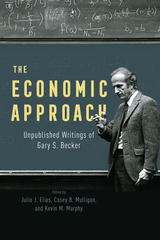
Now in paperback, a revealing collection from the intellectual titan whose work shaped the modern world.
As an economist and public intellectual, Gary S. Becker was a giant. The recipient of a Nobel Prize, a John Bates Clark Medal, and a Presidential Medal of Freedom, Becker is widely regarded as the greatest microeconomist in history.
After forty years at the University of Chicago, Becker left a slew of unpublished writings that used an economic approach to human behavior, analyzing such topics as preference formation, rational indoctrination, income inequality, drugs and addiction, and the economics of family.
These papers unveil the process and personality—direct, critical, curious—that made him a beloved figure in his field and beyond. The Economic Approach examines these extant works as a capstone to the Becker oeuvre—not because the works are perfect, but because they offer an illuminating, instructive glimpse into the machinations of an economist who wasn’t motivated by publications. Here, and throughout his works, an inquisitive spirit remains remarkable and forever resonant.

This volume, which deals mostly with painting, is divided into three sections that consider the interplay between art and economics from different perspectives. In the first section, Art and Economic Theory, economists clarify the need to construct a framework for understanding the roles of taste and fashion in art valuation. A historical view is considered in a piece about the teacher of Velasquez and artistic adviser to the Inquisition in Seville, who took into account not only market factors, like demand, but also the "truth" and the nobility of the artist’s profession and of the painting itself. Also in this section is an essay on Rousseau’s perspective on the worth of a painting based on its envy value in social circles; other contributions focus on William Stanley Jevons, a nineteenth century British political economist, whose problems with art stemmed from the uniqueness of each work, rendering definitive market and economic terms irrelevant. The second section of the book, Art and Economic Policy, looks at broader policy issues with regard to the historical role of art. Essays consider policy with respect to art exports and imports and federal patronage of the arts during theDepression; Lionel Robbins and the political economy of art; and the interplay among economy, architecture, and politics as shown in certain postwar Hilton hotels. In the final section, The Business of Art, a variety of perspectives are considered: the economics of art in early modern times, discussed in the context of both humanist and scholastic approaches; the pricing of pictures based on a study of the Smith-Reynolds connection; and the relationships between Otto Nuerath, graphic art, and the social order.
The first collaborative and historical treatment of the connection between art and economics, Economic Engagements with Art will appeal to people across, from history and economics to art history.
Contributors. Márcia Balisciano, William J. Barber, Neil de Marchi, Bertil Fridén, Crauford D. Goodwin, Guido Guerzoni, Robert J. Leonard, Harro Maas, Ernest Mathijs, Steven G. Medema, Bert Mosselmans, Zarinés Negrón, Marcia Pointon, Helen Rees, Toon van Houdt, Annabel Wharton, Sara Zablotney
This volume, which deals mostly with painting, is divided into three sections that consider the interplay between art and economics from different perspectives. In the first section, Art and Economic Theory, economists clarify the need to construct a framework for understanding the roles of taste and fashion in art valuation. A historical view is considered in a piece about the teacher of Velasquez and artistic adviser to the Inquisition in Seville, who took into account not only market factors, like demand, but also the "truth" and the nobility of the artist’s profession and of the painting itself. Also in this section is an essay on Rousseau’s perspective on the worth of a painting based on its envy value in social circles; other contributions focus on William Stanley Jevons, a nineteenth century British political economist, whose problems with art stemmed from the uniqueness of each work, rendering definitive market and economic terms irrelevant. The second section of the book, Art and Economic Policy, looks at broader policy issues with regard to the historical role of art. Essays consider policy with respect to art exports and imports and federal patronage of the arts during theDepression; Lionel Robbins and the political economy of art; and the interplay among economy, architecture, and politics as shown in certain postwar Hilton hotels. In the final section, The Business of Art, a variety of perspectives are considered: the economics of art in early modern times, discussed in the context of both humanist and scholastic approaches; the pricing of pictures based on a study of the Smith-Reynolds connection; and the relationships between Otto Nuerath, graphic art, and the social order.
The first collaborative and historical treatment of the connection between art and economics, Economic Engagements with Art will appeal to people across, from history and economics to art history.
Contributors. Márcia Balisciano, William J. Barber, Neil de Marchi, Bertil Fridén, Crauford D. Goodwin, Guido Guerzoni, Robert J. Leonard, Harro Maas, Ernest Mathijs, Steven G. Medema, Bert Mosselmans, Zarinés Negrón, Marcia Pointon, Helen Rees, Toon van Houdt, Annabel Wharton, Sara Zablotney
Economic Policy Reform: The Second Stage provides an incisive overview of the context of these crucial second-stage reforms with a thorough examination of the issues confronting the policymakers involved. Edited by Anne O. Krueger, it features studies from distinguished experts in various fields of economics. Each chapter of this book addresses a key issue in economic policy, examines the progress of reforms in the markets considered, and then explores what research might further aid leaders as they embark on fundamental changes.
Both a handbook for economists and practitioners and a theoretical exploration of the most significant challenges currently facing the economic world, this new book will be indispensable to anyone involved in the global economic scene.
Contributors:
Vittorio Corbo
Cimon Cowan
Sebastian Edwards
Stephan Haggard
Michael Kremer
Steven Matusz
Frederic S. Mishkin
Jonathan Morduch
Roger G. Noll
Miguel A. Savastano
T. Paul Shultz
Mary M. Shirley
T.N. Srinivasan
Joseph E. Stiglitz
Vito Tanzi
David Tarr
Aaron Tornell

Through clear bite-sized chapters interspersed with illuminating illustrations, this is an antidote to the abstract and ideological way that economics is normally taught and reported on in in media. Key concepts such as finance, competition and wages are explored, and their importance to everyday life is revealed. It answers questions such as 'Do workers need capitalists?', 'Why does capitalism harm the environment?', and 'What really happens on the stock market?'.
The book is supported with a comprehensive set of web-based course materials including videos for popular economics courses.
A wide-ranging collection of research examining the intricate economics of place-based policies.
After decades of skepticism about place-based policies, recent initiatives such as Opportunity Zones and elements of the Inflation Reduction Act signal renewed policy interest in targeting economically distressed areas. This volume surveys empirical findings from the US and Europe on the effectiveness of these policies, explores new theoretical rationales for geographic targeting, and examines the institutional contexts that shape policy design and implementation. The contributors evaluate major place-based initiatives and consider nontraditional approaches to supporting regional economies, including large-scale industrial interventions, public employment reallocation, and economic development on Native American reservations.
This collection is not limited to empirical policy impact evaluations as it takes a broader-ranging perspective. The contributors present evaluation evidence while also emphasizing the features, implementation processes, and institutional settings that shape policy effectiveness. They address critical questions such as: What new insights from economic theory can inform the design of place-based policies? What lessons from past policies are reflected—or ignored—in current approaches? How does US policymaking compare with European practices, and what takeaways can be derived from the comparison of the two?
The Economics of Place-Based Policies provides policymakers with evidence-based guidance on the design of effective interventions while offering researchers a comprehensive foundation for future study of how public policy can address geographic economic disparities.

A foundational new collection examining the mechanics of privacy in the digital age.
The falling costs of collecting, storing, and processing data have allowed firms and governments to improve their products and services, but have also created databases with detailed individual-level data that raise privacy concerns. This volume summarizes the research on the economics of privacy and identifies open questions on the value of privacy, the roles of property rights and markets for privacy and data, the relationship between privacy and inequality, and the political economy of privacy regulation.
Several themes emerge across the chapters. One is that it may not be possible to solve privacy concerns by creating a market for the right to privacy, even if property rights are well-defined and transaction costs are low. Another is that it is difficult to measure and value the benefits of privacy, particularly when individuals have an intrinsic preference for privacy. Most previous attempts at valuation have focused only on quantifiable economic outcomes, such as innovation. Finally, defining privacy through an economic lens is challenging. The broader academic and legal literature includes many distinct definitions of privacy, and different definitions may be appropriate in different contexts. The chapters explore a variety of frameworks for examining these questions and provide a range of new perspectives on the role of economics research in understanding the benefits and costs of privacy and of data flows. As the digital economy continues to expand the scope of economic theory and research, The Economics of Privacy provides the most comprehensive survey to date of this field and its next steps.
Economists and psychologists share an interest in explaining how people make the choices that they do. However, economists have tended to stress individual rationality, shaped by economic motives and expressed in formal logical or mathematical models, while psychologists have preferred to identify influences through experimentation. In recent decades, behavioral economics has bridged the two fields and challenged the traditional economic assumption that individuals choose rationally. The essays collected here provide a longer view and reflect on episodic contact between psychology and economics beginning in the late nineteenth century. They help explain why meaningful, sustained joint inquiry eluded both disciplines for so long and usefully complement the recent inclination of researchers in each field to find inadequacy in the other.
Contributors: Marina Bianchi, Simon J. Cook, Neil De Marchi, José Edwards, Tiziana Foresti, Craufurd D. Goodwin, Judy L. Klein, Harro Maas, Ivan Moscati, John Staddon, Andrej Svorenčík
Drawn from quantitative and qualitative work of practitioners in the field, this edited collection provides an update to the Staples and Ornatowski's influential Foundations of Teaching Technical Communication (1997). The collection is organized around the broad themes of expanding pedagogy, shaping curriculum, incorporating technology, and engaging community. In each section, authors illustrate their experiences with teaching in the university technical communication classroom, addressing topics such as rethinking the role of internships, redesigning student learning outcomes for assessment practices, incorporating ethics into the technical communication classroom, using visual communication in community context, and engaging plain language. These sixteen chapters, taken as a whole or individually, provide readers with insights and examples into teaching technical communication in the 21st century.
Duran devotes one chapter to each philosopher and provides a sustained critical analysis of her work, utilizing aspects of Continental theory, poststructuralist theory, and literary theory. She situates each philosopher within her respective era and in relation to her intellectual contemporaries, and specifically addresses the contributions each has made to major areas such as metaphysics/epistemology, theory of value, and feminist theory. She affirms the viability and importance of recovering these women's overlooked work and provides a powerful answer to the question of why the rubric "women philosophers" remains so valuable.

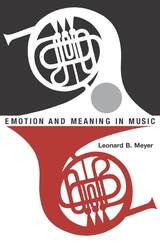
"Altogether it is a book that should be required reading for any student of music, be he composer, performer, or theorist. It clears the air of many confused notions . . . and lays the groundwork for exhaustive study of the basic problem of music theory and aesthetics, the relationship between pattern and meaning."—David Kraehenbuehl, Journal of Music Theory
"This is the best study of its kind to have come to the attention of this reviewer."—Jules Wolffers, The Christian Science Monitor
"It is not too much to say that his approach provides a basis for the meaningful discussion of emotion and meaning in all art."—David P. McAllester, American Anthropologist
"A book which should be read by all who want deeper insights into music listening, performing, and composing."—Marcus G. Raskin, Chicago Review
“Paralyzing problems are banished by this dazzlingly lucid, creative, and practical rethinking of class and economic transformation.” —Meaghan Morris, Lingnan University, Hong Kong
“Profoundly imaginative.” —Eve Kosofsky Sedgwick, City University of New York “Filled with insights, it is clearly written and well supported with good examples of actual, deconstructive practices.” —International Journal of Urban and Regional Research
J. K. Gibson-Graham is the pen name of Katherine Gibson and Julie Graham, feminist economic geographers who work, respectively, at the Australian National University in Canberra and the University of Massachusetts Amherst.
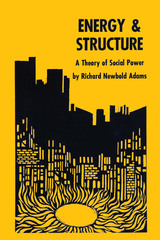
All social structures are essentially power structures dependent on energy. The concept of power and the role of energy in social organization are crucial and timely concerns, especially in light of the current apprehension about future energy resources. In Energy and Structure, Richard N. Adams argues that social power affects humanity's approach to ecological, economic, and political problems, directing people to seek solutions that are often deceptively shortsighted.
Adams, an anthropologist, proposes that social power is directly derived from control over energy processes. He identifies how power and mentalistic structures constitute fundamental determinants that shape the lives of people at all stages of cultural development, forcing them to accept alternatives often far removed from their desires. His central thesis is that the amount of power in any system varies with the amount of control exercised over the environment and that increasing power and control lead to increasing centralization of decision-making, social marginalization, and environmental despoliation. Thus the more highly developed societies, by virtue of their greater controls, are responsible for the greater ultimate subordination and destruction of human potential, as humanity combines technological advances with a growing inability to exercise good judgment with respect to our own survival.
Energy and Structure begins with an examination of the basic theory of social power—what it is and how it works. Adams defines and differentiates between the concepts of power and control, authority and legitimacy, power domains and levels. He then examines the underlying metatheory of energetic and mentalistic structures and provides an analytic model of the evolution of power, from the primitive band to modern nations. He predicts the emergence of supranational blocs and discusses other future possibilities. Throughout, his theoretical points are solidly supported by examples drawn from a wide range of cultures.
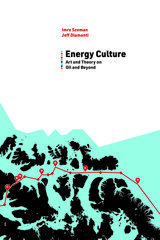
Energy Culture is a provocative book about oil’s firm grip on our politics and everyday lives. It brings together essays and artwork produced in a collaborative environment to stimulate new ways of thinking and to achieve a more just and sustainable world.
The original work collected in Energy Culture creatively engages energy as a social form through lively arguments and artistic research organized around three vectors of inquiry. The first maps how fossil fuels became, and continue to be, embedded in North American society, from the ideology of tar sands reclamation projects to dreams of fiber optic cables running through the Northwest Passage. The second comprises creative and artistic responses to the dominance of fossil fuels in everyday life and to the challenge of realizing new energy cultures. The final section addresses the conceptual and political challenges posed by energy transition and calls into question established views on energy. Its contributions caution against solar capitalism, explore the politics of sabotage, and imagine an energy efficient transportation system called “the switch.” Imbued with a sense of urgency and hope, Energy Culture exposes the deep imbrications of energy and culture while pointing provocatively to ways of thinking and living otherwise.
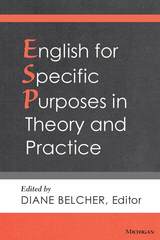
The field of English for Specific Purposes (ESP) is among the richest areas of second language research and practice because increasing globalization and changing technologies spawn new modes of intercultural connection and new occasions for second language use. English for Specific Purposes in Theory and Practice compasses this burgeoning field by presenting new research and commentary from some of the field’s leading scholars.
This volume explores ESP from academic (secondary and tertiary), occupational (business, medical, and legal), and socio-cultural perspectives. Recurring motifs throughout the volume are the effects of globalization, English as a lingua franca, and the impact of migrant populations. One of the major questions this volume seeks to answer is, How can ESP instructors meet their own teacher knowledge needs? Also considered is, How have ESP practitioners succeeded in gaining control of the knowledge they need to address their students’ needs?


Economists dream of equilibrium. It’s time to wake up.
In mainstream economics, markets are ideal if competition is perfect. When supply balances demand, economic maturity is orderly and disturbed only by shocks. These ideas are rooted in doctrines going back thousands of years, yet, as James K. Galbraith and Jing Chen show, they contradict the foundations of our scientific understanding of the physical and biological worlds.
Entropy Economics discards the conventions of equilibrium and presents a new basis for thinking about economic issues, one rooted in life processes—an unequal world of unceasing change in which boundaries, plans, and regulations are essential. Galbraith and Chen’s theory of value is based on scarcity, and it accounts for the power of monopoly. Their theory of production covers increasing and decreasing returns, uncertainty, fixed investments over time, and the impact of rising resource costs. Together, their models illuminate key problems such as trade, finance, energy, climate, conflict, and demography.
Entropy Economics is a thrilling framework for understanding the world as it is and will be keenly relevant to the economic challenges of a world threatened with disorder.
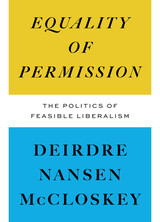
From a revered public intellectual, an essential argument for the political preconditions of a liberal society.
Liberalism has always suffered from messaging challenges. It simultaneously implies a pursuit of individual liberty and social equality, two projects often regarded as at odds. Or: Liberal means the opposite of conservative. Except when it doesn’t. The list goes on.
Liberal bard Deirdre Nansen McCloskey understands these rhetorical troubles. Equality of Permission is her stirring and career-defining intervention on this essentially contested yet critical topic—a forceful case for liberalism as our best hope, and an essential vision of the political conditions necessary for its survival. McCloskey prescribes a liberalism built around liberty from the bottom up: “equality before the law and equality of political and economic permissions,” lightly administered.
The state, McCloskey argues, is increasingly the source of our discontents—an illiberal institution, hindered by a quixotic fixation on pursuing equality of wealth or opportunity. Equality of Permission evangelizes for a better, and earlier, version of liberalism—that of John Locke, Adam Smith, Mary Wollstonecraft, and Henry David Thoreau—as against a top-down quest for an unattainable utopia. McCloskey shows that statism in pursuit of a chimerical general will, even when well-intentioned, leads to tyranny.
Brimming with energy and erudition, drawing on wisdoms from Alexis de Tocqueville to Mae West, Equality of Permission is McCloskey at the peak of her powers—brilliant, lacerating, garrulous, funny, worldly, and warm. Amid intense debate over the use and abuse of government institutions, McCloskey shares her singular vision for a true democracy, one grounded in respect and conducive to universal human flourishing.
From a revered public intellectual, an essential argument for the political preconditions of a liberal society.
Liberalism has always suffered from messaging challenges. It simultaneously implies a pursuit of individual liberty and social equality, two projects often regarded as at odds. Or: Liberal means the opposite of conservative. Except when it doesn’t. The list goes on.
Liberal bard Deirdre Nansen McCloskey understands these rhetorical troubles. Equality of Permission is her stirring and career-defining intervention on this essentially contested yet critical topic—a forceful case for liberalism as our best hope, and an essential vision of the political conditions necessary for its survival. McCloskey prescribes a liberalism built around liberty from the bottom up: “equality before the law and equality of political and economic permissions,” lightly administered.
The state, McCloskey argues, is increasingly the source of our discontents—an illiberal institution, hindered by a quixotic fixation on pursuing equality of wealth or opportunity. Equality of Permission evangelizes for a better, and earlier, version of liberalism—that of John Locke, Adam Smith, Mary Wollstonecraft, and Henry David Thoreau—as against a top-down quest for an unattainable utopia. McCloskey shows that statism in pursuit of a chimerical general will, even when well-intentioned, leads to tyranny.
Brimming with energy and erudition, drawing on wisdoms from Alexis de Tocqueville to Mae West, Equality of Permission is McCloskey at the peak of her powers—brilliant, lacerating, garrulous, funny, worldly, and warm. Amid intense debate over the use and abuse of government institutions, McCloskey shares her singular vision for a true democracy, one grounded in respect and conducive to universal human flourishing.

"Fritzsch could not give the modern reader a more memorable introduction to the personalities and science of Isaac Newton and Albert Einstein unless somehow he could find the keys to H. G. Wells' time machine. . . . Many readers will applaud Fritzsch for this lively but profoundly insightful book." —Booklist, starred review
"[Fritzsch] has dreamed up a dialogue between the two great physicists, helped along by a fictional modern physicist. . . . The conversation builds up to an explanation of E=mc2, and on the way illuminates the important points where Newtonian and Einsteinian theory diverge." —David Lindley, New York Times Book Review
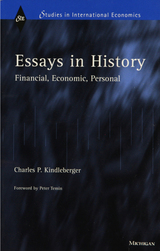
"His critical blast blows like a north wind against the more pretentious erections of modern economics. It is however a healthy and invigorating blast, without malice and with a sincere regard for scientific objectivity."—K.E. Boulding, Political Science Quarterly
"Certainly one of the most engrossing volumes that has appeared recently in economic theory."—William J. Baumol, Review of Economics and Statistics
In fifteen essays, Coase evaluates the contributions of a number of outstanding figures, including Adam Smith, Alfred Marshall, Arnold Plant, Duncan Black, and George Stigler, as well as economists at the London School of Economics in the 1930s.
Ronald H. Coase was awarded the Nobel Prize in Economic Science in 1991.
How do economists decide what questions to address and how to choose their theories? How do they tackle the problems of the economic system and give advice on public policy? With these broad questions, Nobel laureate R. H. Coase, widely recognized for his seminal work on transaction costs, reflects on some of the most fundamental concerns of economists over the past two centuries.
In fifteen essays, Coase evaluates the contributions of a number of outstanding figures, including Adam Smith, Alfred Marshall, Arnold Plant, Duncan Black, and George Stigler, as well as economists at the London School of Economics in the 1930s.
Ronald H. Coase was awarded the Nobel Prize in Economic Science in 1991.
In that spirit of plurality, contributors to this volume identify an important theoretical or methodological problem and present an argument regarding its solution. They also provide a critical evaluation of the current state of archaeological method and theory, illustrating that such recurrent issues as the role of agency and the importance of social considerations in the formation of archaeological research dominate current theoretical development.
By presenting both the range of important questions and a variety of answers, this volume contributes to the 'essential tension' that will further the growth of archaeological theory.
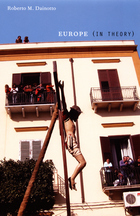
Dainotto synthesizes a vast array of literary, philosophical, and historical works by authors from different parts of Europe. He scrutinizes theories that came to dominate thinking about the continent, including Montesquieu’s invention of Europe’s north-south divide, Hegel’s “two Europes,” and Madame de Staël’s idea of opposing European literatures: a modern one from the North, and a pre-modern one from the South. At the same time, Dainotto brings to light counter-narratives written from Europe’s margins, such as the Spanish Jesuit Juan Andrés’s suggestion that the origins of modern European culture were eastern rather than northern and the Italian Orientalist Michele Amari’s assertion that the South was the cradle of a social democracy brought to Europe via Islam.
For decades, millions of music fans have gathered every summer in parks and fields to hear their favorite bands at festivals such as Lollapalooza, Coachella, and Glastonbury. How did these and countless other festivals across the globe evolve into glamorous pop culture events, and how are they changing our relationship to music, leisure, and public culture? In Everyone Loves Live Music, Fabian Holt looks beyond the marketing hype to show how festivals and other institutions of musical performance have evolved in recent decades, as sites that were once meaningful sources of community and culture are increasingly subsumed by corporate giants.
Examining a diverse range of cases across Europe and the United States, Holt upends commonly-held ideas of live music and introduces a pioneering theory of performance institutions. He explores the fascinating history of the club and the festival in San Francisco and New York, as well as a number of European cities. This book also explores the social forces shaping live music as small, independent venues become corporatized and as festivals transform to promote mainstream Anglophone culture and its consumerist trappings. The book further provides insight into the broader relationship between culture and community in the twenty-first century. An engaging read for fans, industry professionals, and scholars alike, Everyone Loves Live Music reveals how our contemporary enthusiasm for live music is more fraught than we would like to think.
"The best survey of the limits of free markets that we have. . . . A much needed plea for pragmatism: Take from free markets what is good and do not hesitate to recognize what is bad."—Jeff Madrick, Los Angeles Times
"It ought to be compulsory reading for all politicians—fortunately for them and us, it is an elegant read."—The Economist
"Demonstrating an impressive mastery of a vast range of material, Mr. Kuttner lays out the case for the market's insufficiency in field after field: employment, medicine, banking, securities, telecommunications, electric power."—Nicholas Lemann, New York Times Book Review
"A powerful empirical broadside. One by one, he lays on cases where governments have outdone markets, or at least performed well."—Michael Hirsh, Newsweek
"To understand the economic policy debates that will take place in the next few years, you can't do better than to read this book."—Suzanne Garment, Washington Post Book World
A landmark practical guide from the twenty-first-century pioneer in economics.
Experimental economics—generating and interpreting data to understand human decisions, motivations, and outcomes—is today all but synonymous with economics as a discipline. The advantages of the experimental method for understanding causal effects make it the gold standard for an increasingly empirical field. But until now the discipline has lacked comprehensive and definitive guidance for how to optimally design and conduct economic experiments.
For more than 30 years, John A. List has been at the forefront of using experiments to advance economic knowledge, expanding the domain of economic experiments from the lab to the real-world. Experimental Economics is his A-to-Z compendium for students and researchers on the ground floor of designing, conducting, analyzing, and interpreting data that they generate. List seeks not only to guide readers on how to develop and implement their experimental projects—everything from design to administrative and ethical considerations—but to help them avoid all the mistakes he’s made in his career, too. Experimental Economics codifies its author’s refined approach to the design, execution, and analysis of laboratory and field experiments. It is a milestone work poised to become the definitive reference for the next century of economics (and economists).
READERS
Browse our collection.
PUBLISHERS
See BiblioVault's publisher services.
STUDENT SERVICES
Files for college accessibility offices.
RECENTLY PUBLISHED






UChicago Accessibility Resources
home | accessibility | search | about | contact us
BiblioVault ® 2001 - 2026
The University of Chicago Press