
 A SCHOLARLY BOOK REPOSITORY
10 start with F start with F
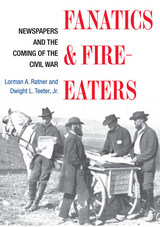
In the troubled years leading up to the Civil War, newspapers in the North and South presented the arguments for and against slavery, debated the right to secede, and in general denounced opposing viewpoints with imagination and vigor. At the same time, new technologies like railroads and the telegraph lent the debates an immediacy that both enflamed emotions and brought the slavery issue into every home.
Lorman A. Ratner and Dwight L. Teeter Jr. look at the power of America's fast-growing media to influence perception and the course of events prior to the Civil War. Drawing on newspaper accounts from across the United States, the authors look at how the media covered—and the public reacted to—major events like the Dred Scott decision, John Brown's raid on Harper's Ferry, and the election of 1860. They find not only North-South disputes about the institution of slavery but differing visions of the republic itself—and which region was the true heir to the legacy of the American Revolution.
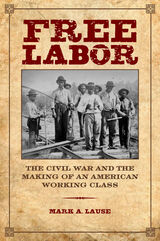
Mark A. Lause describes how the working class radicalized during the war as a response to economic crisis, the political opportunity created by the election of Abraham Lincoln, and the ideology of free labor and abolition. His account moves from battlefield and picket line to the negotiating table, as he discusses how leaders and the rank-and-file alike adapted tactics and modes of operation to specific circumstances. His close attention to women and African Americans, meanwhile, dismantles notions of the working class as synonymous with whiteness and maleness.
In addition, Lause offers a nuanced consideration of race's role in the politics of national labor organizations, in segregated industries in the border North and South, and in black resistance in the secessionist South, creatively reading self-emancipation as the largest general strike in U.S. history.
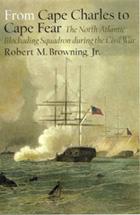
A definitive study of Union naval power and the blockade that reshaped the Civil War.
In From Cape Charles to Cape Fear, acclaimed historian Robert M. Browning, Jr. offers a vivid and authoritative account of the Union Navy’s North Atlantic Blockading Squadron, a critical force in the American Civil War. Charged with enforcing the blockade along the Atlantic coastline from Virginia to North Carolina, the squadron played a decisive role in crippling the Confederacy’s economy and restricting its access to vital supplies.
Browning reveals the blockade as far more than a passive defensive strategy. Through detailed analysis of naval operations, coastal engagements, and strategic planning, he demonstrates how Union forces exerted control over key waterways and ports, including Norfolk and Wilmington. These contested hubs became focal points in a high-stakes struggle involving daring blockade runners, shifting naval tactics, and constant pressure on Southern trade networks.
Blending operational history with compelling narrative, Browning also captures the human dimension of naval warfare. Sailors and officers faced unpredictable weather, dangerous missions, and the relentless demands of maintaining control over an expansive coastline. Their experiences illuminate the challenges and complexities of maritime warfare during one of America’s defining conflicts.
Accessible yet richly researched, this book highlights the central importance of naval power in shaping Civil War outcomes. From Cape Charles to Cape Fear stands as an essential work for readers interested in Civil War history, naval strategy, and the enduring impact of maritime operations on the American past.
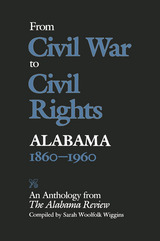
To understand Alabama history one must appreciate the impact of the failure of secession of the state in the subsequent half century as well as the causes for the success of the Civil Rights Movement in the state in the mid-twentieth century. The prophet of the first revolution was William Lowndes Yancey and the prophet of the second was Martin Luther King, Jr., two Southerners who set in motion forces that shaped American history beyond the borders of the state and region. In the years between their two lives Alabama changed dramatically.
In the new century, progressives had a distinct sense that they could take on outside forces larger than themselves. National currents swept Alabama into movements for the regulation of railroads, women’s suffrage, child labor reform, and welfare capitalism. Still, progressive reform coexisted with the most frightening political and social movement of early twentieth-century Alabama, the Ku Klux Klan, whose blessing or curse made or broke the careers of powerful politicians.
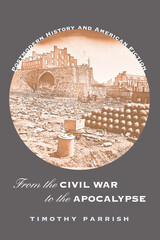
In addressing the postmodernist claim that history works no differently than fiction, Timothy Parrish rejects the implication that history is dead or hopelessly relativistic. Rather, he shows how the best postmodern novelists compel their readers to accept their narratives as true in the same way that historians expect their readers to accept their narratives as true. These novelists write history as a form of fiction.
If the great pre-modernist American historians are Francis Parkman, George Bancroft, and Henry Adams, who are the great modernist or postmodernist historians? In the twentieth century, Parrish argues, the most powerful works of American history were written by William Faulkner, Toni Morrison, Thomas Pynchon, Don DeLillo, Joan Didion, and Cormac McCarthy. What survives a reading of these novels is the sense that writers otherwise identified as multicultural or postmodern share the view that nothing matters more than history and what one believes its possibilities to be. In other words, Parrish concludes, history, not identity, is the ground of postmodern American fiction.
READERS
Browse our collection.
PUBLISHERS
See BiblioVault's publisher services.
STUDENT SERVICES
Files for college accessibility offices.
RECENTLY PUBLISHED




UChicago Accessibility Resources
home | accessibility | search | about | contact us
BiblioVault ® 2001 - 2026
The University of Chicago Press