
 A SCHOLARLY BOOK REPOSITORY
14 start with F start with F

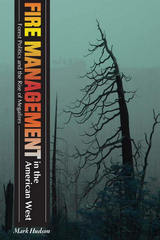
Drawing on correspondence both between and within the Forest Service and the major timber industry associations, newspaper articles, articles from industry outlets, and policy documents from the late 1800s through the present, Hudson shows how the US forest industry, under the constraint of profitability, pushed the USFS away from private industry regulation and toward fire exclusion, eventually changing national forest policy into little more than fire policy.
More recently, the USFS has attempted to move beyond the policy of complete fire suppression. Interviews with public land managers in the Pacific Northwest shed light on the sources of the agency's struggles as it attempts to change the way we understand and relate to fire in the West.
Fire Management in the American West will be of great interest to environmentalists, sociologists, fire managers, scientists, and academics and students in environmental history and forestry.

Understanding the Hawai‘i Island summit of Mauna a Wākea as a place of ancestral connection, cultural resurgence, and political resistance for Native Hawaiians
First Light is a site-specific study of Native Hawaiian resistance to the construction of the Thirty Meter Telescope (TMT) on the summit of Mauna a Wākea, the sacred mountain on the island of Hawai‘i. Drawing on personal interviews, oral histories, archival research, participant observation, and popular, legal, scientific, and Indigenous discourses, Iokepa Casumbal-Salazar explores both the campaign to build the observatory and the movement against it. He asks how astronomers have become stewards of Mauna a Wākea while Kānaka ‘Ōiwi (Aboriginal Hawaiians), in protest, are recast as obstructing progress and clinging to ancient superstitions.
Contextualizing contemporary resistance to telescope expansion within the past 132 years of struggle against U.S. empire in Hawai‘i, Casumbal-Salazar argues the Kanaka-led efforts to protect their ancestral lands did not begin with the TMT and only become legible when understood in the broader history of resistance to U.S. settler hegemony as told through the voices and actions of kiaʻi ʻāina (land defenders). First Light explores how settler science, capital, and law have been mobilized in ways that rationalize industrial development projects like the TMT and promote a vision of “coexistence” that enables the dehumanization of Kānaka ‘Ōiwi and their alienation from ʻāina.
Challenging the assumptions and aggressions of neoliberal environmental policy, settler multiculturalism, and U.S. military occupation, First Light reinforces calls for a moratorium on new telescope development and a literacy in Kanaka ‘Ōiwi movements for life, land, and ea (independence, sovereignty).
Retail e-book files for this title are screen-reader friendly with images accompanied by short alt text and/or extended descriptions.
About Pacific salmon -- a game fish and food source that is protected and manages for economic and environmental abundance -- Scarce writes, "What other living thing receives such extensive attention from science and society, is used in so many ways, yet retains so much of what we would like to think is its 'wild' character?" He shows how political, bureaucratic, and economic forces have directed salmon science for their own purposes and how control remains a central feature in salmon biology.
Identifying a countertrend rooted in environmental activism, Scarce also argues that an ecocentric perspective is gaining ground even as pressures mount simultaneously to save endangered salmon populations and to bring every last salmon to market. Thus, while external forces control much of the biologists' work, a movement is underway to free biology from political and economic pressures. In rich, ethnographic detail, Scarce develops this portrait of a science struggling with nature and itself. The old-line "fisheries biologists" tell how they work under immense pressure to unravel the unknowns of salmon existence to fulfill objectives of politically-motivated funding agencies. In contrast, the new breed of "conservation biology" researchers struggles to maintain the genetic diversity of salmon populations while minimizing the ways humans determine the fate of the salmon.
Fishy Business provides new ways for regarding about human interactions with other species, from appealing ones like wolves, whales, and redwood tress to less popular ones like snail darters and kangaroo rats. Society struggles to decide what parts of nature matter and why. Ultimately, Scarce argues, nature is a social product: what shall we make of it?
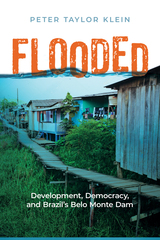
In the middle of the twentieth century, governments ignored the negative effects of large-scale infrastructure projects. In recent decades, many democratic countries have continued to use dams to promote growth, but have also introduced accompanying programs to alleviate these harmful consequences of dams for local people, to reduce poverty, and to promote participatory governance. This type of dam building undoubtedly represents a step forward in responsible governing. But have these policies really worked?
Flooded provides insights into the little-known effects of these approaches through a close examination of Brazil’s Belo Monte hydroelectric facility. After three decades of controversy over damming the Xingu River, a tributary of the Amazon, the dam was completed in 2019 under the left-of-center Workers’ Party, becoming the world’s fourth largest. Billions of dollars for social welfare programs accompanied construction. Nonetheless, the dam brought extensive social, political, and environmental upheaval to the region. The population soared, cost of living skyrocketed, violence spiked, pollution increased, and already overextended education and healthcare systems were strained. Nearly 40,000 people were displaced and ecosystems were significantly disrupted. Klein tells the stories of dam-affected communities, including activists, social movements, non-governmental organizations, and public defenders and public prosecutors. He details how these groups, as well as government officials and representatives from private companies, negotiated the upheaval through protests, participating in public forums for deliberation, using legal mechanisms to push for protections for the most vulnerable, and engaging in myriad other civic spaces. Flooded provides a rich ethnographic account of democracy and development in the making. In the midst of today’s climate crisis, this book showcases the challenges and opportunities of meeting increasing demands for energy in equitable ways.
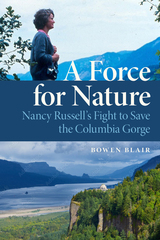
The 85-mile-long Columbia Gorge forms part of the border between Oregon and Washington and is one of the nation’s most historic and scenic landscapes. Many of the region’s cultural divisions boil over here—urban versus rural, west of the mountains versus east—as well as clashes over private property rights, management of public lands, and tribal treaty rights.
In the early 1980s, as a new interstate bridge linked the City of Portland to rural counties in Washington, the Gorge’s renowned vistas were on the brink of destruction. Nancy Russell, forty-eight years old and with no experience in advocacy, fundraising, or politics, built a grassroots movement that overcame 70 years of failed efforts and bitter opposition from both Oregon and Washington governors, five of the six Gorge counties, 41,000 Gorge residents, and the Reagan administration. While building her campaign, Russell stopped subdivisions, factories, and government neglect through litigation brought by her organization, Friends of the Columbia Gorge, and last-second land purchases by the Trust for Public Land (TPL). Initially ignored, then demonized, Russell’s tires were slashed and her life threatened.
The Columbia River Gorge National Scenic Area Act barely passed—on the last day of the congressional session in 1986—and was signed by a reluctant President Reagan hours before the bill would die. Russell positioned the Friends to be a watchdog and orchestrated the purchase of thousands of acres of land for the public. Bowen Blair, an attorney, former executive director of Friends of the Columbia Gorge, and TPL senior vice president, brings an insider’s perspective to the tumultuous and inspiring story of this conservation battle.
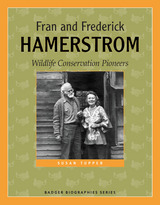
Learn how Fran and Frederick Hamerstrom worked to save the greater prairie chicken from extinction in the Wisconsin Historical Society Press’s new book for young readers, "Fran and Frederick Hamerstrom: Wildlife Conservation Pioneers." Fran and Frederick grew up in New England, and married in 1935. They both loved nature and wanted to dedicate their lives to understanding and preserving wildlife. As students of the famous naturalist, Aldo Leopold, they learned about new ways for humans to think about saving land for animals. Fran was a brave, outgoing woman who cared more about interacting with animals than wearing pretty dresses. Frederick was a calm, thoughtful man who loved to study and conduct research. Together, they spent over thirty years mentoring many future scientists, and working to save the greater prairie chicken, and other animals, from extinction. "Fran and Frederick Hamerstrom: Wildlife Conservation Pioneers" is the newest addition to the Society Press’s Badger Biographies Series.

Drawing upon extensive interviews and document analysis, Hindery argues that many of the structural conditions created by neoliberal policies—including partial privatization of the oil and gas sector—still persist under Morales. Tactics employed by both Morales and his neoliberal predecessors utilize the rhetoric of environmental protection and Indigenous rights to justify oil, gas, mining, and road development in Indigenous territories and sensitive ecoregions.
Indigenous peoples, while mindful of gains made during Morales’s tenure, are increasingly dissatisfied with the administration’s development model, particularly when it infringes upon their right to self-determination. From Enron to Evo demonstrates their dynamic and pragmatic strategies to cope with development and adversity, while also advancing their own aims.
Offering a critique of both free-market piracy and the dilemmas of resource nationalism, this is a groundbreaking book for scholars, policy-makers, and advocates concerned with Indigenous politics, social movements, environmental justice, and resistance in an era of expanding resource development.
In this new collection, a range of contributors—among them researchers, practitioners, organizers, and activists—explore the ways in which people counter or cope with feelings of despair, leverage action for positive change, and formulate pathways to achieve environmental justice goals. These essays pay particular attention to issues of race, class, economic liberalization, and geography; place contemporary environmental struggles in a critical context that emphasizes justice, connection, and reconciliation; and raise important questions about the challenges and responses that concern those pursuing environmental justice.
Contributors include the volume editors, Carol J. Adams, Randall Amster, Jan Inglis, Eileen Delehanty Pearkes, Zoë Roller, and Michael Truscello.
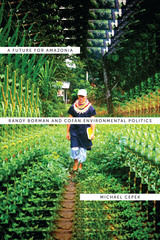
Blending ethnography with a fascinating personal story, A Future for Amazonia is an account of a political movement that arose in the early 1990s in response to decades of attacks on the lands and peoples of eastern Ecuador, one of the world’s most culturally and biologically diverse places. After generations of ruin at the hands of colonizing farmers, transnational oil companies, and Colombian armed factions, the indigenous Cofán people and their rain forest territory faced imminent jeopardy. In a surprising turn of events, the Cofán chose Randy Borman, a man of Euro-American descent, to lead their efforts to overcome the crisis that confronted them.
Drawing on three years of ethnographic research, A Future for Amazonia begins by tracing the contours of Cofán society and Borman’s place within it. Borman, a blue-eyed, white-skinned child of North American missionary-linguists, was raised in a Cofán community and gradually came to share the identity of his adoptive nation. He became a global media phenomenon and forged creative partnerships between Cofán communities, conservationist organizations, Western scientists, and the Ecuadorian state. The result was a collective mobilization that transformed the Cofán nation in unprecedented ways, providing them with political power, scientific expertise, and a new role as ambitious caretakers of more than one million acres of forest. Challenging simplistic notions of identity, indigeneity, and inevitable ecological destruction, A Future for Amazonia charts an inspiring course for environmental politics in the twenty-first century.
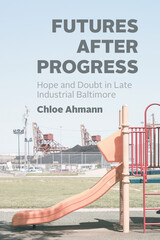
Factory fires, chemical explosions, and aerial pollutants have inexorably shaped South Baltimore into one of the most polluted places in the country. In Futures after Progress, anthropologist Chloe Ahmann explores the rise and fall of industrial lifeways on this edge of the city and the uncertainties that linger in their wake. Writing from the community of Curtis Bay, where two hundred years of technocratic hubris have carried lethal costs, Ahmann also follows local efforts to realize a good future after industry and the rifts competing visions opened between neighbors.
Examining tensions between White and Black residents, environmental activists and industrial enthusiasts, local elders and younger generations, Ahmann shows how this community has become a battleground for competing political futures whose stakes reverberate beyond its six square miles in a present after progress has lost steam. And yet—as one young resident explains—“that’s not how the story ends.” Rigorous and moving, Futures after Progress probes the deep roots of our ecological predicament, offering insight into what lies ahead for a country beset by dreams deferred and a planet on the precipice of change.
READERS
Browse our collection.
PUBLISHERS
See BiblioVault's publisher services.
STUDENT SERVICES
Files for college accessibility offices.
RECENTLY PUBLISHED





UChicago Accessibility Resources
home | accessibility | search | about | contact us
BiblioVault ® 2001 - 2026
The University of Chicago Press