
 A SCHOLARLY BOOK REPOSITORY
37 start with F start with F
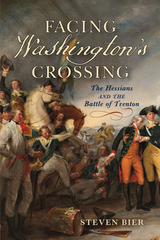
They crossed the ocean to fight in someone else's war. They came for glory, honor, and plunder. Instead, they became America's most famous captives.
In Steven Bier's groundbreaking book, Facing Washington's Crossing: The Hessians at the Battle of Trenton, old stereotypes are shattered and new information emerges. Using newly translated documents, rare hard-to-find material, and obscure nearly-forgotten sources, Facing Washington's Crossing rewrites our understanding of the Battle of Trenton.
Bier maintains a gripping narrative, following the military exploits of a Hessian Brigade through six brutal battles. From their crushing victories in New York to the shocking reversal in the snow-covered village of Trenton, witness how professional European soldiers faced an enemy unlike any they had encountered.Bier offers a fresh perspective by narrating the story through Hessian eyes, presenting fascinating details: shipboard cockfights, St. Elmo's fires, how the militaristic Hessians were influenced by the peaceful philosopher Voltaire, when the Royal Navy accidentally landed the Hessians on a deserted island, and how Emanuel Leutze's iconic painting of Washington crossing the Delaware was created in a tavern.The author traces the Hessian Prince's decision to hire out his army, the army’s harrowing voyage across the Atlantic, and the numerous clashes leading up to Trenton. Washington’s Crossing and the subsequent battle itself are fully recounted, providing a much-needed understanding of the Hessian experience.For 250 years, the story has been told mostly from one side. Now the essential counterpoint is finally revealed.
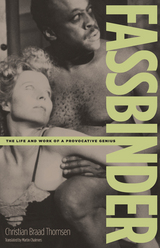
The revealing biography of this highly productive and radical film director
Rainer Werner Fassbinder was the most innovative practitioner of New German Cinema. He worked at breakneck speed and in fourteen years made forty-four films, including Ali: Fear Eats the Soul (1973) and The Marriage of Maria Braun (1978). Fassbinder ruthlessly attacked both German bourgeois society and the larger limitations of humanity, and his films detail the desperate yearning for love and freedom and the many ways in which society defeats that desire.
In Fassbinder, Christian Thomsen, a close friend of the director, illuminates Fassbinder’s body of work while revealing his insider views of a man who, despite a furious temper, manic working habits, and rampant drug addiction, supported an extended family—including his mother, a string of male lovers, lovelorn women, and even a pair of frustrated wives—with his intoxicating and prolific imagination. This book, like Fassbinder’s often-used image of the mirror, brilliantly reflects the sexual, political, and overwhelmingly human contradictions inherent in the life of this intensely creative man and the remarkable films he directed.
Federalism and Regional Development is the resuit of the first German-American geography seminar, held at the University of Texas in September 1979. The chapters deal with the impact of geographic policy planning by various governmental agencies in both the Federal Republic of Germany and the United States, two countries with federal systems of government. Although various bureaucratic offices at the federal, state, county, and city levels became involved in spatial planning in both countries, no overall coordination of development planning existed. The contributors to this volume offer many theoretical and empirical perspectives on the evolution of federal policies and programs and their impact on geographic planning activities at all levels of government. The topics covered range from actual regional case studies in both countries to the framework of the agencies concerned with spatial planning. Numerous maps and tables document the data resources of the contributors and yield useful insights on the workings of the federal system.
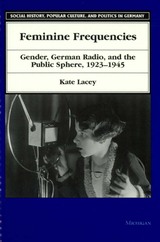

European historians have noted the prominent role of the maternal ethic -- the idea that woman's role as mother extends into society as a whole -- in the theory and practice of German feminism from 1840 to 1914. This body of ideas, however, has seldom been taken seriously. German feminism has been interpreted as a political strategy, not as an intellectual tradition. Historians have portrayed German feminists as conservative, in contrast to their liberal counterparts in other countries who were more likely to campaign for equal rights. Ann Allen revises these views by analyzing German feminism as an attempt to create a symbolic framework for understanding the world rather than simply to attain practical results. She examines the relationship between the experiences of individual female activists and the evolving intellectual traditions of German culture and of international feminism.
Women thought their maternal role led to empowerment and ethical authority. The role gave them the legitimacy to give speeches, to organize reform movements, and to build feminist institutions. They campaigned for infant welfare and the expansion of state responsibility for the welfare of mothers and children. German feminists responded to central public issues, including revolution, national unification, and urbanization. They worked to transform both public and private worlds by extending their ethical values, developed in the family, to political and social issues.
To make her argument, Allen examines the lives and work of the women who were important to the history of German feminism. They centered their careers on issues relating to motherhood and childcare. Allen relates their stories to a broader theme: the relationship of women's experience, under specific historical conditions, to the development of feminist ideology and practice.
Allen assesses the historical significance of German feminism in the context of German history and of similar feminist movements in other countries, particularly the U.S. Allen calls for the ideas of German feminists to be judged with reference to the specific, local conditions under which they developed, rather than to essentialist notions of feminism. Some historians have identified equal rights ideologies as progressive and maternalist ones as conservative. But the women themselves did not perceive the antithesis between these two forms of ideology.
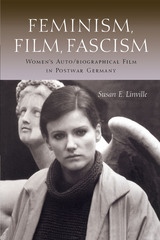
German society's inability and/or refusal to come to terms with its Nazi past has been analyzed in many cultural works, including the well-known books Society without the Father and The Inability to Mourn. In this pathfinding study, Susan Linville challenges the accepted wisdom of these books by focusing on a cultural realm in which mourning for the Nazi past and opposing the patriarchal and authoritarian nature of postwar German culture are central concerns—namely, women's feminist auto/biographical films of the 1970s and 1980s.
After a broad survey of feminist theory, Linville analyzes five important films that reflect back on the Third Reich through the experiences of women of different ages—Marianne Rosenbaum's Peppermint Peace, Helma Sanders-Brahms's Germany, Pale Mother, Jutta Brückner's Hunger Years, Margarethe von Trotta's Marianne and Juliane, and Jeanine Meerapfel's Malou. By juxtaposing these films with the accepted theories on German culture, Linville offers a fresh appraisal not only of the films' importance but especially of their challenge to misogynist interpretations of the German failure to grieve for the horrors of its Nazi past.
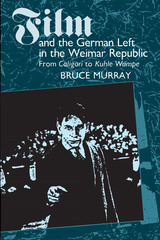
The Weimar Republic of Germany, covering the post-World War I period of civil and governmental strife, witnessed a great struggle among a variety of ideologies, a struggle for which the arts provided one important arena. Leftist individuals and organizations critiqued mainstream art production and attempted to counter what they perceived as its conservative-to-reactionary influence on public opinion. In this groundbreaking study, Bruce Murray focuses on the leftist counter-current in Weimar cinema, offering an alternative critical approach to the traditional one of close readings of the classical films.
Beginning with a brief review of pre-Weimar cinema (1896-1918), he analyzes the film activity of the Social Democratic Party, the German Communists, and independent leftists in the Weimar era. Leftist filmmakers, journalists, and commentators, who in many cases contributed significantly to marginal leftist as well as mainstream cinema, have, until now, received little scholarly attention. Drawing on exhaustive archival research and personal interviews, Murray shows how the plurality of aesthetic models represented in the work of individuals who participated in leftist experiments with cinema in the 1920S collapsed as Germany underwent the transition from parliamentary democracy to fascist dictatorship. He suggests that leftists shared responsibility for that collapse and asserts the value of such insights for those who contemplate alternatives to institutional forms of cinematic discourse today.
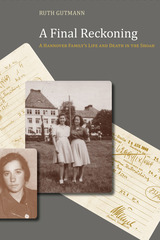
A work of both childhood memory and adult reflection undergirded with scholarly research
Ruth Herskovits Gutmann’s powerful memoir recounts her life not only as a concentration camp inmate and survivor, but also as a sister and daughter. Born in 1928, Gutmann and her twin sister, Eva, escaped the growing Nazi threat in Germany on a Kindertransport to Holland in 1939.
Gutmann’s compelling story captures many facets of the Jewish experience in Nazi Germany. She describes her early life in Hannover as the daughter of a prominent and patriotic member of the Jewish community. Her flight on the Kindertransport offers a vivid, firsthand account of that effort to save the children of Jewish families. Her memories of the camps include coming to the attention of Josef Mengele, who often used twins in human experiments. Gutmann writes with moving clarity and nuance about the complex feelings of survivorship.
A Final Reckoning provides not only insights into Gutmann’s own experience as a child in the midst of the atrocities of the Holocaust, but also a window into the lives of those, like her father, who were forced to carry on and comply with the regime that would ultimately bring about their demise.

Between 1998 and 2007 a series of killings in Germany, disdainfully styled “doner murders” by the media, were attributed by German police to internecine rivalries among immigrants. The victims included eight citizens of Turkish origin, a Greek citizen, and a German policewoman. Not until 2011 did the German public learn not only that the police had ignored signs pointing to the real perpetrators, a neo-Nazi group called the National Socialist Underground, but also that important files, possibly containing evidence implicating state agencies, had disappeared from the archives of Federal Police and intelligence organizations.
Esther Dischereit, one of the preeminent German-Jewish voices of the post-Holocaust generation, takes that failure of the state to protect its citizens from racist violence as the core of her performance text Flowers for Otello: On the Crimes That Came Out of Jena. Seeking an appropriate language with which to meet the bereaved, she also finds a way to raise the blanket of silence that is used by those who would prefer that we forget. Combining witness testimony, myth, and incidents from a history of violence against minorities, Flowers for Otello, in Iain Galbraith’s translation, refuses chaos, instead revealing the chilling, patterned order of tragedy while bringing a great writer’s humanism to the fore.
Considering canonical artists such as Rodin and Klee, seminal authors such as Kafka and Döblin, and largely neglected thinkers in aesthetics and art history such as those associated with Empathy Aesthetics, Maskarinec unpacks the manifold anthropological and aesthetic concerns and historical lineage embedded in the idea of form as the precarious achievement of uprightness.
The Forces of Form in German Modernism makes a decisive contribution to our understanding of modernism and to contemporary discussions about form, empathy, materiality, and human embodiment.
Heartbreaking images of children in distress have propelled some of the most urgent calls for action on immigration crises, and that compassion often affects how state asylum policies are structured. In Germany, for example, the immigration system is engineered to protect minors, which leads to unintended consequences for migrants.
In Forever 17, Ulrike Bialas follows young African and Central Asian migrants in Germany as they navigate that system. Without official paperwork or even, in many cases, knowledge of their exact age, migrants must decide how to present their complicated life stories to government officials. They quickly realize that their age can have an outsized effect on the outcome of their cases. A migrant under 18, for example, can’t be deported, but might instead be placed in a youth home, where they will be subject to strict curfew laws. An 18-year-old adult, on the other hand, can get permission to work, but not opportunities to go to school.
Regardless of their age—actual or assumed—migrants face great difficulties. Those classified as minors must live with the psychological burden of being treated like children, while those classified as adults must live without the practical support and legal protections reserved for minors. The significance of age stands in stark contrast to the ambiguities inherent in its determination. Though Germany’s infamous bureaucracy is designed to issue clear statements about refugees and migrants, the truth is often more complicated, and officials are forced to grapple with the difficult implications of their decisions. Ultimately, Bialas shows, policies surrounding asylum seekers fall dramatically short of their humanitarian ideals. Even those policies designed to help the most vulnerable can lead to outcomes that drastically limit the possibilities for migrants in real need of protection and keep them from leading fulfilling lives.
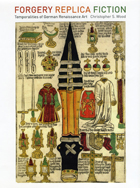
But Wood shows that over the course of the fifteenth and early sixteenth centuries, emerging replication technologies—such as woodcut, copper engraving, and movable type—altered the relationship between artifacts and time. Mechanization highlighted the artifice, materials, and individual authorship necessary to create an object, calling into question the replica’s ability to represent a history that was not its own. Meanwhile, print catalyzed the new discipline of archaeological scholarship, which began to draw sharp distinctions between true and false claims about the past. Ultimately, as forged replicas lost their value as historical evidence, they found a new identity as the intentionally fictional image-making we have come to understand as art.
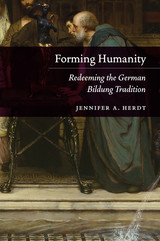
Kant’s proclamation of humankind’s emergence from “self-incurred immaturity” left his contemporaries with a puzzle: What models should we use to sculpt ourselves if we no longer look to divine grace or received authorities? Deftly uncovering the roots of this question in Rhineland mysticism, Pietist introspection, and the rise of the bildungsroman, Jennifer A. Herdt reveals bildung, or ethical formation, as the key to post-Kantian thought. This was no simple process of secularization, in which human beings took responsibility for something they had earlier left in the hands of God. Rather, theorists of bildung, from Herder through Goethe to Hegel, championed human agency in self-determination while working out the social and political implications of our creation in the image of God. While bildung was invoked to justify racism and colonialism by stigmatizing those deemed resistant to self-cultivation, it also nourished ideals of dialogical encounter and mutual recognition. Herdt reveals how the project of forming humanity lives on in our ongoing efforts to grapple with this complicated legacy.
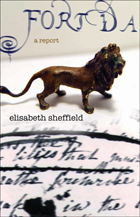
While working at a sleep lab in northern Germany, Rosemarie Ramee, a 38-year-old American neurologist, falls in love with Aslan, an eleven-year-old Turkish Cypriot. To get closer to the boy, RR undertakes a "marriage of convenience" to the boy's uncle. But when the uncle suddenly disappears, Ramee, alone with Aslan, must take the boy to his relatives in northern Cyprus. A train journey ensues, chronicled in RR's psychological reports and neurological inquiries.
But what begins as an objective "report" breaks down as the story progresses: RR's voice, hitherto suppressed and analytical, emerges hesitantly and then erupts, splintering every conception of inner and outer lives, solipsistic reality, and the irrevocable past. Consistently surprising and unrelenting, Fort Da turns one woman's illicit affair into a riveting exploration of language and the mind.
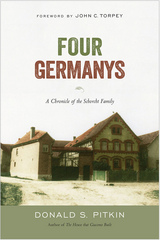
In this last book by the late Donald Pitkin, author of The House that Giacomo Built, comes a story of the Schorcht family, through whose fortunes and struggles one can see the transformations of Germany through the long twentieth century.
Each chapter of Four Germanys is reflective of generational rather than historical time. In 1922, Edwin Schorcht inherited his family farm, and in Part One, Pitkin traces the derivation of this farmstead. Part Two focuses on Schorcht’s children who came of age in Hitler’s Germany. Part Three has the Schorchts growing up in the Ulbricht years (1950–73) of the German Democratic Republic. The book concludes with the great-granddaughter, Maria, looking back to the past in relation to the new Germany that history had bequeathed her.
Ultimately, Four Germanys reflects the impact of critical historical events on ordinary East Germans while it also reveals how one particular family managed its own historical adaptation to these events.
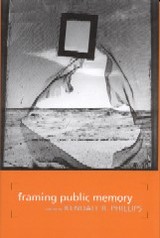
A collection of essays by prominent scholars from many disciplines on the construction of public memories
The study of public memory has grown rapidly across numerous disciplines in recent years, among them American studies, history, philosophy, sociology, architecture, and communications. As scholars probe acts of collective remembrance, they have shed light on the cultural processes of memory. Essays contained in this volume address issues such as the scope of public memory, the ways we forget, the relationship between politics and memory, and the material practices of memory.Stephen Browne’s contribution studies the alternative to memory erasure, silence, and forgetting as posited by Hannah Arendt in her classic Eichmann in Jerusalem. Rosa Eberly writes about the Texas tower shootings of 1966, memories of which have been minimized by local officials. Charles Morris examines public reactions to Larry Kramer’s declaration that Abraham Lincoln was homosexual, horrifying the guardians of Lincoln’s public memory. And Barbie Zelizer considers the impact on public memory of visual images, specifically still photographs of individuals about to perish (e.g., people falling from the World Trade Center) and the sense of communal loss they manifest.
Whether addressing the transitory and mutable nature of collective memories over time or the ways various groups maintain, engender, or resist those memories, this work constitutes a major contribution to our understanding of how public memory has been and might continue to be framed.

This collection of essays was selected from those presented in October 1988 at a conference sponsored by the National Endowment for the Humanities, "Concepts of History in German Cinema." The contributors include notable historians, film scholars, and German studies specialists who explore the complex network of social, political, and religious institutions that have influenced the historiography of German cinema and television.
Before the turn of the century, Germans began to employ the medium of film to represent the past when they attempted to document their Prussian heritage. Since then, German cinema and television have promoted history as a component of personal, cultural, and national identity by consistently providing prominent treatment of historical subjects.
Although it is relatively easy to document changes in the selection and handling of these subjects, it is more difficult to determine precisely which factors have motivated those changes.
In attempting to define these factors, the link between German cinema, television, and history has developed around three interrelated issues: (1) the reception of Weimar cinema, which for most film scholars continues to be mediated to one extent or another by Siegfried Kracauer’s work; (2) the inscribing of fascism in cinema and television; and (3) the nature of, and potential for, alternatives to mainstream cinema and television.
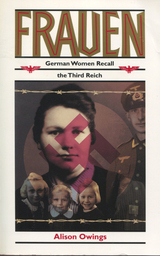
What were the women of Germany doing during the Third Reich? What were they thinking? And what do they have to say a half century later?
In Frauen we hear their voices––most for the first time. Alison Owings interviewed and here records the words of twenty-nine German women who were there: Working for the Resistance. Joining the Nazi Party. Outsmarting the Gestapo. Disliking a Jewish neighbor. Hiding a Jewish friend. Witnessing "Kristallnacht." Witnessing the firebombing of Dresden. Shooting at Allied planes. Welcoming Allied troops. Being a prisoner. And being a guard. The women recall their own and others' enthusiasm, doubt, fear, fury, cowardice, guilt, and anguish.
Alison Owings, in her pursuit of such memories, was invited into the homes of these women. Because she is neither Jewish nor German, and because she speaks fluent colloquial German, many of the women she interviewed felt comfortable enough with her to unlock the past. What they have to say will surprise Americans, just as they surprised the women themselves.
Not since Marcel Ophuls's controversial film The Sorrow and the Pity have we been on such intimate terms with "the enemy." In this case, the story is that of the women, those who did not make policy but were forced to participate in its effects and to witness its results. What they did and did not do is not just a reflection on them and their country––it also leads us to question what actions we might have taken in their place. The interviews do not allow for easy, smug answers.
A vivid picture of Germany under the Nazis emerges from this collection of unsettling interviews conducted by freelance TV writer Owings with 29 women of diverse backgrounds, both Aryan and Jewish. Among the women whose lives in Germany's war-torn homefront are chronicled are the widow of a resistance leader and the wife of an SS guard, who refers to her husband's work in the Ravensbrook and Buchenwald "manufacturing plants." Not only did Hitler attract the young but, according to one supporter, "he understood how to fascinate women." Some of these women claim that they privately protested mistreatment of Jews and prisoners and risked their lives to assist them. Only one non-Jewish woman, however, admits to "hearing" that Jews were gassed.
From Library Journal
Owings, a freelance television writer who is neither a German nor a Jew, has compiled and edited a groundbreaking set of oral histories. She interviews women from many spectrums of the Third Reich: Germans, Jews, individuals of "mixed" parentage, a countess, a camp guard, women who hid Jews, Nazi supporters, Communists, and other women who witnessed and participated in everyday and extraordinary events. Owings has tried, as much as possible, to quote her interviewees directly yet still manages to create an even and engaging text. This volume is an excellent companion to Claudia Koonz's Mothers in the Fatherland: Women, Family Life, and Nazi Ideology , 1919-1945 ( LJ 11/1/86). Highly recommended.
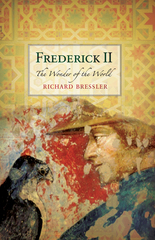
One of the most remarkable personalities of the Middle Ages, Frederick II of Hohenstaufen was born in 1194. His parents—the reigning Holy Roman Emperor and the heiress to the Kingdom of Sicily—belonged to two of the leading ruling families in medieval Europe. The lands controlled by these two families extended from southern Denmark to Sicily, from modern Belgium to Bohemia. Frederick II eventually ruled the joint kingdom, and the story of how he gained and maintained this status is the primary thread running through his life. As a child in Sicily, Frederick was a ward of Pope Innocent III. When he came of age, he sought to be crowned Holy Roman Emperor but only succeeded in 1220 after many years of negotiations with the Vatican, which was reluctant to give up or share power. Resenting the influence and pressure from the papacy, Frederick became its leading opponent. As a result, the new pope, Gregory IX, condemned Frederick as the Antichrist. However, Frederick believed he was a sincere Christian, and led the Sixth Crusade to the Holy Land while under excommunication.
Nationalism was a driving, moving spirit in the nineteenth-century Germany of Friedrich Schleiermacher. Jerry F. Dawson, through his thoughtful and well-wrought study of Friedrich Schleiermacher, provides an insight into contemporary nationalistic movements and the people who have a part in them. Schleiermacher, a prominent theologian and educator, was also a leading contributor to the tide of nationalism which swept Germany during the Napoleonic era. Dawson does not present Schleiermacher as an archetype for nationalists, but rather as an example of one man who was willing to sacrifice everything for the good of the nation.
Examining the influence of Pietism, rationalism, and romanticism on Schleiermacher, the author explains the origins of his subject's nationalistic activities and traces the evolution of his patriotic point of view. Dawson depicts the development of Schleiermacher's patriotism from Prussian particularism to German nationalism—an allegiance to an idealized Germany unified in religion, language, folkways. He describes the diverse approaches utilized by Schleiermacher to achieve a patriotic awakening among his countrymen: "…he preached nationalistic sermons; he delivered scholarly lectures; he repeatedly risked his life on dangerous missions which would help free Germany from France; he used his journalistic talents to try to stimulate the national consciousness of the German people; and he even served in the government of Prussia in an attempt to reconstruct the educational system so that nationalism might be advanced."

Nansen, a Norwegian, was arrested in 1942 by the Nazis, and spent the remainder of World War II in concentration camps--Grini in Oslo, Veidal above the Arctic Circle, and Sachsenhausen in Germany. For three and a half years, Nansen kept a secret diary on tissue-paper-thin pages later smuggled out by various means, including inside the prisoners' hollowed-out breadboards.
Unlike writers of retrospective Holocaust memoirs, Nansen recorded the mundane and horrific details of camp life as they happened, "from day to day." With an unsparing eye, Nansen described the casual brutality and random terror that was the fate of a camp prisoner. His entries reveal his constantly frustrated hopes for an early end to the war, his longing for his wife and children, his horror at the especially barbaric treatment reserved for Jews, and his disgust at the anti-Semitism of some of his fellow Norwegians. Nansen often confronted his German jailors with unusual outspokenness and sometimes with a sense of humor and absurdity that was not appreciated by his captors.
After the Putnam's edition received rave reviews in 1949, the book fell into obscurity. In 1956, in response to a poll about the "most undeservedly neglected" book of the preceding quarter-century, Carl Sandburg singled out From Day to Day, calling it "an epic narrative," which took "its place among the great affirmations of the power of the human spirit to rise above terror, torture, and death." Indeed, Nansen witnessed all the horrors of the camps, yet still saw hope for the future. He sought reconciliation with the German people, even donating the proceeds of the German edition of his book to German refugee relief work. Nansen was following in the footsteps of his father, Fridtjof, an Arctic explorer and humanitarian who was awarded the Nobel Peace Prize in 1922 for his work on behalf of World War I refugees. (Fridtjof also created the "Nansen passport" for stateless persons.)
Forty sketches of camp life and death by Nansen, an architect and talented draftsman, provide a sense of immediacy and acute observation matched by the diary entries. The preface is written by Thomas Buergenthal, who was "Tommy," the ten-year-old survivor of the Auschwitz Death March, whom Nansen met at Sachsenhausen and saved using his extra food rations. Buergenthal, author of A Lucky Child, formerly served as a judge on the International Court of Justice at The Hague and is a recipient of the 2015 Elie Wiesel Award from the US Holocaust Memorial Museum.
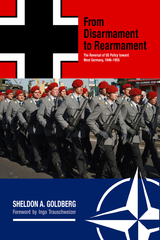
At the end of World War II, the Allies were unanimous in their determination to disarm the former aggressor Germany. As the Cold War intensified, however, the decision whether to reverse that policy and to rearm West Germany as a bulwark against the Soviet threat led to disagreements both within the US government and among members of the nascent NATO alliance. The US military took the practical view that a substantial number of German troops would be required to deter any potential Soviet assault. The State Department, on the other hand, initially advocated an alternative strategy of strengthening European institutions but eventually came around to the military’s position that an armed West Germany was preferable to a weak state on the dividing line between the Western democracies and the Soviet satellite states.
Sheldon A. Goldberg traces the military, diplomatic, and political threads of postwar policy toward West Germany and provides insights into the inner workings of alliance building and the roles of bureaucrats and military officers as well as those of diplomats and statesmen. He draws on previously unexamined primary sources to construct a cogent account of the political and diplomatic negotiations that led to West Germany’s accession to NATO and the shaping of European order for the next forty years.
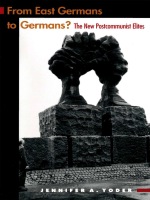
Although the quick transplant of a ready-made democratic system supported by West German financial backing and expertise provided benefits, problems arose for the development of postcommunist political leadership and for the growth of mass support for the democratic system. Jennifer A. Yoder analyzes the implications of the transition process for democratic legitimation and integration. Based on field research in East Germany that included interviews with parliamentarians, her study addresses issues such as culture, identity, and the lack of continuity between the old and new political elites. Although the availability of West German role models, together with pressure to conform, allowed the process of decommunization to occur much faster than elsewhere in Eastern Europe, the cultural differences between east and west are more extensive and complex than previously assumed. Unification has also been followed by a reinvigoration of regional interests. Yoder shows how some political elites have adopted western German patterns, while others openly criticize many of the practices and policies originating in Bonn and present themselves as democratic alternatives and advocates for East German interests in the new Germany. Indeed, for many East Germans, these new regional elites are regarded as the only representatives of their interests in the western-dominated political system.
Providing insight into elite-building at a time of transition and a valuable alternative to the “institutions versus culture” debate found in traditional analyses of political change, this book will interest political scientists and students and scholars of European politics and German studies.
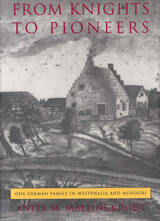
Anita M. Mallinckrodt traces the 750-year history of the Mallinckrodt family from its earliest documented beginnings in thirteenth-century Westphalia (in the Dortmund area) through immigration to Missouri in 1831 and beyond.
In part 1, Mallinckrodt tells the story of some of her family’s leading personalities in order to explicate the history and society of medieval and early modern Germany: the life and times of knight Ludwig (c. 1241) and crusader Gerd (c. 1450–1504); the 1451 and 1492 adventures of the mercenary knight Hermann and his son Wilhelm; the 1594 feuding of the noble brothers Dietrich and Hermann, which led to a double murder; the liberal Dortmund publisher Arnold’s struggles in the early 1800s to establish freedom of the press and to free Westphalian farmers from serfdom; and the wealthy, aristocratic Sister Pauline (b. 1817), founder of the Sisters of Charity and recently beatified for her efforts on behalf of the poor and blind children of her day.
In parts 2 and 3, Mallinckrodt focuses on the first of her forebears to immigrate to the New World—Julius and Emil in 1831, followed by Conrad, Hermann, August, Helene, Sophie, and Luise in 1838—and their immediate families and descendants in Missouri. These early pioneers cleared the forests, built schools and churches, supported German-language periodicals, and founded social and cultural organizations that would benefit later waves of immigrants. In the 1860s, they participated in their adopted country’s Civil War and held strong views toward slavery and the Union. Mallinckrodt ends her family’s history with the deaths of the Dortmund pioneers in the 1890s.
But From Knights to Pioneers is much more than a single family’s history. The experiences Mallinckrodt relates reflect those of many German families who left their mark on centuries of history and of many midwestern families transplanted from the Old World. Especially interesting is the continuity between the old and new ways of life—entries on genealogical tables need not end with the comment "immigrated to the USA," for immigrants often wrote notable chapters of family history that deserve recognition in their old homelands. Similarly, knowledge of pre-immigration history is essential for those Americans whose traditions surely did not begin, as oral history often suggests, with the fact that "great-grandfather arrived in the Midwest from Germany in 1831." Thus the purpose of this book is to set a family’s immigration chapter against its European background, without passing judgment on the cultural influence of outstanding individuals in the United States or of German immigration per se.
Drawing on her extensive research in both Europe and the United States, Mallinckrodt presents an exceptionally detailed picture of the social and political contexts of each of her subjects. The richness of her exposition of both the Old World background and the lives of the immigrants to the New World offers important insights into aspects of European and American history.
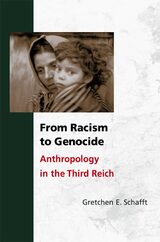
In paperback for the first time, From Racism to Genocide is an explosive, richly detailed account of how Nazi anthropologists justified racism, developed practical applications of racist theory, and eventually participated in every phase of the Holocaust.
Using original sources and previously unpublished documentation, Gretchen E. Schafft shows the total range of anti-human activity from within the confines of a particular discipline. Based on seven years of archival research in the United States and abroad, the work includes many original photos and documents, most of which have never before been published. It uses primary data and original texts whenever possible, including correspondence written by perpetrators. The book also reveals that the United States was not merely a bystander in this research, but instead contributed professional and financial support to early racial research that continued through the first five years of Hitler’s regime.
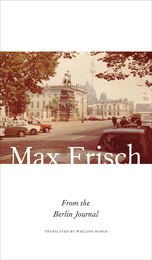
Max Frisch (1911–91) was a giant of twentieth-century German literature. When Frisch moved into a new apartment in Berlin’s Sarrazinstrasse, he began keeping a journal, which he came to call the Berlin Journal. A few years later, he emphasized in an interview that this was by no means a “scribbling book,” but rather a book “fully composed.” The journal is one of the great treasures of Frisch’s literary estate, but the author imposed a retention period of twenty years from the date of his death because of the “private things” he noted in it. From the Berlin Journal now marks the first publication of excerpts from Frisch’s journal. Here, the unmistakable Frisch is back, full of doubt, with no illusions, and with a playfully sharp eye for the world.
From the Berlin Journal pulls from the years 1946–49 and 1966–71. Observations about the writer’s everyday life stand alongside narrative and essayistic texts, as well as finely-drawn portraits of colleagues like Günter Grass, Uwe Johnson, Wolf Biermann, and Christa Wolf, among others. Its foremost quality, though, is the extraordinary acuity with which Frisch observed political and social conditions in East Germany while living in West Berlin.
Winner of the 2014 Jean-Pierre Barricelli Prize for Best Book on Romanticism
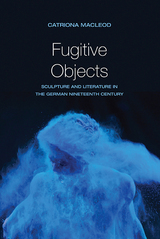
In Fugitive Objects, Catriona MacLeod examines the question of why sculpture is both intensively discussed and yet rendered immaterial in German literature. She focuses on three forms of disappearance: sculpture’s vanishing as a legitimate art form at the beginning of the nineteenth century in German aesthetics, statues’ migration from the domain of high art into mass reproduction and popular culture, and sculpture’s dislodging and relocation into literary discourse. Through original readings of Clemens Brentano, Achim von Arnim, Adalbert Stifter, Leopold von Sacher-Masoch, and others, MacLeod reveals that if sculpture has disappeared from much of nineteenth-century German literature and aesthetics, it is a vanishing act that paradoxically relocates the statue back onto another cultural pedestal, attesting to the powerful force of the medium.
READERS
Browse our collection.
PUBLISHERS
See BiblioVault's publisher services.
STUDENT SERVICES
Files for college accessibility offices.
RECENTLY PUBLISHED


UChicago Accessibility Resources
home | accessibility | search | about | contact us
BiblioVault ® 2001 - 2026
The University of Chicago Press