
 A SCHOLARLY BOOK REPOSITORY
33 start with F start with F

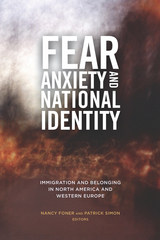
Fifty years of large-scale immigration has brought significant ethnic, racial, and religious diversity to North America and Western Europe, but has also prompted hostile backlashes. In Fear, Anxiety, and National Identity, a distinguished multidisciplinary group of scholars examine whether and how immigrants and their offspring have been included in the prevailing national identity in the societies where they now live and to what extent they remain perpetual foreigners in the eyes of the long-established native-born. What specific social forces in each country account for the barriers immigrants and their children face, and how do anxieties about immigrant integration and national identity differ on the two sides of the Atlantic?
Western European countries such as Germany, the Netherlands, and the United Kingdom have witnessed a significant increase in Muslim immigrants, which has given rise to nativist groups that question their belonging. Contributors Thomas Faist and Christian Ulbricht discuss how German politicians have implicitly compared the purported “backward” values of Muslim immigrants with the German idea of Leitkultur, or a society that values civil liberties and human rights, reinforcing the symbolic exclusion of Muslim immigrants. Similarly, Marieke Slootman and Jan Willem Duyvendak find that in the Netherlands, the conception of citizenship has shifted to focus less on political rights and duties and more on cultural norms and values. In this context, Turkish and Moroccan Muslim immigrants face increasing pressure to adopt “Dutch” culture, yet are simultaneously portrayed as having regressive views on gender and sexuality that make them unable to assimilate.
Religion is less of a barrier to immigrants’ inclusion in the United States, where instead undocumented status drives much of the political and social marginalization of immigrants. As Mary C. Waters and Philip Kasinitz note, undocumented immigrants in the United States. are ineligible for the services and freedoms that citizens take for granted and often live in fear of detention and deportation. Yet, as Irene Bloemraad points out, Americans’ conception of national identity expanded to be more inclusive of immigrants and their children with political mobilization and changes in law, institutions, and culture in the wake of the Civil Rights Movement. Canadians’ views also dramatically expanded in recent decades, with multiculturalism now an important part of their national identity, in contrast to Europeans’ fear that diversity undermines national solidarity.
With immigration to North America and Western Europe a continuing reality, each region will have to confront anti-immigrant sentiments that create barriers for and threaten the inclusion of newcomers. Fear, Anxiety, and National Identity investigates the multifaceted connections among immigration, belonging, and citizenship, and provides new ways of thinking about national identity.
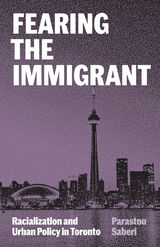
A fascinating deep dive into one city’s urban policy—and the anxiety over immigrants that informs it
The city of Toronto is often held up as a leader in diversity and inclusion. In Fearing the Immigrant, however, Parastou Saberi argues that Toronto’s urban policies are influenced by a territorialized and racialized security agenda—one that parallels the “War on Terror.” Focusing on the figure of the immigrant and so-called immigrant neighborhoods as the targets of urban policy, Saberi offers an innovative, multidisciplinary approach to the politics of racialization and the governing of alterity through space in contemporary cities.
A comprehensive study of urban policymaking in Canada’s largest city from the 1990s to the late 2010s, Fearing the Immigrant uses Toronto as a jumping-off point to understand how the nexus of development, racialization, and security works at the urban and international levels. Saberi situates urban policymaking in Toronto in relation to the dominant policies of international development and public health, counterinsurgency, and humanitarian intervention. Engaging with the genealogies and contemporary developments of major policy techniques involving mapping and policy concepts such as poverty, security, policing, development, empowerment, as well as social determinants of health, equity, and prevention, she scrutinizes the parallel ways these techniques and concepts operate in urban policy and international relations.
Fearing the Immigrant ultimately asserts that the geopolitical fear of the immigrant is central to the formation of urban policy in Toronto. Rather than addressing the root causes of poverty, urban policy as it has been practiced aims to pacify the specter of urban unrest and to secure the production of a neocolonial urban order. As such, this book is an urgent call to reimagine urban policy in the name of equality and social justice.
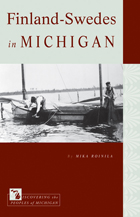
Who are the Finland-Swedes? Defined as citizens of Finland with a Swedish mother tongue, many know these people as “Swede- Finns” or simply “Swedes.” This book, the first ever to focus on this ethnolinguistic minority living in Michigan, examines the origins of the Finland-Swedes and traces their immigration patterns, beginning with the arrival of hundreds in the United States in the 1860s. A growing population until the 1920s, when immigration restrictions were put in place, the Finland-Swedes brought with them unique economic, social, cultural, religious, and political institutions, explored here in groundbreaking detail. Drawing on archival, church, and congregational records, interviews, and correspondence, this book paints a vivid portrait of Finland-Swedish life in photographs and text, and also includes detailed maps that show the movement of this group over time. The latest title in the Discovering the Peoples of Michigan series even includes a sampling of traditional Finland-Swedish recipes.

The book situates transnational families in an analysis of the history of unstable family life in Nicaragua due to decades of war and economic crisis, rather than in the migration process itself, which is often blamed for family breakdown in public discourse. Fouratt argues that the kinds of family configurations often seen as problematic consequences of migration—specifically single mothers, absent fathers, and grandmother caregivers—represent flexible family configurations that have enabled Nicaraguan families to survive the chronic crises of the past decades. By examining the work that goes into forging and sustaining transnational kinship, the book argues for a rethinking of national belonging and discourses of solidarity.
In parallel, the book critically examines conditions in Costa Rica, especially the ways the instabilities and inequalities that have haunted the rest of the region have begun to take shape there, resulting in perceptions of increased crime rates and a declining quality of life. By linking this crisis of Costa Rican exceptionalism to recent immigration reform, the book also builds on scholarship about the production and experiences of immigrant exclusion. Flexible Families offers insight into the impacts of increasingly restrictive immigration policies in the everyday lives of transnational families within the developing world.
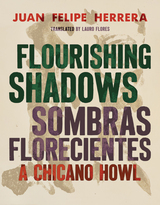
From former U.S. poet laureate Juan Felipe Herrera comes a searing bilingual collection that speaks directly to America and all its peoples. Flourishing Shadows / Sombras Florecientes is a lyrical journey through migration, memory, and resistance—an urgent address to a nation grappling with its identity. Blending autobiography and Indigenous, Chicanx, and Beat traditions, Herrera reclaims language as a tool of compassion and truth. With ink drawings and evocative verse, this book honors the migrants who traverse borders and histories, flourishing even in the shadows. A call to listen, to remember, and to act.
More than a poetic critique, this book initiates a conversation—a direct address to readers that invites reflection, solidarity, and action. Drawing on his anthropological training and lived experience, Herrera weaves together the cultural richness of Indigenous Mexico, the urban vibrancy of San Francisco’s literary scene, and the enduring legacy of migrant journeys. Flourishing Shadows / Sombras Florecientes is a vital addition to the Camino del Sol series and a powerful testament to the resilience and humanity of those too often relegated to the margins.
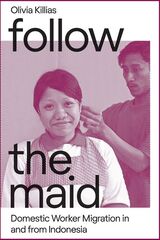
This fascinating study unveils the workings of the Indonesian migration regime, one that sends hundreds of thousands of women abroad as domestic workers each year. Drawing on extended ethnographic research since 2007, the book literally follows migrant women from one particular village in Central Java and tracks the moral, social, economic and legal processes by which they are turned into ‘maids’. From recruitment by local brokers to the ‘training’ received in secluded camps in Jakarta, employment in gated middle-class homes in Malaysia and back home again, Olivia Killias highlights the implications of the migration process on gendered practices of labour mobility (and immobilisation). She also reveals the disciplinary power that states, recruitment agencies and employers exercise over migrant domestic workers as well as highlighting frictions within the system. Killias’s analysis demonstrates that ironically, the “legalisation” of the migration industry, under the joint pressures of the Indonesian migration bureaucracy and international humanitarian agencies, does not automatically improve the situation of the women who embark on the migration adventure. Rather, Killias unmasks the gendered moralizing discourses on “illegal” migration and “trafficking” as legitimizing indentured labour and constraining migrant mobility. By exploring the workings of the Indonesian state’s overseas legal labour migration regime for migrants, she brings the reader directly into the nerve-racking lives of migrant village women, and reveals the richness and ambiguity of their experiences, going beyond stereotypical representations of them as “victims of trafficking”.
Winner, ISHS Certificate of Excellence, 2016
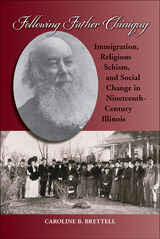
In the late 1850s and early 1860s, the attention of the Catholic and Protestant religious communities around the world focused on a few small settlements of French Canadian immigrants in northeastern Illinois. Soon after arriving in their new home, a large number of these immigrants, led by Father Charles Chiniquy, the charismatic Catholic priest who had brought them there, converted to Protestantism. In this anthropological history, Caroline B. Brettell explores how Father Chiniquy took on both the sacred and the secular authority of the Catholic Church to engineer the religious schism and how the legacy of this rift affected the lives of the immigrants and their descendants for generations. This intriguing study of a nineteenth-century migration of French Canadians to the American Midwest offers an innovative perspective on the immigrant experience in America.
Brettell chronicles how Chiniquy came to lead approximately one thousand French Canadian families to St. Anne, Illinois, in the early 1850s and how his conflict with the Catholic hierarchy over the ownership and administration of church property, delivery of the mass in French instead of Latin, and access to the Bible by laymen led to his excommunication. Drawing on the concept of social drama—a situation of intensely lived conflict that emerges within social groups—Brettell explains the religious schism in terms of larger ethnic and religious disagreements that were happening elsewhere in the United States and in Canada. Brettell also explores legal disputes, analyzes the reemergence of Catholicism in St. Anne in the first decade of the twentieth century, addresses the legacy of Chiniquy in both the United States and Quebec, and closely examines the French Canadian immigrant communities, focusing on the differences between the people who converted to Protestantism and those who remained Catholic.
Occurring when nativism was pervasive and the anti-immigrant Know-Nothing Party was at its height, Chiniquy’s religious schism offers an opportunity to examine a range of important historical and anthropological issues, including immigration, ethnicity, and religion; changes in household and family structure; the ways social identities are constructed and reconstructed through time; and the significance of charismatic leadership in processes of social and religious change. Through its multidisciplinary approach, Brettell’s enlightening study provides a pioneering assessment of larger national tensions and social processes, some of which are still evident in modern immigration to the United States.
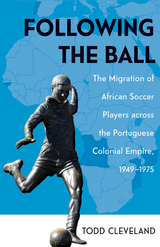
With Following the Ball, Todd Cleveland incorporates labor, sport, diasporic, and imperial history to examine the extraordinary experiences of African football players from Portugal’s African colonies as they relocated to the metropole from 1949 until the conclusion of the colonial era in 1975. The backdrop was Portugal’s increasingly embattled Estado Novo regime, and its attendant use of the players as propaganda to communicate the supposed unity of the metropole and the colonies.
Cleveland zeroes in on the ways that players, such as the great Eusébio, creatively exploited opportunities generated by shifts in the political and occupational landscapes in the waning decades of Portugal’s empire. Drawing on interviews with the players themselves, he shows how they often assumed roles as social and cultural intermediaries and counters reductive histories that have depicted footballers as mere colonial pawns.
To reconstruct these players’ transnational histories, the narrative traces their lives from the informal soccer spaces in colonial Africa to the manicured pitches of Europe, while simultaneously focusing on their off-the-field challenges and successes. By examining this multi-continental space in a single analytical field, the book unearths structural and experiential consistencies and contrasts, and illuminates the components and processes of empire.

JoEllen McNergney Vinyard's comprehensive examination of parochial education in Detroit within the broader context of that city's urbanization patterns yields a richly detailed addition to our understanding of the European immigrant experience.
For Faith and Fortune will be of interest to historians and scholars of urban studies, particularly immigration, schooling, and the Catholic experience.

Heartbreaking images of children in distress have propelled some of the most urgent calls for action on immigration crises, and that compassion often affects how state asylum policies are structured. In Germany, for example, the immigration system is engineered to protect minors, which leads to unintended consequences for migrants.
In Forever 17, Ulrike Bialas follows young African and Central Asian migrants in Germany as they navigate that system. Without official paperwork or even, in many cases, knowledge of their exact age, migrants must decide how to present their complicated life stories to government officials. They quickly realize that their age can have an outsized effect on the outcome of their cases. A migrant under 18, for example, can’t be deported, but might instead be placed in a youth home, where they will be subject to strict curfew laws. An 18-year-old adult, on the other hand, can get permission to work, but not opportunities to go to school.
Regardless of their age—actual or assumed—migrants face great difficulties. Those classified as minors must live with the psychological burden of being treated like children, while those classified as adults must live without the practical support and legal protections reserved for minors. The significance of age stands in stark contrast to the ambiguities inherent in its determination. Though Germany’s infamous bureaucracy is designed to issue clear statements about refugees and migrants, the truth is often more complicated, and officials are forced to grapple with the difficult implications of their decisions. Ultimately, Bialas shows, policies surrounding asylum seekers fall dramatically short of their humanitarian ideals. Even those policies designed to help the most vulnerable can lead to outcomes that drastically limit the possibilities for migrants in real need of protection and keep them from leading fulfilling lives.
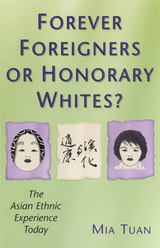
What does it mean to be an Asian-American in the United States today? Are Asian-Americans considered "honorary whites" or forever thought of as "foreigners?"
Mia Tuan examines the salience and meaning of ethnicity for later generation Chinese- and Japanese-Americans, and asks how their concepts of ethnicity differ from that of white ethnic Americans. She interviewed 95 middle-class Chinese and Japanese Californians and analyzes the importance of ethnic identities and the concept of becoming a "real" American for both Asian and white ethnics. She asks her subjects about their early memories and experiences with Chinese/Japanese culture; current lifestyle and emerging cultural practices; experiences with racism and discrimination; and attitudes toward current Asian immigration.
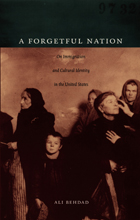
Behdad shows how political, cultural, and legal texts have articulated American anxiety about immigration from the Federalist period to the present day. He reads texts both well-known—J. Hector St. John de Crèvecoeur’s Letters from an American Farmer, Alexis de Tocqueville’s Democracy in America, and Walt Whitman’s Leaves of Grass—and lesser-known—such as the writings of nineteenth-century nativists and of public health officials at Ellis Island. In the process, he highlights what is obscured by narratives and texts celebrating the United States as an open-armed haven for everyone: the country’s violent beginnings, including its conquest of Native Americans, brutal exploitation of enslaved Africans, and colonialist annexation of French and Mexican territories; a recurring and fierce strand of nativism; the need for a docile labor force; and the harsh discipline meted out to immigrant “aliens” today, particularly along the Mexican border.
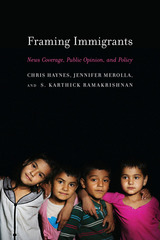
The authors analyze media coverage of several key immigration policy issues—including mass deportations, comprehensive immigration reform, and measures focused on immigrant children, such as the DREAM Act—to chart how news sources across the ideological spectrum produce specific “frames” for the immigration debate. In the past few years, liberal and mainstream outlets have tended to frame immigrants lacking legal status as “undocumented” (rather than “illegal”) and to approach the topic of legalization through human-interest stories, often mentioning children. Conservative outlets, on the other hand, tend to discuss legalization using impersonal statistics and invoking the rule of law. Yet, regardless of the media’s ideological positions, the authors’ surveys show that “negative” frames more strongly influence public support for different immigration policies than do positive frames. For instance, survey participants who were exposed to language portraying immigrants as law-breakers seeking “amnesty” tended to oppose legalization measures. At the same time, support for legalization was higher when participants were exposed to language referring to immigrants living in the United States for a decade or more.
Framing Immigrants shows that despite heated debates on immigration across the political aisle, the general public has yet to form a consistent position on undocumented immigrants. By analyzing how the media influences public opinion, this book provides a valuable resource for immigration advocates, policymakers, and researchers.
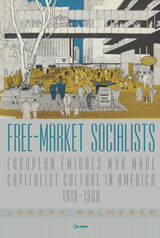
The Hungarian artist-designer László Moholy-Nagy, the Austrian sociologist Paul Lazarsfeld, and his fellow Viennese Victor Gruen—an architect and urban planner—made careers in different fields. Yet they shared common socialist politics, Jewish backgrounds, and experience as refugees from the Nazis. This book tells the story of their intellectual migration from Central Europe to the United States, beginning with the collapse of the Habsburg Empire, and moving through the heady years of newly independent social-democratic republics before the descent into fascism. It follows their experience of exile and adaptation in a new country, and culminates with a surprising outcome of socialist thinking: the opening of the first fully enclosed, air-conditioned suburban shopping center in the United States. Although the American culture they encountered ostensibly celebrated entrepreneurial individualism and capitalistic “free enterprise,” Moholy-Nagy, Lazarsfeld, and Gruen arrived at a time of the progressive economic reforms of the New Deal and an extraordinary open-mindedness about social democracy. This period of unprecedented economic experimentation nurtured a business climate that, for the most part, did not stifle the émigrés’ socialist idealism but rather channeled it as the source of creative solutions to the practical problems of industrial design, urban planning, and consumer behavior.
Based on a vast array of original sources, Malherek interweaves the biographies of these three remarkable personalities and those of their wives, colleagues, and friends with whom they collaborated on innovative projects that would shape the material environment and consumer culture of their adopted home. The result is a narrative of immigration and adaptation that challenges the crude binary of capitalism and socialism with a story of creative economic hybridization.
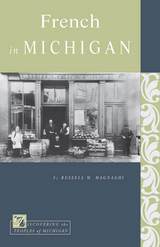
The colonial French served as explorers, soldiers, missionaries, fur traders, and colonists. Later, French priests and nuns were influential in promoting Catholicism in the state and in developing schools and hospitals. Father Gabriel Richard fled the violence of the French Revolution and became a prominent and influential citizen of the state as a U.S. Congressman and one of the founders of the University of Michigan. French observers of Michigan life included Alexis de Tocqueville. French entrepreneurs opened copper mines and a variety of service-oriented businesses. Louis Fasquelle became the first foreign-language instructor at the University of Michigan, and François A. Artault introduced photography to the Upper Peninsula. As pioneers of the early automobile, the French made a major contribution to the language used in auto manufacturing.
end of the country to the other, veteran journalist Sanford J. Ungar documents
the real-life struggles and triumphs of America's newest immigrants. He
finds that the self-chosen who arrive every day, most of them legally,
still enrich our national character and experience and make invaluable
political, economic, social, cultural, and even gastronomic contributions.
"First-class journalism, a book scholars will use decades from now
to find out what it 'felt like' to be an immigrant in the 90s. I do not
know of a better description and analysis of contemporary immigration."
-- Roger Daniels, author of Coming to America: A History of Immigration
and Ethnicity in American Life
"An excellent overview of contemporary immigration issues set within
the context of developments in the past fifty years. Ungar makes a strong
case for the contributions of recent immigrants and for maintaining a
relatively open door in the face of sometimes shrill opposition."
-- Thomas Dublin, editor of Immigrant Voices: New Lives in America
"Exactly the right book at the right time. [Ungar] looks at the
national controversy over immigration policy with a clear eye, producing
a history and a convincing argument why this is no time to reverse a liberal
welcome to newcomers that has always—in good times and bad—made
this a better and more prosperous democracy." -- Ben H. Bagdikian,
author of Double Vision
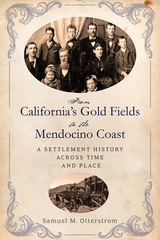
The development of San Francisco’s outlying region from a wilderness into a prosperous village and farming mecca shows how quickly in-migration coupled with economic diversification can establish a stable settlement structure upon the landscape. Otterstrom describes an intricately woven tapestry of interrelated people who were contributing creators of a wide variety of prosperous northern California environs. He uncovers the processes that converted this sleepy post-Mexican outpost into a focal point of nearly hyperactive youthful growth. The narrative follows this crucial story of settlement development until the dawn of the twentieth century, through the interconnected framework of individual and family ingenuity, migration trajectories, and diverse geographical scales.
Multiplying individualistic experiences from across far-flung appendages of the Northern California system into larger and larger scales, Otterstrom has achieved a matchless historical and sociological study that will form the basis for any future studies of the area.
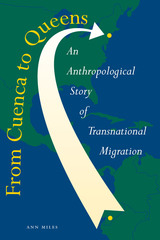
Transnational migration is a controversial and much-discussed issue in both the popular media and the social sciences, but at its heart migration is about individual people making the difficult choice to leave their families and communities in hopes of achieving greater economic prosperity. Vicente Quitasaca is one of these people. In 1995 he left his home in the Ecuadorian city of Cuenca to live and work in New York City. This anthropological story of Vicente's migration and its effects on his life and the lives of his parents and siblings adds a crucial human dimension to statistics about immigration and the macro impact of transnational migration on the global economy.
Anthropologist Ann Miles has known the Quitasacas since 1989. Her long acquaintance with the family allows her to delve deeply into the factors that eventually impelled the oldest son to make the difficult and dangerous journey to the United States as an undocumented migrant. Focusing on each family member in turn, Miles explores their varying perceptions of social inequality and racism in Ecuador and their reactions to Vicente's migration. As family members speak about Vicente's new, hard-to-imagine life in America, they reveal how transnational migration becomes a symbol of failure, hope, resignation, and promise for poor people in struggling economies. Miles frames this fascinating family biography with an analysis of the historical and structural conditions that encourage transnational migration, so that the Quitasacas' story becomes a vivid firsthand illustration of this growing global phenomenon.
Today, over 75 percent of high school seniors aspire to graduate from college. However, only one-third of Americans hold a bachelor’s degree, and college graduation rates vary significantly by race/ethnicity and parental socioeconomic status. If most young adults aspire to obtain a college degree, why are these disparities so great? In From High School to College, Charles Hirschman analyzes the period between leaving high school and completing college for nearly 10,000 public and private school students across the Pacific Northwest.
Hirschman finds that although there are few gender, racial, or immigration-related disparities in students’ aspirations to attend and complete college, certain groups succeed at the highest rates. For example, he finds that women achieve better high school grades and report receiving more support and encouragement from family, peers, and educators. They tend to outperform men in terms of preparing for college, enrolling in college within a year of finishing high school, and completing a degree. Similarly, second-generation immigrants are better prepared for college than first-generation immigrants, in part because they do not have to face language barriers or learn how to navigate the American educational system.
Hirschman also documents that racial disparities in college graduation rates remain stark. In his sample, 35 percent of white students graduated from college within seven years of completing high school, compared to only 19 percent of black students and 18 percent of Hispanic students. Students’ socioeconomic origins—including parental education and employment, home ownership, and family structure—account for most of the college graduation gap between disadvantaged minorities and white students. Further, while a few Asian ethnic groups have achieved college completion rates on par with whites, such as Chinese and Koreans, others, whose socioeconomic origins more resemble those of black and Hispanic students, such as Filipinos and Cambodians, also lag behind in preparedness, enrollment, and graduation from college.
With a growing number of young adults seeking college degrees, understanding the barriers that different students encounter provides vital information for social scientists and educators. From High School to College illuminates how gender, immigration, and ethnicity influence the path to college graduation.
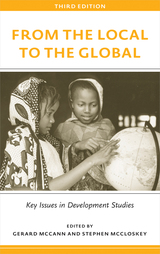
This completely revised third edition takes stock of the international development environment as it embarks on new policy frameworks to confront new challenges, ensuring that From the Local to the Global will continue to serve as an indispensable introduction to key development issues such as aid, debt, trade, migration, security, gender, and climate change.

The experience of Central Americans in the United States is marked by a vicious contradiction. In entertainment and information media, Salvadorans, Guatemalans, Nicaraguans, and Hondurans are hypervisible as threatening guerrillas, MS-13 gangsters, maids, and “forever illegals.” Central Americans are unseen within the broader conception of Latinx community, foreclosing avenues to recognition.
Yajaira M. Padilla explores how this regime of visibility and invisibility emerged over the past forty years—bookended by the right-wing presidencies of Ronald Reagan and Donald Trump—and how Central American immigrants and subsequent generations have contested their rhetorical disfiguration. Drawing from popular films and TV, news reporting, and social media, Padilla shows how Central Americans in the United States have been constituted as belonging nowhere, imagined as permanent refugees outside the boundaries of even minority representation. Yet in documentaries about cross-border transit through Mexico, street murals, and other media, US Central Americans have counteracted their exclusion in ways that defy dominant paradigms of citizenship and integration.
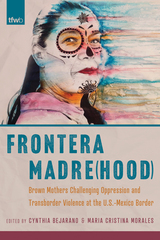
Thirty contributors discuss their lived experiences, research, or community work challenging multiple layers of oppression, including militarization of the border, border security propaganda, feminicides, drug war and colonial violence, grieving and loss of a child, challenges and forms of resistance by Indigenous mothers, working mothers in maquiladoras, queer mothering, academia and motherhood, and institutional barriers by government systems to access affordable health care and environmental justice. Also central to this collection are questions on how migration and detention restructure forms of mothering. Overall, this collection encapsulates how mothering is shaped by the geopolitics of border zones, which also transcends biological, sociological, or cultural and gendered tropes regarding ideas of motherhood, who can mother, and what mothering personifies.
Contributors
Elva M. Arredondo
Cynthia Bejarano
Bertha A. Bermúdez Tapia
Margaret Brown Vega
Macrina Cárdenas Montaño
Claudia Yolanda Casillas
Luz Estela (Lucha) Castro
Marisa Elena Duarte
Taide Elena
Sylvia Fernández Quintanilla
Paula Flores Bonilla
Judith Flores Carmona
Sandra Gutiérrez
Ma. Eugenia Hernández Sánchez
Irene Lara
Leticia López Manzano
Mariana Martinez
Maria Cristina Morales
Paola Isabel Nava Gonzales
Olga Odgers-Ortiz
Priscilla Pérez
Silvia Quintanilla Moreno
Cirila Quintero Ramírez
Felicia Rangel-Samponaro
Coda Rayo-Garza
Shamma Rayo-Gutierrez
Marisol Rodríguez Sosa
Brenda Rubio
Ariana Saludares
Victoria M. Telles
Michelle Téllez
Marisa S. Torres
Edith Treviño Espinosa
Mariela Vásquez Tobon
Hilda Villegas
READERS
Browse our collection.
PUBLISHERS
See BiblioVault's publisher services.
STUDENT SERVICES
Files for college accessibility offices.
RECENTLY PUBLISHED




UChicago Accessibility Resources
home | accessibility | search | about | contact us
BiblioVault ® 2001 - 2026
The University of Chicago Press