
 A SCHOLARLY BOOK REPOSITORY
16 start with F start with F
Since the end of the Cold War, a new dynamic has arisen within the international system, one that does not conform to established notions of the state’s monopoly on war. In this changing environment, the global community must decide how to respond to the challenges posed to the state by military threats, political and economic decline, and social fragmentation. This insightful work considers the phenomenon of state failure and asks how the international community might better detect signs of state decay at an early stage and devise legally and politically legitimate responses.
This collection of essays brings military and social historians into conversation with political and social scientists and former military officers. In case studies from the former Yugoslavia, Somalia, Iraq, and Colombia, the distinguished contributors argue that early intervention to stabilize social, economic, and political systems offers the greatest promise, whereas military intervention at a later stage is both costlier and less likely to succeed.
Contributors: David Carment, Yiagadeesen Samy, David Curp, Jonathan House, James Carter, Vanda Felbab-Brown, Robert Rotberg, and Ken Menkhaus.

"This book began in an argument between friends surprised to find themselves on opposite sides of the debate about whether the United States and the United Kingdom should invade Iraq in 2003. Situated on opposite sides of the Atlantic, in different churches, and on different sides of the just war/pacifist fence, we exchanged long emails that rehearsed on a small scale the great national and international debates that were taking place around us. We discovered the common ground we shared, as well as some predictable and some surprising points of difference....When the initial hostilities ended, our conversation continued, and we felt the urgency of contributing to a wider Christian debate about whether and when war could be justified."
—From the Preface
So began a dynamic collaboration that developed into a civil but provocative debate over matters of war and peace that is Faith and Force. From the ancient battles between Greek city-states to the Crusades to the World Wars of the twentieth-century to the present-day wars in Afghanistan and Iraq and the Middle East, aggressors and defenders alike have claimed the mantle of righteousness and termed their actions just. But can the carnage of war ever be morally grounded? And if so, how?
These are the questions that David L. Clough, a Methodist proponent of pacifism, and Brian Stiltner, a Catholic theologian and just war adherent, have vowed to answer—together. With one voice, Clough and Stiltner outline and clarify issues of humanitarian intervention, weapons proliferation, and preventative war against rogue states. Their writing is grounded in Christian tradition and provides a fresh and illuminating account of the complexities and nuances of the pacifist and just war positions.
In each chapter Clough and Stiltner engage in debate on the issues, demonstrating a respectful exchange of ideas absent in much contemporary political discourse—whether on television or in the classroom. The result is a well-reasoned, challenging repartee that searches for common ground within the Christian tradition and on behalf of the faithful promotion of justice—yet one that also recognizes genuine differences that cannot be bridged easily. Intended for a broad audience, Faith and Force is the perfect foil to the shrill screeching that surrounds partisan perspectives on military power and its use.
To help with using the book in a classroom context, the authors have provided Questions for Reflection and Discussion for each chapter. You can download these questions in PDF format at press.georgetown.edu.

The premier text to illustrate the impact of war on textiles, bodies, costume, art, and design, Fashion and War in Popular Culture will be warmly welcomed by scholars of fashion design and theory, historians of fashion, and those interested in theories of warfare and military science.
An Exploration of the Human Experience in One of the Civil War’s Most Important and Devastating Battles
The Union assault on the critical Confederate stronghold of Fredericksburg, Virginia, along the Rappahannock River in December 1862 was one of the most significant and storied battles of the Civil War. It was fought in order to secure confidence in the North for Lincoln’s administration after 18 months of Confederate victories, Union setbacks, and directionless Northern leadership. The result was a complete and stunning Confederate victory and one of the bloodiest losses for the Union Army. Federal General Ambrose E. Burnside and his Army of the Potomac planned to overrun Fredericksburg and move on to Richmond, the Confederate capital. The opposing general, Robert E. Lee, and his Army of Northern Virginia prepared Fredericksburg’s defense. Thousands of Union troops were able to successfully cross the Rappahannock River despite withering small arms fire and proceeded to brutally sack the city, terrorizing its remaining civilian inhabitants while the Confederates fell back to a line of heights to the west. Burnside soon ordered his generals to attack with the intention of flanking the Confederate defenders. Unable to dislodge or go around the enemy, Burnside was forced to withdraw without a victory after suffering appalling casualties.
In The Fate of War: Fredericksburg, 1862, historian and professional psychologist Duane Schultz uses this key moment in Civil War history to address how soldiers and civilians react to the stress of war. Rather than a traditional military history—and there are a number of excellent accounts of troop movements and strategy at Fredericksburg—The Fate of War explores the human element in battle; the motivations, passions, and emotions of the people who fought on both sides. Using letters, diaries, and memoirs, including those of Clara Barton and Walt Whitman, Schultz reveals what individuals can force themselves to do in the name of duty, patriotism, and dedication to a cause, or the ultimate fear of letting down their friends. Schultz’s account, grounded in careful research, is a record of the triumph and failure, courage and cowardice, compassion and cruelty of the people—the ordinary and high-ranking, soldier and civilian, men and women—who came together one terrible day.
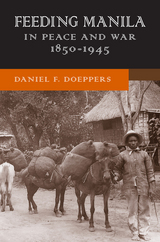
Doeppers follows key commodities for the city—rice, produce, fish, fowl, meat, milk, flour, coffee—and their complex interconnections. In the process he considers the changing ecology of the surrounding region as well as the social fabric that weaves together farmers, merchants, transporters, storekeepers, and door-to-door vendors.
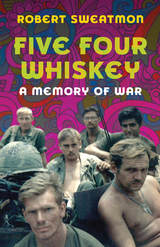
In late 1969, twenty-year-old Robert Sweatmon received a letter informing him that he had ten days to report to the United States Army. Like thousands of others, he had been drafted. Assigned as a rifleman with a mechanized unit, the author began a year-long odyssey in the Southeast Asian wilderness that would change his and his fellow soldiers’ lives forever.
Taking its title from the nighttime radio code call and response between base camp and those on ambush patrol, Five Four Whiskey: A Memory of War is a moving account of life as a combat soldier in the Vietnam War. Set mostly in the sprawling woods and rubber plantations northwest of Saigon, the author explains what his unit was asked to do and what obstacles they faced, including an elusive but deadly enemy, multiple kinds of booby traps, and antitank mines. The author, a notable television personality following the war, does not sensationalize his account; rather, his book allows a new generation to understand the emotional and physical pressures of the times. Coming of age in the maelstrom of civil rights and the free love culture, the author and his fellow soldiers saw their idealism quickly vaporize in the face of the grim realities of war. Here they learned to compartmentalize their lives as a way to survive, but it was their strong bonds that ultimately kept them from succumbing to the madness that surrounded them. Kept in the field for almost the entire time of his tour, the author was in a unit selected to conduct a clandestine reconnaissance in Cambodia and then lead the 1970 invasion, where he was wounded. Following his convalescence, he was sent to Nui Ba Den, the fabled ghost mountain haunted by the spirit of a Vietnamese princess, until he received his papers that he had completed his combat service. At that moment, his year-long mental wall between soldier and civilian fell away as he counted the last terrifying hours before he was safely out of Vietnam. A tour-de-force of military memoir, written in an objective and often literary prose, Five Four Whiskey perfectly captures how ordinary civilian-soldiers survived an ordeal set in one of the most turbulent times in American history.
This anthology reflects some of Colombia’s finest literary talent, and most of these stories appear here for the first time in English translation. They reveal the contradictions and complexities of the human condition, yet they also offer hope for the future. In their bold revelations of the depths of despair, these writers provide gripping portrayals of humanity’s tenacious resistance to those very depths.
The poems in Force Drift recall Gilles Deleuze’s insight that art “is not a matter of reproducing or inventing forms, but of capturing forces.” Through the formal range of this dynamic sequence, Pethybridge achieves something like a synthesis of Deleuze’s opposition whereby the invention of poetic form becomes the very means of capturing, registering forces: “a reckoning lyric.”
The task of reckoning renders visible the violence of the state that lies at the heart of the matter precisely because the state intends to conceal or justify its brutality through the invocation of emergency powers, as well as the state of exception, or how the state disappears persons in its network of black site prisons. As the political scientist Darius Rejali has demonstrated, it is in fact democracies that have refined “invisible tortures” such as sensory deprivation, stress-positions, and the waterboard.
Working at the intersection of documentary poetics and theories of the epic, Pethybridge recommits poetry to a responsibility for a description of history. As a poet-researcher, he asks: “what would be possible…if listening / were the leading-form of being.” Driven by argument, abstraction, and assemblage, the poems in Force Drift address themselves to the irreparable, the “traumaeffect,” within the war on terror’s record of atrocity. Force Drift is a cri de coeur, political critique, and essay in the epic.
Against the world-destroying violence of the US torture program, Force Drifts juxtaposes a catalog of energies, forms, and genres. It is abolitionist, citational, architectural, chromatic, and replete with visual poetries ranging from the arabasques of tzahibs to erasures to extreme measures of leading and kerning. Even when its language is reduced to the pure transcription of pain––”aiai aiai aiai”––Force Drift is committed to aliveness and embodiment as “final treaty of the person,” as conscience and counterworld to the history as catastrophe of US imperialism, “irrefutable as the sun to the eye.”
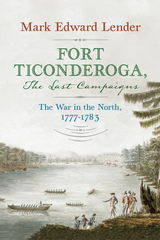
During the War for Independence, Fort Ticonderoga’s guns, sited critically between Lakes Champlain and George, dominated north-south communications in upstate New York that were vital to both the British and American war efforts. In the public mind Ticonderoga was the “American Gibraltar” or the “Key to the Continent,” and patriots considered holding the fort essential to the success of the Revolutionary cause. Ticonderoga was a primary target in British Lieutenant General John Burgoyne’s 1777 campaign to crush American resistance in the north and end the rebellion in a decisive stroke. American efforts to defend the fort in June against overwhelming odds entailed political and military intrigue, bungling, heroism, and ultimately a narrow escape for the Continental and provincial forces under Major General Arthur St. Clair. The loss of Ticonderoga stunned patriot morale and ignited one of the greatest political firestorms of the war. But the fortunes of war turned. Two months later, the rebels mounted a sensational—if little known—counter-attack on Ticonderoga that had major implications for Burgoyne’s eventual defeat at Saratoga in October. Yet Saratoga brought no peace, and Ticonderoga would be central to additional military and political maneuverings—many of them known only to specialist historians—that would keep the region on edge until the end of the war in 1783.
Based on new archival research and taking advantage of the latest scholarship, Fort Ticonderoga, The Last Campaigns: The War in the North, 1777-1783 by distinguished historian Mark Edward Lender highlights the strategic importance of the fort as British, American, and regional forces (including those of an independent Vermont Republic) fought for control of the northern front at a critical point in the war. The book tells the Ticonderoga story in all of its complexity and drama, correcting misconceptions embedded in many previous accounts, and sheds vital new light on this key chapter in America’s struggle for independence.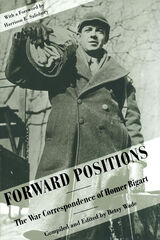
Among journalists—and particularly war correspondents—Homer Bigart was both legend and example. In a career of four decades, first with the New York Herald Tribuneand then, through 1972, with The New York Times, Bigart distinguished himself as a superb writer and tireless digger for the realities that could be learned only in the field and not at headquarters. In 1943 Bigart sailed for England to cover the air war and was soon on mule-back in Sicily, and hanging on at Anzio. He then went to the Pacific, where his dispatches won him his first Pulitzer Prize for foreign correspondence. When hostilities erupted in Korea he was again on the front lines in the front lines in the Orient, and again recipient of a Pulitzer. By the time of the American involvement in Vietnam, he was an old-timer, a seasoned correspondent admired and celebrated for his wit but regarded with awe for his masterly stories, in which straightforward prose, informed by tenacious reporting, cut to the heart of the issues.
Previously available only n crumbling library copies of the Tribune and the Times, or in microfilm repositories, his dispatches, with their rare insights into warefar and he minds of those who wage war, are now collected in Forward Positions: The War Correspondence of Home Bigart, edited by Betsy Wade and introduced by Harrison E. Salisbury, himself the winner of a Pulitzer Prize for journalism.
Forward Positions does honor to a breed of journalist that had passed into history by the time of Bigart’s death. It includes one of the first accounts of the atomic annihilation of Hiroshima, a report on the war-crimes trial of Adolf Eichmann, a number of dispatches on “hot” battles of the Cold War, and a probing dispatch on Lieutenant William Calley’s testimony on the Mỹ Lai Massacre. With this representative selection of more than fifty of Bigart’s accounts of war on the ground, in the air, and in the courtroom, Wade provides a wealth of background material about his career, as well as glimpses of his impact on journalism. The book promises hours of captivating and informative reading for journalists, historians, veterans, and anyone who likes a good story tautly told.
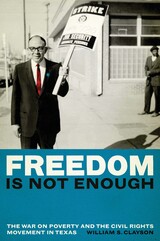
Led by the Office of Economic Opportunity, Lyndon Johnson's War on Poverty reflected the president's belief that, just as the civil rights movement and federal law tore down legalized segregation, progressive government and grassroots activism could eradicate poverty in the United States. Yet few have attempted to evaluate the relationship between the OEO and the freedom struggles of the 1960s. Focusing on the unique situation presented by Texas, Freedom Is Not Enough examines how the War on Poverty manifested itself in a state marked by racial division and diversity—and by endemic poverty.
Though the War on Poverty did not eradicate destitution in the United States, the history of the effort provides a unique window to examine the politics of race and social justice in the 1960s. William S. Clayson traces the rise and fall of postwar liberalism in the Lone Star State against a backdrop of dissent among Chicano militants and black nationalists who rejected Johnson's brand of liberalism. The conservative backlash that followed is another result of the dramatic political shifts revealed in the history of the OEO, completing this study of a unique facet in Texas's historical identity.
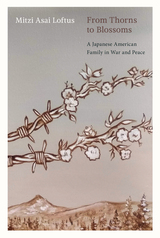
Mitsuko “Mitzi” Asai was not yet ten years old in the spring of 1942 when President Roosevelt’s Executive Order 9066 sent 120,000 people of Japanese ancestry—about two-thirds of them US citizens—from their homes on the West Coast to inland prison camps. They included Mitzi and most of her family, who owned a fruit orchard in Hood River, Oregon. The Asais spent much of World War II in the camps while two of the older sons served in the Pacific in the US Army. Three years later, when the camps began to close, the family returned to Hood River to find an altered community. Shop owners refused to serve neighbors they had known for decades; racism and hostility were open and largely unchecked. Humiliation and shame drove teenaged Mitzi to reject her Japanese heritage, including her birth name. More than a decade later, her life took another turn when a Fulbright grant sent her to teach in Japan, where she reconnected with her roots.
In From Thorns to Blossoms, Mitzi recounts her rich and varied life, from a childhood surrounded by barbed wire and hatred to a successful career as a high school English teacher and college instructor in English as a Second Language. Today, Asai descendants continue to tend the Hood River farm while the town confronts its shameful history. Originally published in 1990 as Made in Japan and Settled in Oregon, this revised and expanded edition describes the positive influence Mitzi’s immigrant parents had on their children, provides additional context for her story, and illuminates the personal side of a dark chapter in US history. It’s the remarkable story of a transformation from thorns into blossoms, pain into healing.
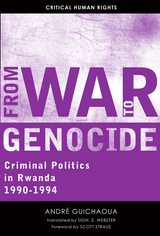
Guichaoua draws on years of meticulous research to describe and analyze this history. He emphasizes that the same virulent controversies that fueled the conflict have often influenced judicial, political, and diplomatic responses to it, reproducing the partisan cleavages between the former belligerents and implicating state actors, international institutions, academics, and the media. Guichaoua insists upon the imperative of absolute intellectual independence in pursuing the truth about some of the gravest human rights violations of the twentieth century.
READERS
Browse our collection.
PUBLISHERS
See BiblioVault's publisher services.
STUDENT SERVICES
Files for college accessibility offices.
RECENTLY PUBLISHED




UChicago Accessibility Resources
home | accessibility | search | about | contact us
BiblioVault ® 2001 - 2026
The University of Chicago Press