
 A SCHOLARLY BOOK REPOSITORY
11 start with H start with H
Yet even among those who study his work in depth, few have looked closely at his use of ideas from evolutionary science to advance his vision of markets and society. With this book Naomi Beck offers the first full-length engagement with Hayek’s thought from this perspective. Hayek argued that the capitalism we see in advanced civilizations is an unintended consequence of group selection—groups that adopted free market behavior expanded more successfully than others. But this attempt at a scientific grounding for Hayek’s principles, Beck shows, fails to hold water, plagued by incoherencies, misinterpretations of the underlying science, and lack of evidence. As crises around the globe lead to reconsiderations of the place of capitalism, Beck’s excavation of this little-known strand of Hayek’s thought—and its failure—is timely and instructive.

The Hipster Economy gives hipsterism the serious analysis it deserves, through which he reveals the importance of hipster aesthetics, based on authenticity, for today’s consumption-based economy.
Since being authentic has become an aspiration and an imperative, the notion of authenticity shapes the consumption habits of individuals in the most diverse contexts such as food and drinks, clothing, music, tourism, and the digital sphere. It even transforms urban areas and their local economies. In this book, Alessandro Gerosa analyzes this complex set of related phenomena to argue that the quest for authenticity has been a driver of Western societies from the emersion of capitalism and industrial society to today.
The Hipster Economy provides a historically and sociologically grounded explanation of the value of authenticity in the contemporary economy and society, through which it shows why and how authenticity has become a fundamental value orienting consumers' taste in late modern capitalism. In clear and convincing writing, Gerosa proposes a novel conceptualization of the aesthetic regime of consumption and an analysis of how the hipster economy impacts the urban space.
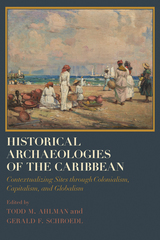
Historical Archaeologies of the Caribbean: Contextualizing Sites through Colonialism, Capitalism, and Globalism addresses issues in Caribbean history and historical archaeology such as freedom, frontiers, urbanism, postemancipation life, trade, plantation life, and new heritage. This collection moves beyond plantation archaeology by expanding the knowledge of the diverse Caribbean experiences from the late seventeenth through the mid-nineteenth centuries.
The essays in this volume are grounded in strong research programs and data analysis that incorporate humanistic narratives in their discussions of Amerindian, freedmen, plantation, institutional, military, and urban sites. Sites include a sample of the many different types found across the Caribbean from a variety of colonial contexts that are seldom reported in archaeological research, yet constitute components essential to understanding the full range and depth of Caribbean history.
Contributors examine urban contexts in Nevis and St. John and explore the economic connections between Europeans and enslaved Africans in urban and plantation settings in St. Eustatius. The volume contains a pioneering study of frontier exchange with Amerindians in Dominica and a synthesis of ceramic exchange networks among enslaved Africans in the Leeward Islands. Chapters on military forts in Nevis and St. Kitts call attention to this often-neglected aspect of the Caribbean colonial landscape. Contributors also directly address culture heritage issues relating to community participation and interpretation. On St. Kitts, the legacy of forced confinement of lepers ties into debates of current public health policy. Plantation site studies from Antigua and Martinique are especially relevant because they detail comparisons of French and British patterns of African enslavement and provide insights into how each addressed the social and economic changes that occurred with emancipation.
Contributors
Todd M. Ahlman / Douglas V. Armstrong / Samantha Rebovich Bardoe / Paul Farnsworth / Jeffrey R. Ferguson / R. Grant Gilmore III / Diana González-Tennant / Edward González-Tennant / Barbara J. Heath / Carter L. Hudgins Kenneth G. Kelly / Eric Klingelhofer / Roger H. Leech / Stephan Lenik / Gerald F. Schroedl / Diane Wallman / Christian Williamson
What lies at the center of the Mexican colonial experience? Should Mexican colonial society be construed as a theoretical monolith, capitalist from its inception, or was it essentially feudal, as traditional historiography viewed it? In this pathfinding study, Enrique Semo offers a fresh vision: that the conflicting social formations of capitalism, feudalism, and tributary despotism provided the basic dynamic of Mexico's social and economic development.
Responding to questions raised by contemporary Mexican society, Semo sees the origin of both backwardness and development not in climate, race, or a heterogeneous set of unrelated traits, but rather in the historical interaction of each social formation. In his analysis, Mexico's history is conceived as a succession of socioeconomic formations, each growing within the "womb" of its predecessor. Semo sees the task of economic history to analyze each of these formations and to construct models that will help us understand the laws of its evolution. His premise is that economic history contributes to our understanding of the present not by formulating universal laws, but by studying the laws of development and progression of concrete economic systems.
The History of Capitalism in Mexico opens with the Conquest and concludes with the onset of the profound socioeconomic transformation of the last fifty years of the colony, a period clearly representing the precapitalist phase of Mexican development. In the course of his discussion, Semo addresses the role of dependency—an important theoretical innovation—and introduces the concept of tributary despotism, relating it to the problems of Indian society and economy. He also provides a novel examination of the changing role of the church throughout Mexican colonial history. The result is a comprehensive picture, which offers a provocative alternative to the increasingly detailed and monographic approach that currently dominates the writing of history.
Originally published as Historia del capitalismo en México in 1973, this classic work is now available for the first time in English. It will be of interest to specialists in Mexican colonial history, as well as to general readers.

As Ice Age glaciers left behind erratics, so the external forces of history tumbled the Irish into America. Existing both out of time and out of space, a diverse range of these Roman-Catholic immigrants saw their new country in a much different way than did the Protestants who settled and claimed it. These erratics chose backward looking tradition and independence over assimilation and embraced a quintessentially Irish form of subversiveness that arose from their culture, faith, and working-class outlook. David M. Emmons draws on decades of research and thought to plumb the mismatch of values between Protestant Americans hostile to Roman Catholicism and the Catholic Irish strangers among them. Joining ethnicity and faith to social class, Emmons explores the unique form of dissidence that arose when Catholic Irish workers and their sympathizers rejected the beliefs and symbols of American capitalism.
A vibrant and original tour de force, History’s Erratics explores the ancestral roots of Irish nonconformity and defiance in America.

Hope lies in our richness, in the joy of our collective creativity. But that richness exists in the peculiar form of money. The fact that we relate to one another through money causes tremendous social pain and destruction and is dragging us through pandemics and war towards extinction.
Richness against money: this battle will decide the future of humanity. If we cannot emancipate richness from money-capital profit, there is probably no hope. Money seems invincible but the constant expansion of debt shows that its rule is fragile. The fictitious expansion of money through debt is driven by fear, fear of us, fear of the rabble. Money contains, but richness overflows.
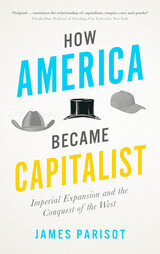
Not so fast, says James Parisot. In How America Became Capitalist, he tells the little-known story of how our economic system came to be, and of the alternatives that were sidelined along the way. Capitalist elements were apparent from the first colonies of white settlers, but they were far from dominant, and they weren’t the driving factor in the advancement of colonies deeper into the continent. Even slavery, which was at the heart of both American capitalism and imperialism throughout much of the nation’s growth, was less a monolithic force than a series of complicated encounters that took different forms. Individual difference slowed the homogenization of capitalism as well, as transgender people, gays and lesbians, and people in interracial relationships all brought complexity to the market’s idea of the typical household.
At a moment when the long-term viability of capitalism is coming increasingly into question, How America Became Capitalist reminds us that the path to its dominance was never so smooth, nor so complete, as its champions would have us believe.

***Winner, British International Studies Association International Political Economy Working Group Book Prize 2016***
Mainstream historical accounts of the development of capitalism describe a profess which is fundamentally European—a system that was born in the mills and factories of English and under the guillotines of the French Revolution. This groundbreaking book tells a very difference story.
How the West Came to Rule offers a unique interdisciplinary and international historical account of the origins of capitalism. It argues that, contrary to dominant wisdom, capitalism’s origins should not be understood as a development confined to the geographically and culturally sealed borders of Europe, but the outcome of a wider array of global processes in which non-European societies played a decisive role.
Here is a provocative, incisive explanation of how capitalism emerged in England and Europe through a dialectical intersocietal and geopolitical process. The authors’ aim to undermine a Eurocentric bias that has been prominent in the debate about capitalisms rise to supremacy, and their case is remarkably convincing. They provide a fundamental rethinking. Anievas and Nisancioglu contend that often cited assumptions are neither theoretically nor empirically tenable and deny the agency of non-Western societies to the emergence of capitalism. Topics covered include:
*The Problem of Eurocentrism
*The Problem of Historical Specificity
*The Brenner Thesis: Explanation and Critique
*The Geopolitical in the Making of Capitalism
*The Political Marxist Conception of Capitalism
*Rethinking the Origins of Capitalism
*And much more!
Through an outline of the uneven histories of Mongolian expansion, New World discoveries, Ottoman-Habsburg rivalry, the development of the colonies, and bourgeois revolutions, Alex Anievas and Kerem Nisancioglu offer an account of capitalism’s origins that convincingly argues against the prevailing Eurocentric narratives. It will change minds and open the eyes of historians, economists, and political thinkers.
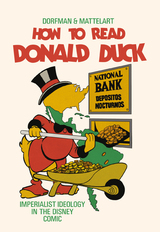
First published in 1971, How to Read Donald Duck shocked readers by revealing how capitalist ideology operates in our most beloved cartoons. Having survived bonfires, impounding and being dumped into the ocean by the Chilean army, this controversial book is once again back on our shelves.
Written and published during the blossoming of Salvador Allende's revolutionary socialism in Chile, the book examines how Disney products reflect capitalist ideology, and are active agents working in this ideology’s favor. Focusing on the hapless mice and ducks of Disney, curiously parentless, marginalized and always short of cash, Ariel Dorfman and Armand Mattelart expose how these characters established hegemonic ideas about capital, race, gender and the relationship between developed countries and the Third World.
A devastating indictment of a media giant, a document of twentieth-century political upheaval, and a reminder of the dark undercurrent of pop culture, How to Read Donald Duck is once again available, together with a new introduction by Ariel Dorfman in which he writes.
"It is that joy in liberation, that alegria, that spirit of resistance, that I wish to share with America, as the book that Pinochet’s soldiers could not liquidate or Disney’s lawyers stop from entering the United States finally finds its way to its new home, deep into the land that invented Donald Duck and Donald Trump. Is the same country that gave me such a warm welcome as a child, and perhaps may now equally greet with open arms this critique of oppression and it certainty that we don’t have to leave the world as it was when we first encountered it."

READERS
Browse our collection.
PUBLISHERS
See BiblioVault's publisher services.
STUDENT SERVICES
Files for college accessibility offices.
RECENTLY PUBLISHED





UChicago Accessibility Resources
home | accessibility | search | about | contact us
BiblioVault ® 2001 - 2026
The University of Chicago Press