
 A SCHOLARLY BOOK REPOSITORY
116 start with I start with I
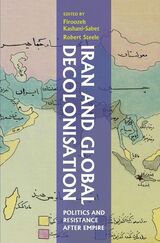
How did Iran’s unique position in the world affect and define its treatment of decolonization? During the final decades of Pahlavi rule in the late 1970s, the country sought to establish close relationships with newly independent counterparts in the Global South. Most scholarly work focused on this period is centered around the Cold War and Iran's relations with the United States, Russia, and Europe. Little attention has been paid to how the country interacted with other regions, such as Africa, Asia, and the Americas. Adding to an important and growing body of literature that discusses the profound and lasting impact of decolonization, Iran and Global Decolonisation contributes to the theoretical debates around the re-shaping of the world brought about by the end of an empire. It considers not only the impact of global decolonization on movements and ideas within Iran but also how Iran’s own experiences of imperialism shaped how these ideas were received and developed.

Inspired by Murdoch's tenacious wrestling with basic questions of human existence, these essays not only clarify her thoughts on human goodness, but also move beyond the academy to reflect on how we can and ought to undertake the human adventure in our daily lives.
Contributors are Charles Taylor, Martha Nussbaum, David Tracy, Cora Diamond, Maria Antonaccio, Elizabeth Dipple, Franklin I. Gamwell, Stanley Hauerwas, and William Schweiker. This volume also includes "Metaphysics and Ethics," a classic essay by Iris Murdoch.
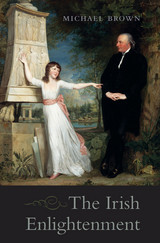
During the eighteenth-century Enlightenment, Scotland and England produced such well-known figures as David Hume, Adam Smith, and John Locke. Ireland’s contribution to this revolution in Western thought has received much less attention. Offering a corrective to the view that Ireland was intellectually stagnant during this period, The Irish Enlightenment considers a range of artists, writers, and philosophers who were full participants in the pan-European experiment that forged the modern world.
Michael Brown explores the ideas and innovations percolating in political pamphlets, economic and religious tracts, and literary works. John Toland, Francis Hutcheson, Jonathan Swift, George Berkeley, Edmund Burke, Maria Edgeworth, and other luminaries, he shows, participated in a lively debate about the capacity of humans to create a just society. In a nation recovering from confessional warfare, religious questions loomed large. How should the state be organized to allow contending Christian communities to worship freely? Was the public confession of faith compatible with civil society? In a society shaped by opposing religious beliefs, who is enlightened and who is intolerant?
The Irish Enlightenment opened up the possibility of a tolerant society, but it was short-lived. Divisions concerning methodological commitments to empiricism and rationalism resulted in an increasingly antagonistic conflict over questions of religious inclusion. This fracturing of the Irish Enlightenment eventually destroyed the possibility of civilized, rational discussion of confessional differences. By the end of the eighteenth century, Ireland again entered a dark period of civil unrest whose effects were still evident in the late twentieth century.
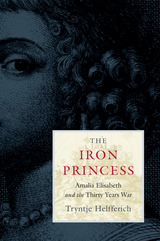
Thrust into power in the midst of the bloodiest conflict Europe had ever experienced, Amalia Elisabeth fought to save her country, her Calvinist church, and her children’s inheritance. Tryntje Helfferich’s vivid portrait reveals how this unique and embattled ruler used her diplomatic gifts to play the great powers of Europe against one another during the Thirty Years War, while raising one of the most powerful and effective fighting forces on the continent.
Stranded in exile after the death of her husband, Amalia Elisabeth stymied the maneuvers of male relatives and advisors who hoped to seize control of the affairs of her tiny German state of Hesse-Cassel. Unshakable in her religious faith and confident in her own capacity to rule, the princess crafted a cunning strategy to protect her interests. Despite great personal tragedy, challenges to her rule, and devastating losses to her people and lands, Amalia Elisabeth wielded her hard-won influence to help shape the new Europe that arose in the war’s wake. She ended her reign in triumph, having secured the birthright of her children and the legalization of her church. The Iron Princess restores to view one of the most compelling political figures of her time, a woman once widely considered the heroine of the seventeenth century.

"Some [essays], like Joseph Brodsky's tribute, are touchingly personal. Others, like G. A. Cohen's 'Isaiah's Marx, and Mine,' mingle personal reminiscences with a more theoretical look at Berlin's ideas. . . . The volume is a fitting tribute to a thinker famed for his erudition, eclecticism, and clarity of style."—Merle Rubin, The Christian Science Monitor
"One of the many merits of this rich and rewarding collection is the sense-very imperfectly conveyed here-it transmits of the tone of Berlin's writings and conversation, of the multiplicity of his interests and the variety of his achievements. . . . The essays testify to the character of Berlin's mind as a luminous prism, in which the cultural traditions of Russia, England and Judaism are marvelously refracted."—John Gray, Times Literary Supplement
"[T]he collection testifies to the learning and profundity of Berlin's thought and, by way both of reminiscence and influence, to the charm and gaity of its expression."—Anthony Quinton, The Times of London
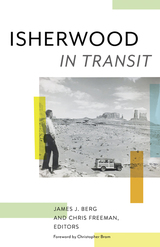
New perspectives on Christopher Isherwood as a searching and transnational writer
“Perhaps I had traveled too much, left my heart in too many places,” muses the narrator of Christopher Isherwood’s novel Prater Violet (1945), which he wrote in his adopted home of Los Angeles after years of dislocation and desperation. In Isherwood in Transit, James J.Berg and Chris Freeman bring together diverse Isherwood scholars to understand the challenges this writer faced as a consequence of his travel.
Based on a conference at the Huntington Library, where Isherwood’s recently opened papers are held, Isherwood in Transit considers the writer not as an English, continental, or American writer but as a transnational one, whose identity, politics, and beliefs were constantly transformed by global connections and engagements arising from journeys to Germany, Japan, China, and Argentina; his migration to the United States; and his conversion to Vedanta Hinduism in the 1940s.
Approaching Isherwood’s rootlessness and restlessness from various perspectives, these essays show that long after he made a new home in California and became an American citizen, Christopher Isherwood remained unsettled, although his wanderings became spiritual and personal rather than geographic.
Contributors: Barrie Jean Borich, DePaul U; Jamie Carr, Niagara U; Robert L. Caserio, Penn State U, University Park; Lisa Colletta, American U of Rome; Lois Cucullu, U of Minnesota; Jaime Harker, U of Mississippi; Carola M. Kaplan, California State U, Pomona; Calvin W. Keogh, Central European U, Budapest; Victor Marsh; Wendy Moffat, Dickinson College; Xenobe Purvis; Bidhan Roy, California State U, Los Angeles; Katharine Stevenson, U of Texas at Austin; Edmund White.
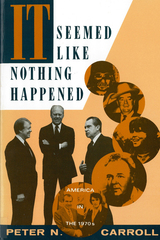
"This is the single best book on the 1970s." -- Leo Ribuffo, George Washington University
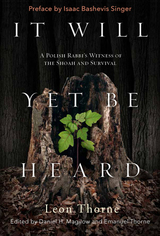
Rabbi Thorne composed his memoir under extraordinary conditions, confined to a small underground bunker below a Polish peasant’s pigsty. But, It Will Yet Be Heard is remarkable not only for the story of its composition, but also for its moral clarity and complexity. A deeply religious man, Rabbi Thorne bore witness to forced labor camps, human degradation, and the murders of entire communities. And once he emerged from hiding, he grappled not only with survivor’s guilt, but also with the lingering antisemitism and anti-Jewish violence in Poland even after the war ended. Harrowing, moving, and deeply insightful, Rabbi Thorne’s firsthand account offers a rediscovered perspective on the twentieth century’s greatest tragedy.

The Italian Fascist Party in Power was first published in 1959. Minnesota Archive Editions uses digital technology to make long-unavailable books once again accessible, and are published unaltered from the original University of Minnesota Press editions.
Although much significant material on the Italian Fascist party became available when the regime collapsed, scholars have not made extensive use of it until now. In this study, which is based on all the available sources, Professor Germino describes the functions of the party, ,explains how it was organized to perform tasks, and discusses conflicts between the party and other power elements in the dictatorship. He reaches a conclusion contrary to that of most other scholars -- that Fascist Italy was a full-fledged totalitarian state resembling Nazi Germany and Soviet Russia in political structure and ideological content.
Professor Carl J. Riedrich of Harvard University writes: "I consider this a major contribution to our knowledge of totalitarian dictatorship. There is nothing in the existing literature that can be compared to it either in terms of depth or analysis, range of documentation or breadth of treatment."
Professor Taylor Cole of Duke University comments: "Professor Germino has presented an excellent case study of the Italian Fascist Party. He has made use of more materials on the Party than any previous writer in English, and has marshalled them effectively to support his contention that the Fascist Party did not differ 'in kind' from [the Nazi and Soviet Communist parties] on the eve of World War II. His conclusion that on most (though not all) basic counts the Italian Fascist system was to be classified as 'totalitarian' is controversial, but it merits the careful attention of all students who are interested in the Italian Fascist period and in totalitarianism."

One of the enduring myths about World War Two is that only the Allies liberated occupied Europe. Many countries had anti-fascist Resistance movements, and Italy's was one of the biggest and most politically radical yet it remains relatively unknown outside of its own homeland.
Within Italy many plaques and streets commemorate the actions of the partisans - a movement from below that grew as Mussolini's dictatorship unravelled. Led by radical left forces, the Resistance trod a thin line between fighting their enemies at home and maintaining an uneasy working relationship with the Allies.
Essential for courses on World War Two and European history, Tom Behan uses unpublished archival material and interviews with surviving partisans to tell an inspiring story of liberation.
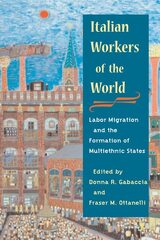
In Italian Workers of the World, a distinguished roster of contributors examines how the reception of immigrants in their new countries shaped their sense of national identity and shaped the multiethnic states where they settled. Argentina and Brazil welcomed Italian migrants as a civilizing influence, and these immigrant workers played an instrumental part in establishing and leading movements committed to labor internationalism. In the United States, by contrast, the American Federation of Labor's hostility to socialism, internationalism, and unskilled laborers fueled distrust and xenophobia that steered Italian immigrants into ethnically mixed unions like radical Industrial Workers of the World. Essays also focus on specific topics ranging from the work of republican Garibaldians in South America to antifascist currents among Italian migrants in France and the United States, and from a 1912 textile strike in Lawrence, Massachusetts, to Mussolini's invasion of Ethiopia.
Contributors: Antonio Bechelloni, Fernando J. Devoto, Pietro Rinaldo Fanesi, Donna R. Gabaccia, Mirta Zaida Lobato, Fraser M. Ottanelli, Carina Frid de Silberstein, Michael Miller Topp, Angelo Trento, Nadia Venturini, and Elisabetta Vezzosi
READERS
Browse our collection.
PUBLISHERS
See BiblioVault's publisher services.
STUDENT SERVICES
Files for college accessibility offices.
RECENTLY PUBLISHED



UChicago Accessibility Resources
home | accessibility | search | about | contact us
BiblioVault ® 2001 - 2026
The University of Chicago Press