front cover of If I Get Out Alive
If I Get Out Alive
The World War II Letters and Diaries of William H McDougall Jr
Gary Topping
University of Utah Press, 2007
In 1939, William H. McDougall was a newspaperman from Salt Lake City who quit his job and went to work for the Japan Times, an English-language newspaper in Tokyo, and later for the United Press, for which he covered the Japanese occupation of Shanghai and the fall of the Dutch East Indies (Indonesia). When the ship on which he had escaped from Java was sunk, he reached the island of Sumatra, where he was captured and imprisoned by the Japanese until 1945. 

McDougall’s letters to his family offer a rare and detailed look at daily life in Tokyo and in Japanese-occupied Shanghai during the months leading up to the Pearl Harbor attack. After his imprisonment in Sumatra, he began keeping a daily journal of his experiences as a POW. Published here for the first time are the journals he retrieved at the end of World War II.

Written by an articulate and perceptive professional reporter, McDougall's letters and diaries offer an intimate, personal narrative of conditions in wartime East Asia. 
[more]

logo for Ohio University Press
Imagining Indonesia
Cultural Politics and Political Culture
Jim Schiller
Ohio University Press, 1997
Increased interest in Indonesian culture and politics is reflected in this work's effort to advance and reject various notions of what it means to be Indonesian. It also addresses perceptions of how Indonesia's citizens and state officials should interact. Because, in recent times, the Indonesian state has been so strong, much of the book is about state-sanctioned and state-supported notions of Indonesian identity and culture and efforts to come to terms with—or sometimes to challenge these official or dominant notions.

The contributions presented here represent a wide range of disciplines, points of view, and ideological orientations. Taken together they convey the notion that much might be gained if the idea were abandoned that a single understanding of what constitutes Indonesian culture is possible or desirable.

[more]

front cover of In Plain Sight
In Plain Sight
Impunity and Human Rights in Thailand
Tyrell Haberkorn
University of Wisconsin Press, 2019
Following a 1932 coup d’état in Thailand that ended absolute monarchy and established a constitution, the Thai state that emerged has suppressed political dissent through detention, torture, forced reeducation, disappearances, assassinations, and massacres. In Plain Sight shows how these abuses, both hidden and occurring in public view, have become institutionalized through a chronic failure to hold perpetrators accountable. Tyrell Haberkorn’s deeply researched revisionist history of modern Thailand highlights the legal, political, and social mechanisms that have produced such impunity and documents continual and courageous challenges to state domination.
[more]

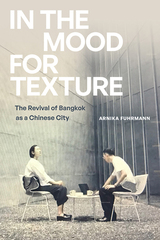
front cover of In the Mood for Texture
In the Mood for Texture
The Revival of Bangkok as a Chinese City
Arnika Fuhrmann
Duke University Press, 2026
In the Mood for Texture considers the revival of Chinese pasts and the aesthetics of colonial modernity in contemporary Southeast Asian cultural production, both virtual and material. By analyzing how twentieth-century Shanghai and Hong Kong have been revived in modern Bangkok’s architecture, design, fashion, and nightlife, Arnika Fuhrmann shows how Chinese pasts are redeployed in contemporary film, literature, and hospitality venues to shape present visions of Asia. At the heart of this inquiry stand Shanghai and Hong Kong’s anomalous colonial temporalities and Thailand’s semi-colonial temporality of the “never” and “yet still” of colonization. Attending to the textures of built environments and agentive female subjects, Fuhrmann reconceptualizes the revival of Bangkok’s Chinese pasts and demonstrates how Southeast Asian imaginations can challenge both domestic and diasporic narratives of identity and collectivity beyond China.
[more]

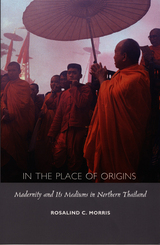
front cover of In the Place of Origins
In the Place of Origins
Modernity and Its Mediums in Northern Thailand
Rosalind C. Morris
Duke University Press, 2000
In the Place of Origins tells the tale of modernity in Northern Thailand, discerning its oblique signs in the performances of contemporary spirit mediums. In a world driven by the twin fantasies of pastness and newness, Rosalind C. Morris reveals that spirit mediumship is not simply a theater of atavistic tendency but an arena in which it is possible to read the relationships between new forms of representation and subjectivity, as well as new modes of magic and political power.
Through her careful examination of the transformations of spirit mediumship wrought by the mass media, Morris takes readers into the world of the northern Thai past to discover the anticipations of future histories. In this process, she finds new objects for anthropological inquiry, including romantic love and epistolary poetry. She then turns her eye toward the relationships between commodification and prosaic form and photography and the discourses of gendered and national identity. Attending to these issues as they manifest themselves in the practices of mediums, Morris describes both the mundane activities of spirit mediums and the grand ambitions to political authority that are embodied in the increasingly spectacular forms of possession that are becoming so popular with both tourists and local culture brokers. In the Place of Origins traverses this ground with accounts of right-wing militarism and ritual revival during the 70s, and of the democracy movement of 1992, when a global mass media was galvanized by images of military repression and the spectacle of traditional ritual power in cursing. Finally, considering the claims that mediums make to magical power in the face of both AIDS and the Asian economic crisis, Morris reveals the potency of extrajudicial forms of power and violence in the late modern era.
This provocative study will interest anthropologists, historians, Asianists, and those involved in gender, performance, media, and literary studies.
[more]

logo for National University of Singapore Press
In the Shadow of the Khmer Rouge
A Child Survivor's Memoir
Muy Lang Lim
National University of Singapore Press, 2025
A compelling memoir written by a survivor of the Khmer Rouge genocide in Cambodia. 

Forty-five years have passed since the end of Khmer Rouge rule in Cambodia in 1979. Angkar, the hidden, menacing face of the revolutionary leadership, is gone, yet the misery, death, and destruction they wrought in the name of revolution cannot be forgotten. In In the Shadow of the Khmer Rouge, a voice is given to these memories by a child survivor of the catastrophe that engulfed Cambodia in the 1970’s. 

Muy Lang's memoir begins by recalling her gentle childhood with her Sino-Cambodian family in Phnom Penh. With the fall of the city to the Khmer Rouge and its brutal emptying, the country descended into a utopian hell in which drastic economic ideas were enforced with deadly fervor. Muy Lang was only nine years old when she and her family were marched at gunpoint out of Phnom Penh in 1975. Within three years, she was completely alone; tragically, the seven other members of her family were all killed.

Muy Lang survived nearly four years of starvation, sickness, brutality, and threatened death in the Cambodian countryside. She ultimately escaped to Thailand with the first group of refugees to navigate a treacherous descent from the border through the landmine-infested Dângrêk Mountains. In the Shadow of the Khmer Rouge pays tribute to Muy Lang’s family and to other war victims who shared their stories with her. It offers future generations a personal reflection on themes such as displacement, loss of cultural identity, hope, and resilience in the face of unimaginable circumstances, and is an unflinching account of Cambodia's darkest years.
[more]

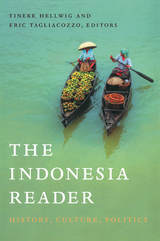
front cover of The Indonesia Reader
The Indonesia Reader
History, Culture, Politics
Tineke Hellwig and Eric Tagliacozzo, eds.
Duke University Press, 2009
Indonesia is the world’s largest archipelago, encompassing nearly eighteen thousand islands. The fourth-most populous nation in the world, it has a larger Muslim population than any other. The Indonesia Reader is a unique introduction to this extraordinary country. Assembled for the traveler, student, and expert alike, the Reader includes more than 150 selections: journalists’ articles, explorers’ chronicles, photographs, poetry, stories, cartoons, drawings, letters, speeches, and more. Many pieces are by Indonesians; some are translated into English for the first time. All have introductions by the volume’s editors. Well-known figures such as Indonesia’s acclaimed novelist Pramoedya Ananta Toer and the American anthropologist Clifford Geertz are featured alongside other artists and scholars, as well as politicians, revolutionaries, colonists, scientists, and activists.

Organized chronologically, the volume addresses early Indonesian civilizations; contact with traders from India, China, and the Arab Middle East; and the European colonization of Indonesia, which culminated in centuries of Dutch rule. Selections offer insight into Japan’s occupation (1942–45), the establishment of an independent Indonesia, and the post-independence era, from Sukarno’s presidency (1945–67), through Suharto’s dictatorial regime (1967–98), to the present Reformasi period. Themes of resistance and activism recur: in a book excerpt decrying the exploitation of Java’s natural wealth by the Dutch; in the writing of Raden Ajeng Kartini (1879–1904), a Javanese princess considered the icon of Indonesian feminism; in a 1978 statement from East Timor objecting to annexation by Indonesia; and in an essay by the founder of Indonesia’s first gay activist group. From fifth-century Sanskrit inscriptions in stone to selections related to the 2002 Bali bombings and the 2004 tsunami, The Indonesia Reader conveys the long history and the cultural, ethnic, and ecological diversity of this far-flung archipelago nation.

[more]

logo for National University of Singapore Press
An Indonesian History
Personalised Politics in Makassar and South Sulawesi, c.1600–2018
Heather Sutherland
National University of Singapore Press, 2024
A history of regionalism in Indonesia.

Indonesia, the world’s fourth most populous country, is a vast archipelago with a relatively short history of unified rule. The devolution of power to the provinces after 1998 has meant that regional social traditions and historical legacies are powerful forces in contemporary politics. South Sulawesi (Southwest Celebes), a crucial and understudied region of Indonesia, is no exception.

Starting in 1669, tensions between the Dutch East India Company’s cosmopolitan port town of Makassar and the aggressive, competitive dynasties of the interior began to shape peninsula politics. A strong ethnic Chinese community embodied the town’s wide horizons, while in the countryside, the nobility’s engagement with Islam ranged from symbiotic co-optation to hostility. Religion, rather than politics, framed the main challenges to authority. Finally integrated in 1965, the city and province remain among the most clientelist in the country, their politics personalized and transactional. Nevertheless, the large city of Makassar is booming. Dutch indirect rule and neocolonial strategies entrenched the power of local elites, who resisted changes imposed by Batavia or, after 1950, by Jakarta. 

In this history, Heather Sutherland’s long-term perspective avoids dichotomies like continuity and change or autonomy and dependence, recognizing that trade-offs have always been fundamental to interaction within and between town and country and between the province and distant capitals.
[more]

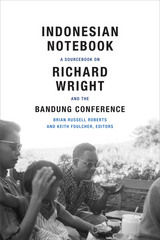
front cover of Indonesian Notebook
Indonesian Notebook
A Sourcebook on Richard Wright and the Bandung Conference
Brian Russell Roberts and Keith Foulcher, editors
Duke University Press, 2016
While Richard Wright's account of the 1955 Bandung Conference has been key to shaping Afro-Asian historical narratives, Indonesian accounts of Wright and his conference attendance have been largely overlooked. Indonesian Notebook contains myriad documents by Indonesian writers, intellectuals, and reporters, as well as a newly recovered lecture by Wright, previously published only in Indonesian. Brian Russell Roberts and Keith Foulcher introduce and contextualize these documents with extensive background information and analysis, showcasing the heterogeneity of postcolonial modernity and underscoring the need to consider non-English language perspectives in transnational cultural exchanges. This collection of primary sources and scholarly histories is a crucial companion volume to Wright'sThe Color Curtain.


[more]

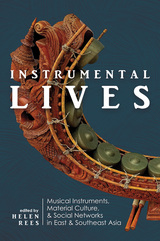
front cover of Instrumental Lives
Instrumental Lives
Musical Instruments, Material Culture, and Social Networks in East and Southeast Asia
Edited by Helen Rees
University of Illinois Press, 2024
The musical instruments of East and Southeast Asia enjoy increasing recognition as parts of humanity’s intangible cultural heritage. Helen Rees edits a collection that offers vibrant new ways to link these objects to their materials of manufacture, the surrounding environment, the social networks they form and help sustain, and the wider ethnic or national imagination. Rees organizes the essays to reflect three angles of inquiry. The first section explores the characteristics and social roles of various categories of instruments, including the koto and an extinct Balinese wooden clapper. In section two, essayists focus on the life stories of individual instruments ranging from an heirloom Chinese qin to end-blown flutes in rural western Mongolia. Essays in the third section examine the ethics and other issues that surround instrument collections, but also show how collecting is a dynamic process that transforms an instrument’s habitat and social roles.

Original and expert, Instrumental Lives brings a new understanding of how musical instruments interact with their environments and societies. Contributors: Supeena Insee Adler, Marie-Pierre Lissoir, Terauchi Naoko, Jennifer C. Post, Helen Rees, Xiao Mei, Tyler Yamin, and Bell Yung
[more]

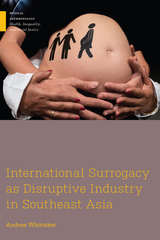
front cover of International Surrogacy as Disruptive Industry in Southeast Asia
International Surrogacy as Disruptive Industry in Southeast Asia
Whittaker, Andrea
Rutgers University Press, 2019
During the last two decades, a new form of trade in commercial surrogacy grew across Asia. Starting in India, a “disruptive” model of surrogacy offered mass availability, rapid accessibility, and created new demands for surrogacy services from people who could not afford or access surrogacy elsewhere.
 
In International Surrogacy as Disruptive Industry in Southeast Asia, Andrea Whittaker traces the development of this industry and its movement across Southeast Asia following a sequence of governmental bans in India, Nepal, Thailand, and Cambodia. Through a case study of the industry in Thailand, the book offers a nuanced and sympathetic examination of the industry from the perspectives of the people involved in it: surrogates, intended parents, and facilitators. The industry offers intended parents the opportunity to form much desired families, but also creates vulnerabilities for all people involved. These vulnerabilities became evident in cases of trafficking, exploitation, and criminality that emerged in southeast Asia, leading to greater scrutiny on the industry as a whole. Yet the trade continues in new flexible hybrid forms, involving the circulation of reproductive gametes, embryos, surrogates, and ova donors across international borders to circumvent regulations. The book demonstrates the need for new forms of regulation to protect those involved in international surrogacy arrangements.
[more]

front cover of Islam and Politics in Indonesia
Islam and Politics in Indonesia
The Masyumi Party between Democracy and Integralism
Rémy Madinier
National University of Singapore Press, 2015
The Masyumi Party, which was active in Indonesia from 1945 to 1960, constitutes the boldest attempt to date at reconciling Islam and democracy. Masyumi proposed a vision of society and government which was not bound by a literalist application of Islamic doctrine but rather inspired by the values of Islam. It set out moderate policies which were both favourable to the West and tolerant towards other religious communities in Indonesia. Although the party made significant strides towards the elaboration of a Muslim democracy, its achievements were nonetheless precarious: it was eventually outlawed in 1960 for having resisted Sukarno’s slide towards authoritarianism, and the refusal of Suharto’s regime to reinstate the party left its leaders disenchanted and marginalised. Many of those leaders subsequently turned to a form of Islam known as integralism, a radical doctrine echoing certain characteristics of 19th-century Catholic integralism, which contributed to the advent of Muslim neo-fundamentalism in Indonesia.


This book examines the Masyumi Party from its roots in early 20th-century Muslim reformism to its contemporary legacy, and offers a perspective on political Islam which provides an alternative to the more widely-studied model of Middle-Eastern Islam. The party’s experience teaches us much about the fine line separating a moderate form of Islam open to democracy and a certain degree of secularisation from the sort of religious intransigence which can threaten the country’s denominational coexistence.
[more]

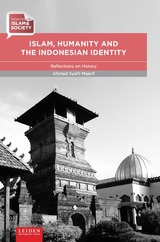
front cover of Islam, Humanity and the Indonesian Identity
Islam, Humanity and the Indonesian Identity
Reflections on History
Ahmad Syafii Maarif
Leiden University Press, 2018
"Islam exists in global history with its richly variegated cultural and social realities. When these specific cultural contexts are marginalized, Islam is reduced to an ahistorical religion without the ability to contribute to humanity. This limited understanding of Islam has been a contributing factor in many of the violent conflicts in the present day. Reflecting on Islam in Indonesia, the world’s third largest democracy, supporting the largest Muslim population, Ahmad Syafii Maarif argues for an understanding that is both faithful to Islam’s essential teachings and open to constantly changing social and cultural contexts. Building on this, he then addresses critical contemporary issues such as democracy, human rights, religious freedom, the status of women, and the future of Islam. Through this book the breadth and depth of the ideas of one of Indonesia’s foremost Muslim scholars are made accessible for English language readership."
[more]

front cover of Islam, Nationalism and Democracy
Islam, Nationalism and Democracy
a Political Biography of Mohammad Natsir
Audrey R. Kahin
National University of Singapore Press, 2012
As Indonesia's leading Muslim politician in the second half of the 20th century, Mohammad Natsir (1908-1993) went from heading the country's first post-independence government and largest Islamic political party to spending years in rebellion and in prison. After initially welcoming Soekarno's overthrow in 1965, he became one of the most outspoken critics of the successor Suharto government's increasingly autocratic rule. Natsir's copious writings stretch from his student days in the late colonial period, when his debates with Soekarno over the character of Indonesian nationalism first attracted public attention, to the years immediately preceding his death when his trenchant criticisms brought him the enmity of the Suharto regime. They reveal a man struggling to harmonize his deep Islamic faith with his equally firm belief in national independence and democracy. Drawing from a wide range of materials, including these writings and extensive interviews with the subject, this political biography of Natsir positions an important Muslim politician and thinker in the context of a critical period of Indonesia's history, and describes his vision of how a newly independent country could embrace religion without sacrificing its democratic values.
[more]

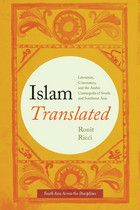
front cover of Islam Translated
Islam Translated
Literature, Conversion, and the Arabic Cosmopolis of South and Southeast Asia
Ronit Ricci
University of Chicago Press, 2011
The spread of Islam eastward into South and Southeast Asia was one of the most significant cultural shifts in world history. As it expanded into these regions, Islam was received by cultures vastly different from those in the Middle East, incorporating them into a diverse global community that stretched from India to the Philippines.

In Islam Translated, Ronit Ricci uses the Book of One Thousand Questions—from its Arabic original to its adaptations into the Javanese, Malay, and Tamil languages between the sixteenth and twentieth centuries—as a means to consider connections that linked Muslims across divides of distance and culture. Examining the circulation of this Islamic text and its varied literary forms, Ricci explores how processes of literary translation and religious conversion were historically interconnected forms of globalization, mutually dependent, and creatively reformulated within societies making the transition to Islam.
[more]


Send via email Share on Facebook Share on Twitter