
 A SCHOLARLY BOOK REPOSITORY
42 start with L start with L
Top linguists from diverse fields address language varieties in the South.

Adventurous and perceptive, Laughing to Keep from Dying reveals how African American satirists unmask the illusions and anxieties surrounding race in the twenty-first century.
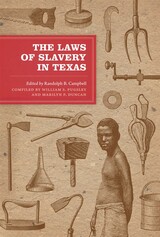
The laws that governed the institution of slavery in early Texas were enacted over a fifty-year period in which Texas moved through incarnations as a Spanish colony, a Mexican state, an independent republic, a part of the United States, and a Confederate state. This unusual legal heritage sets Texas apart from the other slave-holding states and provides a unique opportunity to examine how slave laws were enacted and upheld as political and legal structures changed. The Laws of Slavery in Texas makes that examination possible by combining seminal historical essays with excerpts from key legal documents from the slave period and tying them together with interpretive commentary by the foremost scholar on the subject, Randolph B. Campbell.
Campbell's commentary focuses on an aspect of slave law that was particularly evident in the evolving legal system of early Texas: the dilemma that arose when human beings were treated as property. As Campbell points out, defining slaves as moveable property, or chattel, presented a serious difficulty to those who wrote and interpreted the law because, unlike any other form of property, slaves were sentient beings. They were held responsible for their crimes, and in numerous other ways statute and case law dealing with slavery recognized the humanness of the enslaved. Attempts to protect the property rights of slave owners led to increasingly restrictive laws—including laws concerning free blacks—that were difficult to uphold. The documents in this collection reveal both the roots of the dilemma and its inevitable outcome.
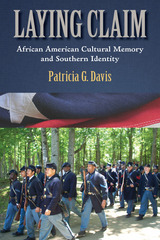
In Laying Claim: African American Cultural Memory and Southern Identity, Patricia Davis identifies the Civil War as the central narrative around which official depictions of southern culture have been defined. Because that narrative largely excluded African American points of view, the resulting southern identity was monolithically white. Davis traces how the increasing participation of black public voices in the realms of Civil War memory—battlefields, museums, online communities—has dispelled the mirage of “southernness” as a stolid cairn of white culture and has begun to create a more fluid sense of southernness that welcomes contributions by all of the region’s peoples.
Laying Claim offers insightful and penetrating examinations of African American participation in Civil War reenactments; the role of black history museums in enriching representations of the Civil War era with more varied interpretations; and the internet as a forum within which participants exchange and create historical narratives that offer alternatives to unquestioned and dominant public memories. From this evolving cultural landscape, Davis demonstrates how simplistic caricatures of African American experiences are giving way to more authentic, expansive, and inclusive interpretations of southernness.
As a case-study and example of change, Davis cites the evolution of depictions of life at Thomas Jefferson’s Monticello. Where visitors to the site once encountered narratives that repeated the stylized myth of Monticello as a genteel idyll, modern accounts of Jefferson’s day offer a holistic, inclusive, and increasingly honest view of Monticello as the residents on every rung of the social ladder experienced it.
Contemporary violence and attacks about or inspired by the causes, outcomes, and symbols of the Civil War, even one hundred and fifty years after its end, add urgency to Davis’s argument that the control and creation of public memories of that war is an issue of concern not only to scholars but all Americans. Her hopeful examination of African American participation in public memory illuminates paths by which this enduring ideological impasse may find resolutions.
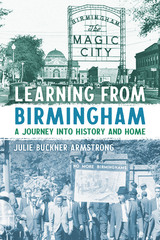
A steel town daughter’s search for truth and beauty in Birmingham, Alabama
“As Birmingham goes, so goes the nation,” Fred Shuttlesworth observed when he invited Martin Luther King Jr. to the city for the transformative protests of 1963. From the height of the Civil Rights Movement through its long aftermath, images of police dogs, fire hoses and four girls murdered when Ku Klux Klan members bombed the Sixteenth Street Baptist Church have served as an uncomfortable racial mirror for the nation. Like many white people who came of age in the Civil Rights Movement’s wake, Julie Buckner Armstrong knew little about this history. Only after moving away and discovering writers like Toni Morrison and Alice Walker did she realize how her hometown and family were part of a larger, ongoing story of struggle and injustice.
When Armstrong returned to Birmingham decades later to care for her aging mother, Shuttlesworth’s admonition rang in her mind. By then an accomplished scholar and civil rights educator, Armstrong found herself pondering the lessons Birmingham holds for a twenty-first century America. Those lessons extended far beyond what a 2014 Teaching Tolerance report describes as the common distillation of the Civil Rights Movement into “two names and four words: Martin Luther King Jr, Rosa Parks, and ‘I have a dream.’” Seeking to better understand a more complex local history, its connection to broader stories of oppression and resistance, and her own place in relation to it, Armstrong embarked on a journey to unravel the standard Birmingham narrative to see what she would find.
Beginning at the center, with her family’s 1947 arrival to a housing project near the color line, within earshot of what would become known as Dynamite Hill, Armstrong works her way over time and across the map. Weaving in stories of her white working-class family, classmates, and others not traditionally associated with Birmingham’s civil rights history, including members of the city’s LGBTQ community, she forges connections between the familiar and lesser-known. The result is a nuanced portrait of Birmingham--as seen in public housing, at old plantations, in segregated neighborhoods, across contested boundary lines, over mountains, along increasingly polluted waterways, beneath airport runways, on highways cutting through town, and under the gaze of the iconic statue of Vulcan.
In her search for truth and beauty in Birmingham, Armstrong draws on the powers of place and storytelling to dig into the cracks, complicating easy narratives of civil rights progress. Among the discoveries she finds in America’s racial mirror is a nation that has failed to recognize itself in the horrific images from Birmingham’s past and to acknowledge the continuing inequalities that make up the Civil Right’s Movement’s unfinished business. Learning from Birmingham reminds us that stories of civil rights, structural oppression, privilege, abuse, race and gender bias, and inequity are difficult and complicated, but their telling, especially from multiple stakeholder perspectives, is absolutely necessary.
Traces the changing meanings of lynching and examines the political power of lynching as metaphor
Between 1880 and 1930, thousands of African Americans were lynched in the United States. Beyond the horrific violence inflicted on these individuals, lynching terrorized whole communities and became a defining characteristic of Southern race relations in the Jim Crow era. As spectacle, lynching was intended to serve as a symbol of white supremacy. Yet, Jonathan Markovitz notes, the act's symbolic power has endured long after the practice of lynching has largely faded away.
Legacies of Lynching examines the evolution of lynching as a symbol of racial hatred and a metaphor for race relations in popular culture, art, literature, and political speech. Markovitz credits the efforts of the antilynching movement with helping to ensure that lynching would be understood not as a method of punishment for black rapists but as a terrorist practice that provided stark evidence of the brutality of Southern racism and as America’s most vivid symbol of racial oppression. Cinematic representations of lynching, from Birth of a Nation to Do the Right Thing, he contends, further transform the ways that American audiences remember and understand lynching, as have disturbing recent cases in which alleged or actual acts of racial violence reconfigured stereotypes of black criminality. Markovitz further reveals how lynching imagery has been politicized in contemporary society with the example of Clarence Thomas, who condemned the Senate's investigation into allegations of sexual harassment during his Supreme Court confirmation hearings as a “high-tech lynching.”Even today, as revealed by the 1998 dragging death of James Byrd in Jasper, Texas, and the national soul-searching it precipitated, lynching continues to pervade America's collective memory. Markovitz concludes with an analysis of debates about a recent exhibition of photographs of lynchings, suggesting again how lynching as metaphor remains always in the background of our national discussions of race and racial relations.
Thoroughly grounded in the latest scholarly literature, theoretical sources, and experimental results, Legacy and Legitimacy substantially advances understanding of Black Americans’ attitudes toward the Supreme Court, the Court’s ability to influence Blacks’ opinions about the legitimacy of public institutions and policies, and the role of media in shaping Blacks’ judgments.
Drawing on legitimacy theory—which explains the acceptance of or tolerance for controversial policies—the authors begin by reexamining the significance of “diffuse support” in establishing legitimacy. They provide a useful overview of the literature on legitimacy and a concise history of the special relationship between Blacks and the Court. They investigate the influences of group attitudes and media “framing.” And they employ data from large-scale surveys to show that Blacks with greater levels of diffuse support for the Court are more likely to adopt positions consistent with Court rulings.
With its broad scope and inclusion of new experimental findings, Legacy and Legitimacy will interest students and scholars of judicial politics, racial politics, media and politics, black studies and public opinion.
Duke University Press Scholars of Color First Book Award recipient
The histories and character of the party branches vary as widely as their locations. The Cape Verdeans of New Bedford, Massachusetts, were initially viewed as a particular challenge for the local Panthers but later became the mainstay of the Boston-area party. In the early 1970s, the Winston-Salem, North Carolina, chapter excelled at implementing the national Black Panther Party’s strategic shift from revolutionary confrontation to mainstream electoral politics. In Detroit, the Panthers were defined by a complex relationship between their above-ground activities and an underground wing dedicated to armed struggle. While the Milwaukee chapter was born out of a rising tide of black militancy, it ultimately proved more committed to promoting literacy and health care and redressing hunger than to violence. The Alabama Black Liberation Front did not have the official imprimatur of the national party, but it drew heavily on the Panthers’ ideas and organizing strategies, and its activism demonstrates the broad resonance of many of the concerns articulated by the national party: the need for jobs, for decent food and housing, for black self-determination, and for sustained opposition to police brutality against black people. Liberated Territory reveals how the Black Panther Party’s ideologies, goals, and strategies were taken up and adapted throughout the United States.
Contributors: Devin Fergus, Jama Lazerow, Ahmad A. Rahman, Robert W. Widell Jr., Yohuru Williams
Liberating Language identifies experiences of nineteenth-century African Americans—categorized as sites of rhetorical education—that provided opportunities to develop effective communication and critical text-interpretation skills. Author Shirley Wilson Logan considers how nontraditional sites, which seldom involved formal training in rhetorical instruction, proved to be effective resources for African American advancement.
Logan traces the ways that African Americans learned lessons in rhetoric through language-based activities associated with black survival in nineteenth-century America, such as working in political organizations, reading and publishing newspapers, maintaining diaries, and participating in literary societies. According to Logan, rhetorical training was manifested through places of worship and military camps, self-education in oratory and elocution, literary societies, and the black press. She draws on the experiences of various black rhetors of the era, such as
Frederick Douglass, Frances Harper, Fanny Coppin, Charles Chesnutt, Ida B. Wells, and the lesser-known Oberlin-educated Mary Virginia Montgomery, Virginia slave preacher "Uncle Jack," and former slave "Mrs. Lee."
Liberating Language addresses free-floating literacy, a term coined by scholar and writer Ralph Ellison, which captures the many settings where literacy and rhetorical skills were acquired and developed, including slave missions, religious gatherings, war camps, and even cigar factories. In Civil War camp- sites, for instance, black soldiers learned to read and write, corresponded with the editors of black newspapers, edited their own camp-based papers, and formed literary associations.
Liberating Language outlines nontraditional means of acquiring rhetorical skills and demonstrates how African Americans, faced with the lingering consequences of enslavement and continuing oppression, acquired rhetorical competence during the late eighteenth century and throughout the nineteenth century.
Liberation and Education brings together a collection of essays about Black educators’ and organizations’ quests to cultivate and employ educational strategies for the liberation of Black people. The contributions examine the enduring nature of Black people’s thinking about education prior to and through enslavement to the present. It documents a variety of critical accounts of how Black people have developed ways to free themselves mentally from the legacies of slavery, the view of Black inferiority, and historical and systemic racism.
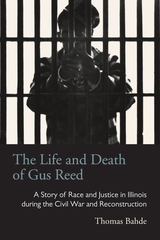
Gus Reed was a freed slave who traveled north as Sherman’s March was sweeping through Georgia in 1864. His journey ended in Springfield, Illinois, a city undergoing fundamental changes as its white citizens struggled to understand the political, legal, and cultural consequences of emancipation and black citizenship. Reed became known as a petty thief, appearing time and again in the records of the state’s courts and prisons. In late 1877, he burglarized the home of a well-known Springfield attorney—and brother of Abraham Lincoln’s former law partner—a crime for which he was convicted and sentenced to the Illinois State Penitentiary.
Reed died at the penitentiary in 1878, shackled to the door of his cell for days with a gag strapped in his mouth. An investigation established that two guards were responsible for the prisoner’s death, but neither they nor the prison warden suffered any penalty. The guards were dismissed, the investigation was closed, and Reed was forgotten.
Gus Reed’s story connects the political and legal cultures of white supremacy, black migration and black communities, the Midwest’s experience with the Civil War and Reconstruction, and the resurgence of nationwide opposition to African American civil rights in the late nineteenth century. These experiences shaped a nation with deep and unresolved misgivings about race, as well as distinctive and conflicting ideas about justice and how to achieve it.

This comprehensive anthology will be the standard source for the
study of African American public address for years to come.
For Americans of the 19th century, as W. E. B. Du Bois observed, eloquent
speeches were 'the shining lights of civilization' that both expressed
and sought to improve the lives and communities from which they sprang.
Through political speeches, sermons, lectures, oral testimonies, and ceremonial
addresses, African Americans offered diverse responses to the issues and
events of their times, including not only slavery and racial equality but
also women's rights, education, religion, immigration, socialism, war,
Indian policy, and labor organization, among others. The speeches in this
collection are among the most powerful expressions of African American
opinions on these issues and were delivered on occasions and before audiences
where the speakers believed their words might be transformative.
Lift Every Voice is a completely revised, updated, and expanded
version of Philip Foner's 1972 classic Voice of Black America, which Library
Journal hailed as "indispensable.""This well-edited and
richly inclusive work," wrote Benjamin Quarles, "unveils the
full sweep of Black expression as found in platform addresses" by
"men and women who join eloquence with reason in articulating their
grievances and their aspirations and in arousing their listeners with their
ringing and prophetic challenges." This new collection includes over
60 additional texts and revised and expanded introductory essays that provide
historical, biographical, and critical information for each speech.
Containing more than 150 speeches, this anthology represents the most
extensive and diverse collection of African American oratory of the 18th
and 19th centuries ever published. Lift Every Voice makes readily
accessible not only the classic orations of such well-known figures
as Frederick Douglass, Sojourner Truth, and Booker T. Washington but also
dozens of lesser-known but important speeches deserving greater recognition
and study. Many of these speeches are previously unpublished, uncollected,
or long out of print.
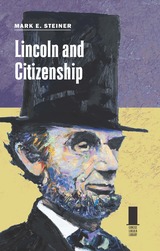
At its most basic level, citizenship is about who belongs to a political community, and for Abraham Lincoln in nineteenth-century America, the answer was in flux. The concept of “fellow citizens,” for Lincoln, encompassed different groups at different times. In this first book focused on the topic, Mark E. Steiner analyzes and contextualizes Lincoln’s evolving views about citizenship over the course of his political career.
As an Illinois state legislator, Lincoln subscribed to the by-then-outmoded belief that suffrage must be limited to those who met certain obligations to the state. He rejected the adherence to universal white male suffrage that had existed in Illinois since statehood. In 1836 Lincoln called for voting rights to be limited to white people who had served in the militia or paid taxes. Surprisingly, Lincoln did not exclude women, though later he did not advocate giving women the right to vote and did not take women seriously as citizens. The women at his rallies, he believed, served as decoration.
For years Lincoln presumed that only white men belonged in the political and civic community, and he saw immigration through this lens. Because Lincoln believed that white male European immigrants had a right to be part of the body politic, he opposed measures to lengthen the time they would have to wait to become a citizen or to be able to vote. Unlike many in the antebellum north, Lincoln rejected xenophobia and nativism. He opposed black citizenship, however, as he made clear in his debates with Stephen Douglas. Lincoln supported Illinois’s draconian Black Laws, which prohibited free black men from voting and serving on juries or in the militia. Further, Lincoln supported sending free black Americans to Africa—the ultimate repudiation and an antithesis of citizenship.
Yet, as president, Lincoln came to embrace a broader vision of citizenship for African Americans. Steiner establishes how Lincoln’s meetings at the White House with Frederick Douglass and other black leaders influenced his beliefs about colonization, which he ultimately disavowed, and citizenship for African Americans, which he began to consider. Further, the battlefield success of black Union soldiers revealed to Lincoln that black men were worthy of citizenship. Lincoln publicly called for limited suffrage among black men, including military veterans, in his speech about Reconstruction on April 11, 1865. Ahead of most others of his era, Lincoln showed just before his assassination that he supported rights of citizenship for at least some African Americans.
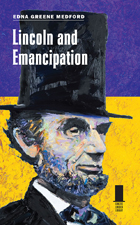
In this succinct study, Edna Greene Medford examines the ideas and events that shaped President Lincoln’s responses to slavery, following the arc of his ideological development from the beginning of the Civil War, when he aimed to pursue a course of noninterference, to his championing of slavery’s destruction before the conflict ended. Throughout, Medford juxtaposes the president’s motivations for advocating freedom with the aspirations of African Americans themselves, restoring African Americans to the center of the story about the struggle for their own liberation.
Lincoln and African Americans, Medford argues, approached emancipation differently, with the president moving slowly and cautiously in order to save the Union while the enslaved and their supporters pressed more urgently for an end to slavery. Despite the differences, an undeclared partnership existed between the president and slaves that led to both preservation of the Union and freedom for those in bondage. Medford chronicles Lincoln’s transition from advocating gradual abolition to campaigning for immediate emancipation for the majority of the enslaved, a change effected by the military and by the efforts of African Americans. The author argues that many players—including the abolitionists and Radical Republicans, War Democrats, and black men and women—participated in the drama through agitation, military support of the Union, and destruction of the institution from within. Medford also addresses differences in the interpretation of freedom: Lincoln and most Americans defined it as the destruction of slavery, but African Americans understood the term to involve equality and full inclusion into American society. An epilogue considers Lincoln’s death, African American efforts to honor him, and the president’s legacy at home and abroad.
Both enslaved and free black people, Medford demonstrates, were fervent participants in the emancipation effort, showing an eagerness to get on with the business of freedom long before the president or the North did. By including African American voices in the emancipation narrative, this insightful volume offers a fresh and welcome perspective on Lincoln’s America.
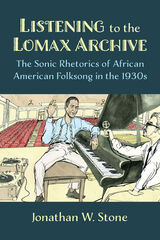
In 1933, John A. Lomax and his son Alan set out as emissaries for the Library of Congress to record the folksong of the “American Negro” in several southern African-American prisons. Listening to the Lomax Archive: The Sonic Rhetorics of African American Folksong in the 1930s asks how the Lomaxes’ field recordings—including their prison recordings and a long-form oral history of jazz musician Jelly Roll Morton—contributed to a new mythology of Americana for a nation in the midst of financial, social, and identity crises. Jonathan W. Stone argues that folksongs communicate complex historical experiences in a seemingly simple package, and can thus be a key element—a sonic rhetoric—for interpreting the ebb and flow of cultural ideals within contemporary historical moments. He contends that the Lomaxes, aware of the power folk music, used the folksongs they collected to increase national understanding of and agency for the subjects of their recordings (including the reconstitution of prevailing stereotypes about African American identity) even as they used the recordings to advance their own careers. Listening to the Lomax Archive gives readers the opportunity to listen in on these seemingly contradictory dualities, demonstrating that they are crucial to the ways that we remember and write about the subjects of the Lomaxes archive and other repositories of historicized sound.
In anticipation of the fiftieth anniversary of the landmark Brown v. Board of Education decision, Catherine Prendergast draws on a combination of insights from legal studies and literacy studies to interrogate contemporary multicultural literacy initiatives, thus providing a sound historical basis that informs current debates over affirmative action, school vouchers, reparations, and high-stakes standardized testing.
As a result of Brown and subsequent crucial civil rights court cases, literacy and racial justice are firmly enmeshed in the American imagination—so much so that it is difficult to discuss one without referencing the other. Breaking with the accepted wisdom that the Brown decision was an unambiguous victory for the betterment of race relations, Literacy and Racial Justice: The Politics of Learning after Brown v. Board of Education finds that the ruling reinforced traditional conceptions of literacy as primarily white property to be controlled and disseminated by an empowered majority. Prendergast examines civil rights era Supreme Court rulings and immigration cases spanning a century of racial injustice to challenge the myth of assimilation through literacy. Advancing from Ways with Words, Shirley Brice Heath’s landmark study of desegregated communities, Prendergast argues that it is a shared understanding of literacy as white property which continues to impact problematic classroom dynamics and education practices.
To offer a positive model for reimagining literacy instruction that is truly in the service of racial justice, Prendergast presents a naturalistic study of an alternative public secondary school. Outlining new directions and priorities for inclusive literacy scholarship in America, Literacy and Racial Justice concludes that a literate citizen is one who can engage rather than overlook longstanding legacies of racial strife.
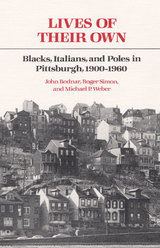
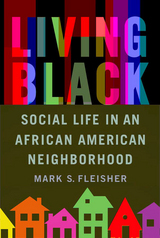
Mark S. Fleisher offers a window into daily life in this neighborhood, particularly through the stories of Mo and Memphis Washington, who fight to sustain a stable home for their children, and of Burpee, a local man who has returned to the North End to rebuild his life after years of crime and punishment in Chicago.
“Outstanding” books for public & secondary school libraries from university presses, American Library Association
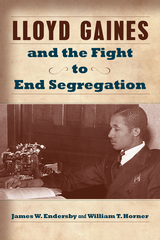
Winner, 2017 Missouri Conference on History Book Award
In 1936, Lloyd Gaines’s application to the University of Missouri law school was denied based on his race. Gaines and the NAACP challenged the university’s decision. Missouri ex rel. Gaines v. Canada (1938) was the first in a long line of decisions by the U.S. Supreme Court regarding race, higher education, and equal opportunity. The court case drew national headlines, and the NAACP moved Gaines to Chicago after he received death threats. Before he could attend law school, he vanished.
This is the first book to focus entirely on the Gaines case and the vital role played by the NAACP and its lawyers—including Charles Houston, known as “the man who killed Jim Crow”—who advanced a concerted strategy to produce political change. Horner and Endersby also discuss the African American newspaper journalists and editors who mobilized popular support for the NAACP’s strategy. This book uncovers an important step toward the broad acceptance of racial segregation as inherently unequal.
This is the inaugural volume in the series Studies in Constitutional Democracy, edited by Justin Dyer and Jeffrey Pasley of the Kinder Institute on Constitutional Democracy.
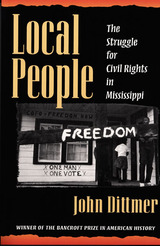
Publication of this book was supported by a grant from DePauw University, Greencastle, Indiana.


The lives built by Black Americans in a pair of summer resort towns
In the late nineteenth and early twentieth centuries, northern resort towns were in their heyday as celebrated retreats for America's wealthy. Lord, Please Don't Take Me in August documents the experiences of African Americans in Saratoga Springs, New York, and Newport, Rhode Island--towns that provided a recurring season of expanded employment opportunities, enhanced social life, cosmopolitan experience, and, in a good year, enough money to last through the winter.
Affirming that the decision to live in their tiny resort communities was conscious and deliberate, Myra B. Young Armstead shows how Afro-Saratogians and Afro-Newporters organized their rhythms, their routines, and their communities to create meaningful identities for themselves. Living on streets close to their churches, developing social organizations that promoted their standards of gentility and respectability, and lobbying for wider opportunities, these African Americans actively shaped their lives within the structures and limitations imposed on them.
Armstead situates the resort town between the poles of the rural South and the large industrial cities of the North. She shows how these small northern towns, with their seasonal economic rhythms and domestic wage work, permitted an important continuity between rural and urban lifestyles and a path from rural South to urban North besides the jarring, disruptive journey that often ended in the ghetto.
"Lord, Please Don't Take Me in August" tells a story that is at once American and uniquely African American: a story of economic imperatives and enlarged social aspirations culminating in a season--June, July, and August--that brought Blacks as close as they could get to the American Dream.
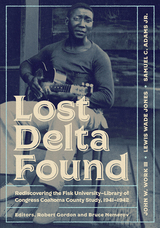
This remarkable book recovers three invaluable perspectives, long thought to have been lost, on the culture and music of the Mississippi Delta.
In 1941 and ’42 African American schol-ars from Fisk University—among them the noted composer and musicologist John W. Work III, sociologist Lewis Wade Jones, and graduate student Samuel C. Adams Jr.—joined folklorist Alan Lomax of the Library of Congress on research trips to Coahoma County, Mississippi. Their mission was “to document adequately the cultural and social backgrounds for music in the community.” Among the fruits of the project were the earliest recordings by the legendary blues singer and guitarist Muddy Waters.
The hallmark of the study was to have been a joint publication of its findings by Fisk and the Library of Congress. While this publication was never completed, Lost Delta Found is composed of the writings, interviews, notes, and musical transcriptions produced by Work, Jones, and Adams in the Coahoma County study. Their work captures, with compelling immediacy, a place, a people, a way of life, and a set of rich musical traditions as they existed in the 1940s.
Illustrated with photos and more than 160 musical transcriptions.
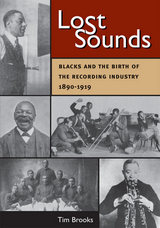
Drawing on more than thirty years of scholarship, Tim Brooks identifies key black recording artists and profiles forty audio pioneers. Brooks assesses the careers and recordings of George W. Johnson, Bert Williams, George Walker, Noble Sissle, Eubie Blake, the Fisk Jubilee Singers, W. C. Handy, James Reese Europe, Wilbur Sweatman, Harry T. Burleigh, Roland Hayes, Booker T. Washington, and boxing champion Jack Johnson, plus a host of lesser-known voices. Many of these pioneers struggled to be heard in an era of rampant discrimination. Their stories detail the forces––black and white––that gradually allowed African Americans to enter the mainstream entertainment industry.
Lost Sounds includes Brooks's selected discography of CD reissues and an appendix by Dick Spottswood describing early recordings by black artists in the Caribbean and South America.
In the book, Ikard explodes the fiction of a postracial society while awakening us to the sobering reality that we must continue to fight for racial equality or risk losing the hard-fought gains of the Civil Rights movement. Through his close reading of novels, films, journalism, and political campaigns, he analyzes willful white blindness and attendant master narratives of white redemption—arguing powerfully that he who controls the master narrative controls the perception of reality. The book sounds the alarm about seemingly innocuous tropes of white redemption that abound in our society and generate the notion that blacks are perpetually indebted to whites for liberating, civilizing, and enlightening them. In Lovable Racists, Magical Negroes, and White Messiahs, Ikard expertly and unflinchingly gives us a necessary critical historical intervention.
Winner, 2022 Ottis Lock Endowment “Best Book” Award from the East Texas Historical Association
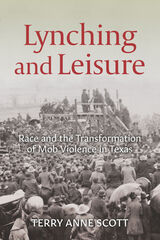
In Lynching and Leisure, Terry Anne Scott examines how white Texans transformed lynching from a largely clandestine strategy of extralegal punishment into a form of racialized recreation in which crowd involvement was integral to the mode and methods of the violence. Scott powerfully documents how lynchings came to function not only as tools for debasing the status of Black people but also as highly anticipated occasions for entertainment, making memories with friends and neighbors, and reifying whiteness. In focusing on the sense of pleasure and normality that prevailed among the white spectatorship, this comprehensive study of Texas lynchings sheds new light on the practice understood as one of the chief strategies of racial domination in the nineteenth- and twentieth-century South.
READERS
Browse our collection.
PUBLISHERS
See BiblioVault's publisher services.
STUDENT SERVICES
Files for college accessibility offices.
RECENTLY PUBLISHED



UChicago Accessibility Resources
home | accessibility | search | about | contact us
BiblioVault ® 2001 - 2026
The University of Chicago Press