
 A SCHOLARLY BOOK REPOSITORY
47 start with L start with L
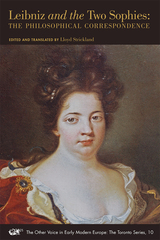
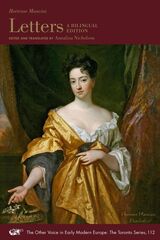
During the seventeenth century, Hortense Mancini, Duchess of Mazarin (1646–99), became an icon of women’s emancipation. In 1668, she shocked Europe when she fled her coercive husband and began a nomadic exile. Her notoriety increased in 1675 with the publication of her memoir—one of the first to appear in French by a woman—and was later magnified by her stint as the royal mistress of Charles II of England and by her establishment of a freethinking salon in London. As a salonnière, an exile, and a litigant fighting for legal separation from her husband, Mancini’s letters were a means of connection, collusion, and survival as well as cultural collaboration. Collected and translated here for the first time, this correspondence charts her struggle for autonomy in her own words.
This volume presents in translation a remarkable collection of her letters and poems—many of which were previously unpublished—that span almost four decades of her life, from 1631 to 1669.

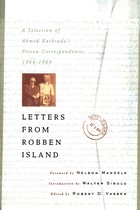
Late one night in July, 1963, a South African police unit surrounded the African National Congress headquarters in Rivonia and arrested a group of Movement leaders gathered inside. Eventually eight of them, including Nelson Mandela, who was already serving a sentence, Walter Sisulu, Dennis Goldberg, Govan Mbeki, Raymond Mhlaba, Elias Motsoledi, Andrew Mangeni, and Ahmed Kathrada, were convicted of sabotage and, on June 12, 1964, sentenced to life in prison. Soon, these men became widely known as the "Rivonia Trialists." Despite their imprisonment, the Trialists played active roles in the struggle against South Africa's racist regime. Instead of being forgotten, as apartheid officials had hoped, they became enduring symbols in a struggle against injustice and racism.
Kathrada and his colleagues were classified as high security prisoners, segregated from others and closely watched. Every activity was regulated and monitored. Among the many indignities visited upon them, the prisoners were prohibited from keeping copies of incoming and outgoing correspondence. Kathrada, or "Kathy" as he is known, successfully hid both.
Letters From Robben Island contains a selection of 86 of the more than 900 pieces of correspondence Ahmed Kathrada wrote during his 26 years on Robben Island and at Pollsmoor Prison. Some were smuggled out by friends; others were written in code to hide meaning and content from prison censors. These are among his most poignant, touching, and eloquent communications. They are testimonies to Kathrada, his colleagues, and to their commitment to obtaining human dignity and freedom for all South Africans.
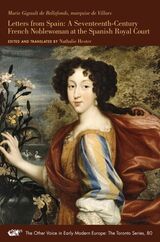
This volume includes her surviving letters from Madrid to her friend Madame de Coulanges and an appendix of her letters sent from Paris and Turin. The letters from Spain, written between 1679 and 1681, paint a vivid and engaging picture of the royal court and its new queen.
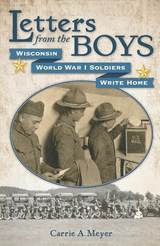
On the 100th anniversary of the arrival of the flood of American troops in Europe that would shift the tide of World War I in favor of the Allies, Letters from the Boys brings to life this terrible war as experienced by Wisconsinites writing home.
Technology had transformed the battlefield in alarming ways. Automatic rifles mowed down the young men who went “over the top” to attack enemy trenches; airplanes and improved artillery brought death unseen from miles away; terrifying clouds of poison gas choked and burned the European countryside; the internal combustion engine brought tanks to the battlefield for the first time and revolutionized the way troops deployed.
In the thick of it were young men from Wisconsin who found themselves caught up in geopolitical events half a world away. Professor Carrie A. Meyer combed through three newspapers in Green County, Wisconsin, to collect and synthesize the letters from the boys into a narrative that is both unique and representative, telling the stories of several Green County boys and what they saw, from preparing for war, to life among French families near the front, to the terror of the battlefield. Meyer gracefully removes the veil of obscurity and anonymity hanging over soldiers who participated in a war fought so long ago by great numbers of men, reminding us that armies are made of individuals who strove to do their part and then return to their families.
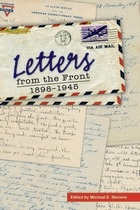
This volume tells the stories of 62 men and women from Wisconsin who served in the Spanish-American War, World War I, and World War II. Letters from the Front is a vivid social history of wartime as told by those who took part in these foreign conflicts. Most of them are "ordinary" people, uprooted from farms, factories, and offices, who took part in extraordinary events. This work explores how war changed their lives and reveals the emotions they felt in uniform, in remote outposts, in combat, and in prison camps. These letters, diaries, oral histories, newspapers, and contemporary accounts provide a history of adaptation to military life; they also reflect the changes that occurred over the half-century encompassing these confilcts, an era of great technological innovation — and one in which America's vision of itself also changed.
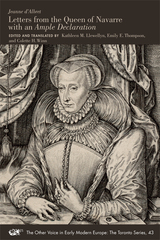
This edition presents in English, for the first time, Jeanne d’Albret’s Letters to the king, his mother, his brother, her own brother-in-law, and the queen of England, together with her Ample Declaration (1568) defending her decampment to the Protestant stronghold of La Rochelle. A historical-biographical introduction situates these writings in the larger context of Reformation politics and examines in detail the specific literary characteristics of her memoir. In her works, Jeanne d’Albret asserts her own position as legal sovereign of Béarn and Navarre and situates herself at the nexus of overlapping political, religious, and familial tensions.
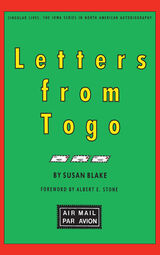
With her delightful prose and insight for detail Blake introduces us to Mahouna, her housekeeper, who runs a cold drink business from his refrigerator in a country where electricity is unreliable; to American Lee Ann and her Togolese family, who works at the American school to earn the fees for a private education for her children; and to the suave René, wearing silk shirts and a most seductive smile, who teeters on the edge of the Togolese and expatriate worlds.
Since Lomé is both an overgrown village and a cosmopolitan city, Blake's exhilarating, often humorous experiences range from buying a car to attending a traditional tom-tom funeral, from visiting people who hunt with bows and arrows to enduring faculty meetings, from negotiating the politics of buying produce to lecturing on Afro-American literature at the English Club. Together, her enlivening letters trace the pattern of adjusting to a foreign environment and probe the connections between Africa and this curious, energetic American. Not "out of Africa" but within it, they take advantage of time and perspective to penetrate the universal experience of being a stranger in a strange land.
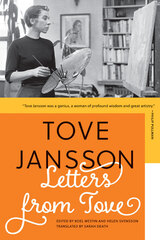
A virtual memoir in letters by the beloved creator of the Moomins
Tove Jansson’s works, even her famed Moomin books, fairly teem with letters of one kind or another, from messages bobbing in bottles to whole epistolary novels. Fortunately for her countless readers, her life was no different, unfolding as it did in the letters to family, friends, and lovers that make up this volume, a veritable autobiography over the course of six decades—and the only one Jansson ever wrote. And just as letters carry a weight of significance in Jansson’s writing, those she wrote throughout her life reflect the gravity of her circumstances, the depth of her thoughts and feelings, and the critical moments of humor, sadness, and grace that mark an artist’s days.
These letters, penned with characteristic insight and wit, provide an almost seamless commentary on Jansson’s life within Helsinki’s bohemian circles and on her island home. Shifting between hope and despair, yearning and happiness, they describe her immersion in art studies and her ascension to fame with the Moomins. They speak frankly of friendship and love, loneliness and solidarity, and also of politics, art, literature, and society. They summon a particular place and time reflected through a mind finely attuned to her culture, her world, and her own nature—all clearly put into biographical and historical context by the volume’s editors, both longtime friends of Tove Jansson—and, in the end, draw a complex, intimate self-portrait of one of the world’s most beloved authors.
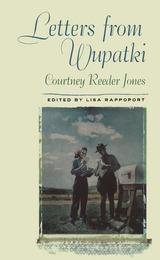
The year was 1938, and the newlyweds had come to Wupatki National Monument as full-time National Park Service caretakers for the ruin. Remote in time and place, their story as described in Courtney's letters will take readers into a dramatic landscape of red rocks, purple volcanoes, and endless blue sky. Here, some 60 years ago, two young people came to terms with their new life together and with their nearly total reliance upon each other and their Navajo neighbors.
"They helped us in any way that a neighbor would, and we helped them as we could," wrote Courtney in her memoirs years later. Vivid and engaging, her letters home spill over with descriptions of their friendship with local Navajo families, their sings and celebrations, and her good luck in being able to be a part of it all.
Letters from Wupatki captures a more innocent era in southwestern archaeology and the history of the National Park Service before the post-war years brought paved roads, expanded park facilities, and ever-increasing crowds of visitors. Courtney's letters to her family and friends reflect all the charm of the earlier time as they convey the sense of rapid transition that came after the war.
Tracking those changes in the development of Wupatki National Monument and the National Park Service, the letters also—and perhaps more important—reveal changes in the Joneses themselves. Of particular interest to anthropologists and historians, their story also gives the general reader captivating glimpses of a partnership between two people who only grew stronger for the struggles they shared together.
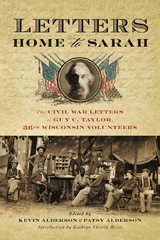
From the initial mustering and training of his regiment at Camp Randall in Wisconsin, through the siege of Petersburg in Virginia, General Lee’s surrender at Appomattox, and the postwar Grand Review of the Armies parade in Washington, D.C., Taylor conveys in vivid detail his own experiences and emotions and shows himself a keen observer of all that is passing around him. While at war, he contracts measles, pneumonia, and malaria, and he writes about the hospitals, treatments, and sanitary conditions that he and his comrades endured during the war. Amidst the descriptions of soldiering, Taylor’s letters to Sarah are threaded with the concerns of a young married couple separated by war but still coping together with childrearing and financial matters. The letters show, too, Taylor’s transformation from a lonely and somewhat disgruntled infantryman to a thoughtful commentator on the greater ideals of the war.
This remarkable trove of letters, which had been left in the attic of Taylor’s former home in Cashton, Wisconsin, was discovered by local historian Kevin Alderson at a household auction. Recognizing them for the treasure they are, Alderson bought the letters and, aided by his wife Patsy, painstakingly transcribed the letters and researched Taylor’s story in Wisconsin and at historical sites of the Civil War. The Aldersons’ preface and notes are augmented by an introduction by Civil War historian Kathryn Shively Meier, and the book includes photographs, maps, and illustrations related to Guy Taylor’s life and letters.
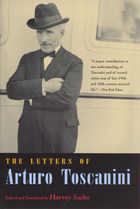
“This is a major contribution to our understanding of Toscanini and of several entire eras of late nineteenth- and twentieth-century musical life, especially the almost improvisatory looseness of opera in Italy, the glamour of European festivals, and the concert life of the United States. It’s also a wonderful, sometimes downright salacious read.”—New York Times
“Toscanini’s large, cranky humanity comes alive throughout his letters, as it does in his best recordings.”—New York Review of Books
“Edited with scrupulous care and wide-ranging erudition.”—Wall Street Journal
“Sachs has served the conductor well . . . by editing this generously annotated and unprecedentedly revealing collection of letters that were written, usually in haste and often in fury, over the course of seventy years.”—Washington Post
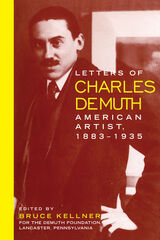
This collection of 155 of his letters offers valuable views of the arts and letters colonies in Provincetown, New York, and Paris. Besides offering information on Demuth's own works, the letters also shed light on the output of his contemporaries, as well as references to their trips, liaisons, and idiosyncrasies. Demuth numbered among his correspondents some of the most famous artists and writers of his time, including Georgia O'Keeffe, Eugene O'Neill, John Reed, Gertrude Stein, Alfred Stieglitz, Carl Van Vechten, and William Carlos Willliams. In his travels in the United States and abroad, he encountered many other talented contemporaries: Peggy Bacon, Muriel Draper, Marcel Duchamp, the Stetthemer sisters, artists and writers, patrons, and gallery owners.
Whether he is offering to pick up a copy of Joyce's Ulysses for Eugene O'Neill or trying to convince Georgia O'Keeffe to decorate his music room ("just allow that red and yellow 'canna' one to spread until it fills the room"), Demuth is always in the thick of art and literary life. Flamboyant in attire but discreet in his homosexuality, Demuth also reveals in his letters the life of a talented homosexual in the teens and twenties. With his best friends Robert Locher and Marsden Hartley, he circulated through the art colonies of Greenwich Village, Provincetown, and Paris, meeting everyone.
The book also contains reprints of some short appraisals of Demuth and his work that were published during his lifetime, long out of print, including pieces by A. E. Gallatin, Angela E. Hagen, Marsden Hartley, Helen Henderson, Henry McBride, Carl Van Vechten, Rita Wells, and Willard Huntington Wright.
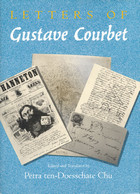
pivotal figure in the emergence of modern painting, remains
an artist whose interests, attitudes, and friendships are
little understood. A voluminous correspondent, Courbet
himself, through his letters, offers a tantalizing avenue
toward a keener assessment of his character and
accomplishments. In her critical edition of over six hundred
of the artist's letters, Petra ten-Doesschate Chu presents
just such a look at the inner life of the artist; her
unparalleled feat of gathering together all of Courbet's
known letters, many heretofore unpublished and untranslated,
is sure to change our evaluation of Courbet's creativity and
of his place in nineteenth-century French life.
Beginning when Courbet left his provincial home at
eighteen and ending eight days before his death in exile in
Switzerland, this correspondence enables readers to follow
the artist's development from youth to mature artist of
international repute. Addressed to correspondents such as
the poet Charles Baudelaire, the painter Claude Monet, the
writers Champfleury, Victor Hugo, and Théeophile Gautier,
the political theorist Pierre-Joseph Proudhon, and the
politician Jules Simon, the letters offer numerous insights
into Courbet's life and art as well as the cultural and
political activity of his day. In fascinating detail, they
present the artist's relation to the contemporary media, his
deliberate choice of subject matter for Salon paintings, his
preoccupation with photography, and his participation in the
Commune.
Besides collecting, translating, and annotating the
letters, Chu provides an introduction, a chronology,
biographies of persons appearing frequently in the letters,
and a list of paintings and sculptures mentioned in the
letters. Her work is an essential resource of immediate use
to historians of art and culture, political and social
historians, and readers of biography.
Petra ten-Doesschate Chu is professor and head of the
Department of Art and Music at Seton Hall University.
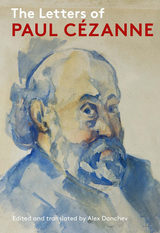
Revered and misunderstood by his peers and lauded by later generations as the father of modern art, Paul Cézanne (1839-1906) has long been a subject of fascination for artists and art lovers, writers, poets, and philosophers. His life was a ceaseless artistic quest, and he channeled much of his wide-ranging intellect and ferocious wit into his letters. Punctuated by exasperated theorizing and philosophical reflection, outbursts of creative ecstasy and melancholic confession, the artist’s correspondence reveals both the heroic and all-toohuman qualities of a man who is indisputably among the pantheon of all-time greats.
This new translation of Cézanne’s letters includes more than twenty that were previously unpublished and reproduces the sketches and caricatures with which Cézanne occasionally illustrated his words. The letters shed light on some of the key artistic relationships of the modern period—about one third of Cézanne’s more than 250 letters are to his boyhood companion Émile Zola, and he communicated extensively with Camille Pissarro and the dealer Ambroise Vollard. The translation is richly annotated with explanatory notes, and, for the first time, the letters are cross-referenced to the current catalogue raisonné. Numerous inaccuracies and archaisms in the previous English edition of the letters are corrected, and many intriguing passages that were unaccountably omitted have been restored. The result is a publishing landmark that ably conveys Cézanne’s intricacy of expression.

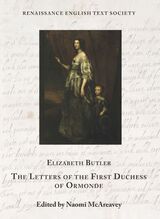
The volume comprises more than three hundred letters written by Ormonde to her husband and family, agents and servants, and friends and clients. Spanning six decades, these letters are meticulously transcribed, edited, and annotated, and the volume includes a substantial scholarly introduction, family trees, a glossary, and other resources.
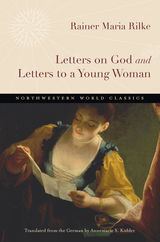
For Rainer Maria Rilke, letter writing was a discipline and art unto itself. Some seven thousand of his letters have survived, among them works of profound beauty and insight to rival his poems and fiction. For the first time, this volume makes available to an English-speaking audience two of the earliest collections of Rilke letters published after his death, each with a nuanced introduction and notes by Annemarie S. Kidder.
The thematic collection Letters on God contains two letters by Rilke, the first an actual letter written during World War I, in 1915 in Munich, the second a fictional one composed after the war, in 1922 at Muzot in Switzerland. In these letters, Rilke builds on the mystical view of God conceived in The Book of Hours, but he moves beyond it, demonstrating a unique vision of God and Christ, the church and religious experience, friendship and death.
Like his famous Letters to a Young Poet, Rilke’s Letters to a Young Woman presents an intimate series of letters written to a young admirer. The nine letters collected here were written to Lisa Heise over the course of five years, from 1919 to 1924. Though Rilke and Heise never met, the poet emerges in these letters as a compassionate listener and patient teacher who with levelheaded sensitivity affirms and guides the movements of another person’s soul.
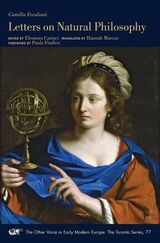
This edition presents the first full English translation of Erculiani’s book and other relevant texts, bringing to light the cultural context and scientific thought of this unique natural philosopher.

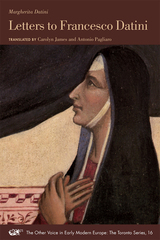
—Jane Tylus
Professor of Italian Studies and vice provost for academic affairs, New York University
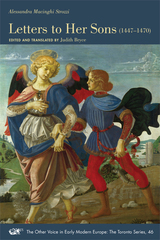
The seventy-three surviving letters written by Florentine widow, Alessandra Macinghi Strozzi (c.1406–1471), to her distant sons first appeared in print well over a century ago, but are here translated into English in their entirety for the first time. Whether for the professional historian or for the general reader interested in Renaissance Florence, they constitute a most precious testimony regarding both private and public life in the mid-fifteenth century, with themes ranging from familial relations, motherhood, marriage, and aspects of material culture to the harsh realities of political exile meted out by the Medici to their perceived opponents, these latter including her husband and, subsequently, her sons.
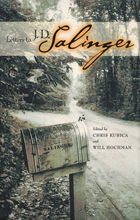
Salinger continues to maintain his silence, but Holden Caulfield, Franny and Zooey, and Seymour Glass—the unforgettable characters of his novel and short stories—continue to speak to generations of readers and writers. Letters to Salinger includes more than 150 personal letters addressed to Salinger from well-known writers, editors, critics, journalists, and other luminaries, as well as from students, teachers, and readers around the world, some of whom have just discovered Salinger for the first time. Their voices testify to the lasting impressions Salinger’s ideas and emotions have made on so many diverse lives.
Contributors include Marvin Bell, Frederick Busch, Stephen Collins, Nicholas Delbanco, Warren French, Herbert Gold, W. P. Kinsella, Molly McQuade, Stewart O’Nan, Robert O’Connor, Ellis Paul, Molly Peacock, Sanford Pinsker, George Plimpton, Gerald Rosen, Sid Salinger, David Shields, Joseph Skibell, Melanie Rae Thon, Alma Luz Villanueva, Katharine Weber, and many others
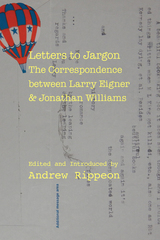
Celebrated by both the Black Mountain poets in the 1950s and 1960s and the Language poets in the 1970s and 1980s, Larry Eigner’s poems occupy an important place in American poetry and poetics, and his reputation and legacy grow seemingly stronger with each passing year. Letters to Jargon collects all of the known correspondence between Larry Eigner and Jonathan Williams, the influential publisher of Jargon Society Press and himself a poet.
Eigner’s correspondence with Williams began in the early 1950s, as the two were in conversation over the manuscript of On My Eyes, published by Jargon in 1960. Their correspondence continued for many years thereafter, extending into the period when Eigner’s work started to gain recognition from the nascent movement that would become known as “Language” writing.
The letters are quite broad in their range of reference and provide a fuller context for Eigner’s poetry and thinking. Eigner and Williams discuss their own poetic practices, including the source material for specific poems, general writing practices, and small press and little magazine publication. This volume offers considerable insight into their shared literary communities as Eigner reports on his readings in contemporary poetry and poetics, as well as his correspondence and contact with other poets including Charles Olson, Vincent Ferrini, Robert Duncan, Denise Levertov, Robert Grenier, and Barrett Watten.
Also recorded are Eigner’s reactions to current events and explications of his own poems, including the contexts for appropriated lines and distinctions of character spacing. Eigner also shares with Williams details of his home life, his financial difficulties and the daily challenges of his cerebral palsy. Finally, the book features a series of images of the original letters, enabling readers to see Eigner’s specific material-textual practices.
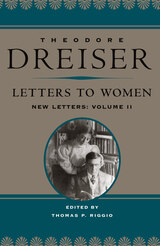
Theodore Dreiser led a long and controversial life, almost always pursuing some serious question, and not rarely pursuing women. This collection, the second volume of Dreiser correspondence to be published by the University of Illinois Press, gathers previously unpublished letters Dreiser wrote to women between 1893 and 1945, many of them showing personal feelings Dreiser revealed nowhere else. Here he both preens and mocks himself, natters and scolds, relates his jaunts with Mencken and his skirmishes with editors and publishers. He admits his worries, bemoans his longings, and self-consciously embarks on love letters that are unafraid to smolder and flame. To one reader he sends “Kisses, Kisses, Kisses, for your sweety mouth” and urges his needy requests: “Write me a love-letter Honey girl.” Alongside such amorous play, he often expressed his deepest feelings on philosophical, religious, and social issues that characterize his public writing.
Chronologically arranged and meticulously edited by Thomas P. Riggio, these letters reveal how wide and deep Dreiser’s needs were. Dreiser often discussed his writing in his letters to women friends, telling them what he wanted to do, where he thought he succeeded and failed, and seeking approval or criticism. By turns seductive, candid, coy, and informative, these letters provide an intimate view of a master writer who knew exactly what he was after.
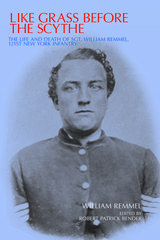
Sergeant William Remmel was a German immigrant who had settled with his parents and family in far upstate New York. His letters collected in Like Grass before the Scythe cover more than two full years of his service and provide details on military and social history in the eastern theater of operations and on the experience of the home front in upstate New York among a largely immigrant, working-class family and community.
Remmel wrote in English and apparently his parents responded in German. In addition to the important material on an immigrant family’s experience, Remmel also deals with the question of slavery, illness and hospital care (when he was wounded), the problem of hard war/total war, as well as the campaigns of Chancellorsville, Gettysburg, and the Shenandoah Valley in 1864.
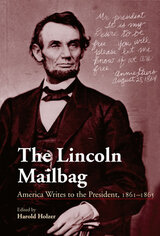
As president, Abraham Lincoln received between two hundred and five hundred letters a day—correspondence from public officials, political allies, and military leaders, as well as letters from ordinary Americans of all races who wanted to share their views with him. Here, and in his critically acclaimed volume Dear Mr. Lincoln, editor Harold Holzer has rescued these voices—sometimes eloquent, occasionally angry, at times poetic—from the obscurity of the archives of the Civil War. The Lincoln Mailbag includes letters written by African Americans, which Lincoln never saw, revealing to readers a more accurate representation of the nation’s mood than even the president knew. This first paperback edition of The Lincoln Mailbag includes a new index and fourteen illustrations, and Holzer’s introduction and annotations provide historical context for the events described and the people who wrote so passionately to their president in Lincoln's America.

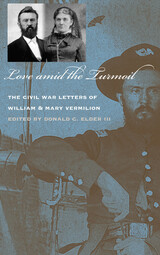
William Vermilion (1830-1894) served as a captain in Company F of the 36th Iowa Infantry from October 1862 until September 1865. Although he was a physician in Iconium in south central Iowa at the start of the war, after it ended he became a noted lawyer in nearby Centerville; he was also a state senator from 1869 to 1872. Mary Vermilion (1831-1883) was a schoolteacher who grew up in Indiana; she and William married in 1858. In this volume historian Donald Elder provides a careful selection from the hundreds of supportive, informative, and heart-wrenching letters that they wrote each other during the war—the most complete collection of letters exchanged between a husband and a wife during the Civil War.
Winner, 1999 Missouri Conference on History Book Award
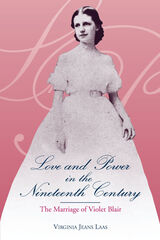
This fascinating biography of a marriage in the Gilded Age closely examines the dynamic flow of power, control, and love between Washington blue blood Violet Blair and New Orleans attorney Albert Janin. Based on their voluminous correspondence as well as Violet’s extensive diaries, it offers a thoroughly intimate portrait of a fifty-four-year union which, in many ways, conformed to societal strictures, yet always created its own definition of itself in order to fit the flux of needs of both husband and wife.
Central to their story is Violet’s fierce determination to maintain her autonomy within the patriarchic institution of marriage. An enduring belle who thought, talked, and acted with the assurance and self-confidence of one whose wishes demanded obedience, she rejected the Victorian ideal of women as silent, submissive consorts. Yet her feminism was a private one, not played out on a public stage but kept to the confines of her own daily life and marriage.
With abundant documentary evidence to draw upon, Laas ties this compelling story to broader themes of courtiship behavior, domesticity, gender roles, extended family bonds, elitism, and societal stereotyping. Deeply researched and beautifully written, Love and Power in the Nineteenth Century has the dual virtue of making an important historical contribution while also appealing to a broad popular audience.

READERS
Browse our collection.
PUBLISHERS
See BiblioVault's publisher services.
STUDENT SERVICES
Files for college accessibility offices.
RECENTLY PUBLISHED



UChicago Accessibility Resources
home | accessibility | search | about | contact us
BiblioVault ® 2001 - 2026
The University of Chicago Press