
 A SCHOLARLY BOOK REPOSITORY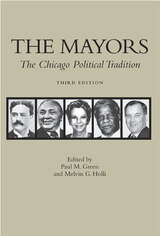
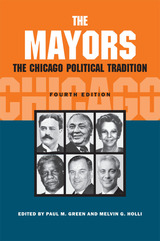
The Mayors: The Chicago Political Tradition taps America’s most qualified observers to scrupulously assess the city’s mayors within the vigorous and tumultuous history of Chicago government. This revised and updated edition features extensive commentary on the enduring mayoral influence of Richard M. Daley.
“In the seventeen years since The Mayors was first published,” editors Paul M. Green and Melvin G. Holli write in the Preface to this edition, “Chicago politics has become more genteel, more docile, and more predictable. This dampening of the city’s once red-hot political coals is due to domination by one man: Mayor Richard M. Daley.” Also providing a political roadmap through the complex and fascinating labyrinth of Chicago politics are essays on other recent mayors: Richard J. Daley, Michael A. Bilandic, Jane M. Byrne, and Harold Washington.
Green and Holli’s popular study maintains that the key to the mayor’s office is power: the power to reward and the power to punish that comes with occupying the fifth floor of city hall in Chicago. Beginning with Joseph Medill, the Tribune publisher who guided the city in its rise from the ashes after the Great Fire of 1871, The Mayors takes readers through the terms of some of the city’s most colorful leaders: from the progressive Carter Harrison II and the radical Edward F. Dunne to the politically reticent Fred A. Busse and the loudmouth Big Bill Thompson. The essays collectively tell a riveting story of structures wherein aggressive power brokers surmount even massive corruption and scandal, and those who fail to seize the office’s inherent authority have short, uncomfortable tenures.
In addition to Green and Holli, contributors include David L. Protess, Edward R. Kantowicz, John D. Buenker, Maureen A. Flanagan, Douglas Bukowski, John R. Schmidt, Roger Biles, Arnold R. Hirsch, William J. Grimshaw, Monroe Anderson, Steve Neal, Steve Rhodes, and Laura S. Washington.
Chicago’s mayoral history is one of corruption and reform, scandal and ambition. This well-researched volume, more relevant than ever twenty-five years after its first edition, presents an intriguing and informative glimpse into the fascinating lives and legacies of Chicago’s most influential leaders.
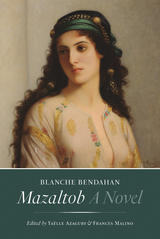
Raised in the Judería or Jewish quarter of Tetouan, Morocco, at the turn of the 20th-century, sixteen-year-old Mazaltob finds herself betrothed to José, an uncouth man from her own community who has returned from Argentina to take a wife. Mazaltob, however, is in love with Jean, who is French, half-Jewish, and a free spirit. In this classic of North African Jewish fiction, Blanche Bendahan evokes the two compelling forces tearing Mazaltob apart in her body and soul: her loyalty to the Judería and her powerful desire to follow her own voice and find true love. Bendahan’s nuanced and moving novel is a masterly exploration of the language, religion, and quotidian customs constraining North African Jewish women on the cusp of emancipation and decolonization. Yaëlle Azagury and Frances Malino provide the first English translation of this modern coming-of-age tale, awarded a prize by the Académie Française in 1930, and analyze the ways in which Mazaltob, with its disconcerting blend of ethnographic details and modernist experimentation, is the first of its genre—that of the feminist Sephardi novel. A historical introduction, a literary analysis, and annotations elucidate historical and cultural terms for readers, supplementing the author’s original notes.

In this fictional autobiography of the father of Icarus, “Apollo’s creature,” a brilliant but flawed man, writer and sculptor Michael Ayrton harnesses the tales of the past to mold a myth for our times. We learn of Daedalus’s increasingly ambitious artifacts and inventions; his fascination with Minoan culture, commerce, and religion, and his efforts to adapt to them; how he comes to design the maze of the horned Minotaur; and how, when he decides that he must flee yet again, he builds two sets of wax wings—wings that will be instruments of his descent into the underworld, a place of both purgatory and rebirth.
A compelling mix of history, fable, lore, and meditations on the enigma of art, The Maze Maker will ensnare classicists, artists, and all lovers of story in its convolutions of life and legend. “I never understood the pattern of my life,” writes Daedalus, “so that I have blundered through it in a maze.”

The authors propose a new understanding of the market structure characterized by a closely interrelated array of quality submarkets. Their comprehensive models ground a unified theory that accounts for demand by both renters and owner occupants, supply by owners of existing dwellings, changes in the stock of housing due to conversions and new construction, and interactions across submarkets.
Mazel means luck in Yiddish, and luck is the guiding force in this magical and mesmerizing novel that spans three generations. Sasha Saunders is the daughter of a Polish rabbi who abandons the shtetl and wins renown as a Yiddish actress in Warsaw and New York. Her daughter Chloe becomes a professor of classics at Columbia. Chloe’s daughter Phoebe grows up to become a mathematician who is drawn to traditional Judaism and the sort of domestic life her mother and grandmother rejected.
When they meet, Franco is a migrant farmworker with two children and a failing marriage, living with poverty, violence, and the looming threat of deportation, while the “college boy” yearns to one day make a name for himself in the writing world. The significance of their romance poses vastly different possibilities and consequences.
Mañana Means Heaven deftly combines fact and fiction to pull back the veil on one of literature’s most mysterious and evocative characters. Inspired by Franco’s love letters to Kerouac and Hernandez’s interviews with Franco, now in her nineties and living in relative obscurity, the novel brings this lost gem of a story out of the shadows and into the spotlight.

Finalist, Montaigne Medal, Eric Hoffer Award
The Black American Literature Forum said of his work, “Mbembe’s poems express a hunger for a fuller life, for an affirmation of existence.” The Kansas City Star commented, “Mbembe works with his own special problem of saying what he has to say and saying it in the authentic voice of a special culture.” The literary quarterly Northeast summed up his work by suggesting we “look for his light on the dark waters of the bay--red flashing four: courage; white flashing one: love--you will find your way safely to harbor.”
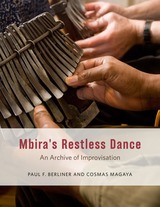
Mbira’s Restless Dance is written to be played. This two-volume, spiral-bound set features musical transcriptions of thirty-nine compositions and variations, annotated with the master player’s advice on technique and performance, his notes and observations, and commentary by Berliner. Enhanced with extensive website audiovisuals, Mbira’s Restless Dance is in effect a series of masterclasses with Magaya, suitable for experienced mbira players and those learning the fundamentals.
Together with Berliner's The Art of Mbira, in which he provides an indispensable historical and cultural guide to mbira in a changing world, Mbira's Restless Dance breaks new ground in the depth and specificity of its exploration of an African musical tradition, and in the entwining of the authors’ collaborative voices. It is a testament to the powerful relationship between music and social life—and the rewards of lifelong musical study, performance, and friendship.
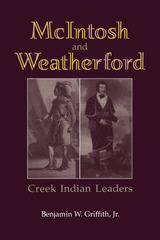
About the time of the American Revolutionary war, when the Creek Indians owned land that is today approximately the lower two-thirds of Alabama and of Georgia west of the Oconee River, two sons were born to Indian mothers and Scots fathers in obscure towns in the territory of the Creek Nation. Both sons were named William, and both were to become leaders of their mothers’ people.
The two remarkable men lived during a period of war and turbulence along the frontier in Alabama and Georgia. More often the subjects of folk tale and legend than serious historical inquiry, McIntosh and Weatherford fought on opposing sides in the Creek War of 1813-1814. McIntosh allied himself with Andrew Jackson and the friendly Lower Creeks, while Weatherford joined with the hostile Red Stick and was the leader of a band of Upper Creeks in the massacre at Fort Mims. McIntosh, who was given the rank of brigadier general for his military feats, was involved in the machinations that led to the ceding of Creek lands to Georgia. As a result, he died in disgrace at the hands of his fellow Creeks. Weatherford, once hated and feared, died a planter and local hero in Alabama near the site of Fort Mims.
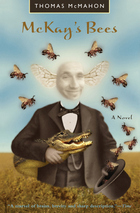
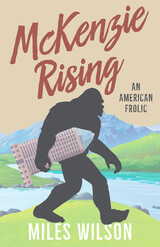
Their work is countered by a Dickensian ensemble of characters, many of whom are chronically sidetracked from the heroic community purpose by various amatory diversions. Given that the protesters include such locals as D.B. Cooper (the long-vanished airplane hijacker) and Sasquatch, in all his odoriferous glory, the reader is in for a rollicking but powerfully thought-provoking journey.
A lusty, environmental picaresque, McKenzie Rising satirizes our shortfalls, while celebrating our resilience and the triumph of community. The book offers a corrective to some of the amendable follies we lug with us as we careen into the (post)-Trump, (post)-COVID era.

Weaving together history, literature, and personal experience, this recent book from a master of literature crafts a mesmerizing exploration of language, loss, and the enduring power of the spirit world.
The strange word “Mdeilmm” was reported to have been uttered by the spirit of Shakespeare when called up during a séance in 1854 at the instigation of the French poet Victor Hugo. Hugo was then living in exile on the island of Jersey where he took part in several such séances. Hélène Cixous weaves this scene into a rich tapestry that draws from many corners of her world, both real and fictional: Dostoevsky’s Idiot, Hugo’s Last Day of a Condemned Man, Poe’s story “The Gold Bug,” but also film footage of the assassination of Itzhak Rabin and many layers of memories of her Algerian childhood. Transcribed communications from spirits of the departed, her father and grandfather among them, provide a fascinating glimpse into past spiritual practices.
Cixous’s unique narrative style enhances the book’s enchanting quality, ensuring that readers are not only engaged by the content but also captivated by the beauty of the prose. Meanwhile, the reader falls under the spell of the author’s incomparable “mole speech,” the language in which poets communicate.




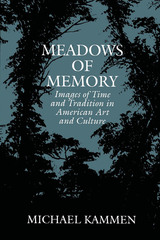
"History painting," for many people, conjures up Washington Crossing the Delaware and other paintings of heroic historical events. But history has made its way into considerably more American art than such obvious examples, in the view of Michael Kammen. In three thought-provoking and innovative essays, Kammen ranges from the Renaissance to the twentieth century, from central Europe to the western United States, and from elegant oil painting to folk sculpture to show the transformations of Old World icons of time into New World images of social memory and tradition.
In the first essay, Kammen demonstrates how American artists and artisans modified European emblems of time in response to their New World setting. In the second essay concerning nineteenth-century landscape art, he explores how artists used space to represent the movement of American culture through time. In the final essay, he looks at two distinctively American motifs of collective memory and tradition—old houses and elm trees. Throughout this interdisciplinary study, Kammen draws his examples from well-known and lesser-known artists, as well as from diverse American writers. Over 100 black-and-white illustrations accompany the text.
Of interest to all students of American culture, Meadows of Memory raises intriguing questions about the American paradox of desiring to conquer mutability while yearning for emblems of a (perhaps imagined?) past.
Mean girl feminism encourages girls and women to be sassy, sarcastic, and ironic as feminist performance. Yet it coopts its affect, form, and content from racial oppression and protest while aiming meanness toward people in marginalized groups.
Kim Hong Nguyen’s feminist media study examines four types of white mean girl feminism prominent in North American popular culture: the bitch, the mean girl, the power couple, and the global mother. White feminists mime the anger, disempowerment, and resistance felt by people of color and other marginalized groups. Their performance allows them to pursue and claim a special place within established power structures, present as intellectually superior, substitute nonpolitical playacting for a politics of solidarity and community, and position themselves as better, more enlightened masters than patriarchy. But, as Nguyen shows, the racialized meanness found across pop culture opens possibilities for building an intersectional feminist politics that rejects performative civility in favor of turning anger into liberation.

The culmination of over a decade of original research, Mean Lives, Mean Laws exposes a Kafkaesque criminal justice system, one that has no problem with treating women as collateral damage in the War on Drugs or with stripping female prisoners of their parental rights. Yet it also reveals the individual histories of women who were jailed in Oklahoma, providing intimate portraits of their lives before, during, and after their imprisonment. We witness the impoverished and abusive conditions in which many of these women were raised; we get a vivid portrait of their everyday lives behind bars; and we glimpse the struggles that lead many ex-convicts to fall back into the penal system.
Through an innovative methodology that combines statistical rigor with extensive personal interviews, Sharp shows how female incarceration affects not only individuals, but also families and communities. Putting a human face on a growing social problem, Mean Lives, Mean Laws raises important questions about both the state of Oklahoma and the state of the nation.

Yet, through canoe trips and intimate explorations of the river, Metzger discovers glints of resiliency: a beaver trolling through a slough, native fish in quiet backwaters, and strong currents that carry undertones of the wild Willamette. Together with tales from farmers and scientists alike, these experiences lead Metzger to ask whether something scarred can fully heal, and whether a disjointed river can be whole again.
A story of re-discovery as told by a learner, Meander Scars will appeal to readers of literary nonfiction, river advocates, naturalists, and outdoor enthusiasts interested in sustaining healthy river systems for themselves, their children, and beyond.
Establishing that science is an inherently normative form of knowledge and that society gives meaning to science instead of being given the "truth" by science, Polanyi contends here that the foundation of meaning is the creative imagination. Largely through metaphorical expression in poetry, art, myth, and religion, the imagination is used to synthesize the otherwise chaotic and disparate elements of life. To Polanyi these integrations stand with those of science as equally valid modes of knowledge. He hopes this view of the foundation of meaning will restore validity to the traditional ideas that were undercut by modern science. Polanyi also outlines the general conditions of a free society that encourage varied approaches to truth, and includes an illuminating discussion of how to restore, to modern minds, the possibility for the acceptance of religion.
With its emphasis on artists’ perspectives of aesthetic and social issues, this anthology provides a unique opportunity to enter into the fray of the most hotly contested art issues of the past few decades: the visibility of women artists, sexuality and the arts, censorship, art world racism, the legacies of modernism, artists as mothers, visual art in the digital age, and the rewards and toils of a lifelong career in art. The stellar cast of contributing artists and art writers includes Nancy Spero, Richard Tuttle, David Humphrey, Thomas McEvilley, Laura Cottingham, Johanna Drucker, David Reed, Carolee Schneemann, Whitney Chadwick, Robert Storr, Leon Golub, Charles Bernstein, and Alison Knowles.
This compelling and theoretically savvy collection will be of interest to artists, art historians, critics, and a general audience interested in the views of practicing artists.
A new reading strategy for the Thanksgiving Hymns
Hasselbalch asserts that current theories about the social background of Thanksgiving Hymns are unable to explain its heterogeneous character. Instead the author suggests a reading strategy that leaves presumptions about the underlying social contexts aside to instead consider the collection’s hybridity as a clue to understanding the collection as a whole.
Features:
- Systemic Functional Linguistics applied to four Hodayot
- Analysis that highlights the role of a mediator in the agency of God
- An approach that highlights the unity of the collection
The authors of the eleven papers here expound their versions of this position and go on to critique Burge's version. Together with Burge's replies, this volume offers a major contribution to contemporary philosophy.
This volume is not a collection of artifacts from past decades of philosophy. Instead, it is a collection of essays that each make a significant contribution to contemporary work in philosophy. This reflects the fact that Gibbard’s work has not only had a massive influence on past discussion in philosophy but also continues to influence new directions of philosophical research.
With contributions from:
Sara Aronowitz, Simon Blackburn, Paul Boghossian, David Braddon-Mitchell, Nate Charlow, Stephen Darwall, Jamie Dreier, Billy Dunaway, Melissa Fusco, Sona Ghosh, Allan Gibbard, Bill Harper, Paul Horwich, Zoë Johnson King, Tristram McPherson, Howard Nye, Lauren Olin, Caleb Perl, David Plunkett, Peter Railton, Connie Rosati, Mark Schroeder, Alex Silk, Daniel J. Singer, Brian Skyrms, and Seth Yalcin.
Meaning, Form, and Body brings together renowned figures in the field of cognitive linguistics to discuss two related research areas in the study of linguistics: the integration of form and meaning and language and the human body. Among the numerous topics discussed are grammatical constructions, conceptual integration, and gesture.
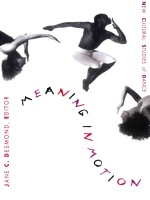
Writing from a broad range of perspectives, contributors from disciplines as varied as art history and anthropology, dance history and political science, philosophy and women’s studies chart the questions and challenges that mark this site. How does dance enact or rework social categories of identity? How do meanings change as dance styles cross borders of race, nationality, or class? How do we talk about materiality and motion, sensation and expressivity, kinesthetics and ideology? The authors engage these issues in a variety of contexts: from popular social dances to the experimentation of the avant-garde; from nineteenth-century ballet and contemporary Afro-Brazilian Carnival dance to hip hop, the dance hall, and film; from the nationalist politics of folk dances to the feminist philosophies of modern dance. Giving definition to a new field of study, Meaning in Motion broadens the scope of dance analysis and extends to cultural studies new ways of approaching matters of embodiment, identity, and representation.
Contributors. Ann Cooper Albright, Evan Alderson, Norman Bryson, Cynthia Cohen Bull, Ann Daly, Brenda Dixon Gottschild, Susan Foster, Mark Franko, Marianne Goldberg, Amy Koritz, Susan Kozel, Susan Manning, Randy Martin, Angela McRobbie, Kate Ramsey, Anna Scott, Janet Wolff
The papers in this volume represent a cross-section of Panofsky's major work. Included are selections from his well-known Studies in Iconology and The Life and Art of Albrecht Dürer, plus an introduction and an epilogue—"The History of Art as a Humanistic Discipline" and "Three Decades of Art History in the United States: Impressions of a Transplanted European"—as well as pieces written especially for this collection. All display Panofsky's vast erudition and deep commitment to a humanistic conception of art and art history.
With his loss of speech, Robillard was forced to communicate through a lip-reading system developed by his wife and student assistants. Restricted by this form of communication and his paralysis, he soon learned the frustrations of making his meaning known. Hospital nurses wrongly anticipated his words. Those who translated for him inevitably distorted his meaning. Most of all, the casual pace of conversational give-and-take was disrupted. Old friends would leave before Robillard could provide the expected interactional response.
Finding himself isolated due to his lack of both mobility and vocalization, Robillard threw himself into his academic work and began to develop settings and methods where he could satisfactorily interact with others. A researcher and writer experienced in describing the bodily and verbal methods used to coordinate and construct the most ordinary of social forms, Robillard joins in this book both his years of sociological training and his time with illness to talk with moving and illuminating analysis about a broad range of matters. Moving gracefully from examinations of narratives about disability and illness, the stigmatizing things that healthcare providers unwittingly say to their patients, and communication problems in the intensive care unit, to more personal reflections on anger, isolation, and stories of tragedy, Robillard also discusses disability in the workplace and such seemingly simple topics as computers and vacations. Meaning of a Disability is the personal story of a highly trained observer forced to confront simultaneously the limits of the disabled person's social world and the unspoken assumptions about meaningful interaction -- as he struggles with the daily difficulties of maintaining his identity.
Meaning of a Disability will interest a wide audience, including healthcare professionals, disabled people, and caretakers as well as academics studying ethnomethodology, health and illness, conversation, symbolic interaction, storytelling, and most aspects of lived experience.
Commercial television deserves praise for its many achievements, but since its earliest days, almost everyone has agreed that it is also open to many criticisms. The Texas-Stanford Seminars, made possible by a grant from TV Guide magazine, were intended "to help bring about the general improvement of television," and to provide "a place and a climate for significant discussion." The vigorous and enthusiastic participation in the seminars by executives from the three major networks, from a number of group stations and independent producers, and from advertising agencies and some of the larger advertisers demonstrated the desire of the industry itself to recognize its own faults and to understand the complaints of its critics.
The Meaning of Commercial Television collects the speeches presented at the second of these seminars, in April 1966. Contributors include Harry S. Ashmore, George Schaefer, August Priemer, Leonard S. Matthews, Thomas Moore, David M. Potter, Paul Goodman, Marshall McLuhan, and John R. Silber. Also in the book are summaries of the discussions which followed each of the speeches, and an examination of the overall impact of the meeting and the conclusions which might be drawn from it. Some of the topics discussed are "numbers" rating method of evaluating television programs; the position in the television industry of the independent producer, of the advertiser, and of the television network, and television itself with respect to its history, social perspective, and other aspects of American life to which it is related.
Rather, conservatism regards the individual not as the premise but the conclusion of politics, a politics that is fundamentally opposed to the ethic of social justice, to equality of station, income, and achievement, or to the attempt to bring major institutions of society (such as schools and universities) under government control.
The conservative outlook, says Scruton, is neither outmoded nor irrational. On the contrary, it is the most reasonable of political alternatives. The evils of socialism, he maintains, lie precisely where its supporters find its strengths, and the conditions for the credibility of socialism have long since disappeared. Neither socialism nor liberalism can come to terms with the real complexity of human society, and both appear plausible only because they direct attention away from what is actual, toward what is merely ideal.
From earlier editions of The Meaning of Conservatism:
“The book provides exactly that swift kick on the intellectual bottom which every undergraduate student of political science needs, most of them more urgently than ever before.” – T. E. Utley, (London) Daily Telegraph
“If the text is full of surprises, the manner is no less striking than the matter. Scruton is a great stylist, and one is continually arrested by beautifully crafted phrases which beg for quotation. . . . [He] is a cultured and critical guide through the traditional landscape of conservatism; his book provokes thought and it is a pleasure to read.”
– Bram Gieben, Political Quarterly
“. . . remarkable work. . . . The highest praise which one can bestow on The Meaning of Conservatism is to say that it reminds one at every page of Thomas Hobbes, the greatest master of the English language ever to write a work of political theory.” – Jonathan Sumption, Sunday Telegraph
“. . . clearly too ghastly to be taken seriously.” – Andrew Belsey, Radical Philosophy
After immigrating from Lebanon to Haiti as a young girl, Merjan comes of age in an insular, conservative community, where it seems as though her sole escape is marriage. Striking a bargain with a young art dealer, she marries and dreams of becoming a painter, only to discover her husband’s support tethered with expectations.
In the late 1970s, Merjan’s daughter Yvonne is a young woman on the cusp of a marriage of convenience. Though resentful of her mother, Yvonne dreams of establishing a Haitian art gallery in New York with the help of a well-connected older man—but her time there ends disastrously, creating a deep rift between her and her family.
In the present day, Yvonne’s daughter Eva is a student whose art draws inspiration from her grandmother Merjan’s largely undiscovered work. When Eva becomes unexpectedly pregnant, she moves back to her childhood home in Miami to sort out her ambivalent feelings, where she finds her family upended by feuds. An intimate family saga, The Meaning of Daughter explores questions about maternal ambivalence, ambition, artmaking, and how desire resists gendered expectations.
Arguing that democratic systems are characterized by self-governing--not state- governed--societies, Ostrom contends that the nature and strength of individual relationships and self-organizing behavior are critical to the creation and survival of a democratic political system. Ostrom begins with a basic contradiction identified by Alexis de Tocqueville. De Tocqueville suggested that if citizens acted on the basis of their natural inclinations they would expect government to provide for them and take care of their needs. Yet these conditions contradict what it means to be self-governing. Ostrom explores the social and cultural context necessary for a democratic system to flourish emphasizing the important role of ideas and the use of language in defining and understanding political life. Discussing differences in the ideas about social organization among various cultural and intellectual traditions, he considers the difficulties encountered over time in building democratic societies in America, Asia, Europe, and Africa. He outlines lessons from these experiences for the efforts to build democracy in the developing world and the countries emerging from communism.
Based on a lifetime of thinking about the social conditions necessary to support a democracy, this book makes a significant contribution to the recent discussion about civil society and the fragility of our formal and informal social institutions and will be of interest to social scientists, historians and all readers concerned with the state of democracy in the modern world.
Vincent Ostrom is Arthur F. Bentley Professor of Political Science Emeritus and Co-Director of the Workshop on Political Theory and Policy Analysis, Indiana University. He is the author of many works on political theory and public administration.
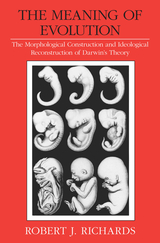
This provocative new reading of Darwin goes directly to the origins of evolutionary theory. Unlike most contemporary biologists or historians and philosophers of science, Richards holds that Darwin did concern himself with the idea of progress, or telos, as he constructed his theory. Richards maintains that Darwin drew on the traditional embryological meanings of the terms "evolution" and "descent with modification." In the 1600s and 1700s, "evolution" referred to the embryological theory of preformation, the idea that the embryo exists as a miniature adult of its own species that simply grows, or evolves, during gestation. By the early 1800s, however, the idea of preformation had become the concept of evolutionary recapitulation, the idea that during its development an embryo passes through a series of stages, each the adult form of an ancestor species.
Richards demonstrates that, for Darwin, embryological recapitulation provided a graphic model of how species evolve. If an embryo could be seen as successively taking the structures and forms of its ancestral species, then one could see the evolution of life itself as a succession of species, each transformed from its ancestor. Richards works with the Origin and other published and archival material to show that these embryological models were much on Darwin's mind as he considered the evidence for descent with modification.
Why do so many modern researchers find these embryological roots of Darwin's theory so problematic? Richards argues that the current tendency to see evolution as a process that is not progressive and not teleological imposes perspectives on Darwin that incorrectly deny the clearly progressive heart of his embryological models and his evolutionary theory.
Runner-up, the Wayland Hand Award for Folklore and History, 2009
"Rudwick has not merely written the first book-length history of palaeontology in the English language; he has written a very intelligent one. . . . His accounts of sources are rounded and organic: he treats the structure of arguments as Cuvier handled fossil bones."—Roy S. Porter, History of Science

The Meaning of Liberalism provides a new perspective on the continuing debate about how liberalism should be defined and what it means in countries with an established parliamentary system, particularly in the new democracies of Central and Eastern Europe.
The key question this book addresses is: will the specific experience of communism and its aftermath give birth to a new distinct current of liberal thought, or will it simply enlarge the scope of the Western liberal debate? The authors argue that liberalism cannot be reduced merely to private property and market prices, but needs a very complex set of institutions and corresponding law.
Contributors come from both sides of the former Iron Curtain and they highlight the richness and diversity of liberalism and discuss different perceptions of liberal thinking in the East and West in the post-modern world.
Art expresses an ideal image of man, and an essential part of understanding the meaning of a work of art is understanding this image. When the ideal image changes, art, too, must change. It is thus possible to look at the emergence of modern art as a function of the disintegration of the Platonic-Christian conception of man. The artist no longer has an obvious, generally accepted route to follow. One sign of this is that there is no one style today comparable to Romanesque, Gothic, Renaissance, or Baroque. This lack of direction has given the artist a new freedom. Today there is a great variety of answers to the question, "What is art?" Such variety, however, betrays an uncertainty about the meaning of art. An uneasiness about the meaning of art has led modern artists to enter into dialogue with art historians, psychologists and philosophers. Perhaps this interpretation can contribute to that dialogue.
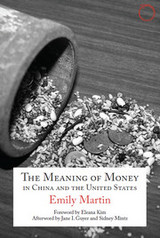
When Emily Martin delivered the annual Lewis Henry Morgan Lectures at the University of Rochester in 1986, she took as her subject the meaning of money in China and the United States. Though the topic is of perennial interest—and never more so than in our era, when economic forecasts of China’s growing economy generate shallow news stories and public fear—the lectures were never edited for publication, so their rich analysis has been unavailable to anthropologists ever since.
With this book—the first volume in a collaboration between Hau Books and the University of Rochester—Martin’s lectures are brought back, fully edited and richly illustrated. A new introduction by Martin herself brings her analysis wholly up to date, while an afterword by Jane I. Guyer and Sidney Mintz discusses Martin’s work, influence, and legacy. The Meaning of Money in China and the United States will instantly assume its rightful place as a classic in the field, with Martin’s insights as germane and productive as they were nearly thirty years ago.
Musician Leo Samama discusses these and many other questions while shaping a vibrant picture of music's importance in human lives both past and present. What is remarkable is that music is recognised almost universally as a type of language that we can use to wordlessly communicate. We can hardly shut ourselves off from music, and considering its primal role in our lives, it comes as no surprise that few would ever want to. Able to transverse borders and appeal to the most disparate of individuals, music is both a tool and a gift, and as Samama shows, a unifying thread running throughout the cultural history of mankind.
Centuries after they were originally performed, the plays of Shakespeare continue to inspire, entertain, and awe audiences and readers today. At the same time, however, there's no question that even the most sophisticated reader can sometimes benefit from the insight and guidance of an expert when entering Shakespeare's long-gone world and complicated figurative language.
William Goddard is here to help. He taught Shakespeare for decades as much-loved professor at Swarthmore College, and here he distills that experience into an accessible, engaging companion to the plays. Across two volumes, Goddard covers all of Shakespeare's plays and brings fresh insight to familiar characters, scenes, and verses. Goddard writes, "The greatest poetry has always depicted the world as a little citadel of nobility threatened by an immense barbarism, a flickering candle surrounded by infinite night" Shakespeare's candle still burns, and with Goddard's help we can all see it brighter than ever.
Centuries after they were originally performed, the plays of Shakespeare continue to inspire, entertain, and awe audiences and readers today. At the same time, however, there's no question that even the most sophisticated reader can sometimes benefit from the insight and guidance of an expert when entering Shakespeare's long-gone world and complicated figurative language.
William Goddard is here to help. He taught Shakespeare for decades as much-loved professor at Swarthmore College, and here he distills that experience into an accessible, engaging companion to the plays. Across two volumes, Goddard covers all of Shakespeare's plays and brings fresh insight to familiar characters, scenes, and verses. Goddard writes, "The greatest poetry has always depicted the world as a little citadel of nobility threatened by an immense barbarism, a flickering candle surrounded by infinite night" Shakespeare's candle still burns, and with Goddard's help we can all see it brighter than ever.
In The Meaning of the Body, Mark Johnson continues his pioneering work on the exciting connections between cognitive science, language, and meaning first begun in the classic Metaphors We Live By. Johnson uses recent research into infant psychology to show how the body generates meaning even before self-consciousness has fully developed. From there he turns to cognitive neuroscience to further explore the bodily origins of meaning, thought, and language and examines the many dimensions of meaning—including images, qualities, emotions, and metaphors—that are all rooted in the body’s physical encounters with the world. Drawing on the psychology of art and pragmatist philosophy, Johnson argues that all of these aspects of meaning-making are fundamentally aesthetic. He concludes that the arts are the culmination of human attempts to find meaning and that studying the aesthetic dimensions of our experience is crucial to unlocking meaning's bodily sources.
"Fills a significant gap: it introduces the notion of environmental meaning so clearly that no reader will doubt the basic premise that the environment holds meaning as part of a cultural system of symbols, and influences our actions and our determinations of social order." —Design Book Review
"This is the second edition of a book first published in 1982. . . . Enthusiastic and inquiring as the reader is brought into the writer's thought processes." —Progress in Human Geography (England)
"It has merits not to be found in any other book in this much-discussed and little understood subject, to wit: it is short, it is simple, and it is useful. It is even, in parts, entertaining....a book which will help architects to do their job better." —Architecture Australia
A sweeping history of our relationship with weather in art, media, philosophy, religion, and science—and how the climate continually defies demystification.
We moderns tend to take the weather for granted. We know it through hourly timetables and radar maps and otherwise make it the subject of predictable and safe conversation. But weather is not safe or predictable and never has been. People have long used all their ingenuity to imagine and portray its shifty ways. As John Durham Peters argues, a closer look at the history of these efforts, from painting and poetry to cartography and close observation, has the potential to disclose something important about what it means to live in the world.
In The Meaning of Weather, John Durham Peters shows how the long history of understanding the weather has seen dreamers and data-crunchers alike craft remarkable visions of the world around us. From Babylonian astronomy to the Event Horizon Telescope, from illuminated manuscripts to television, and more, Peters explores the kaleidoscopic ways people have sought to understand, tame, or manage the weather—and how the climate resists being bridled. In this magisterial telling, Peters reimagines Western culture as a continuing struggle to know ourselves and each other through an ever-changing environment.
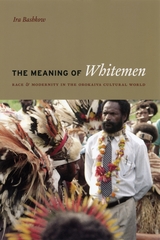
While Papua New Guinea’s resident white population has been severely reduced due to postcolonial white flight, the whiteman remains a significant racial and cultural other here—not only as an archetype of power and wealth in the modern arena, but also as a foil for people’s evaluations of themselves within vernacular frames of meaning. As Ira Bashkow explains, ideas of self versus other need not always be anti-humanistic or deprecatory, but can be a creative and potentially constructive part of all cultures.
A brilliant analysis of whiteness and race in a non-Western society, The Meaning of Whitemen turns traditional ethnography to the purpose of understanding how others see us.
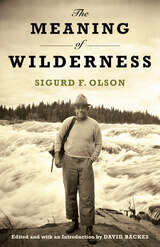
Sigurd F. Olson (1899-1982) was one of the greatest environmentalists of the twentieth century. A conservation activist and popular writer, Olson introduced a generation of readers to the importance of wilderness. He served as president of the Wilderness Society and the National Parks Association and as a consultant to the federal government on wilderness preservation and ecological problems. He earned many honors, including the highest possible from the Sierra Club, National Wildlife Federation, and Izaak Walton League.
Olson is perhaps best known, though, for his many books that express the wonder, awe, and peace he found in the wilderness, including the nature classics The Singing Wilderness, Listening Point, and Reflections from the North Country. While these books have greatly influenced subsequent environmentalist movements and writers such as Annie Dillard and Barry Lopez, a major portion of Olson’s wilderness writing-much of it originating as speeches-has been relatively inaccessible, scattered in a number of magazines and obscure books over a period of more than fifty years, or never published at all.
The Meaning of Wilderness gathers together the most important of Sigurd Olson’s articles and speeches, making them available for the first time. The book also contains an introduction and chapter-by-chapter commentary by Olson’s authorized biographer, David Backes, that help the reader discover the various facets of Olson’s wilderness philosophy and their development over time. A lively look at the evolution of one of environmentalism’s greatest figures, The Meaning of Wilderness will be essential reading for Olson fans, historians, and outdoors people around the country.
College and university faculty in the arts (visual, studio, language, music, design, and others) regularly grade and assess undergraduate student work but often with little guidance or support. As a result, many arts faculty, especially new faculty, adjunct faculty, and graduate student instructors, feel bewildered and must “reinvent the wheel” when grappling with the challenges and responsibilities of grading and assessing student work.
Meaningful Grading: A Guide for Faculty in the Arts enables faculty to create and implement effective assessment methodologies—research based and field tested—in traditional and online classrooms. In doing so, the book reveals how the daunting challenges of grading in the arts can be turned into opportunities for deeper student learning, increased student engagement, and an enlivened pedagogy.

As smartphones mediate more of our activities, they are changing our relationship with meaning. To a teenager, for example a “conversation” is just as likely to refer to an exchange of text messages as it is a face-to-face discussion. Meanwhile, Facebook has redefined what friendship means, Snapchat what a memory means, etc. The kinds of changes smartphones bring are happening at rapid pace: TikTok reached a billion users in just over three years, whereas it took the telephone 75 years to reach a tenth of that number of people. Meaningful Technologies: How Digital Metaphors Change the Way We Think and Live by Eric Chown and Fernando Nascimento offers systematic reconsideration of the ways in which digital technologies impact our lives both individually and collectively.
Metaphors aren’t just a clever way to describe technology, they are also changing the way we think. When we click on a picture of a shopping cart it connects a complex set of technologies to represent a simple idea that we’re all familiar with. A heart icon under a photo is understood as an easy way to express appreciation. We aren’t required to understand how technology works, just how we interact with it. The ambiguity of metaphors, and the complexity of technology can also hide important realities about what is being described. “The cloud,” for example, actually consists of very real data centers, which consume huge amounts of natural resources to keep running. Meanwhile, pressing that heart icon on a photo is a signal to the artificial intelligences running in your app that you want to see more things like that photo and that it should adjust what it knows about you accordingly.
There is a constant feedback loop between us and the digital technologies we use. We are constantly using them and they are changing us through their usage. Meaningful Technologies focuses on this loop from the perspectives of hermeneutic philosophy and cognitive science. Through the former, the authors examine meaning and how it changes over time. Through the latter, they gain understanding of how this feedback loop impacts individuals, especially in terms of learning and attention. Chown and Nascimento argue that, on the one hand, apps have a kind of agency never before possible in a technology, but also that, armed with a critical framework for examining such apps, we can regain some of our own agency. This book will appeal to scholars of digital media digital and computational studies, and those interested in issues related to ethical impacts of digital technologies.
WINNER OF FC2's RONALD SUKENICK INNOVATIVE FICTION PRIZE
A stunning look at the labor of obsession and the industry of self-destruction
In her lush, lyrical, and unflinching short fiction debut, JoAnna Novak examines the restless throb of desire amid the rote work of jobs and obligations, from the walk-ins of a New York banquet kitchen to the pier of Venice Beach. Fueled by jellyfish pad Thai and Necco wafers, Mountain Dew and Xiaolongbao, the characters in these stories defy boundaries and mores: In “MEMO 19,” a former anorectic, bored of recovery and her clerical job, invites an unparalleled act of sexual defilement and in “Rio Grande, Wisconsin,” a fleshly preteen fantasizes about Bill Murray on a family vacation to Wisconsin. Celebrating the grueling beauty of the shift and the ticking virtues of self-restraint, Meaningful Work is a pageant of formal experimentation, in fearless, glittering prose.
In the face of the continuing discourse of crisis in US education, The Meaningful Writing Project offers readers an affirming story of writing in higher education that shares students’ experiences in their own voices. In presenting the results of a three-year study consisting of surveys and interviews of university seniors and their faculty across three diverse institutions, authors Michele Eodice, Anne Ellen Geller, and Neal Lerner consider students’ perceptions of their meaningful writing experiences, the qualities of those experiences, and instructors’ perspectives on assignment design and delivery.
This study confirms that meaningful assignments offer students opportunities to engage with instructors, peers, and texts and are relevant to past experiences and passions as well as to future aspirations and identities. Meaningful writing occurs across majors, in both required and elective courses, and beyond students’ years at college. Additionally, the study makes clear that faculty across the curriculum devote significant care and attention to creating writing assignments that support student learning, as they understand writing performance to be a developmental process connected to overall cognitive and social development, student engagement with learning, and success in a wide variety of disciplines and professions.
The Meaningful Writing Project provides writing center directors, WPAs, other composition scholars, and all faculty interested in teaching and learning with writing an unprecedented look into the writing projects students find meaningful.
A searing critique of the “freedom” that America offers to the victims of its imperialist machinations of war and occupation
Meaningless Citizenship traces the costs of America’s long-term military involvement around the world by following the forced displacement of Iraqi families, unveiling how Iraqis are doubly displaced: first by the machinery of American imperialism in their native countries and then through a more pernicious war occurring on U.S. soil—the dismantling of the welfare state.
Revealing the everyday struggles and barriers that texture the lives of Iraqi families recently resettled to the United States, Sally Wesley Bonet draws from four years of deep involvement in the refugee community of Philadelphia. An education scholar, Bonet’s analysis moves beyond the prevalent tendency to collapse schooling into education. Focusing beyond the public school to other critical institutions, such as public assistance, resettlement programs, and healthcare, she shows how encounters with institutions of the state are an inherently educative process for both refugee youths and adults, teaching about the types of citizenship they are expected to enact and embody while simultaneously shaping them into laboring subjects in service of capitalism.
An intimate, in-depth ethnography, Meaningless Citizenship exposes how the veneer of American values—freedom, democracy, human rights—exported to countries like Iraq, disintegrates to uncover what is really beneath: a nation-state that prioritizes the needs of capitalism above the survival and wellbeing of its citizens.
Carefully edited by Dail Neugarten, each chapter presents the reader with Bernice Neugarten's original formulations on topics such as age norms and age constraints, the changing meanings of age, and age neutral social policy. Including four previously unpublished papers, The Meanings of Age will be of interest to scholars, students, and practitioners of psychology, education, law, medicine, social policy, and gerontology.
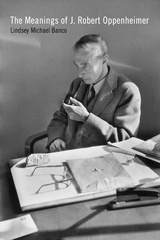
The Meanings of J. Robert Oppenheimer examines how he has been represented over the past seven decades in biographies, histories, fiction, comics, photographs, film, television, documentaries, theater, and museums. Lindsey Michael Banco gathers an unprecedented group of cultural texts and seeks to understand the multiple meanings Oppenheimer has held in American popular culture since 1945. He traces the ways these representations of Oppenheimer have influenced public understanding of the atomic bomb, technology, physics, the figure of the scientist, the role of science in war, and even what it means to pursue knowledge of the world around us. Questioning and unpacking both how and why Oppenheimer is depicted as he is across time and genre, this book is broad in scope, profound in detail, and offers unique insights into the rise of nuclear culture and how we think about the relationship between history, imagination, science, and nuclear weapons today.
Readers will go deep into a Vermont sugar bush and its web of plastic tubes, mainline valves, and collection tanks. They will visit sugarhouses crammed with gas evaporators and reverse-osmosis machines. And they will witness encounters between sugar makers and the tourists eager to invest Vermont with mythological fantasies of rural simplicity.
So much more than a commodity study, Meanings of Maple frames a new approach for evaluating the broader implications of iconic foodways, and it will animate conversations in food studies for years to come.
To better understand these experiences, Schmalzbauer draws on interviews with 60 low-income Latino youth who graduated or were set to graduate from Amherst College, one of the most selective private colleges in the United States. The vast majority of these students were the first in their immigrant families to go to college in the U.S. She finds that while most of the students believed attending Amherst provided them with previously unimaginable opportunities, adjusting to life on campus came with significant challenges. Many of the students Schmalzbauer spoke with had difficulties adapting to the cultural norms at Amherst as well as with relating to their non-Latino, non-low-income peers. The challenges these students faced were not limited to life on campus. As they attempted to adapt to Amherst, many felt distanced from the family and friends they left behind who could not understand the new challenges they faced.
The students credit their elite education for access to extraordinary educational and employment opportunities. However, their experiences while in college and afterward reveal that the relationship between educational and social mobility is much more complicated and less secure than popular conversations about the “American Dream” suggest. Many students found that their educational attainment was not enough to erase the core challenges of growing up in a marginalized immigrant family: many were still poor, faced racism, and those who were undocumented or had undocumented family members still feared deportation.
Schmalzbeauer suggests ways elite colleges can better support low-income Latino students and lower the emotional price of educational mobility, including the creation of immigration offices on campus to provide programming and support for undocumented students and their families. She recommends educating staff to better understand the centrality of family for these students and the challenges they face, as well as educating more privileged students about inequality and the life experiences of their marginalized peers.
Meanings of Mobility provides compelling insights into the difficulties faced by low-income Latinos pursuing educational and social mobility in America’s elite institutions.

AI is inescapable, from its mundane uses online to its increasingly consequential decision-making in courtrooms, job interviews, and wars. The ubiquity of AI is so great that it might produce public resignation—a sense that the technology is our shared fate.
As economist Maximilian Kasy shows in The Means of Prediction, artificial intelligence, far from being an unstoppable force, is irrevocably shaped by human decisions—choices made to date by the ownership class that steers its development and deployment. Kasy shows that the technology of AI is ultimately not that complex. It is insidious, however, in its capacity to steer results to its owners’ wants and ends. Kasy clearly and accessibly explains the fundamental principles on which AI works, and, in doing so, reveals that the real conflict isn’t between humans and machines, but between those who control the machines and the rest of us.
The Means of Prediction offers a powerful vision of the future of AI: a future not shaped by technology, but by the technology’s owners. Amid a deluge of debates about technical details, new possibilities, and social problems, Kasy cuts to the core issue: Who controls AI’s objectives, and how is this control maintained? The answer lies in what he calls “the means of prediction,” or the essential resources required for building AI systems: data, computing power, expertise, and energy. As Kasy shows, in a world already defined by inequality, one of humanity’s most consequential technologies has been and will be steered by those already in power.
Against those stakes, Kasy offers an elegant framework both for understanding AI’s capabilities and for designing its public control. He makes a compelling case for democratic control over AI objectives as the answer to mounting concerns about AI's risks and harms. The Means of Prediction is a revelation, both an expert undressing of a technology that has masqueraded as more complicated and a compelling call for public oversight of this transformative technology.
An eye-opening examination of how power—not technology—will define life with AI.
AI is inescapable, from its mundane uses online to its increasingly consequential decision-making in courtrooms, job interviews, and wars. The ubiquity of AI is so great that it might produce public resignation—a sense that the technology is our shared fate.
As economist Maximilian Kasy shows in The Means of Prediction, artificial intelligence, far from being an unstoppable force, is irrevocably shaped by human decisions—choices made to date by the ownership class that steers its development and deployment. Kasy shows that the technology of AI is ultimately not that complex. It is insidious, however, in its capacity to steer results to its owners’ wants and ends. Kasy clearly and accessibly explains the fundamental principles on which AI works, and, in doing so, reveals that the real conflict isn’t between humans and machines, but between those who control the machines and the rest of us.
The Means of Prediction offers a powerful vision of the future of AI: a future not shaped by technology, but by the technology’s owners. Amid a deluge of debates about technical details, new possibilities, and social problems, Kasy cuts to the core issue: Who controls AI’s objectives, and how is this control maintained? The answer lies in what he calls “the means of prediction,” or the essential resources required for building AI systems: data, computing power, expertise, and energy. As Kasy shows, in a world already defined by inequality, one of humanity’s most consequential technologies has been and will be steered by those already in power.
Against those stakes, Kasy offers an elegant framework both for understanding AI’s capabilities and for designing its public control. He makes a compelling case for democratic control over AI objectives as the answer to mounting concerns about AI's risks and harms. The Means of Prediction is a revelation, both an expert undressing of a technology that has masqueraded as more complicated and a compelling call for public oversight of this transformative technology.

This volume provides a remarkable overview of how such programs actually work, offering an impressive wealth of information on the nation's nine largest "means-tested" programs—that is, those in which some test of income forms the basis for participation. For each program, contributors describe origins and goals, summarize policy histories and current rules, and discuss the recipient's characteristics as well as the different types of benefits they receive. Each chapter then provides an overview of scholarly research on each program, bringing together the results of the field's most rigorous statistical examinations.
The result is a fascinating portrayal of the evolution and current state of means-tested programs, one that charts a number of shifts in emphasis—the decline of cash assistance, for instance, and the increasing emphasis on work. This exemplary portrait of the nation's safety net will be an invaluable reference for anyone interested in American social policy.
One of Shakespeare’s most difficult plays, Measure for Measure has long challenged performers and audiences alike. In reworking the play in her translation, Aditi Brennan Kapil honors the structure, rhythms, and themes of Shakespeare’s original. Kapil’s updated language makes this cautionary fable about frailty, power, and the perils of legislating morality accessible for today’s audiences.
This translation of Measure for Measure was written as part of the Oregon Shakespeare Festival’s Play On! project, which commissioned new translations of thirty-nine Shakespeare plays. These translations present the work of “The Bard” in language accessible to modern audiences while never losing the beauty of Shakespeare’s verse. Enlisting the talents of a diverse group of contemporary playwrights, screenwriters, and dramaturges from diverse backgrounds, this project reenvisions Shakespeare for the twenty-first century. These volumes make these works available for the first time in print—a new First Folio for a new era.
This family saga begins when Salim, the eldest of three brothers, moves to Cairo at the start of the twentieth century with dreams of opening his own bakery. His decision to leave his ancestral village of Kom Ombo despite his parents’ objections reverberates across generations, kicking off a series of migrations that shape the lives of his family and their descendants throughout the decades that follow. These migrations only intensify after the revolution of 1952—with Misha, Salim’s eldest grandchild, being the first to flee to “Amreeka,” his annual phone calls home becoming briefer and briefer with each passing year.
Culminating with the 2011 protests in Tahrir Square, Pauline Kaldas’s The Measure of Distance is a detailed portrait of immigration against the backdrop of an Egypt in constant flux and an America that is always falling short of the fantasy. Alternating between tales of those who migrate and those who stay, this expansive novel follows its characters as they determine the course of their lives, often choosing one uncertainty over another as they migrate to new lands or plant their roots more firmly in their homeland.

Innovative new approaches for improving GDP measurement to better gauge economic productivity.
Official measures of gross domestic product (GDP) indicate that productivity growth has declined in the United States over the last two decades. This has led to calls for policy changes from pro-business tax reform to stronger antitrust measures. But are our twentieth-century economic methods actually measuring our twenty-first-century productivity?
The Measure of Economies offers a synthesis of the state of knowledge in productivity measurement at a time when many question the accuracy and scope of GDP. With chapters authored by leading economic experts on topics such as the digital economy, health care, and the environment, it highlights the inadequacies of current practices and discusses cutting-edge alternatives.
Pragmatic and forward-facing, The Measure of Economies is an essential resource not only for social scientists, but also for policymakers and business leaders seeking to understand the complexities of economic growth in a time of rapidly evolving technology.
Simple in concept, far-reaching in implementation, Curriculum-Based Measurement (CBM) was developed in the 1980s as an efficient way to assess the progress of struggling students, including those with disabilities. Today, there are few areas of special education policy and practice that have not been influenced by CBM progress monitoring. The impact of CBM is reflected in recent education reforms that emphasize improvements in assessment and data-based decision making. Gathering an international group of leading researchers and practitioners, A Measure of Success provides a comprehensive picture of the past, present, and possible future of CBM progress monitoring. The book will be instrumental for researchers and practitioners in both general and special education, particularly those involved in the rapidly growing Response to Intervention (RTI) approach, an approach used to determine the performance and placement of students with learning difficulties.
A Measure of Success presents a nuanced examination of CBM progress monitoring in reading, math, and content-area learning to assess students at all levels, from early childhood to secondary school, and with a wide range of abilities, from high- and low-incidence disabilities to no disabilities. This study also evaluates how the approach has affected instructional practices, teacher training, psychology and school psychology, educational policy, and research in the United States and beyond.
Timely and unique, this volume will interest anyone in education who wants to harness the potential advantage of progress monitoring to improve outcomes for students.
Contributors: Laurence Bergeron; Lionel A. Blatchley; Renee Bradley; Mary T. Brownell, U of Florida; Todd W. Busch, U of St. Thomas; Heather M. Campbell, St. Olaf College; Ann Casey; Theodore J. Christ, U of Minnesota; Kelli D. Cummings, U of Oregon; Eric Dion, U du Québec à Montréal; Isabelle Dubé, U du Québec à Montréal; Hank Fien, U of Oregon; Anne Foegen, Iowa State U; Douglas Fuchs, Vanderbilt U; Lynn S. Fuchs, Vanderbilt U; Gary Germann; Kim Gibbons; Roland H. Good III, U of Oregon; Anne W. Graves, San Diego State U; John L. Hosp, U of Iowa; Michelle K. Hosp; Joseph R. Jenkins, U of Washington; Ruth A. Kaminski; Panayiota Kendeou, Neapolis U Pafos, Cyprus; Dong-il Kim, Seoul National U, South Korea; Amanda Kloo, U of Pittsburgh; Danika Landry, U du Québec à Montréal; Erica Lembke, U of Missouri; Francis E. Lentz Jr., U of Cincinnati; Sylvia Linan-Thompson, U of Texas at Austin; Charles D. Machesky; Doug Marston; James L. McLeskey, U of Florida; Timothy C. Papadopoulos, U of Cyprus; Kelly A. Powell-Smith; Greg Roberts, U of Texas at Austin; Margaret J. Robinson; Steven L. Robinson, Minnesota State U, Mankato; Catherine Roux, U du Québec à Montréal; Barbara J. Scierka; Edward S. Shapiro, Lehigh U; Jongho Shin, Seoul National U, South Korea; Mark R. Shinn, National Louis U; James G. Shriner, U of Illinois, Urbana-Champaign; Paul T. Sindelar, U of Florida; Deborah L. Speece, U of Maryland; Pamela M. Stecker, Clemson U; Martha L. Thurlow, U of Minnesota; RenátaTichá, U of Minnesota; Gerald Tindal, U of Oregon; Paul van den Broek, Leiden U, the Netherlands; Sharon Vaughn, U of Texas at Austin; Dana L. Wagner, Augsburg College; Teri Wallace, Minnesota State U, Mankato; Jeanne Wanzek, Florida State U; Mary Jane White, U of Minnesota; Mitchell L. Yell, U of South Carolina; Naomi Zigmond, U of Pittsburgh.
The Measure of the World by Denis Guedj tells the story of this strange and wonderful effort. Not a traditional history of science, the book is a novelistic account of the measurement project that relies heavily on archival sources. A more "traditional" history could not possibly describe how a sober scientific enterprise could turn into a journey filled with adventures and experiences so bizarre as to be hardly credible. In the tumultuous days of revolutionary and postrevolutionary France, Méchain and Delambre were objects of suspicion as they traveled through the provinces, climbing steeples and deploying strange instrumentsthey were detained as spies, taken for charlatans or fleeing royalists, and arrested for debt. Their perilous labors lasted until 1799, when the meter was formally established.
Arthur Goldhammer's crisp translation of this wonderful novel retains the flavor of the original, and an appendix explaining Guedj's use of historical materials is included. A vivid re-creation of a fascinating and troubling period in history juxtaposed with the achievement of a complicated scientific undertaking, The Measure of the World is a marvelous book-not science fiction, but fiction about science.
Denis Guedj is the author of La évolution des savants and L'Empire des nombres, among other books. La Mesure du monde was awarded the Prix d'Institut in 1989. Arthur Goldhammer is an award-winning translator who has translated works by Emmanuel Le Roy Ladurie, Jacques Le Goff, and Jean Starobinski.
Robert J. Gordon has written the first full-scale work to treat the extent of quality changes over the entire range of durable goods, from autos to aircraft, computers to compressors, from televisions to tractors. He combines and extends existing methods of measurement, drawing data from industry sources, Consumer Reports, and the venerable Sears catalog.
Beyond his important finding that the American economy is more sound than officially recognized, Gordon provides a wealth of anecdotes tracing the postwar history of technological progress. Bolstering his argument that improved quality must be accurately measured, Gordon notes, for example, that today's mid-range personal computers outperform the multimillion-dollar mainframes of the 1970s. This remarkable book will be essential reading for economists and those in the business community.
An introductory essay by the editor provides a useful guide to current thought in the analysis of labor cost. Other papers give new insights into problems encountered in accounting for the nonwage elements of labor compensation, the effect of pensions and other benefits, and the wage-measurement questions raised by incomes policies. In addition, there is a wealth of valuable new data on labor costs in the United States.
Labor economists, statisticians, econometric modelers, and advisers to government and industry will welcome this up-to-date and comprehensive treatment of the costs of production.

deal with the nature and theory of meaning and present a new, objective
method for its measurement which they call the semantic differential.
This instrument is not a specific test, but rather a general technique of
measurement that can be adapted to a wide variety of problems in such areas
as clinical psychology, social psychology, linguistics, mass communications,
esthetics, and political science. The core of the book is the authors' description,
application, and evaluation of this important tool and its far-reaching
implications for empirical research.
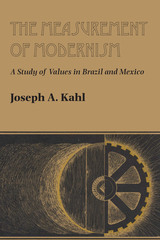
One of the most interesting questions that can be raised about the twentieth century world concerns the degree to which industrialization created a common culture for all peoples. Reported here are the results of an empirical investigation designed to produce instruments to measure those personal values that have been central variables in the theory of modernization of societies.
The purpose of Joseph Kahl’s research is primarily methodological: to advance the description and measurement of those value orientations used by men to organize their occupational careers. It seeks to delineate and measure a set of values that represents a “modern” view of work and life.
The working laboratory was Brazil and Mexico, two countries undergoing rapid industrialization. More than six hundred men in Brazil and more than seven hundred in Mexico responded to questionnaires. In addition, over twenty-five men in each country were asked to sit beside a tape recorder and talk freely of their worldviews. The respondents were divided between inhabitants of the cities of Rio de Janeiro and Mexico City and those who lived in provincial towns of fewer than ten thousand inhabitants. The samples included manual and nonmanual employees.
The results showed that the main variable predicting whether or not a man would tend toward modernism was his social-class position. Middle-class men were much more modern in outlook than working-class men. Residence in a metropolis rather than in a small town also increased modernism, though to a lesser extent. Differences between Brazil and Mexico (and, indeed, the United States) were found to be surprisingly small, of considerably less weight than position in the social structure in predicting value orientations.
The author addresses himself primarily to sociologists and their students who are themselves studying aspects of socio-economic development. His findings, however, cannot fail to be of interest and benefit to social scientists of various disciplines and to all who are concerned with the process of development—planners at the national and local levels, demographers, and businesspeople.
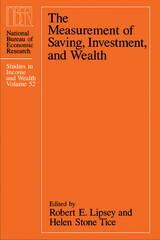
Contributors to this volume investigate ways to improve aggregate and sectoral saving and investment estimates and analyze microdata from recent household wealth surveys. They provide analyses of National Income and Product Account (NIPA) and Flow-of-Funds measures and of saving and survey-based wealth estimates. Conceptual and methodological questions are discussed regarding long-term trends in the U.S. wealth inequality, age-wealth profiles, pensions and wealth distribution, and biases in inferences about life-cycle changes in saving and wealth. Some new assessments are offered for investment in human and nonhuman capital, the government contribution to national wealth, NIPA personal and corporate saving, and banking imputation.

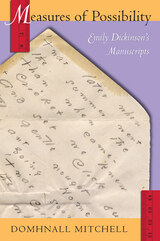
In Measures of Possibility, Domhnall Mitchell sets out to test the hypothesis of Dickinson's textual radicalism, and its consequences for readers, students, and teachers, by looking closely at features such as spacing, the physical direction of the writing, and letter-shapes in handwritten lyric and epistolary texts. Through systematic contextualization and cross-referencing, Mitchell provides the reader with a critical apparatus by which to measure the extent to which contemporary approaches to Dickinson's autograph procedures can reasonably be formulated as corresponding to the poet's own purposes.
READERS
Browse our collection.
PUBLISHERS
See BiblioVault's publisher services.
STUDENT SERVICES
Files for college accessibility offices.
RECENTLY PUBLISHED


UChicago Accessibility Resources
home | accessibility | search | about | contact us
BiblioVault ® 2001 - 2026
The University of Chicago Press