
 A SCHOLARLY BOOK REPOSITORY

This book recounts the story of fitness culture from its beginnings as spectacles of strongmen, weightlifters, acrobats, and wrestlers to its legitimization in the twentieth-century in the form of competitive sports and health and wellness practices. Broderick D. V. Chow shows how these modes of display contribute to the construction and deconstruction of definitions of masculinity.
Attending to its theatrical origins, Chow argues for a more nuanced understanding of fitness culture, one informed by the legacies of self-described Strongest Man in the World Eugen Sandow and the history of fakery in strongman performance; the philosophy of weightlifter George Hackenschmidt and the performances of martial artist Bruce Lee; and the intersections of fatigue, resistance training, and whiteness. Muscle Works: Physical Culture and the Performance of Masculinity moves beyond the gym and across the archive, working out techniques, poses, and performances to consider how, as gendered subjects, we inhabit and make worlds through our bodies.
Muse, the first full-length collection from poet Susan Aizenberg, brings together poems of personal history, elegy, and the complex lives of artists, writers, and “ordinary” people, in an exploration of the relationship between art and life, esthetics and ethics. She is sharp-eyed in purpose, trying to understand “what love is” in a continual shifting between loss and knowledge. While “there is no other world than this one” for Aizenberg, nevertheless she finds a world of affirmation. Aizenberg sings elegant blues, keeps a perfect balance between elaboration and restraint with formal skill that is both impressive and consoling, reminding us that poetry is a form of intelligence in which music creates a world full of mystery and depth.
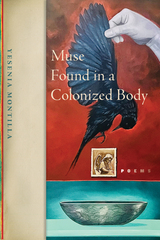
In the book's eponymous poem, Yesenia Montilla writes, “How do you not love yourself when you / constantly survive your undoing just by being precious?" Muse Found in a Colonized Body answers this rhetorical question by populating itself with poems that range far and wide in content — observing pop culture, interrogating history, resisting contemporary injustice — but that share the spinal cord of unflinching love. As Rachel Eliza Griffiths notes, Montilla’s “powers orbit and intuit the lives of Philando Castile, Captain America, Christian Cooper, Karl Marx, Ahmaud Arbery, Eartha Kitt, and many more while stitching our wounded identities, memories, and histories in defiant poems of revision and joyous reclamation.” The vertebral odes of this collection at turns uplift desire, affirm life, celebrate protest, and condemn the violent greed of imperial usurpation that has produced the U.S. as we know it. Both in its criticism and its admiration, Muse Found in a Colonized Body calls upon its readers to rise to the occasion of these lyrics’ profound care.
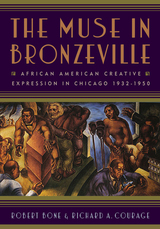
The Muse in Bronzeville, a dynamic reappraisal of a neglected period in African American cultural history, is the first comprehensive critical study of the creative awakening that occurred on Chicago's South Side from the early 1930s to the cold war. Coming of age during the hard Depression years and in the wake of the Great Migration, this generation of Black creative artists produced works of literature, music, and visual art fully comparable in distinction and scope to the achievements of the Harlem Renaissance.
This highly informative and accessible work, enhanced with reproductions of paintings of the same period, examines Black Chicago's "Renaissance" through richly anecdotal profiles of such figures as Richard Wright, Gwendolyn Brooks, Margaret Walker, Charles White, Gordon Parks, Horace Cayton, Muddy Waters, Mahalia Jackson, and Katherine Dunham. Robert Bone and Richard A. Courage make a powerful case for moving Chicago's Bronzeville, long overshadowed by New York's Harlem, from a peripheral to a central position within African American and American studies.
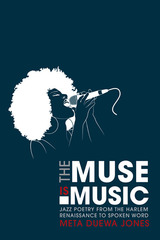
This wide-ranging, ambitiously interdisciplinary study traces jazz's influence on African American poetry from the Harlem Renaissance to contemporary spoken word poetry. Examining established poets such as Langston Hughes, Ntozake Shange, and Nathaniel Mackey as well as a generation of up-and-coming contemporary writers and performers, Meta DuEwa Jones highlights the intersections of race, gender, and sexuality within the jazz tradition and its representation in poetry. Applying prosodic analysis to emphasize the musicality of African American poetic performance, she examines the gendered meanings evident in collaborative performances and in the criticism, images, and sounds circulating within jazz cultures.

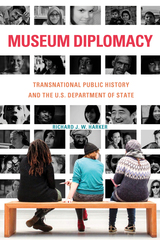
As more historic sites and museums seek to surmount social, cultural, and economic barriers between themselves and their communities in their exhibitions and programming, the Museums Connect program provides important lessons on how to overcome entrenched hierarchies of power in public history.
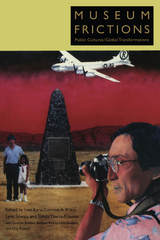
Whether contrasting the transformation of Africa’s oldest museum, the South Africa Museum, with one of its newest, the Lwandle Migrant Labor Museum; offering an interpretation of the audio guide at the Guggenheim Bilbao; reflecting on the relative paucity of art museums in Peru and Cambodia; considering representations of slavery in the United States and Ghana; or meditating on the ramifications of an exhibition of Australian aboriginal art at the Asia Society in New York City, the contributors highlight the frictions, contradictions, and collaborations emerging in museums and heritage sites around the world. The volume opens with an extensive introductory essay by Ivan Karp and Corinne A. Kratz, leading scholars in museum and heritage studies.
Contributors. Tony Bennett, David Bunn, Gustavo Buntinx, Cuauhtémoc Camarena, Andrea Fraser, Martin Hall, Ivan Karp, Barbara Kirshenblatt-Gimblett, Corinne A. Kratz, Christine Mullen Kreamer, Joseph Masco, Teresa Morales, Howard Morphy, Ingrid Muan, Fred Myers, Ciraj Rassool, Vicente Razo, Fath Davis Ruffins, Lynn Szwaja, Krista A. Thompson, Leslie Witz, Tomás Ybarra-Frausto
The Museum in the Cultural Sciences offers the first full English translations of these articles, which remain influential in conversations about the implications of art, historical, and ethnographic museums. They show how sophisticated the discussion of museums and museum display was in the early twentieth century and how much could be gained from revisiting these reflections today. Accompanied by short commentaries from museum professionals, these articles offer an intervention into and intensification of the current debate about the function and purpose of museums.

Author David Saunders, former keeper of conservation and scientific research at the British Museum, explores how to balance the conflicting goals of visibility and preservation under a variety of conditions. Beginning with the science of how light, color, and vision function and interact, he proceeds to offer detailed studies of the impact of light on a wide range of objects, including paintings, manuscripts, textiles, bone, leather, and plastics.
With analyses of the effects of light on visibility and deterioration, Museum Lighting provides practical information to assist curators, conservators, and other museum professionals in making critical decisions about the display and preservation of objects in their collections.
Museum Matters traces the emergence, consolidation, and dispersal of this national museum complex by telling the stories of its objects. Objects that have been separated over time are brought back together in this book in order to shed light on the interactions and processes that have forged things into symbols of science, aesthetics, and politics. The contributors to this volume illuminate how collections came into being or ceased to exist over time, or how objects moved in and out of collections and museum spaces. They explore what it means to move things physically and spatially, as well as conceptually and symbolically.
Museum Matters unravels the concept of the national museum. By unmaking the spaces, frameworks, and structures that form the complicated landscape of national museums, this volume brings a new way to understand the storage, displays, and claims about the Mexican nation’s collections today.
Contributors
Miruna Achim, Christina Bueno, Laura Cházaro, Susan Deans-Smith, Frida Gorbach, Haydeé López Hernández, Carlos Mondragón, Bertina Olmedo Vera, Sandra Rozental, Mario Rufer
A Museum Miscellany celebrates the intriguing world of galleries and museums, from national institutions such as the Louvre, the British Museum, and the Metropolitan Museum of Art to niche collections such as the Lawnmower Museum and the Museum of Barbed Wire. Here you will find a cornucopia of museum-related facts, statistics, and lists, covering everything from museum ghosts, dangerous museum objects, and conservation beetles to treasure troves, museum heists and the Museum of London’s fatberg.
Bursting with quirky facts, intriguing statistics, and legendary curators, this book is the perfect gift for museum aficionados and collectors alike.
Museum Object Lessons for the Digital Age urges readers to question their assumptions through four wide-ranging chapters, each focused on a single object—a box, a pen, an effigy, and a cloak. The book begins with an introduction exploring the legacies of older forms of media and earlier museum practices of collection and then offers a critical analysis of contending theories of knowledge production in museums as it relates to digital projects. From there, Haidy Geismar guides readers in lively, accessible prose through a range of objects, from ethnographic and decorative arts collections, bespoke digital experiments, and even the Google Art Project, revealing what these objects can tell us about both the past and the future of digital collection and display.

In Museum of the Soon to Depart, poet Andy Young searches for her place in history as it unfolds around her through revolution, plague, and natural disaster. As curator of her museum, she navigates her own and others’ suffering through intense observation, from the inner mechanisms of grief and illness to the solace of distance provided by photography. The material of the poet’s own life and events on the world stage intertwine, resulting in poems with a staggering range, inhabiting language in ways that ultimately point to its limits.
WINNER OF FC2’s AMERICAN BOOK REVIEW/RONALD SUKENICK INNOVATE FICTION PRIZE
Step inside a gallery where the strange feels familiar.
A monogrammed cube appears in your town. Your landlord cheats you out of first place in the annual Christmas decorating contest. You need to learn how to love and care for your mate—a paring knife. These situations and more reveal the wondrous play and surreal humor that make up the stories in Amelia Gray’s stunning collection of stories: Museum of the Weird.
Acerbic wit and luminous prose mark these shorts, while sickness and death lurk amidst the humor. Characters find their footing in these bizarre scenarios and manage to fall into redemption and rebirth. Museum of the Weird invites you into its hallways, then beguiles, bewitches, and reveals a writer who has discovered a manner of storytelling all her own.
In the first book ever to explore this museum, James Heffernan argues that ekphrasis stages a battle for mastery between the image and the word. Moving from the epics of Homer, Virgil, and Dante to contemporary American poetry, this book treats the history of struggle between rival systems of representation. Readable and well illustrated, this study of how poets have represented painting and sculpture is a major contribution to our understanding of the relation between the arts.


An eminent historian assembles a career-long group of essays about art collecting and the leadership, strategies, and shifting cultural power of American art museums as they have emerged over the past 150 years.
Museums and their cultural power, and the vagaries of collecting in the United States have fascinated University of Chicago historian Neil Harris for more than sixty years. In this collection of eighteen lively essays from across his distinguished career, Harris addresses period rooms, visitor research, museum education, museum branding and merchandising, and the persistent influence of individual collectors and patrons such as J. Pierpont Morgan, among other important topics. Harris’s geographical range is broad, too, with considerations of museums in Boston, New York, Washington, D.C., Toledo, Chicago, Denver, and elsewhere.
Harris remains one of a very small number of art-minded scholars whose work on museums, taste, and collecting not only can be read by other historians of the United States but can be read with real profit. In a rich and reflective introduction, Harris connects his deep interest in recurring subjects to both his own intellectual biography and broader trends in American scholarship.
The first sustained critique of the ways museum exhibits shape cultural assumptions and political values
Each year the more than seven thousand museums in the United States attract more attendees than either movies or sports. Yet until recently, museums have escaped serious political analysis. The past decade, however, has witnessed a series of unusually acrimonious debates about the social, political, and moral implications of museum exhibitions as varied as the Enola Gay display at the Smithsonian’s Air and Space Museum and the Sensation exhibit at the Brooklyn Museum of Art.
In this important volume, Timothy W. Luke explores museums’s power to shape collective values and social understandings, and argues persuasively that museum exhibitions have a profound effect on the body politic. Through discussions of topics ranging from how the National Holocaust Museum and the Museum of Tolerance in Los Angeles have interpreted the Holocaust to the ways in which the American Museum of Natural History, the Missouri Botanical Gardens, and Tucson’s Arizona-Sonora Desert Museum have depicted the natural world, Luke exposes the processes through which museums challenge but more often affirm key cultural and social realities.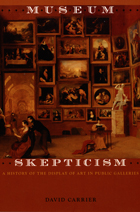
Carrier illuminates the public role of art museums by describing the ways they influence how art is seen: through their architecture, their collections, the narratives they offer museum visitors. He insists that an understanding of the art museum must take into account the roles of collectors, curators, and museum architects. Toward that end, he offers a series of case studies, showing how particular museums and their collections evolved. Among those who figure prominently are Baron Dominique Vivant Denon, the first director of the Louvre; Bernard Berenson, whose connoisseurship helped Isabella Stewart Gardner found her museum in Boston; Ernest Fenollosa, who assembled much of the Asian art collection now in the Museum of Fine Arts, Boston; Albert Barnes, the distinguished collector of modernist painting; and Richard Meier, architect of the J. Paul Getty Center in Los Angeles. Carrier’s learned consideration of what the art museum is and has been provides the basis for understanding the radical transformation of its public role now under way.
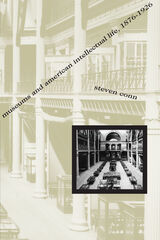
"Conn is an enthusiastic advocate for his subject, an appealing thinker, an imaginative researcher, a scholar at ease with theory and with empirical evidence." —Ann Fabian, Reviews in American History
"Steven Conn's masterly study of late-nineteenth century American museums transports the reader to a strange and wonderful intellectual universe. . . . At the end of the day, Conn reminds us, objects still have the power to fascinate, attract, evoke, and, in the right context, explain." —Christopher Clarke-Hazlett, Journal of American History
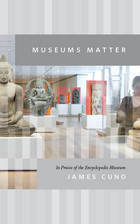
The concept of an encyclopedic museum was born of the Enlightenment, a manifestation of society’s growing belief that the spread of knowledge and the promotion of intellectual inquiry were crucial to human development and the future of a rational society. But in recent years, museums have been under attack, with critics arguing that they are little more than relics and promoters of imperialism. Could it be that the encyclopedic museum has outlived its usefulness?
With Museums Matter, James Cuno, president and director of the Art Institute of Chicago, replies with a resounding “No!” He takes us on a brief tour of the modern museum, from the creation of the British Museum—the archetypal encyclopedic collection—to the present, when major museums host millions of visitors annually and play a major role in the cultural lives of their cities. Along the way, Cuno acknowledges the legitimate questions about the role of museums in nation-building and imperialism, but he argues strenuously that even a truly national museum like the Louvre can’t help but open visitors’ eyes and minds to the wide diversity of world cultures and the stunning art that is our common heritage. Engaging with thinkers such as Edward Said and Martha Nussbaum, and drawing on examples from the politics of India to the destruction of the Bramiyan Buddhas to the history of trade and travel, Cuno makes a case for the encyclopedic museum as a truly cosmopolitan institution, promoting tolerance, understanding, and a shared sense of history—values that are essential in our ever more globalized age.
Powerful, passionate, and to the point, Museums Matter is the product of a lifetime of working in and thinking about museums; no museumgoer should miss it.

All of these developments included interpretive activities that shaped public understanding of the past. Yet it was not until the emergence of the education-oriented National Park Service history program in the 1920s and 1930s that public history found an institutional home that grounded professional practice simultaneously in the values of the emerging discipline and in government service. Even thereafter, tensions between administrators in Washington and practitioners on the ground at National Parks, monuments, and museums continued to define and redefine the scope and substance of the field. The process of definition persists to this day, according to Meringolo, as public historians establish a growing presence in major universities throughout the United States and abroad.
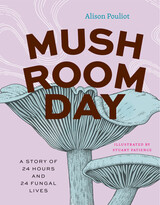
On this mushroom-filled day, ecologist Alison Pouliot tours the world to introduce readers to a fascinating variety of fungi. Each chapter of Mushroom Day introduces a single fungus during a single hour, highlighting twenty-four different species.
In the dark of the night, the green glow of the ghost fungus guides us into the forest to learn about the mysteries of bioluminescence. At dawn, we awaken to find a fairy ring of mushrooms that has appeared overnight like something out of folklore. But we don’t have much time to linger, as we must reach the Italian forest before other porcino hunters forage the morning’s fattest and finest. In the heat of the afternoon, the ripe stench of the stinkhorn might send us out of the woods, while the enticing aroma of the aniseed funnel lures us back in. Late in the evening we spy a fungus known as the witches cauldron and wonder what it might tell us about the future. By the end of our mushroom day, we’ll have glimpsed the diversity of this unique kingdom, met fungus friends that feed and fascinate, and learned how humans can encourage their flourishing.
For each hour, celebrated artist Stuart Patience has depicted these scenes with evocative pen and ink illustrations. Working together to narrate and illustrate these unique moments in time, Pouliot and Patience have created an engaging read that is a perfect way to spend an hour or two—and a true gift for foragers, mycophiles, and anyone who wants to stop and appreciate fungi.

Nestled deep in the Bohemian Forest, Sára’s world is quiet and bound to the rhythms of nature. She has wandered the same wooded trails for seven years, filling her basket with mushrooms, her pockets with memories, and her thoughts with the past she cannot quite escape. The solitude suits her—until the death of her mother forces her to confront the tangled roots of family and the wounds that never fully healed. As Sára meticulously sorts through chanterelles and boletes, she also sorts through childhood recollections and the uneasy inheritance of trauma. The forest offers refuge, but it also holds secrets, and as the seasons shift, so does Sára’s understanding of herself and the complicated bonds that tether her to the world.
With melodic prose and an acute sensitivity to how landscapes shape lives, Viktorie Hanišová crafts a novel of quiet intensity and deep introspection. The Mushroom Gatherer is a haunting meditation on loss and the delicate balance between isolation and connection, perfect for readers drawn to atmospheric fiction.

This completely revised second edition provides all the information necessary to identify mushrooms in the ?eld in the midcontinental region of Iowa, Illinois, Nebraska, Missouri, Minnesota, South Dakota, and Wisconsin: the tallgrass prairies and the western parts of the eastern deciduous forests.
The first edition has been improved in significant ways. The authors have updated scientific names, added photos where there were none and replaced poor photos with better ones, improved the keys, added some species and deleted others, added a section on truffles, and annotated the bibliography. There were originally 224 species; now there are 248. Some of the new photos-125 in all-serve as a second photo for a species, where it is helpful to show details that cannot be viewed in a single photo.
The authors describe each species' cap, gills, stalk, annulus, and season when it is most likely to be seen as well as such characteristics as edibility and toxicity. In their detailed and lively introduction they discuss the economic and environmental aspects of fungi, basic mushroom biology, nomenclature, edibility and toxicity, and habitats and time of fruiting. Most important are the keys, which lead the dedicated reader to the major groups of fungi included in this guide. The section on mushrooms includes keys to their genera in addition to the species within each family discussed, and each of the subsequent sections has a key to the genera and species except where so few species are discussed that a key is not necessary. The volume also includes a glossary and two bibliographies, one with general and one with technical references.
Through their detailed technical descriptions and captivating color photos the authors convey their passionate fondness for these diverse and colorful organisms, whose mysterious appearances and disappearances have long made them objects of fascination.


In addition to crocuses and robins, springtime in Iowa brings out another harbinger of warmer weather: mushrooms. Melting snow and warmer temperatures provide optimal opportunity for mushroom enthusiasts; people of all ages can be found wandering the woods, clutching bags and hoping to spot a clump of elusive morels. Now, for budding naturalists, beginning mushroom hunters, and professionals outside of the area of mycology, Donald Huffman and Lois Tiffany have provided this laminated guide to the most common mushrooms of Iowa.
The guide illustrates forty-three species of Iowa mushrooms using color photos that show the fungi in the wild, from the yellow morel to the destroying angel to the pear-shaped puffball. Huffman and Tiffany give common and scientific names, descriptions of caps and stalks, descriptions of where the mushrooms can be found (on the ground in woods, in clusters on fallen logs, etc.), the season when they are most likely to be seen, plus information on edibility from the “choice edible” yellow morel, much coveted by generations of mushroom hunters, to the poisonous false morel.
Mushrooms’ diverse forms and variety of colors, along with their seemingly mysterious appearances and disappearances, have long made them objects of fascination. Mushrooms in Your Pocket will be an invaluable companion for finding and identifying these unusual and interesting organisms.

The weather patterns and topography of America's Gulf Coast create favorable growing conditions for thousands of species of mushrooms, but the complete region has generally gone uncharted when it comes to mycology. Mushrooms of the Gulf Coast States at last delivers an in-depth, high-quality, user-friendly field guide, featuring more than 1,000 common and lesser-known species—some of which are being illustrated in color for the first time.
Using easily identifiable characteristics and a color key, the authors enable anyone, whether amateur mushroom hunter or professional mycologist, to discern and learn about the numerous species of mushrooms encountered in Texas, Louisiana, Mississippi, Alabama, and Florida. Wild-food enthusiasts will appreciate the information on edibility or toxicity that accompanies each description, and they will also find the book’s detailed instructions for collecting, cleaning, testing, preserving, and cooking wild mushrooms to be of great interest. Providing encyclopedic knowledge in a handy format that fits in a backpack, Mushrooms of the Gulf Coast States is a must-have for any mushroom lover.

Fusing general interest in mushrooming with serious scholarship, Mushrooms of the Midwest describes and illustrates over five hundred of the region's mushroom species. From the cold conifer bogs of northern Michigan to the steamy oak forests of Missouri, the book offers a broad cross-section of the fungi, edible and not, that can be found growing in the Midwest’s diverse ecosystems.
With hundreds of color illustrations, Mushrooms of the Midwest is ideal for amateur and expert mushroomers alike. Michael Kuo and Andrew Methven provide identification keys and thorough descriptions. The authors discuss the DNA revolution in mycology and its consequences for classification and identification, as well as the need for well-documented contemporary collections of mushrooms.
Unlike most field guides, Mushrooms of the Midwest includes an extensive introduction to the use of a microscope in mushroom identification. In addition, Kuo and Methven give recommendations for scientific mushroom collecting, with special focus on ecological data and guidelines for preserving specimens. Lists of amateur mycological associations and herbaria of the Midwest are also included. A must-have for all mushroom enthusiasts!
"This selection of [Cone's] writings includes all the most incandescent and influential articles. We should have had such a book long ago."—Joseph Kerman, University of California at Berkeley
Winner of the ASCAP-Deems Taylor Award for 1990
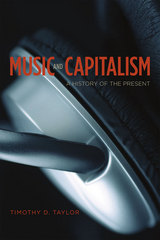
Taylor explores everything from the branding of musicians to the globalization of music to the emergence of digital technologies in music production and consumption. Drawing on interviews with industry insiders, musicians, and indie label workers, he traces both the constricting forces of bottom-line economics and the revolutionary emergence of the affordable home studio, the global internet, and the mp3 that have shaped music in different ways. A sophisticated analysis of how music is made, repurposed, advertised, sold, pirated, and consumed, Music and Capitalism is a must read for anyone who cares about what they are listening to, how, and why.
Contributors are Nimrod Baranovitch, Adriana Helbig, Javier F. Leon, Ana María Ochoa, Silvia Ramos, Helen Rees, Felicia Sandler, Amy Ku'uleialoha Stillman, Ricardo D. Trimillos, Andrew N. Weintraub, and Bell Yung.
Enrico Fubini offers a sampling of English, French, German, and Italian writings on topics ranging from Enlightenment rationalism and the theories of harmony to German musical culture and the polemics on J. S. Bach. Organized by topic and historical period these selections go beyond writings dealing exclusively with specific musical works to larger issues of theory and the reception of musical ideas in the culture at large. The selections are from books, journals, newspapers, pamphlets, and letters; the contributors include Diderot, Rousseau, Voltaire, Grimm, Alfieri, Rameau, Quantz, Gluck, Tartini, Leopold and W. A. Mozart, and C. P .E. Bach. Many are translated here for the first time.
With general and chapter introductions, restored footnotes, and other valuable annotations, and a biographical appendix, this anthology will interest music scholars, students, and teachers.
Offering a radically new theoretical framework for understanding digital media through music, this volume redresses anthropology’s frequent oversight of music as a topic of study. By positioning music as an expansive subject for digital anthropology, Georgina Born demonstrates how the field can build interdisciplinary links to music and sound studies, digital media studies, and science and technology studies. Music and Digital Media includes five original ethnographies spanning pop, folk, and crossover musical genres throughout Kenya, Argentina, India, Canada, and the UK. A further three chapters engage experimentally with the platforms of music-making and distribution, presenting pioneering ethnographies of an extra-legal peer-to-peer site and the streaming platform Spotify, a series of prominent internet-mediated music genres, and the first ethnography of a global software package, the interactive music platform Max MSP.

A cross-section of case studies from the Central African Republic, Finland, and Turkey addresses issues of how performance reflects gender and furthers other social goals, such as negotiating identity and transforming consciousness. Articles on Croatian and Serbian popular music and on the changing circumstances of women musicians in war-torn Ethiopia and post-Soviet Estonia consider the fate of fragile constructions of gender and nationhood in times of war or crisis. Other essays consider the relationship of gender to digital sound technology--in terms of access to the field, interactions among musicians, and aesthetic decisions--and gender issues in writing the musical lives of women composers and performers.
Articulating a theoretical agenda that encompasses perspectives from vastly different musical cultures, this important collection shows how music can help bridge the radical transformations of individuals, groups, and nations.
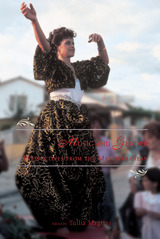
From Spanish flamenco to Algerian raï, Greek rebetika to Turkish pop music, Sephardi and Berber songs to Egyptian belly dancers, the contributors cover an exceedingly wide range of geographic and musical territories. Individual essays examine musical behavior as representation, assertion, and sometimes transgression of gender identities; compare men's and women's roles in specific musical practices and their historical evolution; and explore how music and gender relate to such issues as ethnicity, nationality, and religion. Anyone studying the musics or cultures of the Mediterranean, or more generally the relations between gender and the arts, will welcome this book.
Contributors:
Caroline Bithell, Joaquina Labajo, Jane C. Sugarman, Carol Silverman, Goffredo Plastino, Gail Holst-Warhaft, Edwin Seroussi, Marie Virolle, Terry Brint Joseph, Deborah Kapchan, Karin van Nieuwkerk, Svanibor Pettan, Martin Stokes, Philip V. Bohlman

This book explores the questions of how music came to be associated with German identity, when and how Germans came to be regarded as the "people of music," and how music came to be designated as "the most German art." Drawing on the expertise of leading scholars in German history, musicology, and German literature, the essays assembled here examine philosophy, literature, politics, and social currents, as well as the creation and performance of folk music, art music, church music, jazz, and pop to explore the ways in which music has continued to play a central role in the German national imagination and in shaping German identity.

A PDF version of this book is available for free in open access via the OAPEN Library platform, www.oapen.org It has been made available under a Creative Commons Attribution 4.0 International Public License and is part of Knowledge Unlatched.

Music and Maestros was first published in 1952. Minnesota Archive Editions uses digital technology to make long-unavailable books once again accessible, and are published unaltered from the original University of Minnesota Press editions.
Music lovers all over the United States as well as in other countries have heard the music of the Minneapolis Symphony Orchestra under the direction of such noted conductors as Dimitri Mitropoulos and Eugene Ormandy. Now they can enjoy the story behind those concerts, records, and radio broadcasts through this intimate history of the men and music that have made the orchestra famous.
The story begins with the lively musical activities of a frontier town, the antecedents of the symphony orchestra that took shape at the turn of the century. From the early years of the organization under the batons of Emil Oberhoffer and Henri Verbrugghen, the chronicle rises to the period of the great contemporaries, Ormandy, Mitropoulos, and Antal Dorati. There is a wealth of detail on the career of Mitropoulos, the renowned New York Philharmonic conductor who reached his present stature during his leadership of the Minneapolis orchestra.The extensive concert tours that have earned for the Minneapolis symphony the nickname of "orchestra on wheels" are recalled in anecdotes that will evoke many a chuckle and plenty of amazement. Accounts of early recording sessions offer fascinating sidelights on this aspect of musical history. A complete list of the works performed by the orchestra during the past fifty years provides a significant record of changing trends in musical tastes. A roster of al the players who have been members of the orchestra is given, and the reference section also includes a complete list of out-of-town engagements and a list of the orchestra's recordings which are available.
In Indian culture, music forms an integral part of a broad framework of ideas that includes philosophy, cosmology, religion, literature, and science. Rowell works with the known theoretical treatises and the oral tradition in an effort to place the technical details of musical practice in their full cultural context. Many quotations from the original Sanskrit appear here in English translation for the first time, and the necessary technical information is presented in terms accessible to the nonspecialist. These features, combined with Rowell's glossary of Sanskrit terms and extensive bibliography, make Music and Musical Thought in Early India an excellent introduction for the general reader and an indispensable reference for ethnomusicologists, historical musicologists, music theorists, and Indologists.
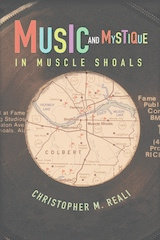
The forceful music that rolled out of Muscle Shoals in the 1960s and 1970s shaped hits by everyone from Wilson Pickett and Aretha Franklin to the Rolling Stones and Paul Simon. Christopher M. Reali's in-depth look at the fabled musical hotbed examines the events and factors that gave the Muscle Shoals sound such a potent cultural power. Many artists trekked to FAME Studios and Muscle Shoals Sound in search of the sound of authentic southern Black music—and at times expressed shock at the mostly white studio musicians waiting to play it for them. Others hoped to draw on the hitmaking production process that defined the scene. Reali also chronicles the overlooked history of Muscle Shoals's impact on country music and describes the region's recent transformation into a tourism destination.
Multifaceted and informed, Music and Mystique in Muscle Shoals reveals the people, place, and events behind one of the most legendary recording scenes in American history.
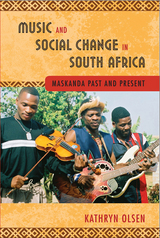
Working closely with translated song lyrics and musical notation-and applying musical and socio-political analysis to this music and its cultural context-Olsen argues that maskanda offers insight into how the post-apartheid ideal of social transformation is experienced by those who were marginalized for most of the twentieth century.
Drawing on a decade of research, Olsen strives to demystify the Zulu part of contemporary experience in South Africa and to reveal some of the complexities of the social, economic, and political landscape of contemporary South Africa.
What does music in Portugal and Spain reveal about the relationship between national and regional identity building? How do various actors use music to advance nationalism? How have state and international heritage regimes contributed to nationalist and regionalist projects? In this collection, contributors explore these and other essential questions from a range of interdisciplinary vantage points. The essays pay particular attention to the role played by the state in deciding what music represents Portuguese or Spanish identity. Case studies examine many aspects of the issue, including local recording networks, so-called national style in popular music, and music’s role in both political protest and heritage regimes. Topics include the ways the Salazar and Franco regimes adapted music to align with their ideological agendas; the twenty-first-century impact of UNESCO’s Intangible Cultural Heritage program on some of Portugal and Spain's expressive practices; and the tensions that arise between institutions and community in creating and recreating meanings and identity around music.
Contributors: Ricardo Andrade, Vera Marques Alves, Salwa El-Shawan Castelo-Branco, Cristina Sánchez-Carretero, José Hugo Pires Castro, Paulo Ferreira de Castro, Fernán del Val, Héctor Fouce, Diego García-Peinazo, Leonor Losa, Josep Martí, Eva Moreda Rodríguez, Pedro Russo Moreira, Cristina Cruces Roldán, and Igor Contreras Zubillaga
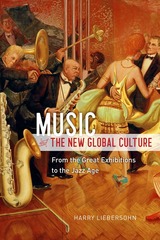
Each essay follows the lead of the substantial introduction, which reviews the history of race in European and American, non-Western and global musics, placing it within the contexts of the colonial experience and the more recent formation of "world music." Offering a bold, new revisionist agenda for musicology in a postmodern, postcolonial world, this book will appeal to students of culture and race across the humanities and social sciences.
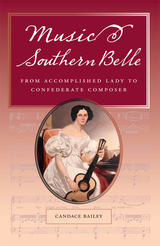
Candace Bailey’s exploration of the intertwining worlds of music and gender shows how young southern women pushed the boundaries of respectability to leave their unique mark on a patriarchal society. Before 1861, a strictly defined code of behavior allowed a southern woman to identify herself as a “lady” through her accomplishments in music, drawing, and writing, among other factors. Music permeated the lives of southern women, and they learned appropriate participation through instruction at home and at female training institutions. A belle’s primary venue was the parlor, where she could demonstrate her usefulness in the domestic circle by providing comfort and serving to enhance social gatherings through her musical performances, often by playing the piano or singing. The southern lady performed in public only on the rarest of occasions, though she might attend public performances by women. An especially talented lady who composed music for a broader audience would do so anonymously so that her reputation would remain unsullied.
The tumultuous Civil War years provided an opportunity for southern women to envision and attempt new ways to make themselves useful to the broader, public society. While continuing their domestic responsibilities and taking on new ones, young women also tested the boundaries of propriety in a variety of ways. In a broad break with the past, musical ladies began giving public performances to raise money for the war effort, some women published patriotic Confederate music under their own names, supporting their cause and claiming public ownership for their creations. Bailey explores these women’s lives and analyzes their music. Through their move from private to public performance and publication, southern ladies not only expanded concepts of social acceptability but also gained a valued sense of purpose.
Music and the Southern Belle places these remarkable women in their social context, providing compelling insight into southern culture and the intricate ties between a lady’s identity and the world of music. Augmented by incisive analysis of musical compositions and vibrant profiles of composers, this volume is the first of its kind, making it an essential read for devotees of Civil War and southern history, gender studies, and music.
Fiddlers, step dancers, storytellers, traditional singers, and folklorists staged Montreal’s first veillée in 1919. All that was missing, announced one of the organizers, was a magic carpet to transport the audience into the countryside and a kiss of forgetfulness to erase the woes of modern life.
Laura Risk tells the story of the veillées and explores how these commercial performances of idealized rural life became part of Quebec’s cultural heritage. Her in-depth examinations of key performances and recordings follow traditional music and dance from the stage onto radio, records and other audio media, and television. Throughout, Risk documents how veillées redefined folklore in twentieth-century Quebec and illuminates how their distinctive framing of traditional musicians and repertoire impacts the performance and reception of the music to the present day.
Astute and evocative, Music and the Staged Veillée in Quebec reveals the music, dancing, call-and-response songs, and extramusical associations winding through century-long conversations about nation, culture, and identity in Quebec.
Music and Theater in Minnesota History was first published in 1958. Minnesota Archive Editions uses digital technology to make long-unavailable books once again accessible, and are published unaltered from the original University of Minnesota Press editions.
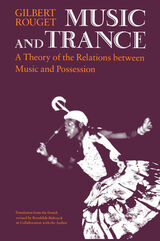
Rouget rigorously examines a worldwide corpus of data from ethnographic literature, but he also draws on the Bible, his own fieldwork in West Africa, and the writings of Plato, Ghazzali, and Rousseau. To organize this immense store of information, he develops a typology of trance based on symbolism and external manifestations. He outlines the fundamental distinctions between trance and ecstasy, shamanism and spirit possession, and communal and emotional trance. Music is analyzed in terms of performers, practices, instruments, and associations with dance. Each kind of trance draws strength from music in different ways at different points in a ritual, Rouget concludes. In possession trance, music induces the adept to identify himself with his deity and allows him to express this identification through dance.
Forcefully rejecting pseudo-science and reductionism, Rouget demystifies the so-called theory of the neurophysiological effects of drumming on trance. He concludes that music's physiological and emotional effects are inseparable from patterns of collective representations and behavior, and that music and trance are linked in as many ways as there are cultural structures.
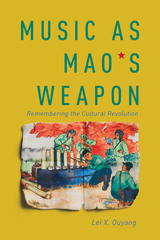
China's Cultural Revolution (1966-1976) produced propaganda music that still stirs unease and, at times, evokes nostalgia. Lei X. Ouyang uses selections from revolutionary songbooks to untangle the complex interactions between memory, trauma, and generational imprinting among those who survived the period of extremes. Interviews combine with ethnographic fieldwork and surveys to explore both the Cultural Revolution's effect on those who lived through it as children and contemporary remembrance of the music created to serve the Maoist regime. As Ouyang shows, the weaponization of music served an ideological revolution but also revolutionized the senses. She examines essential questions raised by this phenomenon, including: What did the revolutionization look, sound, and feel like? What does it take for individuals and groups to engage with such music? And what is the impact of such an experience over time?
Perceptive and provocative, Music as Mao's Weapon is an insightful look at the exploitation and manipulation of the arts under authoritarianism.
Music as Metaphor was first published in 1960. Minnesota Archive Editions uses digital technology to make long-unavailable books once again accessible, and are published unaltered from the original University of Minnesota Press editions.
A professor of music for many years, Mr. Ferguson here sets forth his theories on how music conveys meaning to its listeners. He identifies and discusses the elements of musical expression - tonal stress and rhythm - and correlates them with the nervous tensions and motor impulses which characterize human emotion. Through this correlation, he shows how music portrays universally understood emotional states and ideas. He relates these principles to music criticism, proposing a new system for such criticism.
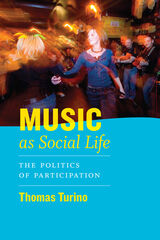
Turino begins by developing tools to think about the special properties of music and dance that make them fundamental resources for connecting with our own lives, our communities, and the environment. These concepts are then put into practice as he analyzes various musical examples among indigenous Peruvians, rural and urban Zimbabweans, and American old-time musicians and dancers. To examine the divergent ways that music can fuel social and political movements, Turino looks at its use by the Nazi Party and by the American civil rights movement. Wide-ranging, accessible to anyone with an interest in music’s role in society, and accompanied by a compact disc, Music as Social Life is an illuminating initiation into the power of music.
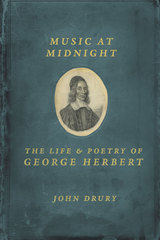
As Drury writes in his preface, Herbert lived “a quiet life with a crisis in the middle of it.” Drury follows Herbert from his academic success as a young man, seemingly destined for a career at court, through his abandonment of those hopes, his devotion to the restoration of a church in Huntingdonshire, and his final years as a country parson. Because Herbert’s work was only published posthumously, it has always been difficult to know when or in what context Herbert wrote his poems. But Drury skillfully places readings of the poems into his narrative at biographically credible moments, allowing us to appreciate not only Herbert’s frame of mind while writing, but also the society that produced it. A sensitive critic of Herbert’s poems as well as a theologian, Drury does full justice to the spiritual dimension of Herbert’s work. In addition, he reveals the occasions of sorrow, happiness, regret, and hope that Herbert captured in his poetry and that led T. S. Eliot to write, “What we can confidently believe is that every poem . . . is true to the poet’s experience.”
Painting a picture of a man torn between worldly ambition and spiritual life, Music at Midnight is an eloquent biography that breathes new life into some of the greatest English poems ever written.
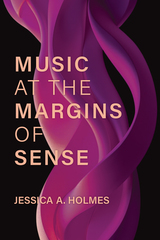
In Music at the Margins of Sense, Jessica A. Holmes contests prevailing misconceptions associated with deafness and hearing in Western music by turning to the musical experiences of deaf, hard of hearing, and hearing disabled musicians in order to impart a multisensory, multimodal conception of music and musicianship. Through a range of examples drawn from music history, popular music, recent film, and popular science, Holmes reveals that “deafness” is mistakenly understood as a state of total silence and heightened tactile sensation, a stigmatizing trope she calls the “figure of deafness.”
Holmes explores music-making spanning auditory, visual-spatial, vibrotactile, and non-sonorous modalities, including the creative practice of Christine Sun Kim, all-deaf electronic dance music raves, the musical experiences of hearing aid users, and music and musical instruments devised to mitigate tinnitus and hyperacusis. By examining the cultural production of “natural” hearing in the design, branding, and musical programming of digital hearing aids, Holmes offers a reappraisal of hearing that defies naturalized perceptual processes and auditory thresholds, the idealization of sonic fidelity, and biologically driven conceptions of musicality. Music at the Margins of Sense champions an understanding of musicianship that embraces the lived experience of disability as a vital locus of musical creativity and expertise.
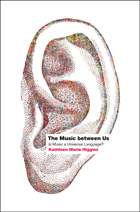
An edited volume that examines the data and statistics that are key to the music industry.
The music industries are fueled by statistics: sales targets, breakeven points, success ratios, royalty splits, website hits, ticket revenues, listener figures, piracy abuses, and big data. Statistics are of consequence. They influence the music that consumers get to hear, they determine the revenues of music makers, and they shape the policies of governments and legislators. Yet many of these statistics are generated by the music industries themselves, and their accuracy can be questioned. Music by Numbers sets out to explore this shadowy terrain.
This edited collection provides the first in-depth examination of the use and abuse of statistics in the music industry. Written by noted music business scholars and practitioners in the field, the book addresses five key areas in which numbers are employed: sales and awards; music industry policy; live music; music piracy; and digital solutions. The authors address these subjects from a range of perspectives: some of them test the veracity of this data and explore its tactical use by music businesses; others help to generate these numbers by developing surveys and online projects and offering candid observations.
The aim of this collection is to expose the culture and politics of data. Music industry statistics are pervasive, but despite this ubiquity they are underexplored. This book offers a corrective by providing new ways by which to learn music by numbers.
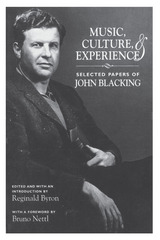
This volume brings together in one convenient source eight of Blacking's most important theoretical papers along with an extensive introduction by the editor. Drawing heavily on his fieldwork among the Venda people of South Africa, these essays reveal his most important theoretical themes such as the innateness of musical ability, the properties of music as a symbolic or quasi-linguistic system, the complex relation between music and social institutions, and the relation between scientific musical analysis and cultural understanding.
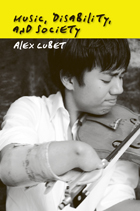
Musical talent in Western culture is regarded as an extraordinary combination of technical proficiency and interpretative sensitivity. In Music, Disability, and Society, Alex Lubet challenges the rigid view of technical skill and writes about music in relation to disability studies. He addresses the ways in which people with disabilities are denied the opportunity to participate in music.
Elaborating on the theory of "social confluence," Lubet provides a variety of encounters between disability and music to observe radical transformations of identity. Considering hand-injured and one-handed pianists; the impairments of jazz luminaries Django Reinhardt, Horace Parlan, and "Little" Jimmy Scott; and the "Blind Orchestra" of Cairo, he shows how the cultural world of classical music contrasts sharply with that of jazz and how musicality itself is regarded a disability in some religious contexts. Music, Disability, and Society also explains how language difference can become a disability for Asian students in American schools of music, limiting their education and careers.
Lubet offers pungent criticism of the biases in music education and the music profession, going so far as to say that culture disables some performers by adhering to rigid notions of what a musician must look like, how music must be played, who may play it, and what (if any) is the legitimate place of music in society. In Music, Disability, and Society, he convincingly argues that where music is concerned, disability is a matter of culture, not physical impairment.
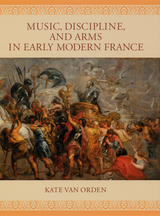
The great pressure on French noblemen to take up the life of the warrior gave rise to bellicose art forms such as sword dances and equestrian ballets. Far from being construed as effeminizing, such combinations of music and the martial arts were at once refined and masculine-a perfect way to display military prowess. The incursion of music into riding schools and infantry drills contributed materially to disciplinary order, enabling the larger and more effective armies of the seventeenth century. This book is a history of the development of these musical spheres and how they brought forth new cultural priorities of civility, military discipline, and political harmony. Music, Discipline, and Arms in Early Modern France effectively illustrates the seminal role music played in mediating between the cultural spheres of letters and arms.
In this original new work, Constantine Chatzipapatheodoridis pulls back the curtain on the production of camp as a queer praxis that constantly feeds the diva-queer culture relationship. By examining the iconography and theatrics of the diva tour show, the author presents a performance studies reading of camp and the culture-sharing process of production and audience reception. Detailed case studies take a close look at popular contemporary performers like Madonna, Kylie Minogue, Beyoncé, and Lady Gaga, and a final section analyzes audience drag in the arena space. Chatzipapatheodoridis also investigates the relationship between camp theory as an academic subject and the figure of the diva as an expression of camp.
A rich and insightful revival of the question of camp in contemporary queer performance, The Music Diva Spectacle seeks to establish how camp is appropriated by the diva and explores how this affects—and is in turn appropriated by—the audience.
Exploring the ideas, innovations, and challenges shaping the future of music education.
This solid collection of essays, written by outstanding American music educators, reflects the current issues in music education and the ongoing attempt to overcome obstacles to excellence in teaching music. It stands as the most important and far-ranging professional overview of the discipline since the publication of the landmark Basic Concepts in Music Education in 1958, and early reviews indicate that it will generate both critical discussion and acclaim.
Several themes recur:(1) that music and, therefore, music education exist in a variety of social and cultural contexts, even when examined in controlled situations; (2) that music teaching has not yet freed itself from its traditional over-reliance on technical training, in spite of attention to aesthetic education; and (3) that there is a remarkable undercurrent of agreement among this diverse group of authors concerning the profession’s basic obligation to expand and refine the musical sensitivity of all age group of Americans. This book reflects some advanced thinking about these themes, which establishes new foundations for next generation theorizing and research.

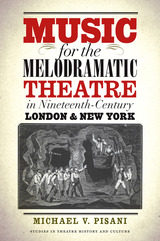
Mining old manuscripts and newspapers, he finds that starting in the 1790s, theatrical managers in Britain and the United States began to rely on music to play an interpretive role in melodramatic productions. During the nineteenth century, instrumental music—in addition to song—was a common feature in the production of stage plays.
The music played by instrumental ensembles not only enlivened performances but also served other important functions. Many actors and actresses found that accompanimental music helped them sustain the emotional pitch of a monologue or dialogue sequence. Music also helped audiences to identify the motivations of characters. Playwrights used music to hold together the hybrid elements of melodrama, heighten the build toward sensation, and dignify the tragic pathos of villains and other characters. Music also aided manager-directors by providing cues for lighting and other stage effects. Moreover, in a century of seismic social and economic changes, music could provide a moral compass in an uncertain moral universe.
Featuring dozens of musical examples and images of the old theatres, Music for the Melodramatic Theatre charts the progress of the genre from its earliest use in the eighteenth century to the elaborate stage productions of the very early twentieth century.
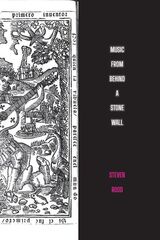
The poems in Steven Rood’s newest collection take on a musical sensibility as they flow from the poet’s sixty years as a classical guitarist who remains preoccupied with the tonalities of daily life. Each poem in music from behind a stone wall comes together to build a multi-layered symphony that reveals the delights and travails of family life and moments of intimate connection with animals and plants. At the core of the book are poems considering the overwhelming task of trying to communicate the essence of musical experience via the written word. This is a book of grief and joy sung with lyric acuity, vivid images, and formal variation.

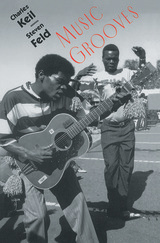
Music Grooves ranges from jazz, blues, polka, soul, rock, world beat, rap, karaoke, and other familiar genres to major scholarly debates in music theory, ethnomusicology, and popular culture studies. The authors develop and create links between the fields of ethnomusicology and popular culture studies and relate the contents of musics from America, Greece, Cuba, Africa, and Papua New Guinea to artists as diverse as James Brown, Aretha Franklin, L'il Wally Jagiello, Bo Diddley, Walt Solek, Madonna, Paul Simon, Miles Davis, Thelonious Monk, and Billie Holiday.
Keil and Feld offer a fascinating view of the shaping of central ideas and terms in ethnomusicology such as "engendered feeling," "interpretive moves," "participatory discrepancies," "iconicity of style," "people's music," "schizophonia," and "lift-up-over sounding." From Keil's critique of Leonard Meyer's musicological approach to Feld's recent work on world beat, this volume covers an array of vital issues in media studies, musicology and ethnomusicology, popular culture, anthropology, and sociology. It will interest anyone concerned with the nature and meaning of music in the modern world.
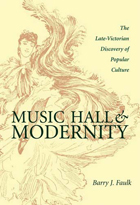
The late-Victorian discovery of the music hall by English intellectuals marks a crucial moment in the history of popular culture. Music Hall and Modernity demonstrates how such pioneering cultural critics as Arthur Symons and Elizabeth Robins Pennell used the music hall to secure and promote their professional identity as guardians of taste and national welfare. These social arbiters were, at the same time, devotees of the spontaneous culture of “the people.”
In examining fiction from Walter Besant, Hall Caine, and Henry Nevinson, performance criticism from William Archer and Max Beerbohm, and late-Victorian controversies over philanthropy and moral reform, scholar Barry Faulk argues that discourse on music-hall entertainment helped consolidate the identity and tastes of an emergent professional class. Critics and writers legitimized and cleaned up the music hall, at the same time allowing issues of class, respect, and empowerment to be negotiated.
Music Hall and Modernity offers a complex view of the new middle-class, middlebrow mass culture of late-Victorian London and contributes to a body of scholarship on nineteenth-century urbanism. The book will also interest scholars concerned with the emergence of a professional managerial class and the genealogy of cultural studies.
Contributors. Annegret Fauser, Bryan Gilliam, Linda Hutcheon, Michael Hutcheon, Kim H. Kowalke, Neil Lerner, Tamara Levitz, Elizabeth Paley

Although the use of music for extramusical purposes has been a part of American culture for some time, the phenomenon remained largely unknown to the general public until revelations became widespread of startling military practices during the second Iraq War. In Music in American Crime Prevention and Punishment, Lily E. Hirsch explores the related terrain at the intersection of music and law, demonstrating the ways in which music has become a tool of law enforcement and justice through: police and community leaders’ use of classical music in crime deterrence and punishment; the use of rap lyrics as prosecutorial evidence; allegations of music as incitement to violence; and the role of music in U.S. prisons and in detention centers in Guantanamo, Iraq, and Afghanistan.
In the course of her study, Hirsch asks several questions: How does the law treat music? When and why does music participate in the law? How does music influence the legal process? How does the legal process influence music? And how do these appropriations affect the Romantic ideals underlying our view of music?

Eclectic and essential, Music in Black American Life, 1600–1945 offers specialists and students alike a gateway to the history and impact of Black music in the United States.
Contributors: R. Reid Badger, Rae Linda Brown, Samuel A. Floyd Jr., Sandra Jean Graham, Jeffrey Magee, Robert M. Marovich, Harriet Ottenheimer, Eileen Southern, Katrina Dyonne Thompson, Stephen Wade, and Charles Wolfe

Part sourcebook and part survey of historic music scholarship, Music in Black American Life, 1945–2020 collects groundbreaking work that redefines our view of Black music and its place in American music history.
Contributors: Nelson George, Wayne Everett Goins, Claudrena N. Harold, Eileen M. Hayes, Loren Kajikawa, Robin D. G. Kelley, Tammy L. Kernodle, Cheryl L. Keyes, Gwendolyn Pough, Bernice Johnson Reagon, Mark Tucker, and Sherrie Tucker
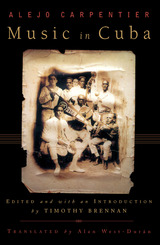
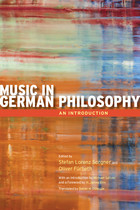
Though many well-known German philosophers have devoted considerable attention to music and its aesthetics, surprisingly few of their writings on the subject have been translated into English. Stefan Lorenz Sorgner, a philosopher, and Oliver Fürbeth, a musicologist, here fill this important gap for musical scholars and students alike with this compelling guide to the musical discourse of ten of the most important German philosophers, from Kant to Adorno.
Music in German Philosophy includes contributions from a renowned group of ten scholars, including some of today’s most prominent German thinkers, all of whom are specialists in the writers they treat. Each chapter consists of a short biographical sketch of the philosopher concerned, a summary of his writings on aesthetics, and finally a detailed exploration of his thoughts on music. The book is prefaced by the editors’ original introduction, presenting music philosophy in Germany before and after Kant, as well as a new introduction and foreword to this English-language addition, which places contemplations on music by these German philosophers within a broader intellectual climate.
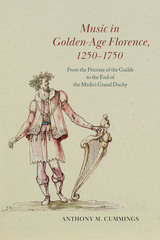
Florence is justly celebrated as one of the world’s most important cities. It enjoys mythic status and occupies an enviable place in the historical imagination. But its musico-historical importance is not as well understood as it should be. If Florence was the city of Dante, Michelangelo, and Galileo, it was also the birthplace of the madrigal, opera, and the piano. Music in Golden-Age Florence, 1250–1750 recounts Florence’s principal contributions to music and the history of how music was heard and cultivated in the city, from civic and religious institutions to private patronage and the academies. This book is an invaluable complement to studies of the art, literature, and political thought of the late-medieval and early-modern eras and the quasi-legendary figures in the Florentine cultural pantheon.
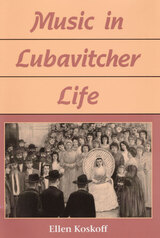
Drawing on twenty years of close study, Ellen Koskoff illuminates the world of the Lubavitcher Hasidim, a community of ultra-orthodox Jews centered in the Crown Heights section of Brooklyn, New York. Her classic ethnography offers an unprecedented look at nigunim, a body of paraliturgical, folk, and popular melodies that Lubavitchers regard as a primary form of spiritual communication with the divine.
Along with vivid descriptions of musical performance in religious contexts and private gatherings, Koskoff details the musical sounds and structures that symbolize Lubavitcher social relations. In particular, she examines the differences between Lubavitcher women's and men's music making and the underlying beliefs and assumptions that give rise to gendered musical behaviors, such as the dictum that prohibits men from hearing a woman sing.
Insightful and distinctive, Music in Lubavitcher Life combines anecdotes with history and musical analysis to reveal music making among the Lubavitchers as a gateway to their ideas about the nature of human spirituality, human social interaction, and God.
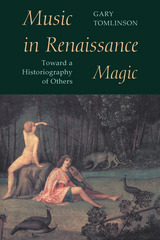
In Music in Renaissance Magic, Gary Tomlinson describes some of these connections and offers a fresh view of the development of early modern thought in Italy. Raising issues essential to postmodern historiography—issues of cultural distance and our relationship to the others who inhabit our constructions of the past —Tomlinson provides a rich store of ideas for students of early modern culture, for musicologists, and for historians of philosophy, science, and religion.
"A scholarly step toward a goal that many composers have aimed for: to rescue the idea of New Age Music—that music can promote spiritual well-being—from the New Ageists who have reduced it to a level of sonic wallpaper."—Kyle Gann, Village Voice
"An exemplary piece of musical and intellectual history, of interest to all students of the Renaissance as well as musicologists. . . . The author deserves congratulations for introducing this new approach to the study of Renaissance music."—Peter Burke, NOTES
"Gary Tomlinson's Music in Renaissance Magic: Toward a Historiography of Others examines the 'otherness' of magical cosmology. . . . [A] passionate, eloquently melancholy, and important book."—Anne Lake Prescott, Studies in English Literature

Music historian James Wierzbicki sheds light on how the Fifties' pervasive moods affected its sounds. Moving across genres established--pop, country, opera--and transfigured--experimental, rock, jazz--Wierzbicki delves into the social dynamics that caused forms to emerge or recede, thrive or fade away. Red scares and white flight, sexual politics and racial tensions, technological progress and demographic upheaval--the influence of each rooted the music of this volatile period to its specific place and time. Yet Wierzbicki also reveals the host of underlying connections linking that most apprehensive of times to our own uneasy present.

I’ve been a professional journalist for over 50 years now, a prose writer whose favorite form is the essay. But there are emotions that poetry seems to capture better than prose. Not unique emotions because there are no such things as unique emotions, only the emotions shared by all of us, shared by the whole world. For me, prose seems much more observational, more a reflection of what our senses present and whatever meaning we attach to that reflection. Poetry is more an attempt to understand our feelings by digging down into ourselves like a spelunker explores a cave. The cave is ourselves, and we try to discover—or more probably uncover—what's down there that makes us human. In these few poems I've tried to throw a small flashlight beam on a few of those places down there.
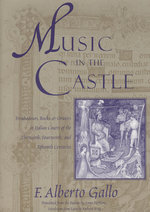
In the first of three elegant essays, Gallo examines the troubadours who traveled to northern Italian courts from Provence during the thirteenth century. He discusses their performance practices, the verbal and musical sophistication of their songs, and their role in the daily life of courtiers at Genoa, Ferrara, and Monferrato. The second essay concerns the now dispersed collection of the Visconti library at Pavia. Here, Gallo examines how this collection expressed the tastes of the fourteenth-century court of Giangaleazzo Visconti, how French arts were imported and imitated at Pavia, and the effects this had on music heard at the court. In the final essay, Gallo looks at the fifteenth-century tradition of improvised music, and especially the virtuoso lute player Pietrobono. Mythologized in literary circles of his day, Pietrobono becomes a point of departure for a discussion of the entire vision of music of Italian humanists, from Guarino Veronese to Aurelio Brandolini.
"Professor Lowinsky's method is the only kind of 'writing about music' that I value."—Igor Stravinsky
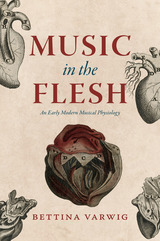
Music in the Flesh reimagines the lived experiences of music-making subjects—composers, performers, listeners—in the long seventeenth century. There are countless historical testimonies of the powerful effects of music upon the early modern body; it is described as moving, ravishing, painful, dangerous, curative, and miraculous while affecting “the circulation of the humors, the purification of the blood, the dilation of the vessels and pores.”
How were these early modern European bodies constituted that music generated such potent bodily-spiritual effects? Bettina Varwig argues that early modern music-making practices challenge our modern understanding of human nature as a mind-body dichotomy. Instead, they persistently affirm a more integrated anthropology, in which body, soul, and spirit remain inextricably entangled. Moving with ease across repertories and regions, sacred and vernacular musics, and domestic and public settings, Varwig sketches a “musical physiology” that is as historically illuminating as it is relevant for present-day performance. This book makes a significant contribution not just to the history of music, but also to the history of the body, the senses, and the emotions, revealing music as a unique access point for reimagining early modern modes of being-in-the-world.

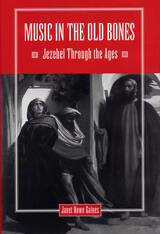
An alien, a polytheist from Phoenicia, the biblical Queen Jezebel posed a serious threat to the stability of the Israelites' single male deity. So powerful was this threat that writers through the ages have portrayed her as the incarnation of feminine evil, and her name has become synonymous with the misogynist view of women as seductresses.
Janet Howe Gaines argues that the bride of the Israelite king Ahab became a convenient scapegoat for biblical writers who portrayed her as the primary force behind their nation's apostasy. The biblical account presents the queen as a murderer, as a disruptive force for evil. Despised, the strong-willed Jezebel is still one of the most intriguing women of the Bible.
Music in the Old Bones is a guide to the eternal Jezebel story. The first part of this illustrated study is a detailed analysis that explores the biblical tale from traditional and feminist points of view. Gaines then analyzes the ways authors through the centuries have treated Jezebel. Her unburied bones became misogynist relics for generations of writers who retold her story as a warning about the dangers of rebelling against patriarchal society. From the sermons of John Knox to the novels of Margaret Atwood, from the poetry of Percy Shelley to the ballads of Boyz II Men, from the drama of Racine to the Academy Award-winning film starring Bette Davis, Jezebel has long been the subject of artistic inquiry. Her image as the bad girl of the Bible is still useful to writers. Most exploit her name and evil reputation to enhance their admonitions to women, but a few break away from tradition and openly admire Jezebel's courage and vigor.
Placing the biblical account of Jezebel's doomed reign in the context of its xenophobic writers, Gaines proposes a new and more sympathetic reading of the murdered queen whose body was left to rot in the streets and whose reputation suffered a fate even more egregious. Rather than providing a decent burial for the mangled bones of Jezebel, Gaines seeks to flesh them out and revivify them because, as she demonstrates, "there's music in the old bones yet."
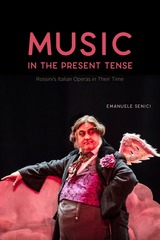
Emanuele Senici’s new book provides a fresh look at the motives behind the Rossinian furore and its aftermath by examining the composer’s works in the historical context in which they were conceived, performed, seen, heard, and discussed. Situating the operas firmly within the social practices, cultural formations, ideological currents, and political events of early nineteenth-century Italy, Senici reveals Rossini’s dramaturgy as a radically new and specifically Italian reaction to the epoch-making changes witnessed in Europe at the time. The first book-length study of Rossini’s Italian operas to appear in English, Music in the Present Tense exposes new ways to explore nineteenth-century music and addresses crucial issues in the history of modernity, such as trauma, repetition, and the healing power of theatricality.
READERS
Browse our collection.
PUBLISHERS
See BiblioVault's publisher services.
STUDENT SERVICES
Files for college accessibility offices.
RECENTLY PUBLISHED





UChicago Accessibility Resources
home | accessibility | search | about | contact us
BiblioVault ® 2001 - 2026
The University of Chicago Press