
 A SCHOLARLY BOOK REPOSITORY
7 start with M start with M

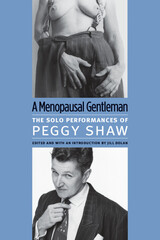
"With classic butch finesse---that handsome combination of vulnerability and toughness---Peggy Shaw pieces together the challenges of growing up butch in the 1950s. Shaw is an engaging performer and inspired writer."
---Gay Community News
Obie-award-winning performer and writer Peggy Shaw has been playing her gender-bending performances on Off Broadway, regional, and international stages for three decades. Co-founder of the renowned troupe Split Britches, Shaw has gone on to create memorable solo performances that mix achingly honest introspection with campy humor, reflecting on everything from her Irish-American working-class roots to her aging butch body.
This collection of Shaw's solo performance scripts evokes a 54-year-old grandmother who looks like a 35-year-old man (in her classic Menopausal Gentleman); a mother's ambivalent ministrations to a daughter she treated like a son (in the raw You're Just Like My Father); Shaw's love for her biracial grandson, for whom she models masculinity (in the musically punctuated To My Chagrin); and a mapping of her body's long, bittersweet history (in the lyrical Must: The Inside Story, a collaboration with the UK's Clod Ensemble). The book also includes a selection of Shaw's other classic monologues and an extensive introduction by Jill Dolan, Professor of English and Theater and Dance at Princeton University and the blogger behind The Feminist Spectator website.
A volume in the series Triangulations: Lesbian/Gay/Queer Theater/Drama/Performance
Cover photos by Eva Weiss (top) and Robin Holland/robinholland.com (bottom).
Method Acting and Its Discontents: On American Psycho-Drama provides a new understanding of a crucial chapter in American theater history. Enelow’s consideration of the broader cultural climate of the late 1950s and early 1960s, specifically the debates within psychology and psychoanalysis, the period’s racial and sexual politics, and the rise of mass media, gives us a nuanced, complex picture of Lee Strasberg and the Actors Studio and contemporaneous works of drama. Combining cultural analysis, dramaturgical criticism, and performance theory, Enelow shows how Method acting’s contradictions reveal powerful tensions inside mid-century notions of individual and collective identity.
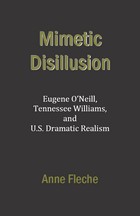
Reimagining American dramatic realism through the lenses of mimesis, theory, and theatrical innovation.
This volume focuses on two major writers of the 1930s and 1940s—Eugene O'Neill and Tennessee Williams—one whose writing career was just ending and the other whose career was just beginning. In new readings of their major works from this period, Long Day's Journey into Night, The Iceman Cometh, The Glass Menagerie, and A Streetcar Named Desire, Fleche develops connections to the writings of Jacques Derrida, Paul de Man, and Michel Foucault, among others, and discusses poststructuralism in the light of modern writers such as Bertolt Brecht, Antonin Artaud, and Walter Benjamin. Fleche also extends this discussion to the work of two contemporary playwrights, Adrienne Kennedy and Tony Kushner. The aim of Mimetic Disillusion is not to reject "mimetic" and "realistic" readings but to explore the rich complexities of these two ideas and the fruit of their ongoing relevance to U.S. theatre.
READERS
Browse our collection.
PUBLISHERS
See BiblioVault's publisher services.
STUDENT SERVICES
Files for college accessibility offices.
RECENTLY PUBLISHED



UChicago Accessibility Resources
home | accessibility | search | about | contact us
BiblioVault ® 2001 - 2026
The University of Chicago Press