
 A SCHOLARLY BOOK REPOSITORY
16 start with M start with M
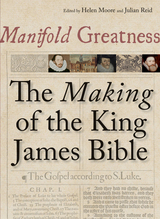
Published to commemorate the four hundredth anniversary of the publication of the King James Bible, Manifold Greatness tells the story of the creation and immediate afterlife of the King James translation of the Bible, first published in 1611. Revolutionary at its time, the King James translation quickly became the dominant authorized translation of the Christian Bible in English. There are more than one billion copies in print, making it the best-selling book of all time, and its effect on the English language is incalculable, both in common speech and in literature.
This accessible and richly illustrated visual history contains eighty color illustrations, including images of rare manuscripts, artifacts, and archival material such as the annotated Bodleian Bishops’ Bible of 1602, pages from the Wycliffite and Tyndale Bibles, and an edition of the Bishop’s Bible owned by Elizabeth I. Eight chapters contributed by leading academics in the field discuss the history of biblical translation, the political background of the project, the Oxford Translators—including Henry Savile, John Rainolds, and John Harmar—and their working milieu, the cultural politics, and the reception and influence of the King James Bible up until the 1769 publication of the Oxford Standard Edition, which was the first revision of the original 1611 translation. Also included is a look at the later reception of the King James Bible in America, including a chapter specifically on the King James Bible and the Folger Shakespeare Library.
Manifold Greatness brings together key research and documentation to provide a lively and comprehensive visual account to celebrate one of the most important occasions in publishing and modern religious history.
An incitement to re-assess how society relates to persons with poor mental health
Mainwaring explores the societal contexts of those who suffer poor mental health, and in particular the relational dynamics of how identity, agency, and dialogue are negotiated in personal encounters. This work seeks to serve as an experiment, such that interested readers might better understand the dynamics of relational power that pervade encounters with persons with poor mental health.
Features:
- Foucauldian analysis of the relational dynamics of poor mental health used to re-imagine hegemonic relational dynamics
- Close readings of encounters between individual characters to evaluate how mutuality operates in those encounters
- Study of mutuality as it has emerged in mental health literature, feminist theologies, and theologies of disability
In this collection of essays, leading New Testament scholars reassess the reciprocal relationship between Matthew and Second Temple Judaism. Some contributions focus on the relationship of the Matthean Jesus to torah, temple, and synagogue, while others explore theological issues of Jewish and gentile ethnicity and universalism within and behind the text.
Recent research reveals that among both Jews and Christians of the first century many groups believed in Jesus while remaining close to Judaism. Saldarini argues that the author of the Gospel of Matthew belonged to such a group, supporting his claim with an informed reading of Matthew's text and historical context. Matthew emerges as a Jewish teacher competing for the commitment of his people after the catastrophic loss of the Temple in 70 C.E., his polemics aimed not at all Jews but at those who oppose him. Saldarini shows that Matthew's teaching about Jesus fits into first-century Jewish thought, with its tradition of God-sent leaders and heavenly mediators.
In Saldarini's account, Matthew's Christian-Jewish community is a Jewish group, albeit one that deviated from the larger Jewish community. Contributing to both New Testament and Judaic studies, this book advances our understanding of how religious groups are formed.
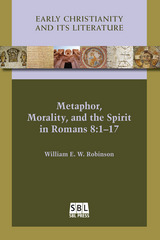
Engage compelling arguments that challenge prominent positions in Pauline studies
In this innovative book, William E. W. Robinson takes the reader on a journey through Romans 8:1–17 using Conceptual Metaphor Theory and Conceptual Integration Theory. Robinson delineates the underlying cognitive metaphors, their structure, their function, what they mean, and how Paul’s audiences then and now are able to comprehend their meaning. He examines each metaphor in the light of relevant aspects of the Greco-Roman world and Paul’s Jewish background. Robinson contends that Paul portrays the Spirit as the principal agent in the religious-ethical life of believers. At the same time, his analysis demonstrates that the conceptual metaphors in Romans 8:1–17 convey the integral role of believers in ethical conduct. In the process, he addresses thorny theological issues such as whether Spirit and flesh signal an internal battle within believers or two conflicting ways of life. Finally, Robinson shows how this study is relevant to related Pauline passages and challenges scholars to incorporate these methods into their own investigation of biblical texts.
Features:
- Sustained argument that sheds new light on how Paul communicates with his audiences
- Substantial contribution to current debates about central theological concepts
- Conceptual Metaphor Theory and Conceptual Integration Theory applied to the metaphors in Romans 8:1-17
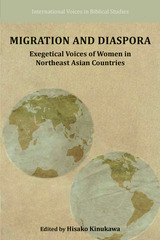
Engage and explore readings from a multi-religious, globalized, multicultural region
The papers in this collection were presented at the third meeting of the Society of Asian Biblical Studies held at the Sabah Theological Seminary, Malaysia in 2012. The essays represent the work of women/feminist scholars in biblical hermeneutics in this region who have raised questions against traditional, male-centered interpretations, offering distinct perspectives based on their experiences of pain, subjugation, and a forced sacrificial philosophy of life.
Features:
- Articles focused on finding justice for women through dialogue with biblical texts
- Reflections on migration, diaspora, displacement, discrimination, and conditions generated by poverty and systemic oppression
- Five essays from women in China, Japan, and Korea
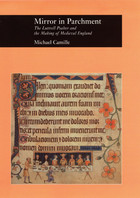
The richly illuminated Luttrell Psalter was created for the English nobleman Sir Geoffrey Luttrell (1276-1345). Inexpensive mechanical illustration has since disseminated the book's images to a much wider audience; hence the Psalter's representations of manorial life have come to profoundly shape our modern idea of what medieval English people, high and low, looked like at work and at play. Alongside such supposedly truthful representations, the Psalter presents myriad images of fantastic monsters and beasts. These patently false images have largely been disparaged or ignored by modern historians and art historians alike, for they challenge the credibility of those pictures in the Luttrell Psalter that we wish to see as real.
In the conviction that medieval images were not generally intended to reflect daily life but rather to shape a new reality, Michael Camille analyzes the Psalter's famous pictures as representations of the world, imagined and real, of its original patron. Addressed are late medieval chivalric ideals, physical sites of power, and the boundaries of Sir Geoffrey's imagined community, wherein agricultural laborers and fabulous monsters play a similar ideological role. The Luttrell Psalter thus emerges as a complex social document of the world as its patron hoped and feared it might be.
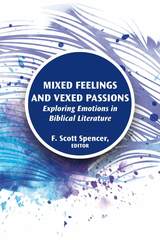
A ground-breaking collection exploring the rich array of emotions in biblical literature
An international team of Hebrew Bible and New Testament scholars offers incisive case studies of passions displayed by divine and human figures in the biblical texts ranging from joy, happiness, and trust to grief, hate, and disgust. Essays address how biblical characters' feelings affect their relationship with God, one another, and the world and how these feelings mix together, for good or ill, for flourishing or vexation. Deeply engaged with both ancient and modern contexts, including the burgeoning interdisciplinary study of emotion in the humanities and sciences, these essays break down the artificial divide between reason and passion, cognition and emotion, thought and feeling in biblical study.
Features
- Case studies drawn from multiple genres across the Bible: narrative, prophets, poetry, wisdom, Gospels, and letters
- Helpful select bibliographies of interdisciplinary resources at the end of each essay
- Critical balance between theory and practice and between method and close textual analysis
- Distinctive ancient Hebrew and Greek uses of emotional terms and concepts compared with each other and with evolving understandings in Western culture
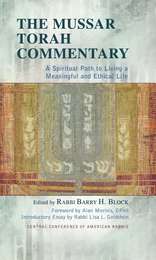
This Mussar-based commentary is a vital resource for Torah study, offering a thoughtful analysis of each of the 54 weekly parashot. Each essay in this anthology brings a parashah into juxtaposition with one of the Mussar middot (character traits as described within the Jewish school of ethics called Mussar), thereby providing an applied lens of Mussar teachings that helps us to delve deeper into our tradition with increased mindfulness and intention.

How Barbara Jordan used sacred and secular scriptures in her social activism
US Congresswoman Barbara Jordan is well-known as an interpreter and defender of the Constitution, particularly through her landmark speech during Richard Nixon’s 1974 impeachment hearings. However, before she developed faith in the Constitution, Jordan had faith in Christianity. In “My Faith in the Constitution is Whole”: Barbara Jordan and the Politics of Scripture, Robin L. Owens shows how Jordan turned her religious faith and her faith in the Constitution into a powerful civil religious expression of her social activism.
Owens begins by examining the lives and work of the nineteenth-century Black female orator-activists Maria W. Stewart and Anna Julia Cooper. Stewart and Cooper fought for emancipation and women’s rights by “scripturalizing,” or using religious scriptures to engage in political debate. Owens then demonstrates how Jordan built upon this tradition by treating the Constitution as an American “scripture” to advocate for racial justice and gender equality. Case studies of key speeches throughout Jordan’s career show how she quoted the Constitution and other founding documents as sacred texts, used them as sociolinguistic resources, and employed a discursive rhetorical strategy of indirection known as “signifying on scriptures.”
Jordan’s particular use of the Constitution—deeply connected with her background and religious, racial, and gender identity—represents the agency and power reflected in her speeches. Jordan’s strategies also illustrate a broader phenomenon of scripturalization outside of institutional religion and its rhetorical and interpretive possibilities.
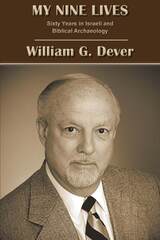
Experience a lifetime of adventure
This autobiography of prominent American archaeologist William G. Dever is unabashedly his story, in which he offers candid, often brutally honest, reflections on his life and sixty-five-year career. Dever places himself in the midst of a remarkable generation of giants in archaeology in Israel during a period when the fields of biblical and Israeli archaeology were evolving. With technical expertise developed over a lifetime of working alongside four generations of Israeli and foreign excavators, he recalls their exploits and shares numerous personal stories that few others would know. His memoir concludes with a postscript on the likely future of biblical archaeology and an annotated bibliography for serious readers who wish to explore some of the scholarly literature to flesh out Dever’s narrative.
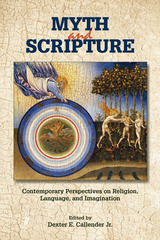
An interdisciplinary collection for scholars and students interested in the connections between myth and scripture
In this collection scholars suggest that using “myth” creates a framework within which to set biblical writings in both cultural and literary comparative contexts. Reading biblical accounts alongside the religious narratives of other ancient civilizations reveals what is commonplace and shared among them. The fruit of such work widens and enriches our understanding of the nature and character of biblical texts, and the results provide fresh evidence for how biblical writings became “scripture.”
Features:
- Essays that explore how myth sheds light on the emergence of scripture
- Examples drawn from the Ancient Near East, Hebrew Bible, New Testament, and Greco-Roman world
- Articles by experts from a range of disciplines
READERS
Browse our collection.
PUBLISHERS
See BiblioVault's publisher services.
STUDENT SERVICES
Files for college accessibility offices.
RECENTLY PUBLISHED




UChicago Accessibility Resources
home | accessibility | search | about | contact us
BiblioVault ® 2001 - 2026
The University of Chicago Press