
 A SCHOLARLY BOOK REPOSITORY
24 start with M start with M
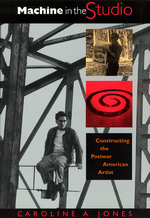
"Jones manages to analyze art works in their historical, political, and conceptual context, giving them a thickness of description rarely possible in standard art history. . . . This is one of the best books on the period I have read so far. To paraphrase Clement Greenberg, it gives contemporary art history a good name."—Serge Guilbaut, Bookforum
"Though we are some 30 years past the events of the '60s, our world is still largely responding to them, as this marvelous book amply demonstrates."—David McCarthy, New Art Examiner
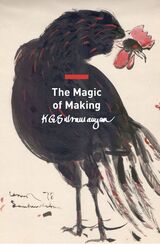
In this collection of essays, written by K. G. Subramanyan over twenty-five years, this artist delves into the evolving aesthetic sensibilities in a globalized world, offering profound reflections on art, aesthetics, tradition, and societal challenges. As one of India's most celebrated artists, Subramanyan provides invaluable insights into contemporary art and cultural dynamics
Covering a broad spectrum of topics including art, visual perception, creativity, craft practice, tradition, and societal issues, Subramanyan's essays offer a comprehensive exploration of the complexities shaping modern civilization. He critically examines the impact of globalization, industrialization, environmental degradation, and societal disparities on art, education, and society, urging readers to negotiate these challenges with insight and vigilance.
Subramanyan played a pivotal role in shaping India’s artistic identity after Independence. Mani-da, as he was fondly called, seamlessly blended elements of modernism with folk expression in his works, spanning paintings, murals, sculptures, prints, set designs, and toys. Beyond his visual artistry, his writings have laid a solid foundation for understanding the demands of art on the individual. In the year of his centenary, Seagull is proud to publish his writings in special new editions.

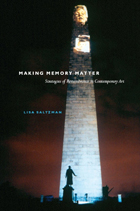
In an ancient account of painting’s origins, a woman traces the shadow of her departing lover on the wall in an act that anticipates future grief and commemoration. Lisa Saltzman shows here that nearly two thousand years after this story was first told, contemporary artists are returning to similar strategies of remembrance, ranging from vaudevillian silhouettes and sepulchral casts to incinerated architectures and ghostly processions.
Exploring these artists’ work, Saltzman demonstrates that their methods have now eclipsed painting and traditional sculpture as preeminent forms of visual representation. She pays particular attention to the groundbreaking art of Krzysztof Wodiczko, who is known for his projections of historical subjects; Kara Walker, who creates powerful silhouetted images of racial violence in American history; and Rachel Whiteread, whose work centers on making casts of empty interior spaces. Each of the artists Saltzman discusses is struggling with the roles that history and memory have come to play in an age when any historical statement is subject to question and doubt. In identifying this new and powerful movement, she provides a framework for understanding the art of our time.
Spurred by the theoretical claims of Arthur Danto, a leader in the philosophy of the avant-garde, Herwitz reexamines the art and theory of major figures in the avant-garde movement including John Cage, Jean-François Lyotard, Jean Baudrillard, and Andy Warhol.
A sense of stillness and silence pervades Manet's painting. His flattened, sometimes fragmented forms appear to exist absentmindedly in a world removed from speech. It is this silence that James Rubin explores in a book that shows us Manet as we see him--naturally, in pictures that articulated their own purely visual terms. In such a sense, this book is about the restoration of the visual to its primacy in art through Manet's painting.
While insisting that Manet's pictures must be given the first and final say in any interpretation, Rubin uses contradictory views of the painter's works--from the present and past--as a context for approaching them. Applying J.L. Austin's notion of the performative, which bridges the gap between language and action or between the painted image and its social effect, Rubin goes beyond past theorists to describe the curious ways in which Manet's paintings act upon us. With these ideas as his guide, he takes us through Manet's work, pointing out the element that are distinctive and consistent, particularly the painter's reliance on a pattern of gazes and the "unique state of undecidability" that this strategy produces. Rubin also examines Manet's relatioship to three of the leading critics of his day--Baudelaire, Zola, and Mallarmé--giving special attention to Mallarmé's appreciation, and eventual use in his poetry, of the paradox between immersion and externality in Manet's oeuvre. Finally, the book uses the image of the bouquet to exemplify Manet's creative poetics through an exploration of his still life.
Filled with revealing insights into Manet's achievevment, this sensitive, informed, and clearly written book goes a long way toward explaining why Manet's paintings continue to fascinate and elude us more than one hundred years after the artist's death.
Concerned with collective trauma and memory, Ettinger’s own experience as an Israeli living with the memory of the Holocaust is a deep source of inspiration for her paintings, several of which are reproduced in the book. The paintings, like the essays, replay the relation between the visible and invisible, the sayable and ineffable; the gaze, the subject, and the other.
Bracha Ettinger is a painter and a senior clinical psychologist. She is professor of psychoanalysis and aesthetics at the University of Leeds, England, and Bezalel Academy, Jerusalem.
Judith Butler is professor of rhetoric and comparative literature at the University of California, Berkeley. Griselda Pollock is professor of fine arts at the University of Leeds. Brian Massumi is professor of communication at the University of Montreal.
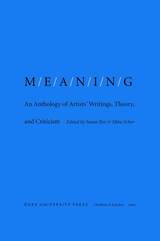
With its emphasis on artists’ perspectives of aesthetic and social issues, this anthology provides a unique opportunity to enter into the fray of the most hotly contested art issues of the past few decades: the visibility of women artists, sexuality and the arts, censorship, art world racism, the legacies of modernism, artists as mothers, visual art in the digital age, and the rewards and toils of a lifelong career in art. The stellar cast of contributing artists and art writers includes Nancy Spero, Richard Tuttle, David Humphrey, Thomas McEvilley, Laura Cottingham, Johanna Drucker, David Reed, Carolee Schneemann, Whitney Chadwick, Robert Storr, Leon Golub, Charles Bernstein, and Alison Knowles.
This compelling and theoretically savvy collection will be of interest to artists, art historians, critics, and a general audience interested in the views of practicing artists.
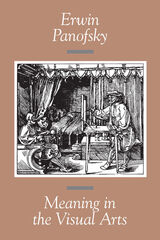
The papers in this volume represent a cross-section of Panofsky's major work. Included are selections from his well-known Studies in Iconology and The Life and Art of Albrecht Dürer, plus an introduction and an epilogue—"The History of Art as a Humanistic Discipline" and "Three Decades of Art History in the United States: Impressions of a Transplanted European"—as well as pieces written especially for this collection. All display Panofsky's vast erudition and deep commitment to a humanistic conception of art and art history.
Contributors. Keith Broadfoot, Rex Butler, Patrick Crogan, Wolfgang Ernst, Gary Hall, Rosemary Hawker, Peter Krapp, Catherine Liu, John MacArthur, Andrew McNamara, Toni Ross, Lisa Trahair, Georg Stanitzek, Georg Christoph Tholen, Lisa Trahair, Samuel Weber, Simon Morgan Wortham
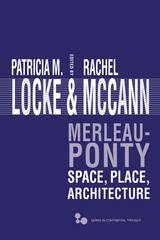
Phenomenology has played a decisive role in the emergence of the discourse of place, now indispensable to many disciplines in the humanities and social sciences, and the contribution of Merleau-Ponty’s thought to architectural theory and practice is well established. Merleau-Ponty: Space, Place, Architecture is a vibrant collection of original essays by twelve eminent philosophers who mine Merleau-Ponty’s work to consider how we live and create as profoundly spatial beings. The resulting collection is essential to philosophers and creative artists as well as those concerned with the pressing ethical issues of our time.
Each contributor presents a different facet of space, place, or architecture. These essays carve paths from Merleau-Ponty to other thinkers such as Irigaray, Deleuze, Ettinger, and Piaget. As the first collection devoted specifically to developing Merleau-Ponty’s contribution to our understanding of place and architecture, this book will speak to philosophers interested in the problem of space, architectural theorists, and a wide range of others in the arts and design community.
Contributors: Nancy Barta-Smith, Edward S. Casey, Helen Fielding, Lisa Guenther, Galen A. Johnson, Randall Johnson, D. R. Koukal, Suzanne Cataldi Laba, Patricia M. Locke, Glen Mazis, Rachel McCann, David Morris, and Dorothea Olkowski.
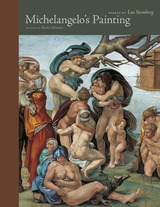
For half a century, Steinberg delved into Michelangelo’s work, revealing the symbolic structures underlying the artist’s highly charged idiom. This volume of essays and unpublished lectures elucidates many of Michelangelo’s paintings, from frescoes in the Sistine Chapel to the Conversion of St. Paul and the Crucifixion of St. Peter, the artist’s lesser-known works in the Vatican’s Pauline Chapel; also included is a study of the relationship of the Doni Madonna to Leonardo.
Steinberg’s perceptions evolved from long, hard looking. Almost everything he wrote included passages of old-fashioned formal analysis, but always put into the service of interpretation. He understood that Michelangelo’s rendering of figures, as well as their gestures and interrelations, conveys an emblematic significance masquerading under the guise of naturalism. Michelangelo pushed Renaissance naturalism into the furthest reaches of metaphor, using the language of the body to express fundamental Christian tenets once expressible only by poets and preachers.
Leo Steinberg was one of the most original art historians of the twentieth century, known for taking interpretive risks that challenged the profession by overturning reigning orthodoxies. Michelangelo’s Painting is the second volume in a series that presents Steinberg’s writings, selected and edited by his longtime associate Sheila Schwartz.
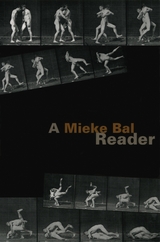
This Reader is organized into four parts, reflecting the fields that Bal has most profoundly influenced: literary study, interdisciplinary methodology, visual analysis, and postmodern theology. The essays include some of Bal’s most characteristic and provocative work, capturing her at the top of her form. “Narration and Focalization,” for example, provides the groundwork for Bal’s ideas on narrative, while “Reading Art?” clearly outlines her concept of reading images. “Religious Canon and Literary Identity” reenvisions Bal’s own work at the intersection of theology and cultural analysis, while “Enfolding Feminism” argues for a new feminist rallying cry that is not a position but a metaphor. More than a dozen other essays round out the four sections, each of which is interdisciplinary in its own right: the section devoted to literature, for instance, ranges widely over psychoanalysis, theology, photography, and even autobiography.
A Mieke Bal Reader is the product of a capacious intellect and a sustained commitment to critical thinking. It will prove to be instructive, maddening, and groundbreaking—in short, all the hallmarks of intellectual inquiry at its best.
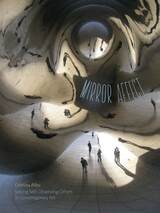
For decades, contemporary artworks with reflective properties have stimulated public forms of spectatorship. According to Cristina Albu, these artworks, which can include elements such as mirrors, live video feedback, or sensors, draw attention to affective interdependence and mechanisms of social control.
In Mirror Affect, Albu provides a historical account of mirroring processes in contemporary art and offers insight into the phenomenological and sociopolitical concerns that have inspired artists to stage processes of affective, perceptual, and behavioral mirroring between art viewers. Beginning with the 1960s, Albu charts the rise of interpersonal modes of art spectatorship. She reveals contemporary artists’ strategic use of reflective and responsive interfaces to instill doubt in visual representation and appeal to active scrutiny of the changing social dynamics. She suggests that the mirroring processes envisioned by contemporary artists such as Joan Jonas, Dan Graham, Lynn Hershman Leeson, Olafur Eliasson, and Rafael Lozano-Hemmer trigger visual disjunctions to upset narcissistic inclinations. They invite viewers to see themselves in relation to others and to ponder their role within complex social systems.
From sculpture and performance to art and technology projects, video art, and installation art, Mirror Affect analyzes forms of interpersonal spectatorship, revising and expanding current historiographies of participatory art.
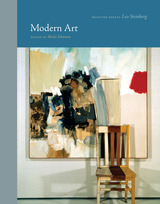
Leo Steinberg was one of the most original art historians of the twentieth century, known for taking interpretive risks that challenged the profession by overturning reigning orthodoxies. In essays and lectures ranging from old masters to modern art, he combined scholarly erudition with eloquent prose that illuminated his subject and a credo that privileged the visual evidence of the image over the literature written about it. His writings, sometimes provocative and controversial, remain vital and influential reading. Steinberg’s perceptions evolved from long, hard looking at his objects of study. Almost everything he wrote included passages of formal analysis that were always put into the service of interpretation.
Following the series publication on Pablo Picasso, this volume focuses on other modern artists, including Cézanne, Monet, Matisse, Max Ernst, Jasper Johns, Robert Rauschenberg, Roy Lichtenstein, Hans Haacke, and Jeff Koons. Included are seven unpublished lectures and essays, Steinberg’s landmark essay “Encounters with Rauschenberg,” a survey of twentieth-century sculpture, and an examination of the role of authorial predilections in critical writing. The final chapter presents a collection of Steinberg’s humorous pieces, witty forays penned for his own amusement.
Modern Art is the fifth and final volume in a series that presents Steinberg’s writings, selected and edited by his longtime associate Sheila Schwartz.
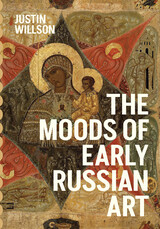
The Moods of Early Russian Art describes an alternative early modernity at the easternmost border of the European cultural sphere, where the Renaissance marked a return not to secular humanism but to the religiosity and art of the Middle Ages. Charting a kind of “Renaissance in reverse,” art historian Justin Willson explores how the value placed on style and virtuosity faded in importance as the Church cultivated miracle-working images during the reigns of Ivan the Great and Ivan the Terrible. Arguing for a broader unity of interests among artistic workshops across the Muscovite landscape—a system of interconnected values that he explains using the language of “moods”—Willson examines icons, illuminated manuscripts, enamelwork, and murals, tracing how the interpretive framework of the age shifted from the “aesthetic” and “literal” moods to the “intoxicated” and “romantic” over the fifteenth and sixteenth centuries.
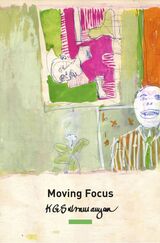
Written between the early 1960s and the mid-1970s, the articles and lectures collected in Moving Focus reflect on some of the major concerns of the practicing artist and scholar of modern Indian art: tradition and modernism, the question of the image, and the use of art criticism. The collection also includes essays on the work of Rabindranath Tagore, Abanindranath Tagore, Binodebehari Mukherjee, Ramkinker Baij, and Amrita Sher-Gil. Together, they deal with the focal changes taking place in the contemporary art situation—a period of great significance in terms of cultural development, just about a decade and a half after India’s hard-won Independence—and seek to put them in perspective. The analytical essays of K. G. Subramanyan, one of India's most celebrated artists, remain as relevant and useful today as they were when this collection first appeared decades ago, and are perfectly suited to introducing the non-specialist to Indian modernism and its global concerns.
Subramanyan played a pivotal role in shaping India’s artistic identity after Independence. Mani-da, as he was fondly called, seamlessly blended elements of modernism with folk expression in his works, spanning paintings, murals, sculptures, prints, set designs, and toys. Beyond his visual artistry, his writings have laid a solid foundation for understanding the demands of art on the individual. In the year of his centenary, Seagull is proud to publish his writings in special new editions.
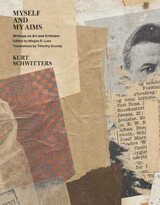
As the first anthology in English of the critical and theoretical writings of this influential artist, Myself and My Aims makes the case for Schwitters as one of the most creative thinkers of his generation. Including material that has never before been published, this volume presents the full range of his prolific writing on the art and attitudes of his time, joining existing translations of his children’s stories, poetry, and fiction to give new readers unprecedented access to his literary imagination. With an accessible introduction by Megan R. Luke and elegant English translations by Timothy Grundy, this book will prove an exceptional resource for artists, scholars, and enthusiasts of his art.
READERS
Browse our collection.
PUBLISHERS
See BiblioVault's publisher services.
STUDENT SERVICES
Files for college accessibility offices.
RECENTLY PUBLISHED



UChicago Accessibility Resources
home | accessibility | search | about | contact us
BiblioVault ® 2001 - 2025
The University of Chicago Press