
 A SCHOLARLY BOOK REPOSITORY
26 start with M start with M

Incorporating captivating mini-biographies of women who attended Madison College and who went on to change their communities in ways large and small, this book reveals how the lives of its students impart lessons about history, regional culture, and how we can shape the Appalachia's future.
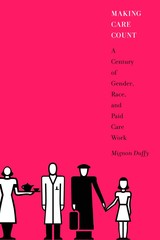
There are fundamental tasks common to every society: children have to be raised, homes need to be cleaned, meals need to be prepared, and people who are elderly, ill, or disabled need care. Day in, day out, these responsibilities can involve both monotonous drudgery and untold rewards for those performing them, whether they are family members, friends, or paid workers. These are jobs that cannot be outsourced, because they involve the most intimate spaces of our everyday lives--our homes, our bodies, and our families.
Mignon Duffy uses a historical and comparative approach to examine and critique the entire twentieth-century history of paid care work--including health care, education and child care, and social services--drawing on an in-depth analysis of U.S. Census data as well as a range of occupational histories. Making Care Count focuses on change and continuity in the social organization along with cultural construction of the labor of care and its relationship to gender, racial-ethnic, and class inequalities. Debunking popular understandings of how we came to be in a "care crisis," this book stands apart as an historical quantitative study in a literature crowded with contemporary, qualitative studies, proposing well-developed policy approaches that grow out of the theoretical and empirical arguments.
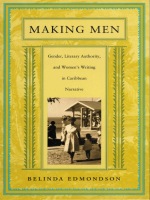
Discussing the canonical Caribbean narrative as it reflects national identity under the domination of English cultural authority, Belinda Edmondson focuses particularly on the pervasive influence of Victorian sensibilities in the structuring of twentieth-century national identity. She shows that issues of race and English constructions of masculinity not only are central to West Indian identity but also connect Caribbean authorship to the English literary tradition. This perspective on the origins of West Indian literary nationalism then informs Edmondson’s search for female subjectivity in current literature by West Indian women immigrants in America. Making Men compares the intellectual exile of men with the economic migration of women, linking the canonical male tradition to the writing of modern West Indian women and exploring how the latter write within and against the historical male paradigm in the continuing process of national definition.
With theoretical claims that invite new discourse on English, Caribbean, and American ideas of exile, migration, race, gender identity, and literary authority, Making Men will be informative reading for those involved with postcolonial theory, African American and women’s studies, and Caribbean literature.

This social, cultural, and political history of Slavic Muslim women of the Yugoslav region in the first decades of the post-Ottoman era is the first to provide a comprehensive overview of the issues confronting these women. It is based on a study of voluntary associations (philanthropic, cultural, Islamic-traditionalist, and feminist) of the period.
It is broadly held that Muslim women were silent and relegated to a purely private space until 1945, when the communist state “unveiled” and “liberated” them from the top down. After systematic archival research in Bosnia, Croatia, Serbia, and Austria, Fabio Giomi challenges this view by showing: • How different sectors of the Yugoslav elite through association publications, imagined the role of Muslim women in post-Ottoman times, and how Muslim women took part in the construction or the contestation of these narratives. • How associations employed different means in order to forge a generation of “New Muslim Women” able to cope with the post-Ottoman political and social circumstances. • And how Muslim women used the tools provided by the associations in order to pursue their own projects, aims and agendas. The insights are relevant for today’s challenges facing Muslim women in Europe. The text is illustrated with exceptional photographs.T

This is a book about the making and unmaking of sex over the centuries. It tells the astonishing story of sex in the West from the ancients to the moderns in a precise account of developments in reproductive anatomy and physiology. We cannot fail to recognize the players in Thomas Laqueur’s story—the human sexual organs and pleasures, food, blood, semen, egg, sperm—but we will be amazed at the plots into which they have been woven by scientists, political activists, literary figures, and theorists of every stripe.
Laqueur begins with the question of why, in the late eighteenth century, woman’s orgasm came to be regarded as irrelevant to conception, and he then proceeds to retrace the dramatic changes in Western views of sexual characteristics over two millennia. Along the way, two “master plots” emerge. In the one-sex story, woman is an imperfect version of man, and her anatomy and physiology are construed accordingly: the vagina is seen as an interior penis, the womb as a scrotum, the ovaries as testicles. The body is thus a representation, not the foundation, of social gender. The second plot tends to dominate post-Enlightenment thinking while the one-sex model is firmly rooted in classical learning. The two-sex story says that the body determines gender differences, that woman is the opposite of man with incommensurably different organs, functions, and feelings. The two plots overlap; neither ever holds a monopoly. Science may establish many new facts, but even so, Laqueur argues, science was only providing a new way of speaking, a rhetoric and not a key to female liberation or to social progress. Making Sex ends with Freud, who denied the neurological evidence to insist that, as a girl becomes a woman, the locus of her sexual pleasure shifts from the clitoris to the vagina; she becomes what culture demands despite, not because of, the body. Turning Freud’s famous dictum around, Laqueur posits that destiny is anatomy. Sex, in other words, is an artifice.
This is a powerful story, written with verve and a keen sense of telling detail (be it technically rigorous or scabrously fanciful). Making Sex will stimulate thought, whether argument or surprised agreement, in a wide range of readers.
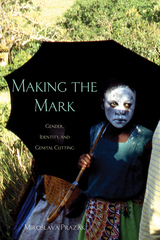
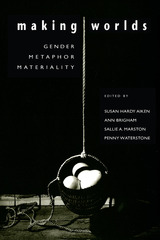
In recent years these questions have occasioned intensifying debates, but they have seldom extended beyond the boundaries of individual academic disciplines or crossed the divide that has traditionally separated the academy from the "outside" world. Making Worlds both questions and traverses those divisions by combining personal essays, activist political rhetoric, oral history, poetry, iconography, and performance art with interdisciplinary academic discourses.
Representing a wide range of perspectives, Making Worlds develops a provocative conversation about gender and spatiality in the interwoven symbolic and material environments we create. The contributors engage such issues as the body as site of symbolic action, fabrication, and desire; the place and play of sexualities; the cultural implications of everyday life—home, travel, work, childbirth, food, disease, and death; technology and mass media; surveillance, confinement, and the law; the dynamics of race and ethnicity; imperialism, oppression, and resistance; the politics of urban spaces; landscape and cultural memory; the experience of time; and the nature of "Nature." For students and scholars in cultural studies, geography, literary criticism, anthropology, history, and women's studies, it offers new ways of thinking about space, place, and the spatial contexts of social thought and action.
---Choice
"In this insightful analysis of representations of mammy, Wallace-Sanders skillfully illustrates how this core icon of Black womanhood has figured prominently in upholding hierarchies of race, gender, and class in the United States. Far from being a timeless, natural, benign image of domesticity, the idealized mammy figure was repeatedly reworked to accommodate varying configurations of racial rule. No one reading this book will be able to see Gone with the Wind in the same way ever again."
---Patricia Hill Collins, University of Maryland
"Kimberly Wallace-Sanders' interdisciplinary approach is first-rate. This expansive and engaging book should appeal to students and scholars in American studies, African American studies, and women's studies."
---Thadious Davis, The University of Pennsylvania
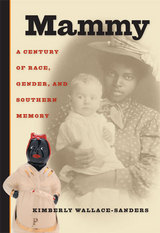
Her cheerful smile and bright eyes gaze out from the covers of old cookbooks, song sheets, syrup bottles, salt and pepper shakers, and cookie jars, and she has long been a prominent figure in fiction, film, television, and folk art. She is Mammy, a figure whose provocative hold on the American psyche has persisted since before the Civil War.
But who is Mammy, and where did she come from? Her large, dark body and her round smiling face tower over our imaginations to such an extent that more accurate representations of African American women wither in her shadow. Mammy's stereotypical attributes---a sonorous and soothing voice, raucous laugh, infinite patience, self-deprecating wit, and implicit acceptance of her own inferiority and her devotion to white children---all point to a long-lasting and troubled confluence of racism, sexism, and southern nostalgia.
This groundbreaking book traces the mammy figure and what it has symbolized at various historical moments that are linked to phases in America's racial consciousness. The author shows how representations of Mammy have loomed over the American literary and cultural imagination, an influence so pervasive that only a comprehensive and integrated approach of this kind can do it justice.
The book's many illustrations trace representations of the mammy figure from the nineteenth century to the present, as she has been depicted in advertising, book illustrations, kitchen figurines, and dolls. The author also surveys the rich and previously unmined history of the responses of African American artists to the black mammy stereotype, including contemporary reframings by artists Betye Saar, Michael Ray Charles, and Joyce Scott.
Kimberly Wallace-Sanders is Associate Professor of the Graduate Institute of Liberal Arts and Women's Studies at Emory University. She is editor of Skin Deep, Spirit Strong: The Black Female Body in American Culture.
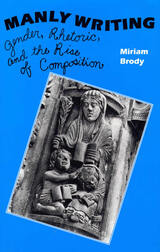
In this critical history of the gendered politics of rhetoric and the rise of composition, Miriam Brody argues that nothing about words or their arrangement is innately gendered. Yet since the English Enlightenment, teachers have encouraged their students to admire and imitate "manly" writing, writing that is plain, forceful, cogent, and true. Similarly, students have been enjoined to avoid so-called effeminate or feminine writing—writing characterized as vague, unorganized, ornate, and deceitful.
Such advice, part of what Brody terms the hidden curriculum, has served the interests of discourse communities as various as the early Enlightenment Royal Society in seventeenth-century London (by urging a clear and masculine style for the work of science) and the land-grant universities of nineteenth-century America (by claiming that the work of writing was similar to clearing the land and pushing back the frontier). Brody’s discussion in fact becomes a social history of canonical rhetorical essays and important late Enlightenment, nineteenth-century, and early modern school texts. She points out that in their advice to writers even the Strunks and Whites and Peter Elbows of more recent times have extolled masculine virtues and urged control over invasive and problematic feminine qualities.
Brody’s book not only clarifies rhetoric’s inheritance and transformation of the classical ideal of manliness, it also is the first critical work to explore the ideological significance of gendered imagery and to interpret in light of this imagery rhetorical essays and hard-to-locate early composition texts against a background of previously unpublished archival materials.
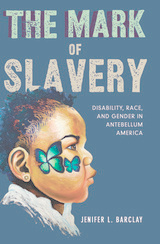
Time and again, antebellum Americans justified slavery and white supremacy by linking blackness to disability, defectiveness, and dependency. Jenifer L. Barclay examines the ubiquitous narratives that depicted black people with disabilities as pitiable, monstrous, or comical, narratives used not only to defend slavery but argue against it. As she shows, this relationship between ableism and racism impacted racial identities during the antebellum period and played an overlooked role in shaping American history afterward. Barclay also illuminates the everyday lives of the ten percent of enslaved people who lived with disabilities. Devalued by slaveholders as unsound and therefore worthless, these individuals nonetheless carved out an unusual autonomy. Their roles as caregivers, healers, and keepers of memory made them esteemed within their own communities and celebrated figures in song and folklore.
Prescient in its analysis and rich in detail, The Mark of Slavery is a powerful addition to the intertwined histories of disability, slavery, and race.

Drawing on a rich trove of focus group data, interviews, and textual sources, Elaine Weiner's Market Dreams powerfully captures the varied responses of female managers and factory workers in the Czech Republic to their country's transition from socialism to capitalism. Her work, rooted in sociology and comparative feminism, is an important advance for the literature on women in Eastern Europe.
"Market Dreams is a conceptually-sophisticated and empirically-rich account of how the discourses and practices of the free market penetrated the hearts and minds of everyday Czech citizens. Weiner's provocative analysis takes readers inside the worlds of female factory workers to expose the discontinuities between their radiant market dreams and their everyday realities--and juxtaposes them to the continuities experienced by female managers. In the process, it challenges many of our ideas about post/socialism, marketization, and gender and reveals the enduring power of stories in shaping social identities and actions."
---Lynne Haney, Associate Professor of Sociology, New York University
"Through interviews and a careful analysis of newspaper articles written in the first decade after the collapse of state socialism, Weiner explores the complicated interconnections between personal stories and the emerging neoliberal metanarrative of the free market in the Czech Republic after 1989. Her book transcends many of the dichotomies with which researchers of post-state socialism have been struggling: 'East' vs. 'West,' losers and winners, emancipation vs. oppression, etc., and thus makes a truly novel contribution to our understanding of women's lives after state socialism."
---Éva Fodor, Assistant Professor of Gender Studies, Central European University
"Weiner's rich and innovative study of female Czech managers and workers exemplifies the importance of narrative analysis for understanding why gender and class have not (yet) reconfigured the sense of postcommunism's alternatives. This is critical reading for feminists, class analysts, and students of postcommunist social change."
---Michael Kennedy, Director, Center for European Studies, University of Michigan
Elaine Weiner is Assistant Professor of Sociology at McGill University. Visit the author's website at: www.mcgill.ca/sociology/faculty/weiner/.
Cover Credit: Frank Scherschel/Time & Life Pictures/Getty Images
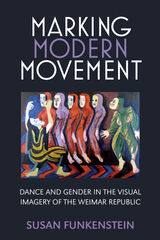
Yet behind the razzle dazzle of these depictions and experiences was one far more complex involving issues of gender and the body during a tumultuous period in history, Germany’s first democracy (1918-1933). Rather than mere titillation, the images copiously illustrated and analyzed in Marking Modern Movement illuminate how visual artists and dancers befriended one another and collaborated together. In many ways because of these bonds, artists and dancers forged a new path in which images revealed artists’ deep understanding of dance, their dynamic engagement with popular culture, and out of that, a possibility of representing women dancers as cultural authorities to be respected. Through six case studies, Marking Modern Movement explores how and why these complex dynamics occurred in ways specific to their historical moment.
Extensively illustrated and with color plates, Marking Modern Movement is a clearly written book accessible to general readers and undergraduates. Coming at a time of a growing number of major art museums showcasing large-scale exhibitions on images of dance, the audience exists for a substantial general-public interest in this topic. Conversing across German studies, art history, dance studies, gender studies, and popular culture studies, Marking Modern Movement is intended to engage readers coming from a wide range of perspectives and interests.

Based on extensive research in this archive, this book reveals how these documents were produced in a centuries-long effort to regulate—and ultimately to redefine—property and gender relations. At the center of the transformation was a shift from a marital property regime based on custom to one based on contract. In the former, a widow typically inherited her husband's property; in the latter, she shared it with or simply held it for his family or offspring. Howell asks why the law changed as it did and assesses the law's effects on both social and gender meanings but she insists that the reform did not originate in general dissatisfaction with custom or a desire to disempower widows. Instead, it was born in a complex economic, social and cultural history during which Douaisiens gradually came to think about both property and gender in new ways.
This ethical and poetic ethnography analyses the upheavals to gender roles and marital relationships brought about by Somali refugee migration to the UK. Unmoored from the socio-cultural norms that made them men and women, being a refugee is described as making "everything" feel "different, mixed up, upside down." Marriage, Gender and Refugee Migration details how Somali gendered identities are contested, negotiated, and (re)produced within a framework of religious and politico-national discourses, finding that the most significant catalysts for challenging and changing harmful gender practices are a combination of the welfare system and Islamic praxis. Described as “an important and urgent monograph," this book will be a key text relevant to scholars of migration, transnational families, personal life, and gender. Written in a beautiful and accessible style, the book voices the participants with respect and compassion, and is also recommended for scholars of qualitative social research methods.

While for some screenwriters a return to pre-2011 life would be welcome after so much bloodshed, others advocated profound cultural and social transformation, instead. They employed marriage and gender metaphors in the stories they wrote to engage in political critique, even at the risk of creating marketing difficulties for the shows or they created escapist stories such as transnational adaptations and Old Damascus tales. Serving as heritage preservation, Mediating the Uprising underscores that television drama creators in Syria have many ways of engaging in protest, with gender and marriage at the heart of the polemic.
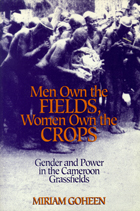
Based on a decade of fieldwork, this work tracks the negotiations between chiefs and subchiefs and women and men over ritual power, economic power, and administrative power. Though Nso men obviously dominate their society at both the local level and nationally, women have had power of their own by virtue of their status as women. Men may own the land, for example, but women control the crops through their labor . Goheen explains clearly the place of gender in very complex historical processes, such as land tenure systems, title societies, chieftancy, marriage systems, changing ideas of symbolic capital, and internal and external politics.
In examining women’s resistance to traditional patterns of marriage, Goheen raises the question of whether such actions truly change the balance of power between the sexes, or whether resistance to marriage is instead fostering the formation of a new elite class, since it is only the better-educated women of wealthier families who can change the dynamic of power and labor within the household.
The issues raised in this book are not unique to Nso but apply throughout the African subcontinent. Written in a straightforward way with much of the theoretical argument in footnotes, Men Own the Fields, Women Own the Crops marshals important arguments of wide relevance in present-day Africa.
Winner, 2021 CCCC Outstanding Book Award
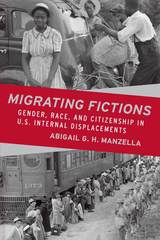
Migrating Fictions analyzes the role of race, gender, and citizenship in the major internal displacements of the 20th century in history and in narrative. Surveying the particular tactics employed by the United States during the Great Migration, the Dust Bowl, the Japanese American incarceration, and the migrant labor of the Southwest, Abigail G. H. Manzella reveals how the country’s past is imbued with governmentally (en)forced movements that diminished access to full citizenship rights for the laboring class, people of color, and women.
This work is the first book-length study to examine all of these movements together along with their literature, including Zora Neale Hurston’s Their Eyes Were Watching God, Sanora Babb’s Whose Names Are Unknown, Julie Otsuka’s When the Emperor Was Divine, Helena María Viramontes’s Under the Feet of Jesus, and Jesmyn Ward’s Salvage the Bones. Manzella shows how the United States’ history of spatial colonization within its own borders extends beyond isolated incidents into a pattern based on ideology about nation-building, citizenship, and labor. This book seeks to theorize a Thirdspace, an alternate location for social justice that acknowledges the precarity of the internally displaced person.

Anthropologist Sandhya Krittika Narayanan begins with these challenges, and asks: What does it mean to be a Quechua or Aymara speaker in Puno today? What does it mean to be an Indigenous ethnic Quechua or Aymara individual?
Mother Tongues of the High Andes opens with these questions, exploring what Quechua and Aymara languages and identities mean for Indigenous puneños as they navigate their past and present. Narayanan argues that understanding inter-Indigenous linguistic and social differences involves examining Indigenous gender roles, responsibilities, and linguistic practices, particularly those of Indigenous puneña women. She shows how these practices have contributed to the maintenance of Indigenous multilingualism and continuity in local modes of understanding Indigenous identity and difference.
Even as ideologies around Indigenous identity and linguistic practices shift due to global discourses on Indigenous ethnic identity and nationalism, Indigenous women continue to play a crucial role, promoting new ways to speak and think about Quechua and Aymara linguistic differences, making the Indigenous roots and histories of Puno recognizable to a global audience. Through a comprehensive ethnographic exploration of gender, language, and Indigenous difference, Narayanan shows how the linguistic and social practices of Indigenous puneña women both contest and reaffirm competing visions of Quechua and Aymara linguistic identity and authority.
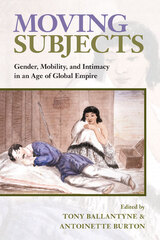
Moving Subjects is the first of its kind to make a case not simply for the necessity of a spatial analysis of imperial formations, but for the indispensability of an investigative approach that links space and movement with the domain of the intimate. Through careful archival research and a commitment to excavating the variety of "mobile intimacies" at the heart of imperial power, its agents, and its interlocutors, contributors offer new evidence and approaches for scholars engaged in capturing the historical nuances of imperial domination.
Contributors are Tony Ballantyne, Antoinette Burton, Adrian Carton, David Haines, Katherine Ellinghaus, Charlotte Macdonald, Michael A. McDonnell, Kirsten McKenzie, Michelle Moran, Fiona Paisley, Adele Perry, Dana Rabin, Christine M. Skwiot, Rachel Standfield, Frances Steel, Elizabeth Vibert, and Kerry Wynn.
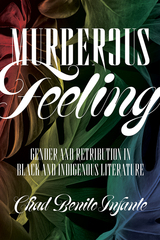
Examining revenge narratives as a feminist response to slavery and settler colonialism
From Octavia Butler’s Kindred to The Round House by Louise Erdrich, themes of retribution resound throughout the work of renowned Black and Indigenous women and queer authors. Revealing how the Black Power Movement and the American Indian Movement influenced literature from the 1960s onward, Murderous Feeling explores how these writers have employed revenge narratives as a response to white supremacy and colonialism.
Chad Benito Infante shows how, rather than using retributive violence to cultivate a heroic, masculine ideal, Black and Native women and queer writers use revenge as a way to raise philosophical questions about justice and the reclamation of power in the face of white supremacy. Pairing canonical texts—including work by James Baldwin, Leslie Marmon Silko, Craig Womack, Toni Morrison, and others—he demonstrates how this uniquely queer and feminist literary tradition, the “grammar of interrogation,” allows for generative ambivalence and curiosity about the possibilities and failures of violence.
In highlighting these narratives’ potential to steer anticolonial efforts, Murderous Feeling reconceptualizes literary violence not as an individualized act of cleansing but as a tool for revolutionary inquiry.
Retail e-book files for this title are screen-reader friendly.

A cross-section of case studies from the Central African Republic, Finland, and Turkey addresses issues of how performance reflects gender and furthers other social goals, such as negotiating identity and transforming consciousness. Articles on Croatian and Serbian popular music and on the changing circumstances of women musicians in war-torn Ethiopia and post-Soviet Estonia consider the fate of fragile constructions of gender and nationhood in times of war or crisis. Other essays consider the relationship of gender to digital sound technology--in terms of access to the field, interactions among musicians, and aesthetic decisions--and gender issues in writing the musical lives of women composers and performers.
Articulating a theoretical agenda that encompasses perspectives from vastly different musical cultures, this important collection shows how music can help bridge the radical transformations of individuals, groups, and nations.
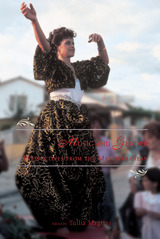
From Spanish flamenco to Algerian raï, Greek rebetika to Turkish pop music, Sephardi and Berber songs to Egyptian belly dancers, the contributors cover an exceedingly wide range of geographic and musical territories. Individual essays examine musical behavior as representation, assertion, and sometimes transgression of gender identities; compare men's and women's roles in specific musical practices and their historical evolution; and explore how music and gender relate to such issues as ethnicity, nationality, and religion. Anyone studying the musics or cultures of the Mediterranean, or more generally the relations between gender and the arts, will welcome this book.
Contributors:
Caroline Bithell, Joaquina Labajo, Jane C. Sugarman, Carol Silverman, Goffredo Plastino, Gail Holst-Warhaft, Edwin Seroussi, Marie Virolle, Terry Brint Joseph, Deborah Kapchan, Karin van Nieuwkerk, Svanibor Pettan, Martin Stokes, Philip V. Bohlman
READERS
Browse our collection.
PUBLISHERS
See BiblioVault's publisher services.
STUDENT SERVICES
Files for college accessibility offices.
RECENTLY PUBLISHED




UChicago Accessibility Resources
home | accessibility | search | about | contact us
BiblioVault ® 2001 - 2026
The University of Chicago Press