
 A SCHOLARLY BOOK REPOSITORY
12 start with M start with M
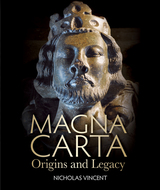
This book tells the story of the birth and development of Magna Carta from its origins to the modern day. It also reproduces and describes, for the very first time, every surviving copy of the Great Charter, as well as related charters of the period, including various new discoveries. It addresses the previously unanswered question of how the charter was published and disseminated to the shires of England and includes a chapter on the charter's scribes and sealing, supplying a truly unique insight into both the creation and afterlife of the most fundamental legal document in British history.
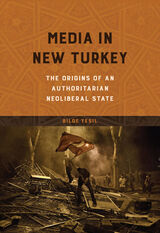
Yesil confronts essential questions regarding: the role of the state and military in building the structures that shaped Turkey's media system; media adaptations to ever-shifting contours of political and economic power; how the far-flung economic interests of media conglomerates leave them vulnerable to state pressure; and the ways Turkey's politicized judiciary criminalizes certain speech.
Drawing on local knowledge and a wealth of Turkish sources, Yesil provides an engrossing look at the fault lines carved by authoritarianism, tradition, neoliberal reform, and globalization within Turkey's increasingly far-reaching media.
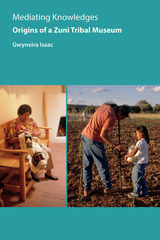
These personal narratives provide insight into the diversity of perspectives found within the community, as well as tracing the ongoing negotiation of the relationship between Zuni and Anglo-American cultures. In particular, Isaac examines how Zunis, who transmit knowledge about their history through oral tradition and initiation into religious societies, must navigate the challenge of utilizing Anglo-American museum practices, which privilege technology that aids the circulation of knowledge beyond its original narrators.
This book provides a much-needed contemporary ethnography of a Pueblo community recognized for its restrictive approach to outside observers. The complex interactions between Zunis and anthropologists explored here, however, reveal not only Puebloan but also Anglo-American attitudes toward secrecy and the control of knowledge.
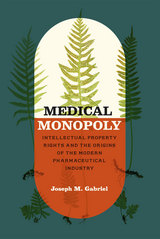
Drawing on a wealth of previously unused archival material, Medical Monopoly combines legal, medical, and business history to offer a sweeping new interpretation of the origins of the complex and often troubling relationship between the pharmaceutical industry and medical practice today. Joseph M. Gabriel provides the first detailed history of patent and trademark law as it relates to the nineteenth-century pharmaceutical industry as well as a unique interpretation of medical ethics, therapeutic reform, and the efforts to regulate the market in pharmaceuticals before World War I. His book will be of interest not only to historians of medicine and science and intellectual property scholars but also to anyone following contemporary debates about the pharmaceutical industry, the patenting of scientific discoveries, and the role of advertising in the marketplace.

Since its founding in 1930 the Peruvian Aprista party (APRA) has occupied a place of signal importance in the Peruvian political spectrum, and it is one of the most important political parties to appear in twentieth-century Latin America. Modernization, Dislocation, and Aprismo is the first major analysis of the social and political bases of the Aprista movement. Previous studies of APRA had been chiefly descriptive in nature and did not utilize modern social science approaches in analyzing the movement.
Peter F. Klarén’s major thesis is that APRA emerged in the 1930s as a direct political response to the far-reaching dislocative impact of modernization within the Peruvian sugar industry, a process that unfolded over a period of about four decades beginning in the 1890s and that substantially upset and transformed the traditional structure of society along the north coast.
Jolted by the effects of modernization, elements of the old middle and lower sectors grew increasingly hostile to the existing order. Joined by the new proletariat that was beginning to voice its collective grievances by means of the unionization process, this large, alienated segment of northern society responded overwhelmingly in 1931 to the reformist appeal of the new Aprista party. APRA, many of whose leaders were products of this environment, best expressed politically the general mood of alienation and rebellion of the area’s discontented. The eruption of the bloody and abortive Trujillo Revolution of 1932 is considered as the culmination of this process of social and economic dislocation.
In addition to presenting a major new interpretation of the origins of the Aprista movement, this study places the Aprista party in the larger Latin American context by comparing APRA with other political movements in Mexico, Brazil, Argentina, and Cuba that were responding to similar modernization phenomena.
This study is based not only on a large body of official party literature and local newspapers for the period, but also on the newly discovered records of the Archivo de la Cámara de Comercio, Agricultura e Industria of the Department of La Libertad for the years 1904–1932.
Montaigne’s Essays are rightfully studied as giving birth to the literary form of that name. Ann Hartle’s Montaigne and the Origins of Modern Philosophy argues that the essay is actually the perfect expression of Montaigne as what he called "a new figure: an unpremeditated and accidental philosopher." Unpremeditated philosophy is philosophy made sociable—brought down from the heavens to the street, where it might be engaged in by a wider audience. In the same philosophical act, Montaigne both transforms philosophy and invents "society," a distinctly modern form of association. Through this transformation, a new, modern character emerges: the individual, who is neither master nor slave and who possesses the new virtues of integrity and generosity. In Montaigne’s radically new philosophical project, Hartle finds intimations of both modern epistemology and modern political philosophy.
Not until seven years later did Mormons first learn that authority had been restored by angels or of the need for a hierarchy mirroring the Pauline model. That same year (1835) a Quorum of Twelve Apostles was organized, but their jurisdiction was limited to areas outside established stakes (dioceses). Stakes were led by a president, who oversaw spiritual development, and by a bishop, who supervised temporal needs.
At Smith’s martyrdom in 1844, the church had five leading quorums of authority. The most obvious successor to Smith, Illinois stake president William Marks, opposed the secret rites of polygamy, anointing, endowments, and the clandestine political activity that had characterized the church in Illinois. The secret Council of Fifty had recently ordained Smith as King on Earth and sent ambassadors abroad to form alliances against the United States.
The majority of church members knew nothing of these developments, but they followed Brigham Young, head of the Quorum of the Twelve, who spoke forcefully and moved decisively to eliminate contenders for the presidency. He continued to build on Smith’s political and doctrinal innovations and social stratification. Young’s twentieth-century legacy is a well-defined structure without the charismatic spontaneity or egalitarian chaos of the early church.
Historian D. Michael Quinn examines the contradictions and confusion of the first two tumultuous decades of LDS history. He demonstrates how events and doctrines were silently, retroactively inserted into the published form of scriptures and records to smooth out the stormy, haphazard development. The bureaucratization of Mormonism was inevitable, but the manner in which it occurred was unpredictable and will be, for readers, fascinating.
READERS
Browse our collection.
PUBLISHERS
See BiblioVault's publisher services.
STUDENT SERVICES
Files for college accessibility offices.
RECENTLY PUBLISHED




UChicago Accessibility Resources
home | accessibility | search | about | contact us
BiblioVault ® 2001 - 2026
The University of Chicago Press