
 A SCHOLARLY BOOK REPOSITORY
30 start with N start with N

Between 1900 and 1920, the St. Louis neighborhoods occupied by migrants were sites of efforts by civic authorities and social reformers to counter the perceived threat of foreignness by attempting to Americanize foreign-born residents. At the same time, these neighborhoods saw the strengthening of Banat Swabians’ ethnic identities. Historically, scholars and laypeople have understood migrants in terms of their aspirations and transformations, especially their transformations into Americans. The experiences of John Gergen and his kin, however, suggest that identity at the level of the individual was both more fragmented and more fluid than twentieth-century historians have recognized, subject to a variety of forces that often pulled migrants in multiple directions.

Nation and Migration provides a way to understand recent migration events in Europe that have attracted the world's attention. The emergence of the nations in the West promised homogenization, but instead the imagined national communities have everywhere become places of heterogeneity, and modern nation states have been haunted by the specter of minorities. This study analyses experiences relating to migration in 23 European countries. It is based on data from the International Social Survey Programme, a global cross-national collaborative exercise, with surveys made in 1995, 2003, and 2013. In the authors' view, a critical test for Europe will be its ability to find adequate responses to the challenges of globalization.
The book provides a detailed overview of how citizens in Europe are coping with a xenophobia fueled by their own sense of insecurity. The authors reconstruct the competing sociological reactions to migration in the forms of integration, assimilation and segregation. Hungary receives special attention: the data show that people living there are far less closed and xenophobic than they might seem through the prism of a media-instigated moral panic.
Contributors: Eiichiro Azuma, David Cook-Martín, David FitzGerald, Monique Laney, Heather Lee, Kathleen López, Laura Madokoro, Ronald L. Mize, Arissa H. Oh, Ana Elizabeth Rosas, Lorrin Thomas, Ruth Ellen Wasem, and Elliott Young
Nationalism has become a topic of wide-ranging significance and heated debate over recent years, with a huge expansion in the amount of literature available. Bringing together the best and most representative of these writings, Nations and Nationalism is an essential reader for students of political theory and related fields.
Assembled by two influential scholars, the volume includes the core, basic texts required for any course on nationalism, along with a selection of less well-known contributions that illuminates the debates. Articles and chapters cover the origins, different types, and concepts of nationalism; its relationship with race, gender, and ethnicity; the impact of globalization, post-communism, and migration; and debates about citizenship and self-determination. Classic writers such as Ernest Gellner, Anthony Smith, Benedict Anderson, and John Breuilly are represented along with younger scholars who have played a critical role in reshaping contemporary attitudes toward the topic.
Selected writings by historians, sociologists, and anthropologists supplement contributions from political scientists so that students will be able to compare theories and debates across a range of disciplines and time periods. Taken together, the chapters provide a balanced and vivid overview of how nationalism has exploded as a topic of inquiry over the last two decades and how it has interacted with other political and social forces.

Based on ethnographic and archival research conducted by Axel at several sites in India, England, and the United States, the text delineates a theoretical trajectory for thinking about the proliferation of diaspora studies and area studies in America and England. After discussing this trajectory in relation to the colonial and postcolonial movement of Sikhs, Axel analyzes the production and circulation of images of Sikhs around the world, beginning with visual representations of Maharaja Duleep Singh, the last Sikh ruler of Punjab, who died in 1893. He argues that imagery of particular male Sikh bodies has situated—at different times and in different ways—points of mediation between various populations of Sikhs around the world. Most crucially, he describes the torture of Sikhs by Indian police between 1983 and the present and discusses the images of tortured Sikh bodies that have been circulating on the Internet since 1996. Finally, he returns to questions of the homeland, reflecting on what the issues discussed in The Nation's Tortured Body might mean for the ongoing fight for Khalistan.
Specialists in anthropology, history, cultural studies, diaspora studies, and Sikh studies will find much of interest in this important work.

2013 — NACCS Book Award – National Association for Chicana and Chicano Studies
During the nineteenth and early twentieth centuries, a majority of the Mexican immigrant population in the United States resided in Texas, making the state a flashpoint in debates over whether to deny naturalization rights. As Texas federal courts grappled with the issue, policies pertaining to Mexican immigrants came to reflect evolving political ideologies on both sides of the border.
Drawing on unprecedented historical analysis of state archives, U.S. Congressional records, and other sources of overlooked data, Naturalizing Mexican Immigrants provides a rich understanding of the realities and rhetoric that have led to present-day immigration controversies. Martha Menchaca's groundbreaking research examines such facets as U.S.-Mexico relations following the U.S. Civil War and the schisms created by Mexican abolitionists; the anti-immigration stance that marked many suffragist appeals; the effects of the Spanish American War; distinctions made for mestizo, Afromexicano, and Native American populations; the erosion of means for U.S. citizens to legalize their relatives; and the ways in which U.S. corporations have caused the political conditions that stimulated emigration from Mexico.
The first historical study of its kind, Naturalizing Mexican Immigrants delivers a clear-eyed view of provocative issues.
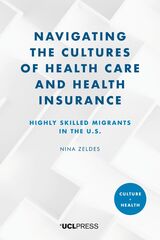
What are the barriers preventing migrants from accessing and successfully using health care in their new home country? Do these barriers vary based on the migrants’ country of origin? And are they a problem for highly skilled migrants, who often have well-paid jobs and health insurance provided by their employers? Based on field research conducted in the Washington DC area, Navigating the Cultures of Health Care and Health Insurance brings together mixed methods, qualitative, and quantitative approaches to the study of foreign patients’ utilization and assessment of health care in the United States. Through interviews with both health care providers and patients, attitudes toward health insurance and medical treatment are compared for migrants from three countries with very different cultural backgrounds and health insurance systems: Germany, India, and Japan.

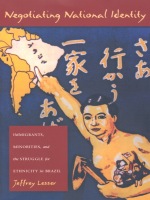
Employing a cross-cultural approach, Lesser examines a variety of acculturating responses by minority groups, from insisting on their own whiteness to becoming ultra-nationalists and even entering secret societies that insisted Japan had won World War II. He discusses how various minority groups engaged in similar, and successful, strategies of integration even as they faced immense discrimination and prejudice. Some believed that their ethnic heritage was too high a price to pay for the “privilege” of being white and created alternative categories for themselves, such as Syrian-Lebanese, Japanese-Brazilian, and so on. By giving voice to the role ethnic minorities have played in weaving a broader definition of national identity, this book challenges the notion that elite discourse is hegemonic and provides the first comprehensive look at Brazilian worlds often ignored by scholars.
Based on extensive research, Negotiating National Identity will be valuable to scholars and students in Brazilian and Latin American studies, as well as those in the fields of immigrant history, ethnic studies, and race relations.
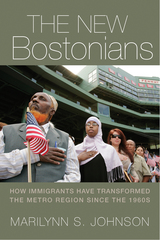
How immigrants helped rebuild a city—and redefined what it means to be American
Among the most consequential pieces of Great Society legislation, the Immigration Act of 1965 opened the nation's doors to large-scale immigration from Africa, Asia, and Latin America. A half century later, the impact of the "new immigration" is evident in the transformation of the country's demographics, economy, politics, and culture, particularly in urban America.
In The New Bostonians, Marilynn S. Johnson examines the historical confluence of recent immigration and urban transformation in greater Boston, a region that underwent dramatic decline after World War II. Since the 1980s, the Boston area has experienced an astounding renaissance—a development, she argues, to which immigrants have contributed in numerous ways. From 1970 to 2010, the percentage of foreign-born residents of the city more than doubled, representing far more diversity than earlier waves of immigration. Like the older Irish, Italian, and other European immigrant groups whose labor once powered the region's industrial economy, these newer migrants have been crucial in re-building the population, labor force, and metropolitan landscape of the New Boston, although the fruits of the new prosperity have not been equally shared.
Contributors: Ottorino Cappelli, Donna Gabaccia, Stefano Luconi, Maddalena Marinari, James S. Pasto, Rodrigo Praino, Laura E. Ruberto, Joseph Sciorra, Donald Tricarico, and Elizabeth Zanoni.
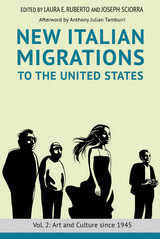
Contributors: John Allan Cicala, Simone Cinotto, Teresa Fiore, Incoronata (Nadia) Inserra, Laura E. Ruberto, Joseph Sciorra, and Anthony Julian Tamburri.

"The authors have done a commendable and impressive job of addressing a topic of long-lasting and increasing significance in U.S. politics."
---F. Chris Garcia, University of New Mexico
"This is a path-breaking book that will be read across disciplines beyond political science."
---James Jennings, Tufts University
Over the past four decades, the United States has experienced the largest influx of immigrants in its history. Not only has the ratio of European to non-European newcomers changed, but the numbers of recent arrivals from the Asian subcontinent, Southeast Asia, South America, and other regions are increasing.
In this timely study, a team of political scientists examines how the arrival of these newcomers has affected the efforts of long-standing U.S. minority groups---Blacks, Latinos, and Asian Pacific Americans---to gain equality through greater political representation and power. The authors predict that, for some time to come, the United States will function as a complex multiracial hierarchy, rather than as a genuine democracy.
Ronald Schmidt, Sr. is Professor of Political Science at California State University, Long Beach.
Yvette M. Alex-Assensoh is Associate Professor of Political Science and Dean of the Office for Women's Affairs (OWA) at Indiana University, Bloomington.
Andrew L. Aoki is Professor of Political Science at Augsburg College.
Rodney E. Hero is Professor of Political Science at the University of California, Berkeley.
California has long been mythologized as the quintessential land of opportunity and reinvention—a place where anyone, regardless of origin, can forge a new life and realize their aspirations. Yet beneath this gilded narrative lies a starker reality: California ranks among the most unequal states in one of the world's most unequal countries, where the middle class finds itself increasingly squeezed. Economic inequality is not an anomaly but part of a broader global phenomenon, as disparities deepen across the world. While we know a lot about its contours, its evolution over time and its intersections with race and immigration, we understand far less about how ordinary people interpret and internalize it. In Normalizing Inequality, sociologists G. Cristina Mora and Tianna S. Paschel illuminate how middle-class Californians perceive and come to accept the inequalities that surround them.
Drawing on extensive interviews and surveys, Mora and Paschel uncover a profound paradox at the heart of middle-class consciousness. They find that Californians are keenly aware of the systemic causes of inequality—they recognize policies engineered to benefit the wealthy, they acknowledge how structural racism makes it hard for some groups to get ahead—yet they consistently minimize these forces. Instead, they gravitate toward explanations rooted in individualism, moral character, and the idea that things are worse in other places. Racism and racial inequality in California become palatable when framed as "not as bad as the South." Immigrant exploitation, however severe, transforms into evidence of the American Dream fulfilled simply upon arrival. Economic pressures that displace others become surmountable through personal industriousness and forbearance.
These beliefs about inequality grow more troubling still. Middle-class Californians sometimes blame disempowered people for their circumstances—acknowledging structural barriers facing homeless and undocumented populations while simultaneously faulting them for insufficient drive or criminal behavior that compounds their difficulties. When contemplating California's future, interviewees envision economic prosperity propelled by technological innovation, yet remain curiously unconcerned with how present inequalities might shape that tomorrow. Their imagined future is one where White and Asian American populations thrive, while Black, Latino, and economically marginalized Californians either vanish through displacement or fade into irrelevance. As respondents use these interpretive frameworks to make sense of inequality, they lean heavily on California's foundational narratives of opportunity, sanctuary and multiracial promise.
Normalizing Inequality offers an incisive examination of how ordinary citizens make sense of inequality and, through that very process of sense-making, how they tolerate and passively reproduce the conditions they often claim to deplore.
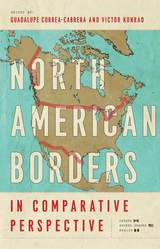
The northern and southern borders and borderlands of the United States should have much in common; instead they offer mirror articulations of the complex relationships and engagements between the United States, Mexico, and Canada. In North American Borders in Comparative Perspectiveleading experts provide a contemporary analysis of how globalization and security imperatives have redefined the shared border regions of these three nations.
This volume offers a comparative perspective on North American borders and reveals the distinctive nature first of the overportrayed Mexico-U.S. border and then of the largely overlooked Canada-U.S. border. The perspectives on either border are rarely compared. Essays in this volume bring North American borders into comparative focus; the contributors advance the understanding of borders in a variety of theoretical and empirical contexts pertaining to North America with an intense sharing of knowledge, ideas, and perspectives.
Adding to the regional analysis of North American borders and borderlands, this book cuts across disciplinary and topical areas to provide a balanced, comparative view of borders. Scholars, policy makers, and practitioners convey perspectives on current research and understanding of the United States’ borders with its immediate neighbors. Developing current border theories, the authors address timely and practical border issues that are significant to our understanding and management of North American borderlands.
The future of borders demands a deep understanding of borderlands and borders. This volume is a major step in that direction.
Contributors
Bruce Agnew
Donald K. Alper
Alan D. Bersin
Christopher Brown
Emmanuel Brunet-Jailly
Irasema Coronado
Guadalupe Correa-Cabrera
Michelle Keck
Victor Konrad
Francisco Lara-Valencia
Tony Payan
Kathleen Staudt
Rick Van Schoik
Christopher Wilson

2025 Foreword Indies Finalist, Nonfiction (Multicultural)
north by north/west is a hybrid work of creative nonfiction assembled as several iterative sequences—a discontinuous itinerary—of exile. Harnessing both montage and collage to represent the incohesive experience of being between cultures, categories, and language, this book is a personal, critical, and autoethnographic exploration of diasporic identity formation and creative expression amidst the cultural and political impacts of Cold War colonialism and fragmentation. As the narrator begins work on a rough translation of the 1959 film North by Northwest, focal points surface through textual correspondences with distant coordinates, shifting between close readings of Whitney Houston’s early music videos, current events reportage, illness journals, eighties spy movies, the most recent solar eclipse, Alfred Hitchcock’s unproduced films, Cold War “stay-behind operations,” an ill-fated party at the Festival de Cannes, and family accounts of migration. These meticulously arranged narrative threads—harnessing elements of a novel alongside poetry, photographs, and field notes—attempt to discompose the epistemology of the West/Global North in order to conceptualize a genre of work by the children of exiles who have been called “the post-dictatorship generation.”
Capitalism is a dynamic system, continually adapting itself to exploit workers in new ways. In Britain today, the gig economy is its newest form, expressed through precarious contracts and the supposed atomization of workers. In this book, Jane Hardy argues that despite capitalism’s best efforts to stop us, we can always find ways to fight it.
Through a range of case studies, from cleaners to university lecturers, Hardy looks at how workers are challenging employers’ assaults in the neoliberal workplace, comparing these new actions to a long history of British working class struggle. She explores the historic role of migrants in the British workforce, from the Windrush generation to more recent arrivals from the European Union, as well as placing womens’ collective action center stage. Analysing the rise of robotics and artificial intelligence, she refutes claims that we are entering a post-capitalist society.
Nothing to Lose But Our Chains is an optimistic exploration into the power of the working class, showing that no matter what tools capitalism uses, it can always be resisted.

Capitalism is a dynamic system, continually adapting itself to exploit workers in new ways. In Britain today, the gig economy is its newest form, expressed through precarious contracts and the supposed atomization of workers. In this book, Jane Hardy argues that despite capitalism’s best efforts to stop us, we can always find ways to fight it.
Through a range of case studies, from cleaners to university lecturers, Hardy looks at how workers are challenging employers’ assaults in the neoliberal workplace, comparing these new actions to a long history of British working class struggle. She explores the historic role of migrants in the British workforce, from the Windrush generation to more recent arrivals from the European Union, as well as placing womens’ collective action center stage. Analysing the rise of robotics and artificial intelligence, she refutes claims that we are entering a post-capitalist society.
Nothing to Lose But Our Chains is an optimistic exploration into the power of the working class, showing that no matter what tools capitalism uses, it can always be resisted.
READERS
Browse our collection.
PUBLISHERS
See BiblioVault's publisher services.
STUDENT SERVICES
Files for college accessibility offices.
RECENTLY PUBLISHED







UChicago Accessibility Resources
home | accessibility | search | about | contact us
BiblioVault ® 2001 - 2026
The University of Chicago Press