
 A SCHOLARLY BOOK REPOSITORY
10 start with O start with O
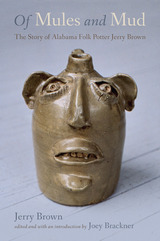
Born in 1942, Jerry Brown helped out in his father’s pottery shop as a young boy. There he learned the methods and techniques for making pottery in a family tradition dating back to the 1830s. His responsibilities included tending the mule that drove the mill that was used to mix clay (called “mud” by traditional potters). Business suffered as demand for stoneware churns, jugs, and chamber pots waned in the postwar years, and manufacture ceased following the deaths of Brown’s father and brother in the mid-1960s. Brown turned to logging for his livelihood, his skill with mules proving useful in working difficult and otherwise inaccessible terrain. In the early 1980s, he returned to the family trade and opened a new shop that relied on the same methods of production with which he had grown up, including a mule-powered mill for mixing clay and the use of a wood-fired rather than gas-fueled kiln.
Folklorist Joey Brackner met Brown in 1983, and the two quickly became close friends who collaborated together on a variety of documentary and educational projects in succeeding years—efforts that led to greater exposure, commercial success, and Brown’s recognition as a National Heritage Fellow by the National Endowment for the Arts. For years, Brown spoke of the urge to write his life story, but he never set pen to paper. In 2015, Brackner took the initiative and interviewed Brown, recording his life story over the course of a weekend at Brown’s home. Of Mules and Mud is the result of that marathon interview session, conducted one year before Brown passed away.
Brackner has captured Jerry Brown’s life in his own words as recounted that weekend, lightly edited and elaborated. Of Mules and Mud is illustrated with photos from all phases of Brown’s life, including a color gallery of 28 photos of vessel forms made by Brown throughout his career that collectors of folk pottery will find invaluable.
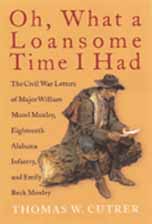
Most surviving correspondence of the Civil War period was written by members of a literate, elite class; few collections exist in which the woman's letters to her soldier husband have been preserved. Here, in the exchange between William and Emily Moxley, a working-class farm couple from Coffee County, Alabama, we see vividly an often-neglected aspect of the Civil War experience: the hardships of civilian life on the home front.
Emily's moving letters to her husband, startling in their immediacy and detail, chronicle such difficulties as a desperate lack of food and clothing for her family, the frustration of depending on others in the community, and her growing terror at facing childbirth without her husband, at the mercy of a doctor with questionable skills. Major Moxley's letters to his wife reveal a decidedly unromantic side of the war, describing his frequent encounters with starvation, disease, and bloody slaughter.
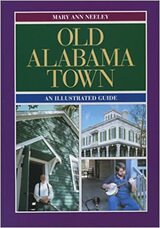
Old Alabama Town is a visual and historical chronicle of one of the South's important architectural landmarks—four blocks of 19th-century buildings restored to their original condition, collectively forming an educational village that preserves and displays life as it was lived in Alabama from the 1830s through the 1890s. A creation of the Landmarks Foundation of Montgomery, a nonprofit organization developed in 1967, Old Alabama Town displays the lifestyles and environment of the time period through architecture, decorative arts, and living history. The "town" has been made available for students, secondary school educators for field trips, and to tourists for entertainment and family excursions.
More than 50 historic structures, all formerly in danger of demolition, have been transported from around central Alabama and restored on site. The Living Block of the village allows visitors to explore a log cabin, dogtrot house, carriage house, "shotgun" house, pole barn, schoolhouse, tavern, grange hall, and grocery. The Working Block allows patrons to visit a blacksmith's shop, drugstore, grist mill, cotton gin, woodcarver's shop, print shop, and cookhouse. Additional regions of the village present some of the most significant historic homes to be preserved in the state: the Cram-Lakin House, Thompson Mansion, and the Ordeman-Mitchell-Shaw House, among others.
Designed in full color, this paperback guide is introduced by the author's historical, sociological, and cultural overview of Montgomery. The 45 individual entries detail the history and features of each structure and are supplemented by a map, archival photographs of the buildings, and 60 contempo-rary color photographs. This book will be useful to tourists, preservationists, students and scholars of Alabama history and architecture, and all those interested in an interpretive museum of southern life.
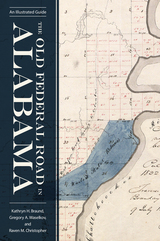
A concise illustrated guidebook for those wishing to explore and know more about the storied gateway that made possible Alabama's development.
Forged through the territory of the Creek Nation by the United States federal government, the Federal Road was developed as a communication artery linking the east coast of the United States with Louisiana. Its creation amplified already tense relationships between the government, settlers, and the Creek Nation, culminating in the devastating Creek War of 1813–1814, and thereafter it became the primary avenue of immigration for thousands of Alabama settlers.
Central to understanding Alabama’s territorial and early statehood years, the Federal Road was both a physical and symbolic thoroughfare that cut a swath of shattering change through the land and cultures it traversed. The road revolutionized Alabama’s expansion, altering the course of its development by playing a significant role in sparking a cataclysmic war, facilitating unprecedented American immigration, and enabling an associated radical transformation of the land itself.
The first half of The Old Federal Road in Alabama: An Illustrated Guide offers a narrative history that includes brief accounts of the construction of the road, the experiences of historic travelers, and descriptions of major changes to the road over time. The authors vividly reconstruct the course of the road in detail and make use of a wealth of well-chosen illustrations. Along the way they give attention to the very terrain it traversed, bringing to life what traveling the road must have been like and illuminating its story in a way few others have ever attempted.
The second half of the volume is divided into three parts—Eastern, Central, and Southern—and serves as a modern traveler’s guide to the Federal Road. This section includes driving tours and maps, highlighting historical sites and surviving portions of the old road and how to visit them.
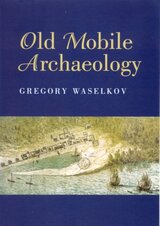
An archaeological guide to the earliest French settlement on the northern Gulf Coast. Archaeological excavations since 1989 have uncovered exciting evidence of the original townsite of Mobile, first capital of the Louisiana colony, and remnants of the colony's port on Dauphin Island.

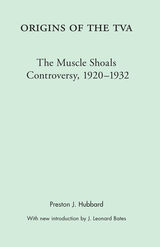
How a North Alabama river fueled a national showdown over power, democracy, and the New Deal
Origins of the TVA: The Muscle Shoals Controversy, 1920–1932 is the definitive history of the bitter, decade-long struggle that gave rise to the Tennessee Valley Authority, one of the most consequential experiments in American public policy. Centered on Muscle Shoals, Alabama, this book traces how wartime investments in nitrates and hydropower became the focal point for national debates over public versus private power, regional planning, agricultural reform, and the proper role of the federal government.
In an era grappling with industrial transformation and sectional inequality, the story of Muscle Shoals illuminates why the TVA emerged as a landmark solution with global influence. Drawing on an extraordinary range of sources—more than twenty-five congressional hearings, the Congressional Record, private manuscripts, National Archives collections, and contemporary journalism—historian Preston J. Hubbard delivers a model of scholarly rigor and balance. Originally published in 1961 and still unmatched in scope, the book is widely praised for its restraint, clarity, and meticulous reconstruction of complex political, economic, and technological issues.
Hubbard demonstrates how a small group of lawmakers led by Senator George W. Norris ultimately shaped a durable vision of public power and regional development. This book will reward historians, political scientists, policy professionals, and students of Southern history, as well as readers interested in the origins of the New Deal, environmental policy, and the enduring debate over public resources and private enterprise.

“As powerful as a lion and as soaring as an eagle, Daniels's vision remains in the pages and pictures of this volume.” —Southern Cultures
Outside Agitator tells the powerful, largely forgotten story of Jonathan Daniels—a white Episcopal seminarian from New England who answered the call of the civil rights movement and paid for that commitment with his life. In 1965, Daniels left the safety of Harvard and Cambridge for Selma and Alabama’s Black Belt, where he worked alongside Black activists to challenge segregation, register voters, and confront the moral failures of church and state. His murder by a white segregationist shocked the nation and exposed the deadly cost of racial injustice—and of moral courage.
More than a biography, this book asks urgent questions that still resonate: What does it mean to act on conscience in a society structured by inequality? What responsibilities do faith, citizenship, and privilege impose? Historian Charles W. Eagles places Daniels’s life within the turbulent final phase of the southern civil rights movement, revealing the everyday fears, ethical dilemmas, and racial tensions behind the iconic events of Selma and Lowndes County.
Outside Agitator will appeal to readers interested in civil rights history, religious activism, Southern history, and the moral dimensions of political struggle. It is essential reading for students, scholars, clergy, and general readers seeking to understand how individual lives can illuminate—and challenge—the ongoing fight for justice and equality.

Winner of the Alabama Library Author Award
Outside the Magic Circle tells the remarkable story of Virginia Foster Durr, a southern white woman born into privilige who (along with her husband Clifford Durr, a lawyer best known for defending Rosa Parks), nonetheless devoted her life to Civil Rights activism.
Outside the Magic Circle is the powerful and deeply personal autobiography of Virginia Foster Durr, a Southern woman who defied the expectations of her privileged upbringing to become one of the most courageous voices for civil rights and social justice in 20th-century America. Born into a wealthy, white Alabama family, Durr was raised in a world steeped in segregation and conservative values. Yet through a journey marked by moral reckoning, intellectual awakening, and political activism, she stepped outside the “magic circle” of Southern gentility to confront the injustices that shaped her world.
With a foreword by renowned oral historian Studs Terkel, this memoir captures Durr’s transformation from reluctant conformist to outspoken advocate. Her story spans decades of American history—from the Great Depression and New Deal politics to the McCarthy era and the Civil Rights Movement. Alongside her husband, attorney Clifford Durr, Virginia became a key figure in progressive circles, working to abolish the poll tax, defend civil liberties, and support Black activists in the segregated South.
Told in Durr’s own voice, the narrative is rich with anecdotes, reflections, and encounters with historical figures such as Eleanor Roosevelt, Rosa Parks, and Martin Luther King Jr. It is both a personal reckoning and a political document, offering rare insight into the inner conflicts of white Southern liberals and the cost of dissent in a deeply divided society.
Outside the Magic Circle is more than a memoir—it is a testament to the power of conscience, the courage of transformation, and the enduring fight for justice. It remains a vital resource for readers interested in civil rights history, feminist thought, and the complexities of Southern identity.
READERS
Browse our collection.
PUBLISHERS
See BiblioVault's publisher services.
STUDENT SERVICES
Files for college accessibility offices.
RECENTLY PUBLISHED




UChicago Accessibility Resources
home | accessibility | search | about | contact us
BiblioVault ® 2001 - 2026
The University of Chicago Press