
 A SCHOLARLY BOOK REPOSITORY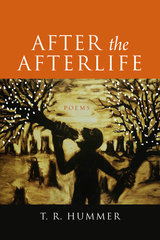
which is like trying to teach
The cat to waltz, so much awkwardness, so many tender
advances, and I’m shocked when it actually learns,
When it minces toward me in a tiny cocktail gown, offering a martini,
asking for this dance, insisting on hearing me refuse
To reply, debating all along, in the chorus of its interior mewing, who
are you really, peculiar animal, who taught you to call you you.
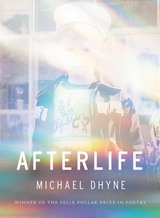
“If I tell the story in reverse, / it still ends with nothing,” he writes. Yet it is in the telling that Dhyne’s story—and the world he creates—is filled. The echoes of his childhood loss reverberate through adolescence and adulthood, his body, the bodies of those he loves, and the world around them—from Bourbon Street to dark and lonely bedrooms, from grief support groups to heartachingly beautiful sunsets.
How we are shaped by our experiences, and how we refuse to be shaped, is at the heart of the poet’s search for memory, meaning, and love—in all its forms and wonders. This bold and tender debut is a rousing reminder that poetry and art can heal.
Can I start with my birth? and I ask her if anything happened

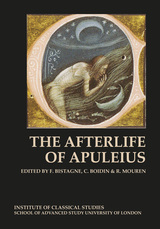
The volume gathers the proceedings of an international conference held in March 2016 at the Warburg Institute in London, in association with the Institute of Classical Studies. It includes both diachronic overviews and specific case-studies. A first series of papers focuses on The Golden Ass and its historical and geographical diffusion, from High Medieval Europe to early modern Mexico. The oriental connections of the book are also taken into account. The second part of the book examines the textual and visual destiny of Psyche’s story from the Apuleian fabula to allegorical retellings, in poetical or philosophical books and on stage. As the third series of essays indicates, the fortunes of the book led many ancient and early modern writers and translators to use it as a canonical model for reflections about the status of fiction. It also became, mostly around the beginning of the fifteenth century, a major linguistic and stylistic reference for lexicographers and neo-Latin writers. The last papers of the book deal with Renaissance polemics about "‘Apuleianism" and the role of editors and commentators.
This is the sixth and last of the volumes in the series of ‘Afterlives’ of the Classics, which is being produced jointly by the Institute of Classical Studies and the Warburg Institute.
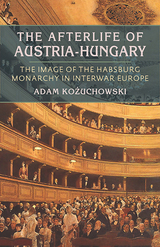
The Afterlife of Austria-Hungary examines histories, journalism, and literature in the period between world wars to expose both the positive and the negative treatment of the Habsburg monarchy following its dissolution and the powerful influence of fiction and memory over history. Originally published in Polish, Adam Kozuchowski’s study analyzes the myriad factors that contributed to this phenomenon. Chief among these were economic depression, widespread authoritarianism on the continent, and the painful rise of aggressive nationalism. Many authors of these narratives were well-known intellectuals who yearned for the high culture and peaceable kingdom of their personal memory.
Kozuchowski contrasts these imaginaries with the causal realities of the empire’s failure. He considers the aspirations of Czechs, Poles, Romanians, Hungarians, and Austrians, and their quest for autonomy or domination over their neighbors, coupled with the wave of nationalism spreading across Europe. Kozuchowski then dissects the reign of the legendary Habsburg monarch, Franz Joseph, and the lasting perceptions that he inspired.
To Kozuchowski, the interwar discourse was a reaction to the monumental change wrought by the dissolution of Austria-Hungary and the fear of a history lost. Those displaced at the empire’s end attempted, through collective (and selective) memory, to reconstruct the vision of a once great multinational power. It was an imaginary that would influence future histories of the empire and even became a model for the European Union.
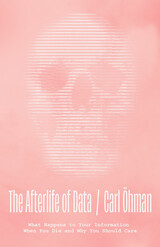
These days, so much of our lives takes place online—but what about our afterlives? Thanks to the digital trails that we leave behind, our identities can now be reconstructed after our death. In fact, AI technology is already enabling us to “interact” with the departed. Sooner than we think, the dead will outnumber the living on Facebook. In this thought-provoking book, Carl Öhman explores the increasingly urgent question of what we should do with all this data and whether our digital afterlives are really our own—and if not, who should have the right to decide what happens to our data.
The stakes could hardly be higher. In the next thirty years alone, about two billion people will die. Those of us who remain will inherit the digital remains of an entire generation of humanity—the first digital citizens. Whoever ends up controlling these archives will also effectively control future access to our collective digital past, and this power will have vast political consequences. The fate of our digital remains should be of concern to everyone—past, present, and future. Rising to these challenges, Öhman explains, will require a collective reshaping of our economic and technical systems to reflect more than just the monetary value of digital remains.
As we stand before a period of deep civilizational change, The Afterlife of Data will be an essential guide to understanding why and how we as a human race must gain control of our collective digital past—before it is too late.
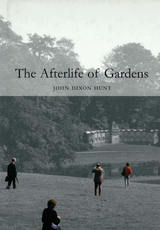
The author looks at many aspects of the subject, including the enigmatic Hypnerotomachia Polifili of 1499; part fictional narrative and part scholarly treatise, this fascinating early narrative of garden reception paves the way for an exploration of subsequent landscapes and their reception in later periods. He also looks at Italian Renaissance gardens; the Picturesque; the architectural and inscriptional elements of gardens; the ways experiences of gardens have been recorded; and the different kinds of movement within gardens, from the strolling pedestrian to the motorway traveller who experiences landscapes at speed.
In this ambitious new book the author shows how the complete history of a garden must extend beyond the moment of its design and the aims of the designer to record its subsequent reception. He raises questions about the preservation of historical sites, and provides lessons for the contemporary designer, who may perhaps be more attentive to the life of a work after its design and implementation. This book will interest all who have a professional interest in gardens, as well as the wide general audience for gardens and landscapes of past and present.
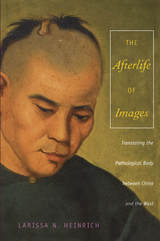
Combining literary studies, the history of science, and visual culture studies, Heinrich analyzes the rhetoric and iconography through which medical missionaries transmitted to the West an image of China as “sick” or “diseased.” He also examines the absorption of that image back into China through missionary activity, through the earliest translations of Western medical texts into Chinese, and even through the literature of Chinese nationalism. Heinrich argues that over time “scientific” Western representations of the Chinese body and culture accumulated a host of secondary meanings, taking on an afterlife with lasting consequences for conceptions of Chinese identity in China and beyond its borders.
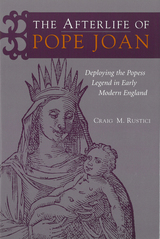
The legend concerning a popess had first taken written form in the thirteenth century and for several hundred years was more or less accepted. The Reformation, however, polarized discussions of the legend, pitting Catholics, who denied the story’s veracity, against Protestants, who suspected a cover-up and instantly cited Joan as evidence of papal depravity. In this heated environment, writers reimagined Joan variously as a sorceress, a hermaphrodite, and even a noteworthy author.
The Afterlife of Pope Joan examines sixteenth- and seventeenth-century debates concerning the popess’s existence, uncovering the disputants’ historiographic methods, rules of evidence, rhetorical devices, and assumptions concerning what is probable and possible for women and transvestites. Author Craig Rustici then investigates the cultural significance of a series of notions advanced in those debates: the claim that Queen Elizabeth I was a popess in her own right, the charge that Joan penned a book of sorcery, and the curious hypothesis that the popess was not a disguised woman at all but rather a man who experienced a sort of spontaneous sex change.
The Afterlife of Pope Joan draws upon the discourses of religion, politics, natural philosophy, and imaginative literature, demonstrating how the popess functioned as a powerful rhetorical instrument and revealing anxieties and ambivalences about gender roles that persist even today.
Craig M. Rustici is Associate Professor of English at Hofstra University.
Literary realism rose to prominence in postbellum America with what the realists heralded as artful and accurate depictions of the world. Realism is thought to have replaced sentimentality—an earlier mode of writing the realists disparaged, which has often been seen as antithetical to realism. Literary scholar Faye Halpern challenges this apparent binary by uncovering how and why William Dean Howells, Mark Twain, Henry James, Constance Fenimore Woolson, and Charles Chesnutt incorporated sentimental elements into their most famous works.
With its distinctively narratological approach, The Afterlife of Sympathy offers a more rhetorical way to understand sentimentality and assess the ethical complexity of sympathy. Halpern demonstrates how sentimentality enables authors to form intimate relationships between their characters and readers to supplement the critical distance that realist writers otherwise celebrate and that has remained a key value in literary studies today. In reassessing American literary realism, Halpern seeks not only to understand why these writers adopted sentimental techniques but to provide insight into contemporary arguments in literary studies about critical distance and sympathetic identification.

Popular representations of the past are everywhere in Japan, from cell phone charms to manga, from television dramas to video games to young people dressed as their favorite historical figures hanging out in the hip Harajuku district. But how does this mass consumption of the past affect the way consumers think about history and what it means to be Japanese?
By analyzing representations of the famous sixteenth-century samurai leader Toyotomi Hideyoshi in historical fiction based on Taikōki, the original biography of him, this book explores how and why Hideyoshi has had a continued and ever-changing presence in popular culture in twentieth- and twenty-first-century Japan. The multiple fictionalized histories of Hideyoshi published as serial novels and novellas before, during, and after World War II demonstrate how imaginative re-presentations of Japan’s past have been used by various actors throughout the modern era.
Using close reading of several novels and short stories as well as the analysis of various other texts and paratextual materials, Susan Furukawa discovers a Hideyoshi who is always changing to meet the needs of the current era, and in the process expands our understanding of the powerful role that historical narratives play in Japan.
Popular representations of the past are everywhere in Japan, from cell phone charms to manga, from television dramas to video games to young people dressed as their favorite historical figures hanging out in the hip Harajuku district. But how does this mass consumption of the past affect the way consumers think about history and what it means to be Japanese?
By analyzing representations of the famous sixteenth-century samurai leader Toyotomi Hideyoshi in historical fiction based on Taikōki, the original biography of him, this book explores how and why Hideyoshi has had a continued and ever-changing presence in popular culture in twentieth- and twenty-first-century Japan. The multiple fictionalized histories of Hideyoshi published as serial novels and novellas before, during, and after World War II demonstrate how imaginative re-presentations of Japan’s past have been used by various actors throughout the modern era.
Using close reading of several novels and short stories as well as the analysis of various other texts and paratextual materials, Susan Furukawa discovers a Hideyoshi who is always changing to meet the needs of the current era, and in the process expands our understanding of the powerful role that historical narratives play in Japan.
In this much-needed examination of Buddhist views of death and the afterlife, Carl B. Becker bridges the gap between books on death in the West and books on Buddhism in the East.
Other Western writers have addressed the mysteries surrounding death and the afterlife, but few have approached the topic from a Buddhist perspective. Here, Becker resolves questions that have troubled scholars since the beginning of Buddhism: How can Buddhism reconcile its belief in karma and rebirth with its denial of a permanent soul? What is reborn? And when, exactly, is the moment of death?
By systematically tracing Buddhism’s migration from India through China, Japan, and Tibet, Becker demonstrates how culture and environment affect Buddhist religious tradition.
In addition to discussing historical Buddhism, Becker shows how Buddhism resolves controversial current issues as well. In the face of modern medicine’s trend toward depersonalization, traditional Buddhist practices imbue the dying process with respect and dignity. At the same time, Buddhist tradition offers documented precedents for decision making in cases of suicide and euthanasia.
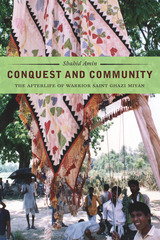
Conquest and Community is Shahid Amin's answer. Covering more than eight hundred years of history, the book centers on the enduringly popular saint Ghazi Miyan, a youthful soldier of Islam whose shrines are found all over India. Amin details the warrior saint’s legendary exploits, then tracks the many ways he has been commemorated in the centuries since. The intriguing stories, ballads, and proverbs that grew up around Ghazi Miyan were, Amin shows, a way of domesticating the conquest—recognizing past conflicts and differences but nevertheless bringing diverse groups together into a community of devotees. What seems at first glance to be the story of one mythical figure becomes an allegory for the history of Hindu-Muslim relations over an astonishingly long period of time, and a timely contribution to current political and historical debates.

Ellen Wohl has thought about these questions, and In Dead Wood, she takes us through the afterlife of trees, describing the importance of standing and downed dead wood in forests, in rivers, along beaches, in the open ocean, and even at the deepest parts of the seafloor. Downed wood in the forest provides habitat for diverse plants and animals, and the progressive decay of the wood releases nutrients into the soil. Wood in rivers provides critical habitat for stream insects and fish and can accumulate in logjams that divert the river repeatedly across the valley floor, creating a floodplain mosaic that is rich in habitat and biodiversity. Driftwood on the beach helps to stabilize shifting sand, creating habitat for plants and invertebrates. Fish such as tuna congregate at driftwood in the open ocean. As driftwood becomes saturated and sinks to the ocean floor, collections of sunken wood provide habitat and nutrients for deep-sea organisms. Far from being an unsightly form of waste that needs to be cleaned from forests, beaches, and harbors, dead wood is a critical resource for many forms of life.
Dead Wood follows the afterlives of three trees: a spruce in the Colorado Rocky Mountains that remains on the floodplain after death; a redcedar in Washington that is gradually transported downstream to the Pacific; and a poplar in the Mackenzie River of Canada that is transported to the Arctic Ocean. With these three trees, Wohl encourages readers to see beyond landscapes, to appreciate the ecological processes that drive rivers and forests and other ecosystems, and demonstrates the ways that the life of an ecosystem carries on even when individual members of that system have died. Readers will discover that trees can have an exceptionally rich afterlife—one tightly interwoven with the lives of humans and ecosystems.
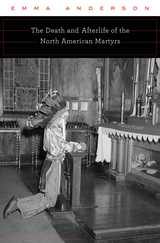
In the 1640s--a decade of epidemic and warfare across colonial North America--eight Jesuit missionaries met their deaths at the hands of native antagonists. With their collective canonization in 1930, these men, known to the devout as the North American martyrs, would become the continent's first official Catholic saints. In The Death and Afterlife of the North American Martyrs, Emma Anderson untangles the complexities of these seminal acts of violence and their ever-changing legacy across the centuries. While exploring how Jesuit missionaries perceived their terrifying final hours, the work also seeks to comprehend the motivations of the those who confronted them from the other side of the axe, musket, or caldron of boiling water, and to illuminate the experiences of those native Catholics who, though they died alongside their missionary mentors, have yet to receive comparable recognition as martyrs by the Catholic Church.
In tracing the creation and evolution of the cult of the martyrs across the centuries, Anderson reveals the ways in which both believers and detractors have honored and preserved the memory of the martyrs in this "afterlife," and how their powerful story has been continually reinterpreted in the collective imagination over the centuries. As rival shrines rose to honor the martyrs on either side of the U.S.-Canadian border, these figures would both unite and deeply divide natives and non-natives, francophones and anglophones, Protestants and Catholics, Canadians and Americans, forging a legacy as controversial as it has been enduring.
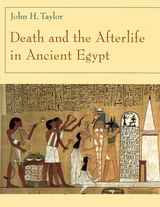
The author describes in detail the numerous provisions made for the dead and the intricate rituals carried out on their behalf. He considers embalming, coffins and sarcophagi, shabti figures, magic and ritual, and amulets and papyri, as well as the mummification of sacred animals, which were buried by the millions in vast labyrinthine catacombs.
The text also reflects recent developments in the interpretation of Egyptian burial practices, and incorporates the results of much new scientific research. Newly acquired information derives from a range of sophisticated applications, such as the use of noninvasive imaging techniques to look inside the wrappings of a mummy, and the chemical analysis of materials used in the embalming process. Authoritative, concise, and lucidly written, Death and the Afterlife in Ancient Egypt illuminates aspects of this complex, vibrant culture that still perplex us more than 3,000 years later.
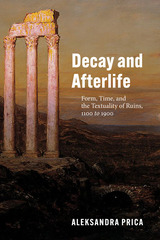
Western ruins have long been understood as objects riddled with temporal contradictions, whether they appear in baroque poetry and drama, Romanticism’s nostalgic view of history, eighteenth-century paintings of classical subjects, or even recent photographic histories of the ruins of postindustrial Detroit. Decay and Afterlife pivots away from our immediate, visual fascination with ruins, focusing instead on the textuality of ruins in works about disintegration and survival. Combining an impressive array of literary, philosophical, and historiographical works both canonical and neglected, and encompassing Latin, Italian, French, German, and English sources, Aleksandra Prica addresses ruins as textual forms, examining them in their extraordinary geographical and temporal breadth, highlighting their variability and reflexivity, and uncovering new lines of aesthetic and intellectual affinity. Through close readings, she traverses eight hundred years of intellectual and literary history, from Seneca and Petrarch to Hegel, Goethe, and Georg Simmel. She tracks European discourses on ruins as they metamorphose over time, identifying surprising resemblances and resonances, ignored contrasts and tensions, as well as the shared apprehensions and ideas that come to light in the excavation of these discourses.
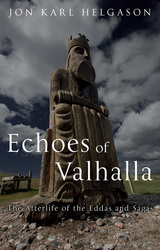
Jón Karl Helgason looks at comic books, plays, travel books, music, and films in order to explore the reincarnations of a range of legendary characters, from the Nordic gods Thor and Odin to the saga characters Hallgerd Long-legs, Gunnar of Hlidarendi, and Leif the Lucky. Roaming the globe, Helgason unearths echoes of Nordic lore in Scandinavia, Britain, America, Germany, Italy, and Japan. He examines the comic work of Jack Kirby and cartoon work of Peter Madsen; reads the plays of Henrik Ibsen and Gordon Bottomley; engages thought travelogues by Frederick Metcalfe and Poul Vad; listens to the music of Richard Wagner, Edward Elgar, and the metal band Manowar; and watches films by directors such as Roy William Neill and Richard Fleischer, outlining the presence of the eddas and sagas in these nineteenth- and twentieth-century works.
Altogether, Echoes of Valhalla tells the remarkable story of how disparate, age-old poetry and prose originally recorded in remote areas of medieval Iceland have come to be a part of our shared cultural experience today—how Nordic gods and saga heroes have survived and how their colorful cast of characters and adventures they went on are as vibrant as ever.
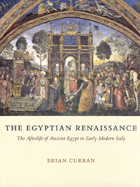
Fascination with ancient Egypt is a recurring theme in Western culture, and here Brian Curran uncovers its deep roots in the Italian Renaissance, which embraced not only classical art and literature but also a variety of other cultures that modern readers don’t tend to associate with early modern Italy. Patrons, artists, and spectators of the period were particularly drawn, Curran shows, to Egyptian antiquity and its artifacts, many of which found their way to Italy in Roman times and exerted an influence every bit as powerful as that of their more familiar Greek and Roman counterparts.
Curran vividly recreates this first wave of European Egyptomania with insightful interpretations of the period’s artistic and literary works. In doing so, he paints a colorful picture of a time in which early moderns made the first efforts to decipher Egyptian hieroglyphs, and popes and princes erected pyramids and other Egyptianate marvels to commemorate their own authority. Demonstrating that the emergence of ancient Egypt as a distinct category of historical knowledge was one of Renaissance humanism’s great accomplishments, Curran’s peerless study will be required reading for Renaissance scholars and anyone interested in the treasures and legacy of ancient Egypt.
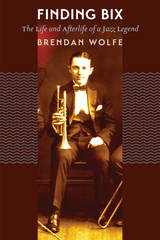
A native of Beiderbecke’s hometown of Davenport, Iowa, Wolfe grew up seeing Bix’s iconic portrait on everything from posters to parking garages. He never heard his music, though, until cast to play a bit part in an Italian biopic filmed in Davenport. Then, after writing a newspaper review of a book about Beiderbecke, Wolfe unexpectedly received a letter from the late musician's nephew scolding him for getting a number of facts wrong. This is where Finding Bix begins: in Wolfe's good-faith attempt to get the facts right.
What follows, though, is anything but straightforward, as Wolfe discovers Bix Beiderbecke to be at the heart of furious and ever-timely disputes over addiction, race and the origins of jazz, sex, and the influence of commerce on art. He also uncovers proof that the only newspaper interview Bix gave in his lifetime was a fraud, almost entirely plagiarized from several different sources. In fact, Wolfe comes to realize that the closer he seems to get to Bix, the more the legend retreats.
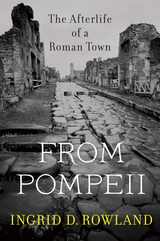
When Vesuvius erupted in 79 CE, the force of the explosion blew the top right off the mountain, burying nearby Pompeii in a shower of volcanic ash. Ironically, the calamity that proved so lethal for Pompeii's inhabitants preserved the city for centuries, leaving behind a snapshot of Roman daily life that has captured the imagination of generations.
The experience of Pompeii always reflects a particular time and sensibility, says Ingrid Rowland. From Pompeii: The Afterlife of a Roman Town explores the fascinating variety of these different experiences, as described by the artists, writers, actors, and others who have toured the excavated site. The city's houses, temples, gardens--and traces of Vesuvius's human victims--have elicited responses ranging from awe to embarrassment, with shifting cultural tastes playing an important role. The erotic frescoes that appalled eighteenth-century viewers inspired Renoir to change the way he painted. For Freud, visiting Pompeii was as therapeutic as a session of psychoanalysis. Crown Prince Hirohito, arriving in the Bay of Naples by battleship, found Pompeii interesting, but Vesuvius, to his eyes, was just an ugly version of Mount Fuji. Rowland treats readers to the distinctive, often quirky responses of visitors ranging from Wolfgang Amadeus Mozart, Charles Dickens, and Mark Twain to Roberto Rossellini and Ingrid Bergman.
Interwoven throughout a narrative lush with detail and insight is the thread of Rowland's own impressions of Pompeii, where she has returned many times since first visiting in 1962.
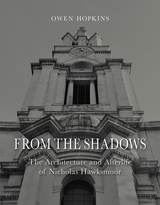
Hawksmoor wasn’t always appreciated, however: for decades after his death, he was seen as at best a second-rate talent. From the Shadows tells the story of the resurrection of his reputation, showing how over the years his work was ignored, abused, and altered—and, finally, recovered and celebrated. It is a story of the triumph of talent and of the power of appreciative admirers like T. S. Eliot, James Stirling, Robert Venturi, and Peter Ackroyd, all of whom played a role in the twentieth-century recovery of Hawksmoor’s reputation.
Eli Friedlander reads Rousseau's autobiography, Reveries of the Solitary Walker, as philosophy. Reading this work against Descartes's Meditations, Friedlander shows how Rousseau's memorable transformation of experience through writing opens up the possibility of affirming even the most dejected state of being and allows the emergence of the innocence of nature out of the ruins of all social attachments. In tracing the re-creation of a human subject in reverie, Friedlander is alive to the very form of the experience of reading the Reveries by showing the ways this work needs to--and in effect does--generate a reader, without betraying Rousseau's utter solitude.
Friedlander's book provides an afterlife for the Reveries in modern philosophy. It constitutes an alternative to the analytic tradition's revival of Rousseau, primarily through Rawls's influential vision of the social contract. It also counters the fate of Rousseau's writings in the continental tradition, determined by and large by Derrida's deconstruction.
Friedlander's reading of the Reveries, a work that has fascinated generations of readers, is an incomparable introduction to one of the greatest thinkers in Western culture.
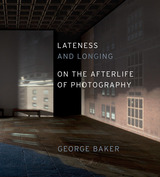
Beginning in the 1990s, a series of major artists imagined the expansion of photography, intensifying its ideas and effects while abandoning many of its former medium constraints. Simultaneous with this development in contemporary art, however, photography was moving toward total digitalization.
Lateness and Longing presents the first account of a generation of artists—focused on the work of Zoe Leonard, Tacita Dean, Sharon Lockhart, and Moyra Davey—who have collectively transformed the practice of photography, using analogue technologies in a dissident way and radicalizing signifiers of older models of feminist art. All these artists have resisted the transition to the digital in their work. Instead—in what amounts to a series of feminist polemics—they return to earlier, incomplete, or unrealized moments in photography’s history, gravitating toward the analogue basis of photographic mediums. Their work announces that photography has become—not obsolete—but “late,” opened up by the potentially critical forces of anachronism.
Through a strategy of return—of refusing to let go—the work of these artists proposes an afterlife and survival of the photographic in contemporary art, a formal lateness wherein photography finds its way forward through resistance to the contemporary itself.
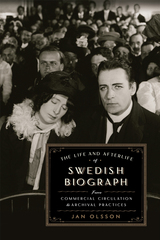
Sweden’s early film industry was dominated by Swedish Biograph (Svenska Biografteatern), home to star directors like Victor Sjöström and Mauritz Stiller. It is nostalgically remembered as the generative site of a nascent national artform, encapsulating a quintessentially Nordic aesthetic—the epicenter of Sweden’s cinematic Golden Age. In The Life and Afterlife of Swedish Biograph, veteran film scholar Jan Olsson takes a hard look at this established, romanticized narrative and offers a far more complete, complex, and nuanced story.
Nearly all of the studio’s original negatives were destroyed in an explosion in 1941, but Olsson’s comprehensive archival research shows how the company operated in a commercial, international arena, and how it was influenced not just by Nordic aesthetics or individual genius but also by foreign audiences’ expectations, technological demands, Hollywood innovations, and the gritty back-and-forth between economic pressures, government interference, and artistic desires. Olsson’s focus is wide, encompassing the studio’s production practices, business affairs, and cinematographic conventions, as well as the latter-day archival efforts that both preserved and obscured parts of Swedish Biograph’s story, helping construct the company’s rosy legacy. The result is a necessary rewrite to Swedish film historiography and a far fuller picture of a canonical film studio.
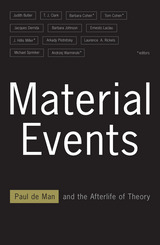
Renowned contributors use the late work of this crucial figure to open new speculations on "materiality."
A "material event," in one of Paul de Man’s definitions, is a piece of writing that enters history to make something happen. This interpretation hovers over the publication of this volume, a timely reconsideration of de Man’s late work in its complex literary, critical, cultural, philosophical, political, and historical dimensions.
A distinguished group of scholars responds to the problematic of "materialism" as posed in Paul de Man’s posthumous final book, Aesthetic Ideology. These contributors, at the forefront of critical theory, productive thinking, and writing in the humanities, explore the question of "material events" to illuminate not just de Man’s work but their own. Prominent among the authors here is Jacques Derrida, whose extended essay “Typewriter Ribbon: Limited Inc (2)” returns to a celebrated episode in Rousseau’s Confessions that was discussed by de Man in Allegories of Reading.
The importance of de Man’s late work is related to a broad range of subjects and categories and-in Derrida’s provocative reading of de Man’s concept of "materiality"-the politico-autobiographical texts of de Man himself. This collection is essential reading for all those interested in the present state of literary and cultural theory.
Contributors: Judith Butler, UC Berkeley; T. J. Clark, UC Berkeley; Jacques Derrida, École des Hautes Études en Sciences Sociales and UC Irvine; Barbara Johnson, Harvard U; Ernesto Laclau, U of Essex; Arkady Plotnitsky, Purdue U; Laurence A. Rickels, UC Santa Barbara; and Michael Sprinker.
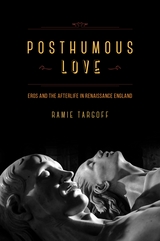
Targoff shows that medieval notions of the somewhat flexible boundaries between love in this world and in the next were hardened by Protestant reformers, who envisioned a total break between the two. Tracing the narrative of this rupture, she focuses on central episodes in poetic history in which poets developed rich and compelling compensations for the lack of posthumous love—from Thomas Wyatt’s translations of Petrarch’s love sonnets and the Elizabethan sonnet series of Shakespeare and Spencer to the carpe diem poems of the seventeenth century. Targoff’s centerpiece is Romeo and Juliet, where she considers how Shakespeare’s reworking of the Italian story stripped away any expectation that the doomed teenagers would reunite in heaven. Casting new light on these familiar works of poetry and drama, this book ultimately demonstrates that the negation of posthumous love brought forth a new mode of poetics that derived its emotional and aesthetic power from its insistence upon love’s mortal limits.
A Choice Outstanding Academic Title of the Year
A Tablet Book of the Year
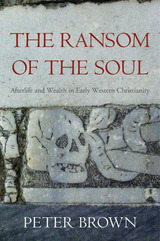
Marking a departure in our understanding of Christian views of the afterlife from 250 to 650 CE, The Ransom of the Soul explores a revolutionary shift in thinking about the fate of the soul that occurred around the time of Rome’s fall. Peter Brown describes how this shift transformed the Church’s institutional relationship to money and set the stage for its domination of medieval society in the West.
“[An] extraordinary new book…Prodigiously original—an astonishing performance for a historian who has already been so prolific and influential…Peter Brown’s subtle and incisive tracking of the role of money in Christian attitudes toward the afterlife not only breaks down traditional geographical and chronological boundaries across more than four centuries. It provides wholly new perspectives on Christianity itself, its evolution, and, above all, its discontinuities. It demonstrates why the Middle Ages, when they finally arrived, were so very different from late antiquity.”
—G. W. Bowersock, New York Review of Books
“Peter Brown’s explorations of the mindsets of late antiquity have been educating us for nearly half a century…Brown shows brilliantly in this book how the future life of Christians beyond the grave was influenced in particular by money.
—A. N. Wilson, The Spectator

Cambodian history is Cold War history, asserts Y-Dang Troeung in Refugee Lifeworlds. Constructing a genealogy of the afterlife of the Cold War in Cambodia, Troeung mines historical archives and family anecdotes to illuminate the refugee experience, and the enduring impact of war, genocide, and displacement in the lives of Cambodian people.
Troeung, a child of refugees herself, employs a method of autotheory that melds critical theory, autobiography, and textual analysis to examine the work of contemporary artists, filmmakers, and authors. She references a proverb about the Cambodian kapok tree that speaks to the silences, persecutions, and modes of resistance enacted during the Cambodian Genocide, and highlights various literary texts, artworks, and films that seek to document and preserve Cambodian histories nearly extinguished by the Khmer Rouge regime.
Addressing the various artistic responses to prisons and camps, issues of trauma, disability, and aphasia, as well as racism and decolonialism, Refugee Lifeworlds repositions Cambodia within the broader transpacific formation of the Cold War. In doing so, Troeung reframes questions of international complicity and responsibility in ways that implicate us all.
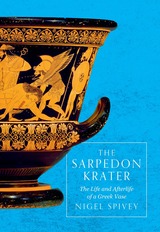
Spivey takes the reader on a dramatic journey, beginning with the krater’s looting from an Etruscan tomb in 1971 and its acquisition by the Metropolitan Museum of Art, New York, followed by a high-profile lawsuit over its status and its eventual return to Italy. He explains where, how, and why the vase was produced, retrieving what we know about the life and legend of Sarpedon. Spivey also pursues the figural motif of the slain Sarpedon portrayed on the vase and traces how this motif became a standard way of representing the dead and dying in Western art, especially during the Renaissance.
Fascinating and informative, The Sarpedon Krater is a multifaceted introduction to the enduring influence of Greek art on the world.
In Surviving Lamentations, Tod Linafelt offers an alternative reading of Lamentations in light of the "literature of survival" (works written by survivors of catastrophe) as well as literary and philosophical reflections on "the survival of literature." He refocuses attention on the figure of Zion as a manifestation of a basic need to give voice to suffering, and traces the afterlife of Lamentations in Jewish literature, in which text after text attempts to provide the response to Zion's lament that is lacking in Lamentations itself.
Seen through Linafelt's eyes, Lamentations emerges as uncannily relevant to contemporary discourse on survival.
Undead Science examines the story of cold fusion, one of the most publicized scientific controversies of the late twentieth century. In 1989 two Utah-based “discoverers” claimed to have developed an electrochemical process that produced more energy than was required to initiate the process. Finding no other explanation, the researchers described their findings as some kind of nuclear reaction. If they were correct, an important new energy source would have been found. Objections surfaced quickly, and in the year that followed, hundreds of scientists worldwide attempted to reproduce these results. Most, though not all, failed, and the controversy became increasingly antagonistic. By 1990, general scientific opinion favored the skeptics and experimental work went into a steep decline. Nevertheless, many scientists continue to do research in what Bart Simon calls this “undead science.”
Simon argues that in spite of widespread skepticism in the scientific community, there has been a continued effort to make sense of the controversial phenomenon. Researchers in well-respected laboratories continue to produce new and rigorous work. In this manner, cold fusion research continues to exist long after the controversy has subsided, even though the existence of cold fusion is circumscribed by the widespread belief that the phenomenon is not real.
The survival of cold fusion signals the need for a more complex understanding of the social dynamics of scientific knowledge making, the boundaries between experts, intermediaries, and the lay public, and the conceptualization of failure in the history of science and technology.
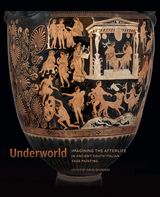
What happens to us when we die? What might the afterlife look like? For the ancient Greeks, the dead lived on, overseen by Hades in the Underworld. We read of famous sinners, such as Sisyphus, forever rolling his rock, and the fierce guard dog Kerberos, who was captured by Herakles. For mere mortals, ritual and religion offered possibilities for ensuring a happy existence in the beyond, and some of the richest evidence for beliefs about death comes from southern Italy, where the local Italic peoples engaged with Greek beliefs. Monumental funerary vases that accompanied the deceased were decorated with consolatory scenes from myth, and around forty preserve elaborate depictions of Hades’s domain.
For the first time in over four decades, these compelling vase paintings are brought together in one volume, with detailed commentaries and ample illustrations. The catalogue is accompanied by a series of essays by leading experts in the field, which provides a framework for understanding these intriguing scenes and their contexts. Topics include attitudes toward the afterlife in Greek ritual and myth, inscriptions on leaves of gold that provided guidance for the deceased, funerary practices and religious beliefs in Apulia, and the importance accorded to Orpheus and Dionysos. Drawing from a variety of textual and archaeological sources, this volume is an essential source for anyone interested in religion and belief in the ancient Mediterranean.

With the advent of easy-to-use websites, ordinary people have become internet writers, disseminating their texts to large audiences. Social media sites enable writers’ audiences to communicate back to the them, instantly and often. Even professional writers work within interfaces that place comments adjacent to their text, privileging the audience’s voice. Thus, writers face the prospect of attending to their writing after they deliver their initial arguments. Update Culture and the Afterlife of Digital Writing describes the conditions that encourage “published” texts to be revisited. It demonstrates—through forty case studies of Amazon reviewers, redditors, and established journalists—how writers consider the timing, attention, and management of their writing under these ever-evolving conditions.
Online culture, from social media to blog posts, requires a responsiveness to readers that is rarely duplicated in print and requires writers to consistently reread, edit, and update texts, a process often invisible to readers. This book takes questions of circulation online and shows, via interviews with both writers and participatory audience members, that writing studies must contend with writing’s afterlife. It will be of interest to researchers, scholars, and students of writing studies and the fields of rhetoric, communication, education, technical communication, digital writing, and social media, as well as all content creators interested in learning how to create more effective posts, comments, replies, and reviews.
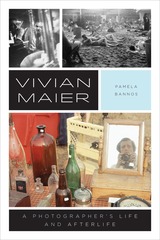
But, as Pamela Bannos reveals in this meticulous and passionate biography, this story of the nanny savant has blinded us to Maier’s true achievements, as well as her intentions. Most important, Bannos argues, Maier was not a nanny who moonlighted as a photographer; she was a photographer who supported herself as a nanny. In Vivian Maier: A Photographer’s Life and Afterlife, Bannos contrasts Maier’s life with the mythology that strangers—mostly the men who have profited from her work—have created around her absence. Bannos shows that Maier was extremely conscientious about how her work was developed, printed, and cropped, even though she also made a clear choice never to display it. She places Maier’s fierce passion for privacy alongside the recent spread of her work around the world, and she explains Maier’s careful adjustments of photographic technique, while explaining how the photographs have been misconstrued or misidentified. As well, Bannos uncovers new information about Maier’s immediate family, including her difficult brother, Karl—relatives that once had been thought not to exist.
This authoritative and engrossing biography shows that the real story of Vivian Maier, a true visionary artist, is even more compelling than the myth.
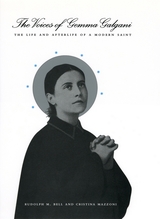
Gemma Galgani was the first person who lived in the twentieth century to become a saint. Born in Lucca to a pharmacist and his wife, Gemma died of tuberculosis at the young age of twenty-five after a life of intense personal spirituality. Jesus caressed her as lovers do; the Virgin Mary was her affectionate Mom; Brother Gabriel playfully teased her about whether she preferred his visits to those of Jesus; and she even received all of Christ's wounds in her hands, feet, and side. At the same time, she was mocked by her family and labeled a hysteric by doctors and the local bishop. Her trials and the intimate details of her supernatural encounters—the voices of Gemma Galgani—are revealed here in this marvelous book by Rudolph M. Bell and Cristina Mazzoni.
Bell and Mazzoni have chosen and translated the most important of Gemma's words: her autobiographical account of her childhood, her diary, and key selections from her "ecstasies" and letters. Gemma emerges as a very modern saint indeed: confident, grandiose, manipulative, childish, admired, and with this book, no longer forgotten. Following Gemma's own voice, Bell carefully contextualizes her life and passion and explores her afterlife, specifically the complicated process of her canonization. Mazzoni closes the book with a "Saint's Alphabet" that finds, through Gemma's voice, spiritual meaning for women in the twenty-first century.
Far more than the reinvigoration of a neglected historical figure, The Voices of Gemma Galgani is a portrait of a complex girl-woman caught between the medieval and the modern and a potent reminder of spirituality in a supposedly secular age.
READERS
Browse our collection.
PUBLISHERS
See BiblioVault's publisher services.
STUDENT SERVICES
Files for college accessibility offices.
RECENTLY PUBLISHED


UChicago Accessibility Resources
home | accessibility | search | about | contact us
BiblioVault ® 2001 - 2024
The University of Chicago Press