
 A SCHOLARLY BOOK REPOSITORY
30 start with O start with O

Ancient human groups in the Eastern Woodlands of North America were long viewed as homogeneous and stable hunter-gatherers, changing little until the late prehistoric period when Mesoamerican influences were thought to have stimulated important economic and social developments. The authors in this volume offer new, contrary evidence to dispute this earlier assumption, and their studies demonstrate the vigor and complexity of prehistoric peoples in the North American Midwest and Midsouth. These peoples gathered at favored places along midcontinental streams to harvest mussels and other wild foods and to inter their dead in the shell mounds that had resulted from their riverside activities. They created a highly successful, pre-maize agricultural system beginning more than 4,000 years ago, established far-flung trade networks, and explored and mined the world's longest cave—the Mammoth Cave System in Kentucky.
Contributors include:
Kenneth C. Carstens, Cheryl Ann Munson, Guy Prentice, Kenneth B. Tankersley, Philip J. DiBlasi, Mary C. Kennedy, Jan Marie Hemberger, Gail E. Wagner, Christine K. Hensley, Valerie A. Haskins, Nicholas P. Herrmann, Mary Lucas Powell, Cheryl Claassen, David H. Dye, and Patty Jo Watson

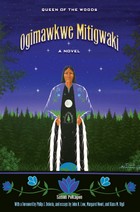
Simon Pokagon, the son of tribal patriarch Leopold Pokagon, was a talented writer, advocate for the Pokagon Potawatomi community, and tireless self-promoter.
In 1899, shorty after his death, Pokagon's novel Ogimawkwe Mitigwaki (Queen of the Woods)—only the second ever published by an American Indian—appeared. It was intended to be a testimonial to the traditions, stability, and continuity of the Potawatomi in a rapidly changing world. Read today, Queen of the Woods is evidence of the author's desire to mark the cultural, political, and social landscapes with a memorial to the past and a monument to a future that included the Pokagon Potawatomi as distinct and honored people.
This new edition offers a reprint of the original 1899 novel with the author's introduction to the language and culture of his people. In addition, new accompanying materials add context through a cultural biography, literary historical analysis, and linguistic considerations of the unusual text.
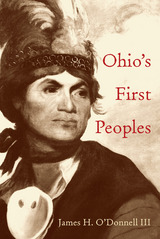
Although founders of the state like Rufus Putnam pointed to the remaining prehistoric earthworks at Marietta as evidence that the architects were a people of “ingenuity, industry, and elegance,” their words did not prevent a rivalry with the area’s Indian inhabitants that was settled only through decades of warfare and treaty-making.
Native American armies managed to win battles with Josiah Harmar and Arthur St. Clair, but not the war with Anthony Wayne. By the early nineteenth century only a few native peoples remained, still hoping to retain their homes. Pressures from federal and state governments as well as the settlers‘ desire for land, however, left the earlier inhabitants no refuge. By the mid-1840s they were gone, leaving behind relatively few markers on the land.
Ohio’s First Peoples depicts the Native Americans of the Buckeye State from the time of the well-known Hopewell peoples to the forced removal of the Wyandots in the 1840s.
Professor James O’Donnell presents the stories of the early Ohioans based on the archaeological record. In an accessible narrative style, he provides a detailed overview of the movements of Fort Ancient peoples driven out by economic and political forces in the seventeenth century. Ohio’s plentiful game and fertile farmlands soon lured tribes such as the Wyandots, Shawnees, and Delawares, which are familiar to observers of the historic period.
In celebrating the bicentennial of Ohio, we need to remember its earliest residents. Ohio’s First Peoples recounts their story and documents their contribution to Ohio’s full heritage.

The western Ojibwa are descendants of Ojibwa who migrated from around the Great Lakes in the late 18th century. This was an era of dramatic change. Between 1780 and 1870, they survived waves of epidemic disease, the rise and decline of the fur trade, the depletion of game, the founding of non-Native settlement, the loss of tribal lands, and the government's assertion of political control over them. As a people who emerged, adapted, and survived in a climate of change, the western Ojibwa demonstrate both the effects of historic forces that acted upon Native peoples, and the spirit, determination, and adaptive strategies that the Native people have used to cope with those forces. This study examines the emergence of the western Ojibwa within this context, seeing both the cultural changes that they chose to make and the continuity within their culture as responses to historical pressures.
The Ojibwa of Western Canada differs from earlier works by focussing closely on the details of western Ojibwa history in the crucial century of their emergence. It is based on documents to which pioneering scholars did not have access, including fur traders' and missionaries' journals, letters, and reminiscences. Ethnographic and archaeological data, and the evidence of material culture and photographic and art images, are also examined in this well-researched and clearly written history.
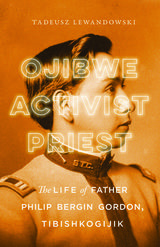
Drawing on previously unexplored materials, Tadeusz Lewandowski paints a portrait of a contentious life. Ojibwe, Activist, Priest examines Gordon's efforts to abolish the Bureau of Indian Affairs, his membership in the Society of American Indians, and his dismissal from his Ojibwe parish and exile to a tiny community where he'd be less likely to stir up controversy. Lewandowski illuminates a significant chapter in the struggle for Native American rights through the views and experiences of a key Native progressive.
The story of generations of Ojibwe women who built a thriving Indigenous home in the urban heart of Minneapolis
Minneapolis became home to White Earth Ojibwe people not through a centralized movement but through generations of determined, behind-the-scenes work by Ojibwe women. These women were organizing not in the streets, but in sewing clubs, churches, classrooms, and kitchens to bring people together and form interconnected communities. Rooted in care, tradition, and persistence, their labor laid the foundation for a thriving urban Indigenous population that continues to shape the city today.
An Ojibwe Home in the City tells the histories of Louise and Emily Peake, Winnie Jourdain, Ignatia Broker, and other Ojibwe women who endeavored to make space for Native families in South Minneapolis. From the 1930s through the 1970s, these women built institutions, secured services, and fought for culturally grounded education—all while working inside systems never intended for them. Their efforts led to the creation of vital community hubs such as the Division of Indian Work and the Minneapolis American Indian Center and helped ensure that future generations would stay connected to their culture, even in an urban setting.
Far broader than a local history, this book challenges what we think we know about Native activism in the twentieth century, shifting the focus from protest to perseverance and steady commitment. Intimate, compelling, and deeply grounded in community, An Ojibwe Home in the City is both a tribute and a revelation—an essential and personal account of how Indigenous women made a place for their people in a changing world.
Retail e-book files for this title are screen-reader friendly with images accompanied by short alt text and/or extended descriptions.
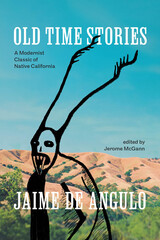
Dismantled and scattered just before his death, Jaime de Angulo’s poetic masterpiece Old Time Stories is now reconstituted for the first time in this edition.
Jaime de Angulo’s Old Time Stories, a visual prose-poem drawing on his anthropological research among Indigenous communities in California, is a forgotten modernist treasure. Completed shortly before de Angulo’s death, the work has survived only in fragments, divided between an abridged 1953 publication and a limited edition from the 1970s. This new reconstituted edition gives contemporary readers—whether interested in experimental literature, linguistics, cultural anthropology, or Native American history—their first chance to engage with the complete work.
Structured around children’s stories inspired by the Indigenous tales and legends de Angulo encountered directly during his studies, Old Time Stories uses illustrations, different typefaces, and other experimental formatting techniques to translate rich oral and pictographic traditions into the condensed form of print. Beyond its significance as an innovative work of American literary modernism, it interrogates the colonialist foundations of Western modernity through this very reworking of Western literary conventions.

William Apess was the first Native American to fully, and publicly, speak out regarding the racism and unfair treatment that he and others endured. The author's writing is eloquently delivered, instilling the reader with a realistic framework of a political, historical, and personal mindset.
As characters and tribes emerge in the Huron-Wyandot’s oral tradition of creation, and take their respective places upon the Great Island, the author reveals the most difficult element of the Huron-Wyandot’s history: how the tribal name was obtained. With the knowledge of how both Huron and Wyandot are relevant names for one tribe of people, the author then shares his tribe’s amazing history. The reader will be fascinated to learn how one of the smallest tribes, birthed amid the Iroquois Wars, rose to become one of the most respected and influential tribes of North America.
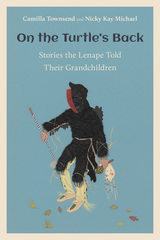
The Lenape tribe, also known as the Delaware Nation, lived for centuries on the land that English colonists later called New Jersey. But once America gained its independence, they were forced to move further west: to Indiana, then Missouri, and finally to the territory that became Oklahoma. These reluctant migrants were not able to carry much from their ancestral homeland, but they managed to preserve the stories that had been passed down for generations.
On the Turtle’s Back is the first collection of Lenape folklore, originally compiled by anthropologist M. R. Harrington over a century ago but never published until now. In it, the Delaware share their cherished tales about the world’s creation, epic heroes, and ordinary human foibles. It features stories told to Harrington by two Lenape couples, Julius and Minnie Fouts and Charles and Susan Elkhair, who sought to officially record their legends before their language and cultural traditions died out. More recent interviews with Lenape elders are also included, as their reflections on hearing these stories as children speak to the status of the tribe and its culture today. Together, they welcome you into their rich and wondrous imaginative world.

One Good Story, That One is a collection steeped in native oral tradition and shot through with Thomas King’s special brand of wit and comic imagination. These highly acclaimed stories conjure up Native and Judeo-Christian myths, present-day pop culture, and literature while mixing in just the right amount of perception and experience.

The proscription against interracial marriage was for many years a flashpoint in American culture. In One Nation, One Blood, Karen Woods Weierman explores this taboo by investigating the traditional link between marriage and property. Her research reveals that the opposition to intermarriage originated in large measure in the nineteenth-century desire for Indian land and African labor. Yet despite the white majority's overwhelming rejection of nonwhite peoples as marriage partners, citizens, and social equals, nineteenth-century reformers challenged the rule against intermarriage. Dismissing the new “race science” that purported to prove white superiority, reformers held fast to the religious notion of a common humanity and the republican rhetoric of freedom and equality, arguing that God made all people “of one blood.”
The years from 1820 to 1870 marked a crucial period in the history of this prejudice. Tales of interracial marriage recounted in fiction, real-life scandals, and legal statutes figured prominently in public discussion of both slavery and the fate of Native Americans. In Part One of this book, Weierman focuses on Indian-white marriages during the 1820s, when Indian removal became a rallying cry for New England intellectuals.
In Part Two she shifts her attention to black-white marriages from the antebellum period through the early years of Reconstruction. In both cases she finds that the combination of a highly publicized intermarriage scandal, new legislation prohibiting interracial marriage, and fictional portrayals of the ills associated with such unions served to reinforce popular prejudice, justifying the displacement of Indians from their lands and upholding the system of slavery. Even after the demise of slavery, restrictions against intermarriage remained in place in many parts of the country long into the twentieth century. Not until the 1967 Loving v. Virginia decision did the Supreme Court finally rule that such laws were unconstitutional.
Finishing on a contemporary note, Weierman suggests that the stories Americans tell about intermarriage today—stories defining family, racial identity, and citizenship—still reflect a struggle for resources and power.
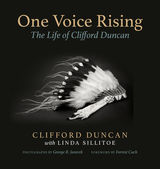
“Everything was Indian then, when I was a boy. They had to explain to us about the white man's side. Now everything is in the white man's world and we teach Indian ways.”
—Clifford Duncan (from the book)
For the first time, the traumatic removal of the Oneida Indians from New York to Wisconsin is examined in a groundbreaking collection of essays, The Oneida Indian Journey from New York to Wisconsin, 1784–1860. To shed light on this vital period of Oneida history, editors Laurence Hauptman and L. Gordon McLester, III, present a unique collaboration between an American Indian nation and the academic community. Two professional historians, a geographer, anthropologist, archivist and attorney join in with eighteen voices from the Oneida community—local historians, folklorists, genealogists, linguists, and tribal elders—discuss tribal dispossession and community; Oneida community perspectives of Oneida history; and the means of studying Oneida history.
Contributors include: Debra Anderson, Eileen Antone, Jim Antone, Abrahms Archiquette, Oscar Archiquette, Jack Campisi, Richard Chrisjohn, Amelia Cornelius, Judy Cornelius, Katie Cornelius, Melissa Cornelius, Jonas Elm, James Folts, Reginald Horsman, Elizabeth Huff, Francis Jennings, Arlinda Locklear, Jo Margaret Mano, Loretta Metoxen, Liz Obomsawin, Jessie Peters, Sarah Summers, and Rachel Swamp
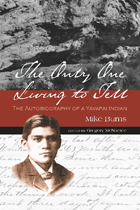
Mike Burns—born Hoomothya—was around eight years old in 1872 when the US military murdered his family and as many as seventy-six other Yavapai men, women, and children in the Skeleton Cave Massacre in Arizona. One of only a few young survivors, he was adopted by an army captain and ended up serving as a scout in the US army and adventuring in the West. Before his death in 1934, Burns wrote about the massacre, his time fighting in the Indian Wars during the 1880s, and life among the Kwevkepaya and Tolkepaya Yavapai. His precarious position between the white and Native worlds gives his account a distinctive narrative voice.
Because Burns was unable to find a publisher during his lifetime, these firsthand accounts of history from a Native perspective remained unseen through much of the twentieth century, archived at the Sharlot Hall Museum in Prescott. Now Gregory McNamee has brought Burns's text to life, making this extraordinary tale an accessible and compelling read. Generations after his death, Mike Burns finally gets a chance to tell his story.
This autobiography offers a missing piece of Arizona history—as one of the only Native American accounts of the Skeleton Cave Massacre—and contributes to a growing body of history from a Native perspective. It will be an indispensable tool for scholars and general readers interested in the West—specifically Arizona history, the Apache wars, and Yavapai and Apache history and lifeways.
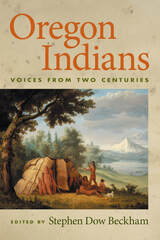
In this deeply researched volume, Stephen Dow Beckham brings together commentary by Native Americans about the events affecting their lives in Oregon. Now available in paperback for the first time, this volume presents first-person accounts of events threatening, changing, and shaping the lives of Oregon Indians, from “first encounters” in the late eighteenth century to modern tribal economies.
The book's seven thematic sections are arranged chronologically and prefaced with introductory essays that provide the context of Indian relations with Euro-Americans and tightening federal policy. Each of the nearly seventy documents has a brief introduction that identifies the event and the speakers involved. Most of the book's selections are little known. Few have been previously published, including treaty council minutes, court and congressional testimonies, letters, and passages from travelers’ journals.
Oregon Indians opens with the arrival of Euro-Americans and their introduction of new technology, weapons, and diseases. The role of treaties, machinations of the Oregon volunteers, efforts of the US Army to protect the Indians but also subdue and confine them, and the emergence of reservation programs to “civilize” them are recorded in a variety of documents that illuminate nineteenth-century Indian experiences.
Twentieth-century documents include Tommy Thompson on the flooding of the Celilo Falls fishing grounds in 1942, as well as Indian voices challenging the "disastrous policy of termination," the state's prohibition on inter-racial marriage, and the final resting ground of Kennewick Man. Selections in the book's final section speak to the changing political atmosphere of the late twentieth century, and suggest that hope, rather than despair, became a possibility for Oregon tribes.
Biolsi pays particular attention to the administrative means by which the OIA retained the power to design and implement tribal "self-government" as well as the power to control the flow of critical resources—rations, relief employment, credit—to the reservations. He also shows how this imbalance of power between the tribes and the federal bureaucracy influenced politics on the reservations, and argues that the crisis of authority faced by the Lakota tribal governments among their own would-be constituents—most dramatically demonstrated by the 1973 Wounded Knee occupation—is a direct result of their disempowerment by the United States.
The Osage Indians were a powerful group of Native Americans who lived along the prairies and plains of present-day Kansas, Missouri, Oklahoma, and Arkansas. The Osage: An Ethnohistorical Study of Hegemony on the Prairie-Plains, now available in paper, shows how the Osage formed and maintained political, economic, and social control over a large portion of the central United States for more than 150 years.
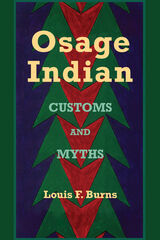
Siouan peoples who migrated from the Atlantic coastal region and settled in the central portion of the North American continent long before the arrival of Europeans are now known as Osage. Because the Osage did not possess a written language, their myths and cultural traditions were handed down orally through many generations. With time, only those elements deemed vital were preserved in the stories, and many of these became highly stylized. The resulting verbal recitations of the proper life of an Osage—from genesis myths to body decoration, from star songs to child-naming rituals, from war party strategies to medicinal herbs—constitute this comprehensive volume.
Osage myths differ greatly from the myths of Western Civilization, most obviously in the absence of individual names. Instead, “younger brother,” “the messenger,” “Little Old Men,” or a clan name may serve as the allegorical embodiment of the central player. Individual heroic feats are also missing because group life took precedence over individual experience in Osage culture.
Supplementing the work of noted ethnographer Francis La Flesche who devoted most of his professional life to recording detailed descriptions of Osage rituals, Louis Burns’s unique position as a modern Osage—aware of the white culture’s expectations but steeped in the traditions himself is able to write from an insider’s perspective.
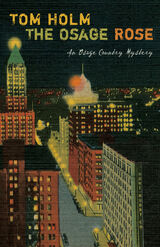
Life is looking easy for J. D. Daugherty, a crusty ex-cop who has set up his own PI firm in Tulsa, Oklahoma, just after World War I. J. D. expects to make a straightforward living off the intrigues of the city’s wealthy socialites, but then Rose Chichester, a privileged young white woman, runs off with Tommy Ruffle, a young Indian who is heir to Osage oil. Hired by Rose’s father to track down the young pair, J. D. and his associate, a Cherokee named Hoolie Smith, find themselves caught in the cross fire of a deadly scheme. When Tommy turns up murdered and with Rose still missing, J. D. and Hoolie must navigate a twisting maze of deception, race riots, and gun battles in their unrelenting search for the truth—a search that ultimately leads to an intimate secret no one suspected.
Tom Holm writes a true private-eye mystery, yet he entwines the story’s layers of conspiracy and deceit with the realities of prejudice and hatred that existed during the early years of Oklahoma statehood. Rooted firmly in its time, Holm’s well-researched novel tells a complex and compelling story of individuals struggling to find justice at any cost in a world still caught between modernity and its Wild West legacy.
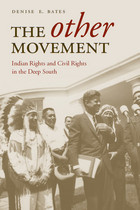
Examines the most visible outcome of the Southern Indian Rights Movement: state Indian affairs commissions
In recalling political activism in the post-World War II South, rarely does one consider the political activities of American Indians as they responded to desegregation, the passing of the Civil Rights Acts, and the restructuring of the American political party system. Native leaders and activists across the South created a social and political movement all their own, which drew public attention to the problems of discrimination, poverty, unemployment, low educational attainment, and poor living conditions in tribal communities.
While tribal-state relationships have historically been characterized as tense, most southern tribes—particularly non-federally recognized ones—found that Indian affairs commissions offered them a unique position in which to negotiate power. Although individual tribal leaders experienced isolated victories and generated some support through the 1950s and 1960s, the creation of the inter-tribal state commissions in the 1970s and 1980s elevated the movement to a more prominent political level. Through the formalization of tribal-state relationships, Indian communities forged strong networks with local, state, and national agencies while advocating for cultural preservation and revitalization, economic development, and the implementation of community services.
This book looks specifically at Alabama and Louisiana, places of intensive political activity during the civil rights era and increasing Indian visibility and tribal reorganization in the decades that followed. Between 1960 and 1990, U.S. census records show that Alabama’s Indian population swelled by a factor of twelve and Louisiana’s by a factor of five. Thus, in addition to serving as excellent examples of the national trend of a rising Indian population, the two states make interesting case studies because their Indian commissions brought formerly disconnected groups, each with different goals and needs, together for the first time, creating an assortment of alliances and divisions.
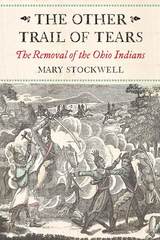
The Indian Removal Act of 1830 was the culmination of the United States’ policy to force native populations to relocate west of the Mississippi River. The most well-known episode in the eviction of American Indians in the East was the notorious “Trail of Tears” along which Southeastern Indians were driven from their homes in Georgia, Alabama, and Mississippi to reservations in present-day Oklahoma. But the struggle in the South was part of a wider story that reaches back in time to the closing months of the War of 1812, back through many states—most notably Ohio—and into the lives of so many tribes, including the Delaware, Seneca, Shawnee, Ottawa, and Wyandot (Huron). They, too, were forced to depart from their homes in the Ohio Country to Kansas and Oklahoma. The Other Trail of Tears: The Removal of the Ohio Indians by award-winning historian Mary Stockwell tells the story of this region’s historic tribes as they struggled following the death of Tecumseh and the unraveling of his tribal confederacy in 1813. At the peace negotiations in Ghent in 1814, Great Britain was unable to secure a permanent homeland for the tribes in Ohio setting the stage for further treaties with the United States and encroachment by settlers. Over the course of three decades the Ohio Indians were forced to move to the West, with the Wyandot people ceding their last remaining lands in Ohio to the U.S. Government in the early 1850s. The book chronicles the history of Ohio’s Indians and their interactions with settlers and U.S. agents in the years leading up to their official removal, and sheds light on the complexities of the process, with both individual tribes and the United States taking advantage of opportunities at different times. It is also the story of how the native tribes tried to come to terms with the fast pace of change on America’s western frontier and the inevitable loss of their traditional homelands. While the tribes often disagreed with one another, they attempted to move toward the best possible future for all their people against the relentless press of settlers and limited time.
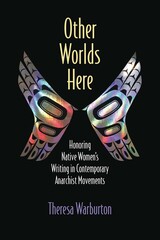
All is not lost, however. Rather than centering a critical indictment of contemporary anarchist politics, Other Worlds Here maintains that a defining characteristic of New Anarchism is its ability to adapt and transform. Through close readings of texts by Native women authors, Warburton argues that anarchists must shift the paradigm that another world is possible to one that recognizes other worlds already here: stories, networks, and histories that lay out methods of building reciprocal relationships with the land and its people. Analyzing memoirs, poetry, and novels by writers including Deborah Miranda, Elissa Washuta, Heid E. Erdrich, Janet Rogers, and Leslie Marmon Silko, Other Worlds Here extends the study of Native women’s literatures beyond ethnographic analysis of Native experience to advance a widely applicable, contemporary political critique.
Through cycles of war and peace, resistance and assimilation, trauma and regeneration, Cherokees have long debated what it means to be Cherokee through protest writings, memoirs, fiction, and retellings of traditional stories. Justice employs the Chickamauga consciousness of resistance and Beloved Path of engagement—theoretical approaches that have emerged out of Cherokee social history—to interpret diverse texts composed in English, a language embraced by many as a tool of both access and defiance.
Justice’s analysis ultimately locates the Cherokees as a people of many perspectives, many bloods, mingled into a collective sense of nationhood. Just as the oral traditions of the Cherokee people reflect the living realities and concerns of those who share them, Justice concludes, so too is their literary tradition a textual testament to Cherokee endurance and vitality.
Daniel Heath Justice is assistant professor of aboriginal literatures at the University of Toronto.
The twentieth-anniversary edition of the path-clearing study of Cherokee writing in English, with an emphatic refocus on voices from the three Cherokee tribal nations
This Citizenship and Sovereignty Edition of Our Fire Survives the Storm is a thoroughly updated, nationhood-focused, twentieth-anniversary revision of Daniel Heath Justice’s influential study of Cherokee writing in English. Through politically astute and historically grounded readings of diverse texts by citizens of the Cherokee Nation, United Keetoowah Band of Cherokee Indians, and Eastern Band of Cherokee Indians, Justice connects Cherokee literature to Indigenous sovereignty, nationhood, and collective futurity.
Guided by a reparative vision that directly contends with the outdated literary legacies of the book’s first edition, this revision confronts the ongoing harms of unsubstantiated and false Cherokee heritage claims on literary studies, replacing readings of primary texts by unverified claimants with those of Cherokee citizen writers. As Justice addresses issues of accountability, he engages with the past two decades of Indigenous scholarship, fully updating terminology, concepts, and scholarly resources. He expands and deepens the intellectual and historical context for Cherokee literary production introduced in the first edition, and he discusses Cherokee writing and community in the mid-twentieth century, the Cherokee Freedmen’s long struggle for justice, and the future of Cherokee nationhood.
Highlighting the work of authors who illustrate the transformative collective discourses of what it means to be Cherokee, Justice examines the richness of Cherokee literary expression through motifs of roots, removal, and nationhood in traditional stories, speeches, legal and governance documents, memoirs, short stories, novels, and plays. An invitation to reflective criticism, this new edition of Our Fire Survives the Storm is grounded in the belief that Indigenous nationhood is a necessary ethical response to the violence of the settler imaginary.
Retail e-book files for this title are screen-reader friendly with images accompanied by short alt text and/or extended descriptions.

READERS
Browse our collection.
PUBLISHERS
See BiblioVault's publisher services.
STUDENT SERVICES
Files for college accessibility offices.
RECENTLY PUBLISHED




UChicago Accessibility Resources
home | accessibility | search | about | contact us
BiblioVault ® 2001 - 2026
The University of Chicago Press